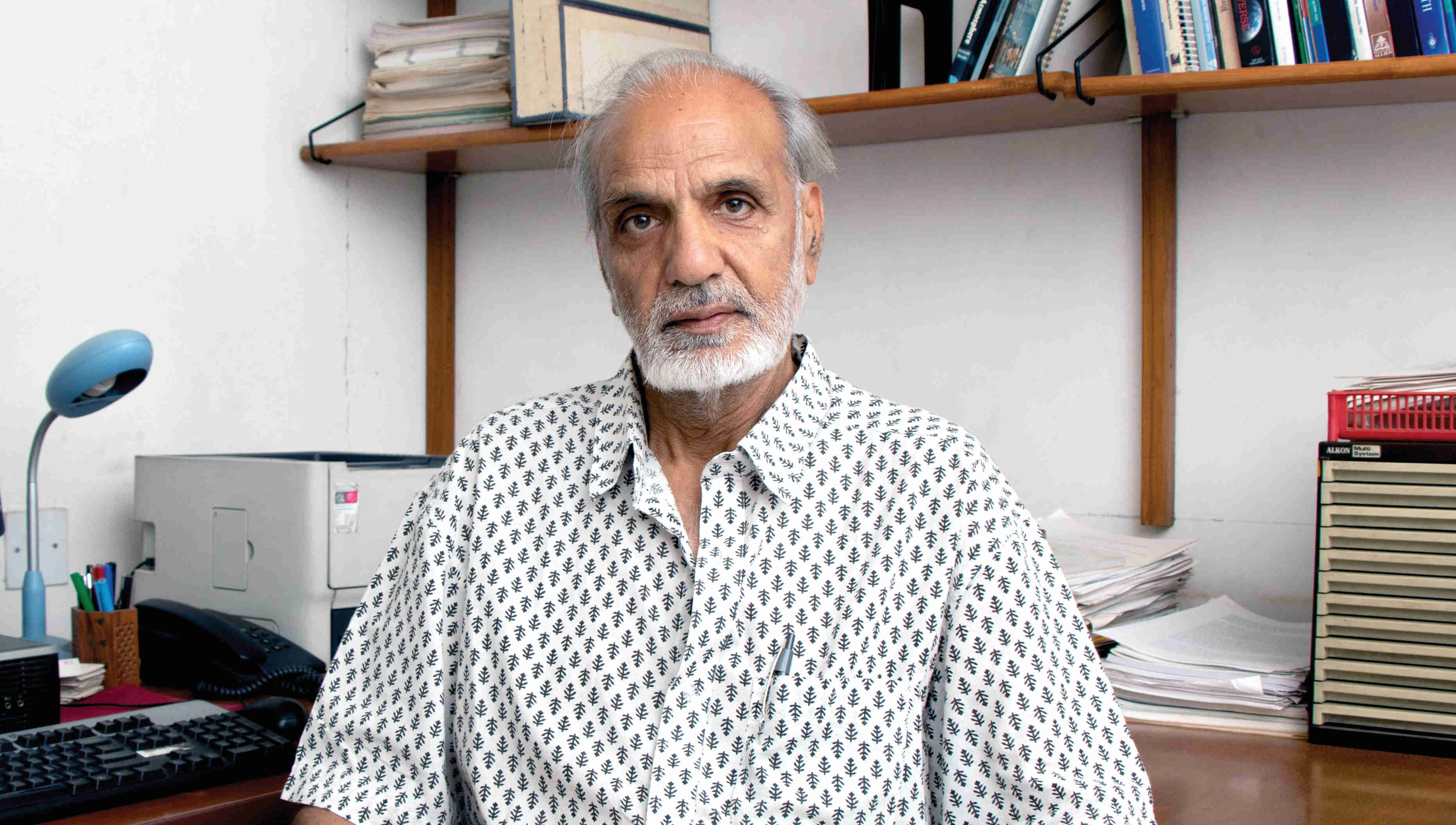
The sudden passing of Naresh is a hugely felt loss for team Bhāvanā. It would be fitting to share the following excerpt from his email dated 22 March 2025, in response to our proposal to carry Jayant Narlikar’s blog on the genesis of IUCAA in Bhāvanā.
You are doing a signal service in Bhāvanā bringing out the human aspects of people who do mathematics. The stories are enchanting and enjoyable, and also give the flavour of how mathematics is done.
I had subscribed to Bhāvanā for a year or more and then found it difficult to renew, for one reason or the other. I would like to compensate by ordering the whole set of past issues, which should be sent to my South African friends who are very hungry to know about Indian mathematics. I am pretty sure it would spread like wildfire in the SA academic community, and hopefully, you will get a sizeable number of new members.
When we reached out him to contribute his reminiscences of P.P. Divakaran for the tribute article, he was more than enthusiastic, and his energy was infectious, as is evident from his email from 22 October 2025:
Besides reminiscences, there are three aspects of his intellectual journey. First, particle physics – his main career; the second, Indian mathematics. And the third, his thoughts on the fundamental constants and space-time structure, that is what I can cover.
I am currently in China, and returning on the 19th November, and will surely send my bit by 30th.
Alas, fate had other plans, and we are left to contend with the sad reality of his unexpected demise. The following tribute by his long-time friend and colleague, Ajit Kembhavi, crisply sketches his life’s impactful journey.
Naresh Dadhich passed away at the age of 81 on November 6, 2025, in Beijing while on an academic visit. His sudden demise is a tragic loss to the scientific community, and to the very large number of people from diverse fields and professions, in India and in many other countries, who were his friends, colleagues and collaborators. He worked mainly in general relativity and gravitation theory, and was one of the founders of the Inter-University Centre for Astronomy and Astrophysics (IUCAA), where he was Director from 2003 to 2009. He continued to be associated with the institute as an active scientist to the very end.
Naresh was born and brought up in a village near Churu in Rajasthan, where his father was a priest. He left home for school at a young age, got his first degree in mathematics from BITS-Pilani and his MSc from Sardar Patel University, Vallabh Vidyanagar. He then reached the University of Poona (now Savitribai Phule Pune University, SPPU) in 1966, for research in mathematics. There, he had the good fortune of becoming a PhD student of the renowned mathematician and relativist V.V. Narlikar. Naresh specialized in the area of general relativity, in which he became a notable expert.
Soon after his PhD in the early seventies, Naresh was appointed as a lecturer in the Department of Mathematics at SPPU, where his scientific journey truly began. He worked on classical and quantum aspects of gravity, with Lovelock Gravity being one of his favourites, along with brane world cosmologies, gravitational collapse, wormholes, and the astrophysics of black holes. Over the years, he gathered around him a number of highly talented young researchers, including Sanjeev Dhurandhar, B.S. Sathyaprakash and Patrick Dasgupta, who had obtained their PhDs from leading institutes in the country. There were also research students, including Sanjay Wagh, Ravi Kulkarni, Sucheta Koshti and Varsha Daftardar, who did their PhDs under his guidance. Some of these young people went on to become leading researchers in their areas. The work done during this period included the very interesting magnetic Penrose process for the extraction of energy from black holes. Naresh continued to publish until his last days, and had a paper accepted just a few days before he passed away. His essays for the Gravity Research Foundation’s annual competition were awarded with the Honourable Mention several times, including in 2025, placing him amongst the oldest persons to be so honoured. He was also the President of the Indian Association of General Relativity and Gravitation during 1994–1996.
Naresh had very simple-sounding explanations for profound and difficult-to-understand concepts, like the universality of space and time, the constancy of the velocity of light, the curvature of space-time and its manifestation as gravity, and derivations of Einstein’s field equations. He lectured on these matters to diverse audiences, ranging from professional scientists to students barely out of school, with the same energy and elan. Over the last few months, I have heard him speak on these topics to early college students in Darjeeling and masters and research students in Silchar. Those students certainly enjoyed the experience of listening to a person who had dedicated his life to science, and spoke from his heart.
Around 1987, Naresh’s life took a dramatic turn. Jayant Narlikar wanted to set up an inter-university centre for astronomy, which took form as IUCAA, and Naresh played a pivotal role in creating the place. He was the first person to be appointed on the rolls of IUCAA, even before Jayant Narlikar’s appointment as the Founding Director. Naresh worked tirelessly, providing liaison between SPPU, UGC, the government of Maharashtra and several ministries at the Centre. The very difficult task of setting up an institution with a complex structure was made so much easier because of his acumen and efforts. He helped in identifying and transferring a piece of land on the SPPU campus for the new institute.
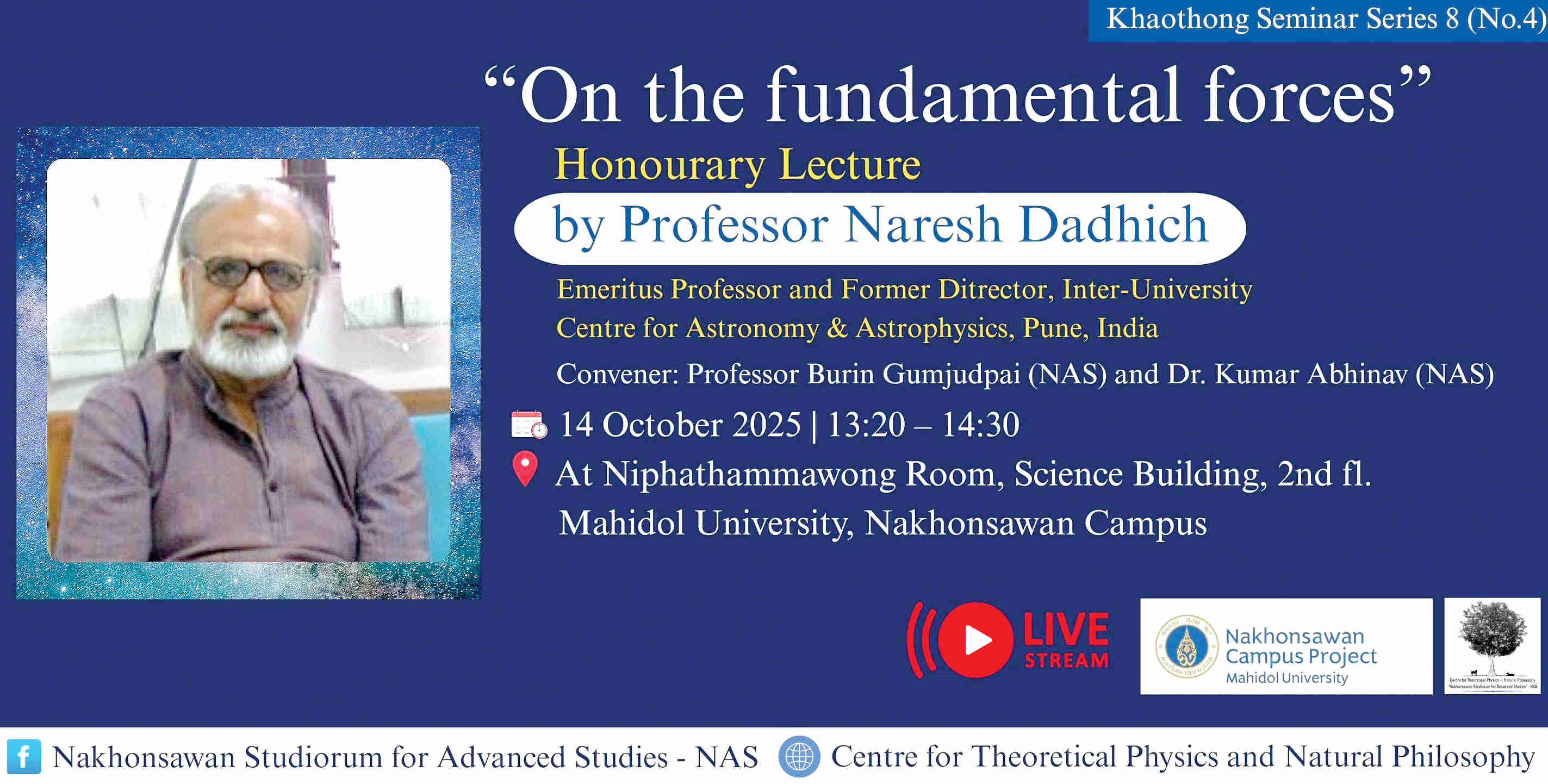
Naresh had deep and abiding friendships and collaborations with a number of relativists and astrophysicists in many countries. There was an unusual element to these collaborations. While he worked with leading scientists in Western countries, and visited them often, he also collaborated over decades with groups in various countries like Uzbekistan and other Central Asian republics, Iran, Turkey, Pakistan and South Africa. Faculty as well as students from these countries visited IUCAA regularly, and many PhDs were produced through these interactions. His ties with South Africa began soon after apartheid ended, and during his many visits to the country, he developed close ties with the intellectual elite there, including scientists from different fields, artists, constitutional court justices, senior science administrators, vice-chancellors and others, and he even had a meeting with Nelson Mandela soon after his release from prison.
Over the years, and especially when he was the Director, Naresh helped in making large astronomical facilities available to IUCAA. He got the telescope at Girawali going, and he made IUCAA a partner in the Southern African Large Telescope. He also began the process of IUCAA and other institutions in the country becoming partners in the Thirty Meter Telescope project. Sanjeev Dhurandhar and Naresh tried to set up a gravitational wave detector in the country about 25 years ago–-an effort that was far ahead of its time. Their pioneering efforts were not in vain, however, since they laid the foundation for the approval of the LIGO-India project in 2016.
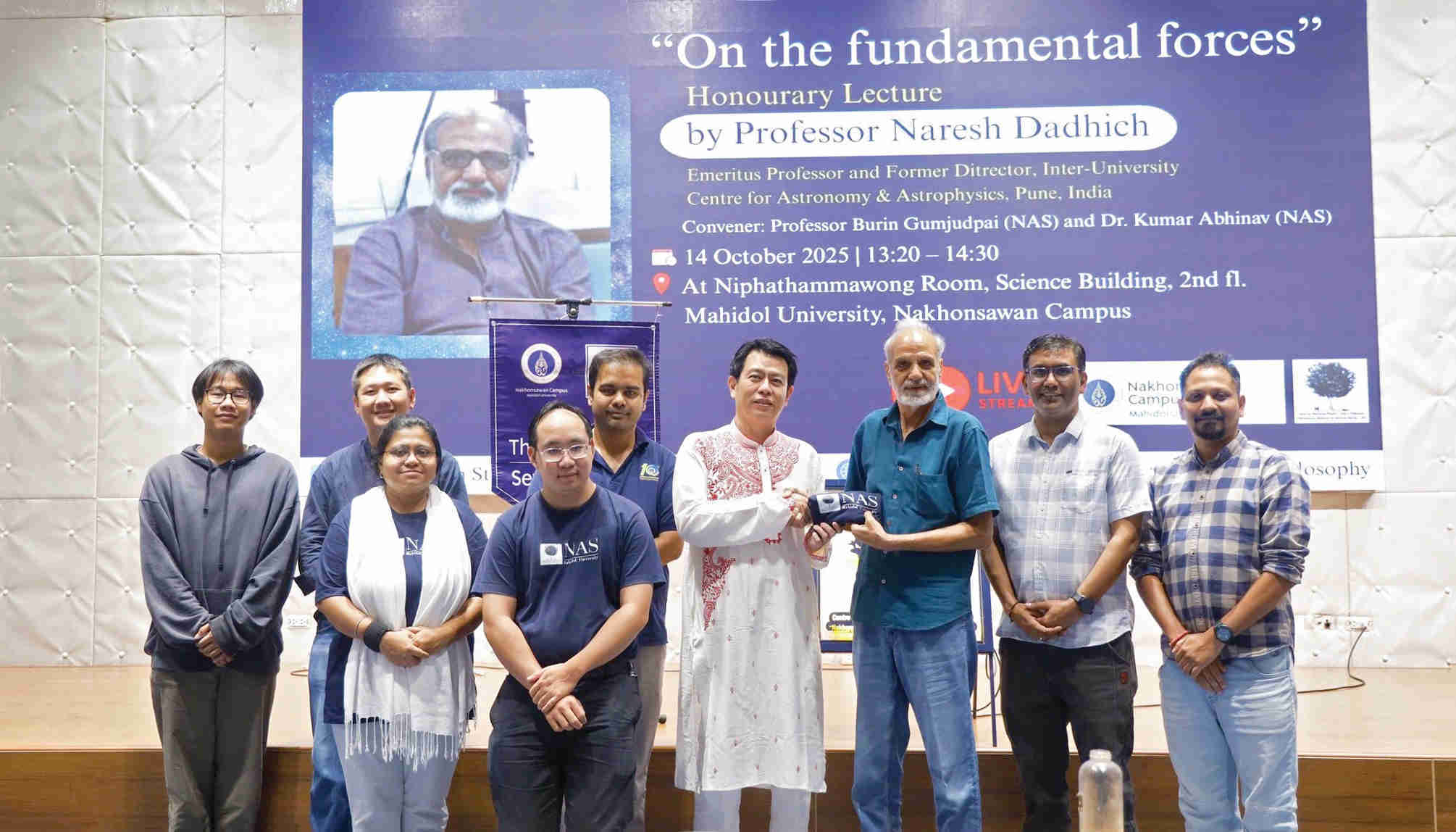
Naresh had intellectual convictions which went far beyond his scientific side. He was a non-believer and rationalist. He was also a committed socialist and firmly believed in the equality of all men and women, young and old, and rich and poor. He was an activist, and amidst his busy schedule, often participated in marches and demonstrations for a variety of causes, including the environment. He lived a simple life bordering on the spartan, but he liked his fun too. He greatly enjoyed going to parties and organising many parties himself.
Naresh had a vast circle of friends and admirers in his home city of Pune and elsewhere in the country. He had close ties with people from the performing arts and theatre all over. For many years, great playwrights, artists and thespians visited and performed in IUCAA, providing a rich and multihued background to the excellent science being done there.
Naresh is survived by his wife Sadhana, who is a deeply committed social worker and activist, his daughter Juee, who is an entrepreneur in Information Technology, and his son Nishith, who is a successful producer of movies and serials.
Naresh clearly was a person of many parts. His tall, handsome, voluble presence, his infectious laughter and gracious company will be missed by many for long.\blacksquare
Footnotes
- This article extract, originally published in the book One Hundred Reasons to be a Scientist, ICTP, Trieste (2004), pp. 175–178, is republished here, with edits, and with permission. ↩