

“I am thrilled to share that my father, Jayant Narlikar, has started a blog at the age of 85! Besides being a scientist, he has been a writer of books and articles on astrophysics, popular science, and science fiction in English, Marathi and Hindi. He always has so many more stories to share with us – related to science as well as personal. We convinced him to start a blog, so he could share them with more people.”
The blog, edited and published online by Girija and her son Sharad Parulekar, posted 27 delightful stories in his inimitable style until his sad demise on 20 May 2025. Nine of them, in a series under the title The IUCAA Story, are presented here as a single article to give the readers a wholesome reading experience. The story, supplemented by a recollection narrative of his colleagues Naresh Dadhich and Ajit Kembhavi as they walked the IUCAA trail with Jayant Narlikar, relates some of its defining moments.
The Background
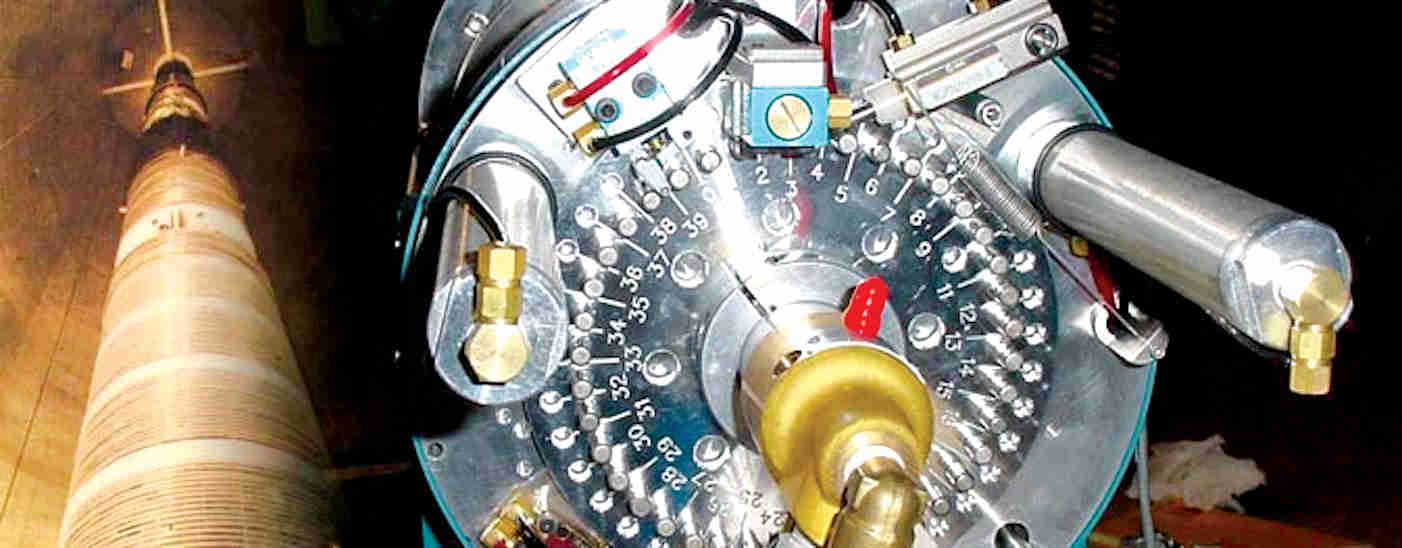
On December 28, 1992, Chairman Ram Reddy of the University Grants Commission dedicated a new institution called the `Inter-University Centre for Astronomy and Astrophysics’ to the Nation. The occasion was marked by a lecture by Nobel Laureate Subrahmanyan Chandrasekhar and the start of a Foucault Pendulum.
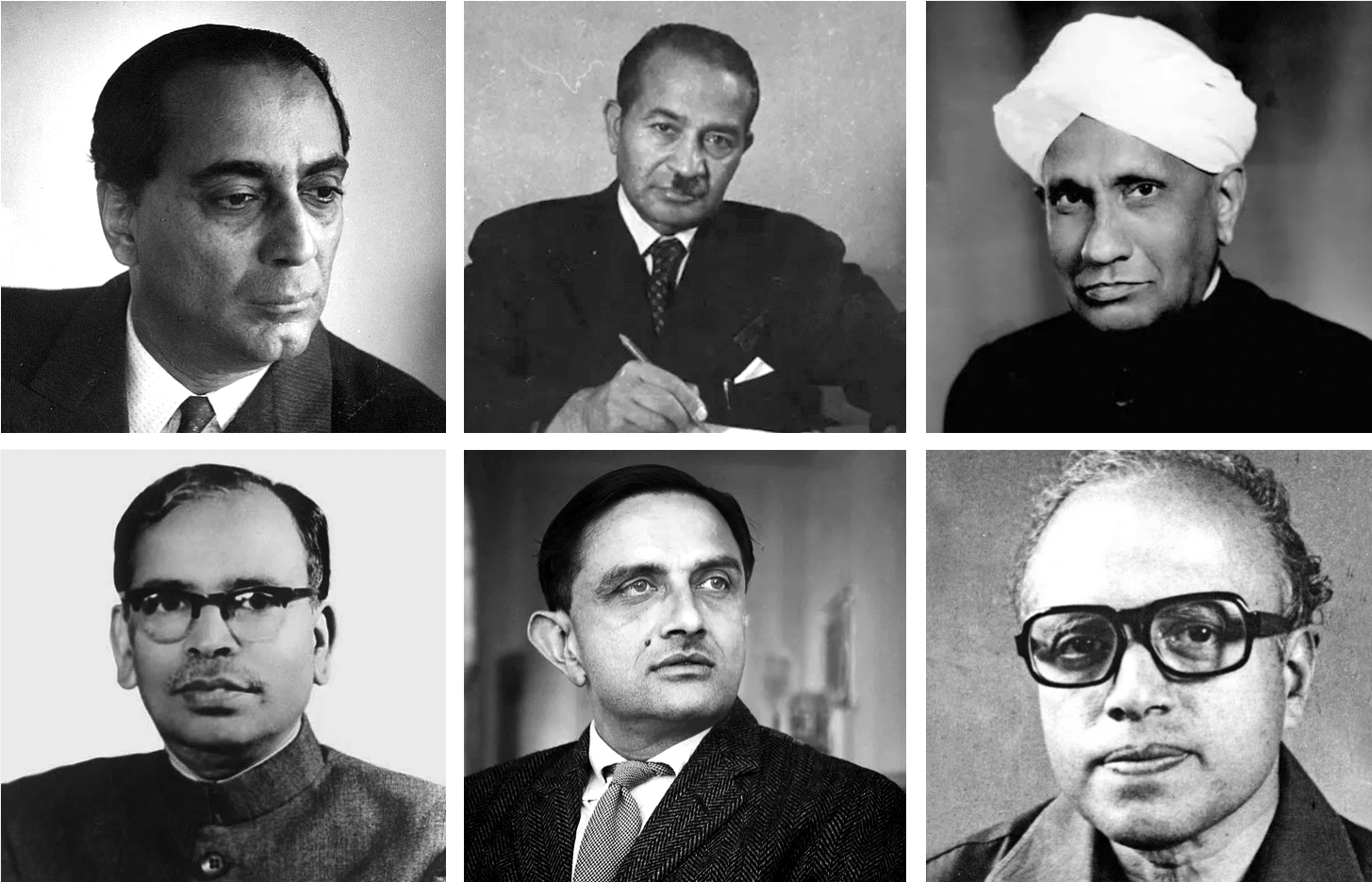
In the 1940s, it was becoming clear that the British rule of India would end soon, and the new nation would face several challenges. On August 15, 1947, when the British left the country to fend for itself, it was important that an enlightened leadership took over the task of guiding the new nation. Fortunately, the first Prime Minister, Jawaharlal Nehru, was aware that science and technology would play a key role in the nation’s development. So, he took leading scientists and technocrats in confidence while making key decisions that made it possible for the new nation to catch up with the developed nations. Department of Atomic Energy (DAE), Council of Scientific and Industrial Research (CSIR), and University Grants Commission (UGC) are some of the important outcomes of those early days. Homi Bhabha, Shanti Swarup Bhatnagar, C.V. Raman, M.S. Swaminathan, D.S. Kothari, and Vikram Sarabhai were some of the leading lights. The outcome of Nehru’s vision was the growth of research institutions and centres of excellence under Government Departments like DAE, CSIR, etc., which led to a boost in scientific research.
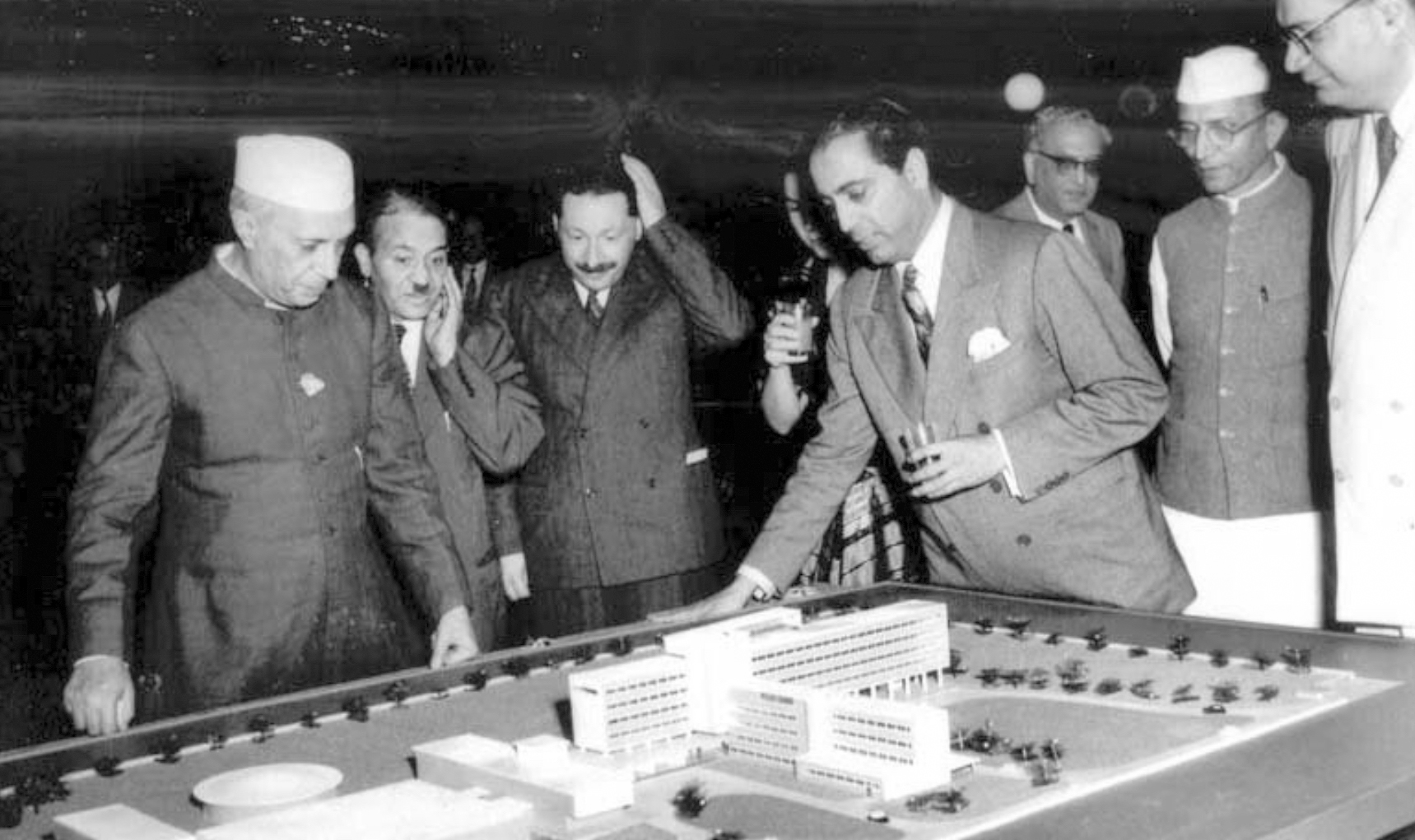
While creating this infrastructure, it was hoped that the university system in India would also grow and participate in the S&T progress. The universities in advanced countries serve as the main caterers of higher education. Universities like Oxford and Cambridge, Harvard and Princeton have successfully combined the teaching of students with advanced research. Good students are attracted to a research career if they see good teachers at a university campus. Also, interacting with students helps teachers bring freshness to their research. Many successful universities abroad have managed to create and maintain academic excellence. These universities are centres of excellence not only in technical subjects but also in humanities, arts, classics etc. In fact, Jawaharlal Nehru had hoped that this would happen when S&T launched in India. The headquarters of UGC in New Delhi have on display the following statement by Nehru:
While Nehru was aware of the role of universities in the building of a nation, several reasons, such as shortage of manpower and funds, political interference, compromising with quality, etc., made it difficult to achieve spectacular growth in the university sector. Ironically, the emergence of autonomous centres of excellence in various subjects diverted attention away from universities, creating problems for both. The autonomous centres, being isolated from university students, complained of a shortage of good students coming to them while the typical university student missed the excitement of research in his university department. What was needed and was missing was a close connection between a university and an autonomous centre of excellence.
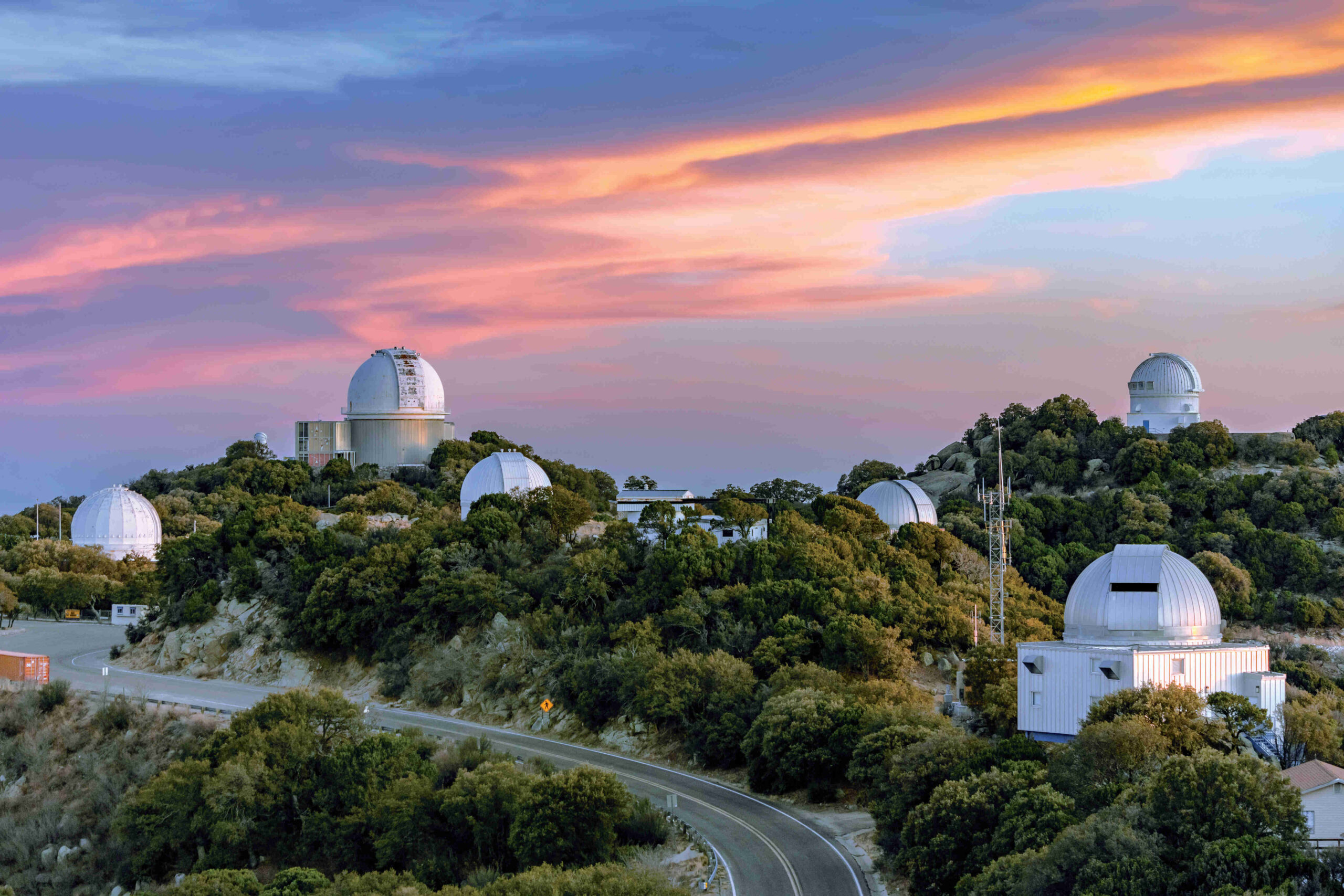
We now look at an example in the USA that has worked. In astronomy, a sophisticated telescope plays a key role in bringing fresh data on the universe. In the 1970s, a state-of-the-art 4-metre telescope was expected to be launched in an observatory in Tucson, Arizona. While several universities were interested in such a telescope, its basic cost and regular maintenance were too high for a typical university. There was also the issue that if the telescope could function on, say, 200 nights in the year, the users from a single university would not have sufficient observing programs to keep it busy. To address these issues, a concerned group of universities (some twenty of them) formed an “Association for Research in Astronomy” (AURA) to acquire and control the telescope. The costs were shared by members of AURA. Thus, if a university were expected to keep the telescope busy for 20 nights a year, it would contribute 10% of the total budgetary cost. Therefore, the telescope is affordable for each participant university, and they keep it busy on all of its usable nights.
Inter-University Centres
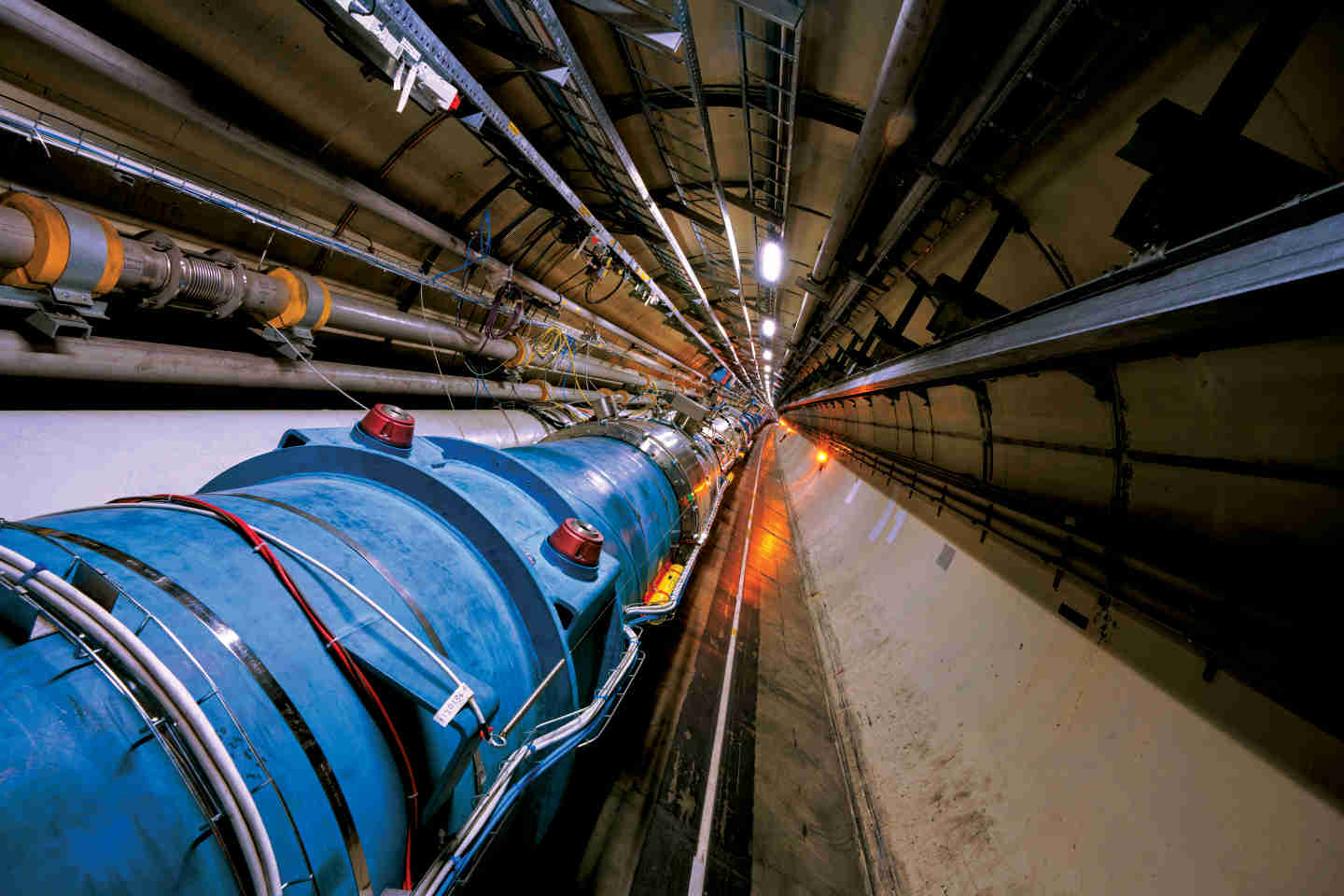
As mentioned earlier, the growth of science in India was such that the universities felt `left out’ in the usage of advanced facilities. To deal with the problem, the UGC decided to create centres of excellence in various fields, with the users being faculty and advanced students from universities. Through an act of Parliament, the UGC was empowered to create such centres. The Nuclear Science Centre, now renamed the `Inter-University Centre for Accelerator Sciences’, was the first such centre, created on the campus of Jawaharlal Nehru University. It was centred around the nuclear accelerator pelletron with state-of-the-art technology for studies of nuclear structures.
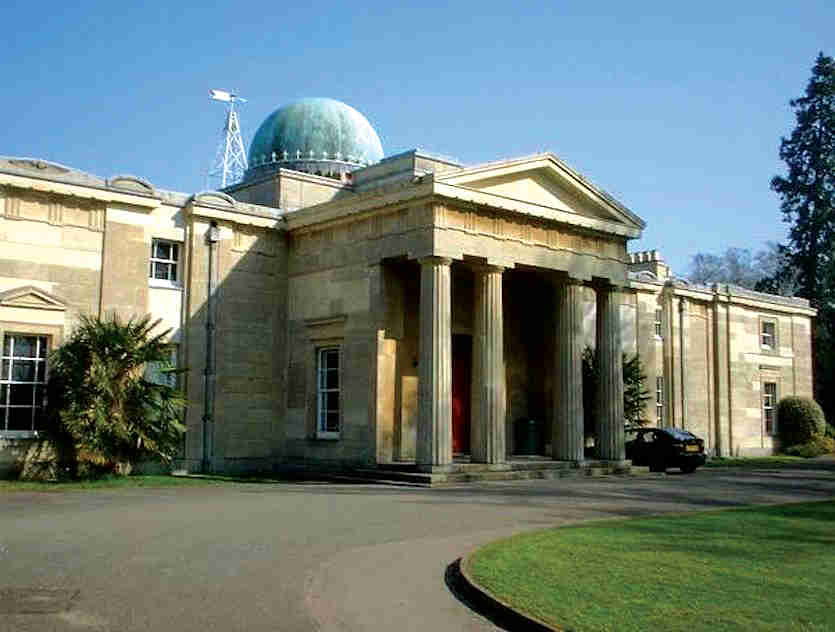
To briefly describe my background, after a fruitful career as a founder member of the Institute of Astronomy (IOA) in Cambridge, I returned to India in 1972 to join the Tata Institute of Fundamental Research (TIFR). I had joined the institute with a mandate to grow its activities in theoretical astrophysics, and over the sixteen or so years there, I had the satisfaction of seeing that objective accomplished. Although I was happy with my work, other issues were beginning to weigh on my mind, issues that were to take me on an adventurous journey away from TIFR.
TIFR had been set up by Homi Bhabha to help create and strengthen the base for fundamental research in the country. The expectation was that scientists trained here would contribute to applied research in related fields and to universities by enriching their faculties. The first happened to some extent, e.g., through the setting up of major scientific establishments like the BARC, SAMIR, NCST, etc., by the talent drawn from TIFR. The benefits expected by the university system, however, did not materialize. Although in 1946, when the TIFR was set up, the conditions in a typical university were academically reasonable, these declined sharply in the 1960s. For various reasons, including this circumstance, there was no significant transfer of faculty from TIFR to Universities. Except for the School of Mathematics, there was no significant collaborative venture between the TIFR and [then] University of Bombay.
 |
 |
Indeed, in the 1980s, there was a growing realization in my mind that there was a need for centres of excellence exclusively within the university sector. Indeed, the parent body of universities in India, the University Grants Commission (UGC), had appreciated the need and, to address this issue had decided to create its own centres of excellence, the `Inter-University Centres’ (IUCs).
I saw here a fresh opportunity to revive astronomy and astrophysics within the university sector. Could we create a centre that acts as a resource not only for material facilities but also for intellectual stimulation for the faculty and students of universities? Although the projected setting up of the Giant Metrewave Radio Telescope (GMRT) near Pune was one reason for bringing IUCAA into existence, even without it, enough exciting challenges existed. Challenges that I was missing at TIFR.
My brainstorming discussions with scientific colleagues, starting with Naresh Dadhich, a general relativist at Pune University, were productive enough to interest the UGC in the possibility of creating an IUC in the field of astronomy and astrophysics. As a result, the UGC asked me to submit a proposal for such a centre to initiate any executive action. I did that and hoped that the effort would lead somewhere.
An academic adventure
Making the decision to leave a prestigious institute to found IUCAA.
At some stage (around January 1988), when I was asked by Yash Pal, the then Chairman of the UGC, to take on the Founder-Directorship of IUCAA, I agreed immediately. In fact, the way Yash Pal put it, he had my report and would accept it for executive action only if I agreed to be the Founder Director of the proposed centre. I recall receiving Yash’s phone call at home while having lunch. I had replied that I would call back within fifteen minutes. During that period, I consulted my wife Mangala about how I should reply. The centre was to be in Pune: shifting there from Mumbai was not a problem, but Mangala pointed out that our second daughter was in 12th Standard, and her examination, as well as her preparation for IIT Entrance Examination, should not be disturbed until June. So, I agreed to take on the responsibility offered by Yash with the caveat that I would function from Mumbai until June.
 |
 |
|
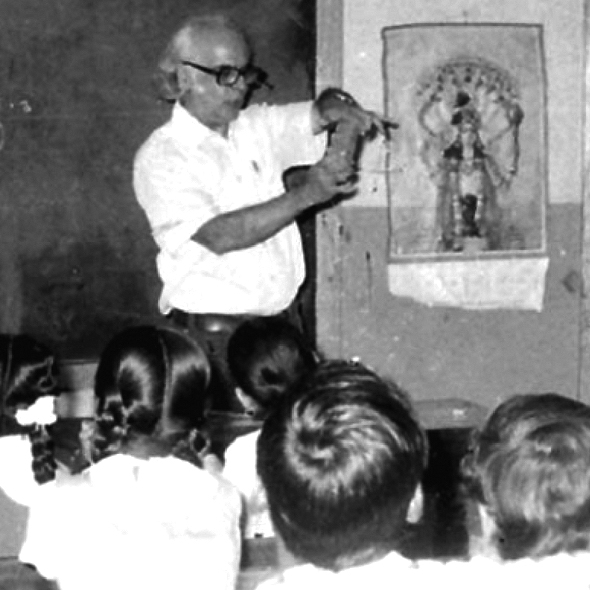
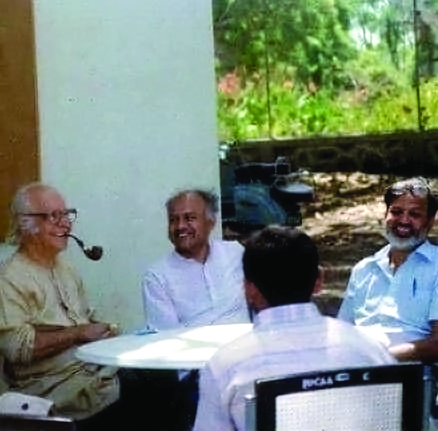
| Yash Pal teaching school children (left), and at IUCAA in its early days (right), with members of the founding team, including Naresh Dadhich and the author. IUCAA | ||
There was a mixed reaction to my decision to leave TIFR to set up IUCAA. The optimists welcomed it, saying that it was a step in the right direction. The pessimists felt that I was taking a grave risk in leaving a well-run institute to start up something out of nothing—a venture that may fail. I recalled a similar spectrum of opinion in 1972 when I had planned to leave Cambridge to return to India. Similar to that occasion, I decided to take the plunge. In fact, when I had planned to return to India in 1972, some friends had suggested that I should set up an institution with the sponsorship of the Government of India. Having seen at close hands the trials and tribulations of Fred Hoyle while setting up the astronomy institute in Cambridge, as well as hearing the gory tales of government bureaucracy in India, I had baulked at the idea then. Nor had I been a believer in applying precious national resources to create institutions to boost one’s ego. An institution should be created only if a national need is felt for it. Such a need was being felt in 1987–88, while none had been perceived in 1971–72, at least in my personal recollection. Also, in the earlier period, I was in my early thirties, whereas in the later one, I was moving into the fifties. The priorities of a scientist when he is young and in the high-momentum phase of research are, or at least ought to be, different from those when he is more advanced in age. It was thus a different ball game for me in the late eighties when I chose to leave TIFR.
A change of gears
Navigating bureaucratic hurdles, paving the way for the institute’s establishment.
As a Founder Director, I had many challenges to face.
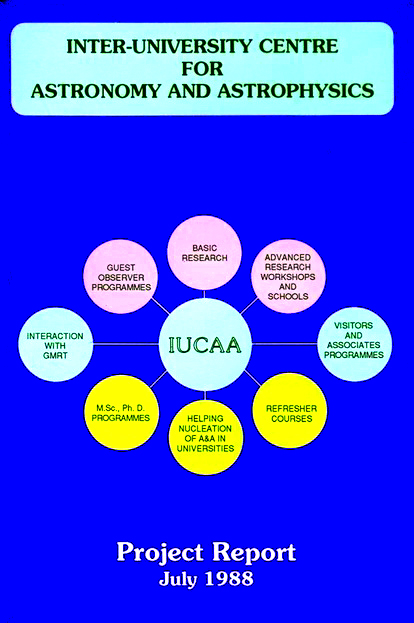
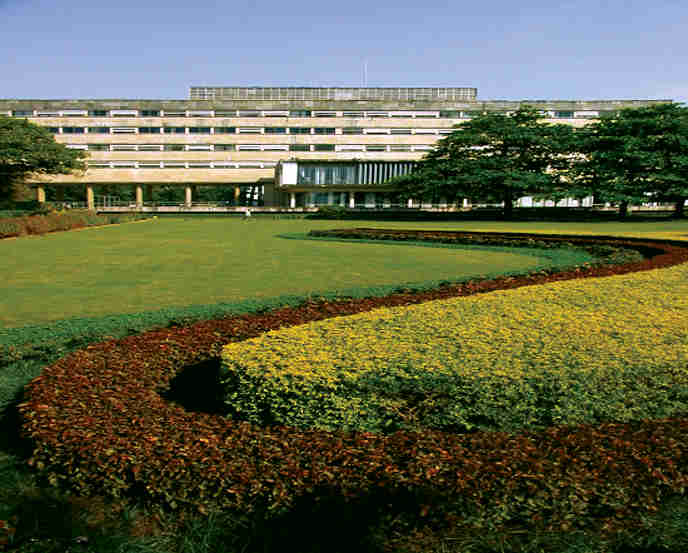
A practical question to be settled was where the Centre would be located. The Project Report approved by the UGC specified that the area needed for the centre’s activities was twenty acres. I had to find a suitable location in Pune.
The Project Report had estimated the building requirements—the actual `what goes where’ would require a good architect. I had to find one and get the choice approved by the UGC.
IUCAA was to be registered as a `Registered Society’ by the Registrar of Societies operating in the region where the Centre would be located.
Last but not least, the Centre’s Bye-Laws had to be framed. These would determine how the Centre was to be run.
I had been alerted by the Director of the Nuclear Science Centre that all these `hurdles’ took time and might easily take more than a year to cross! I found, however, that personal contacts help, as a few examples will suffice!
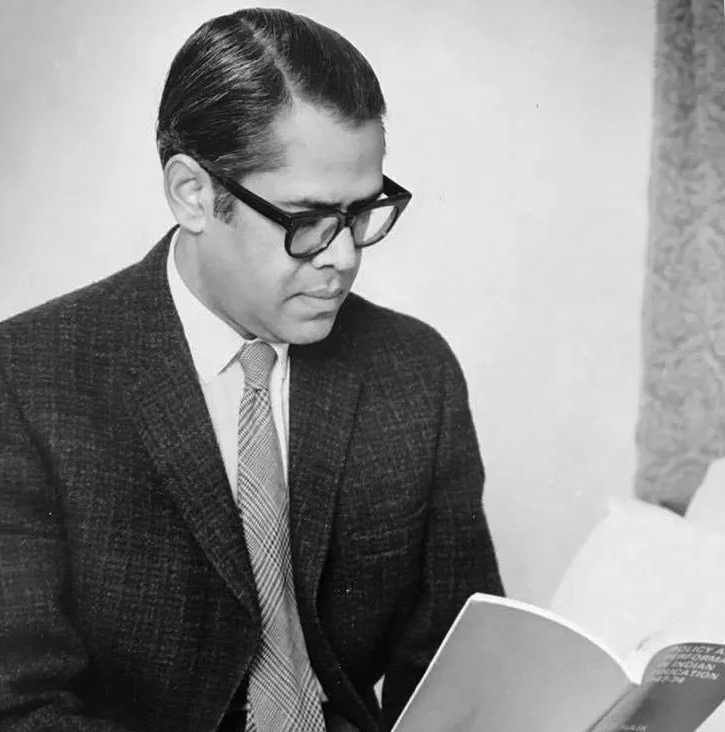
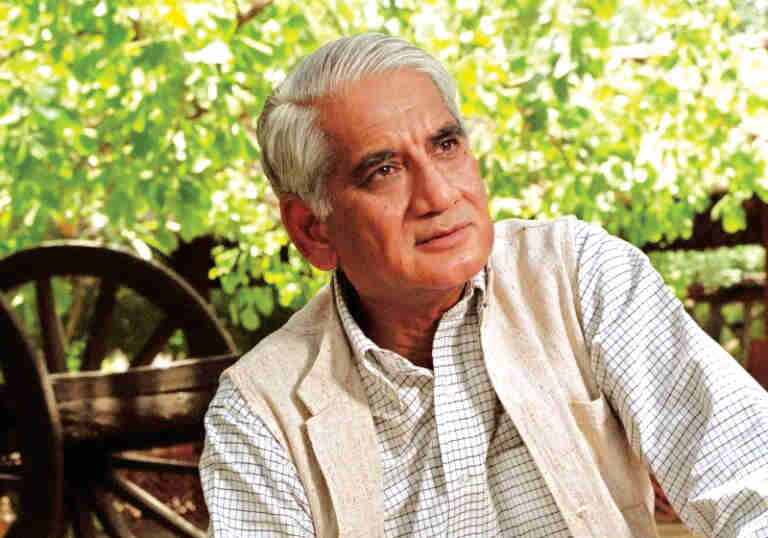
Personal contact proved useful in selecting the architect. I had known the famous architect Charles Correa for about two years. Although he operated from Mumbai and Goa, he had international contacts. He had a building under construction in New York, had been a Nehru Visiting Professor at Cambridge and had received a prestigious award from Japan. We had met and chatted informally on two to three occasions when I found common interests in astronomy, ancient Indian traditions and history.
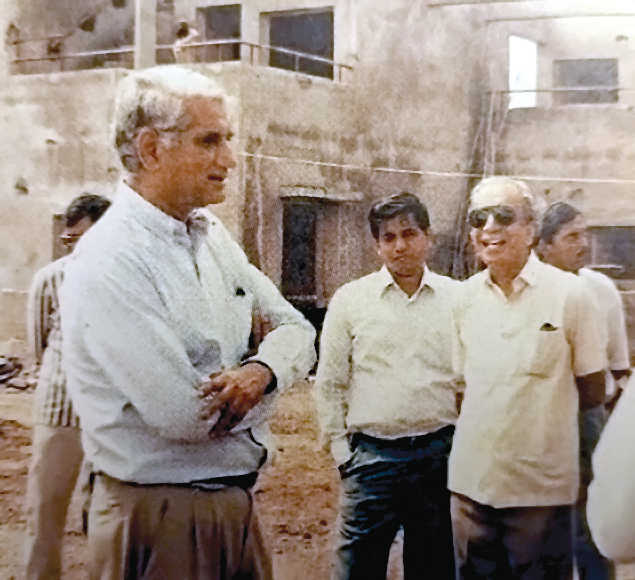
I should mention that the supervision of construction is a critical job, and it was ably exercised by Kumar Shrikhande, a professional who had earlier worked on DAE projects. He got along well with Charles on our project.
Quo Vadis, IUCAA?
Overcoming hurdles in finding a home for IUCAA
The search for a suitable site for IUCAA was proving to be difficult. The GMRT project managed to land on the university campus. This had been possible because there was an agreement between TIFR and Pune University under which the TIFR Physics Faculty had agreed to lecture at the MSc level. Some of us commuted to Pune regularly under this programme. The programme had developed a friendly relationship between TIFR and Pune University. At that time, TIFR requested and received some land to house GMRT laboratories.
However, TIFR later discontinued the programme because very few senior faculty members liked lecturing to students. Some of them looked upon teaching as an indication of failure to do research. Exceptions to this feeling were shared by very few, like Udgaonkar, Jha, Baba, and myself, who argued that teaching improves one’s own perspectives on the subject. We gave examples of distinguished scientists like Hoyle, Wheeler, Feynman, and Rees, who enjoyed teaching—but to no avail! After a trial for two years, TIFR unilaterally terminated the arrangement, citing a lack of faculty support. Hence, when I approached Pune University requesting twenty acres of land, the response was negative. There was a reaction that TIFR got our land and then abandoned us! Both Yash Pal (Chairman of the UGC) and I tried to convince the Vice Chancellor that our proposal was sincere and that having IUCAA on the university campus would bring many benefits, but to no avail. Although the VC was friendly to the IUCAA programme, he was under local pressure not to agree to our request.
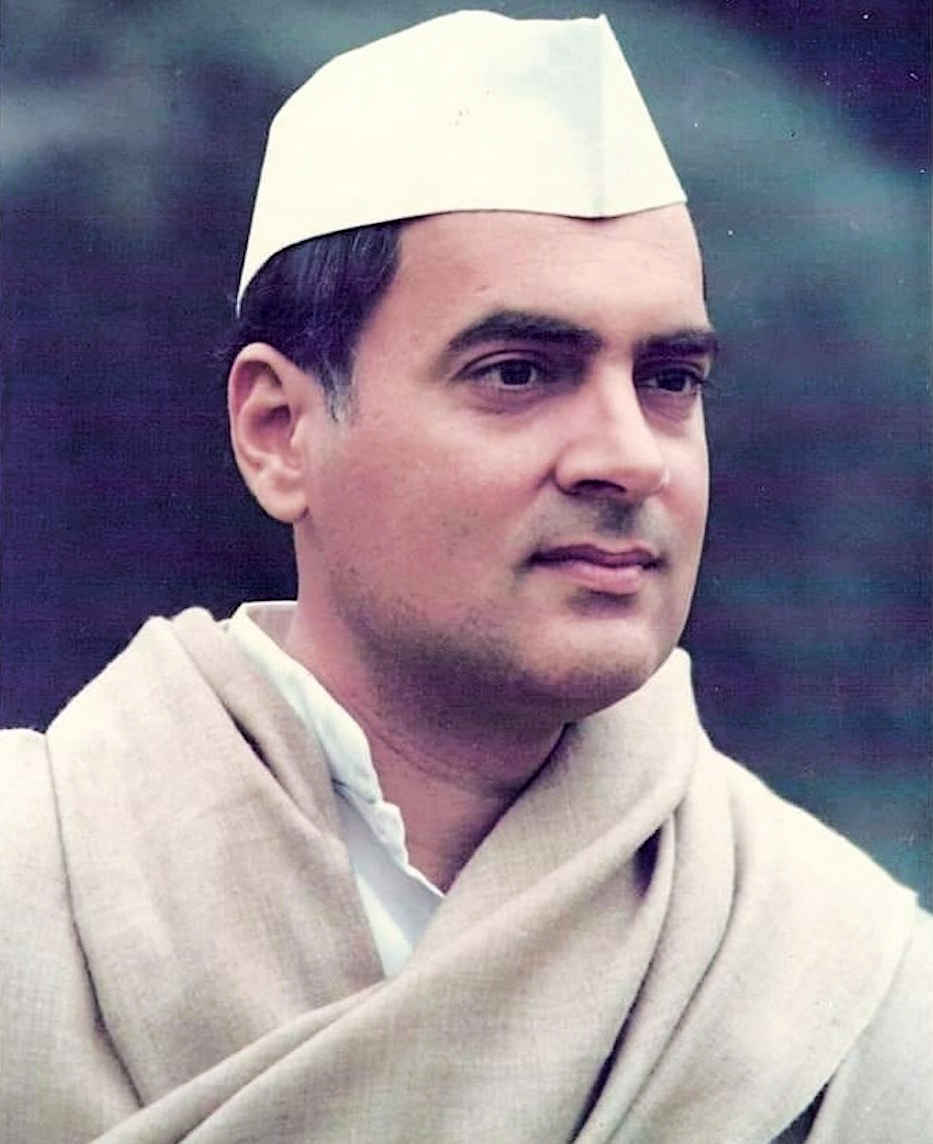
Having reached an impasse, I sought an extreme way out. Writing to the then Prime Minister Rajiv Gandhi, I appealed to him to help solve our land problem. I did not expect any response and was not surprised when there was none. In the meantime, I prepared myself for a lecture visit to France, which had been arranged long before I got involved with IUCAA matters. I was to spend two months as a Visiting Professor at the College de France in Paris.
The day before I was to leave for Paris, I received an urgent telephone call from the Mantralaya, the seat of the Government of Maharashtra. The Chief Minister (CM) wished to meet me: could I come and see him right away? Wondering what it was all about, I turned up at the Chief Minister’s office. I knew that CM, Shankarrao Chavan, was a good administrator. He immediately came to the point. The Prime Minister’s office had requested him to help me get a suitable plot of land for IUCAA. How much did I need? Where did I want it to be? I supplied the relevant details, whereupon he smiled and said: “Done!”
He called in his IAS Secretary, DasGupta, and introduced me to him. “Mr. DasGupta will pursue the matter until it is complete. He will be in touch with you.”
So, the letter to the PM had not been in vain! On July 19, 1988, DasGupta called me to his office and smiled as he handed me a copy of the Government Resolution assigning 20 acres of land on the university campus. I told him that on that date, I had turned 50.
A very welcome birthday present!
 |
 |
|
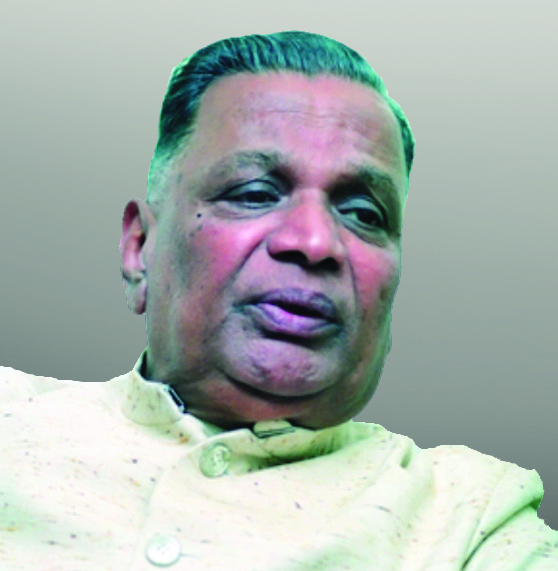
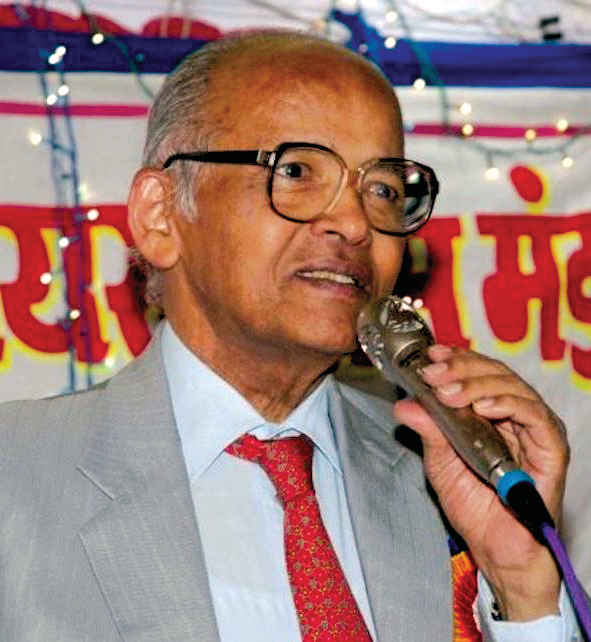
| Maharashtra Chief Minister Shankarrao Chavan (left Courtesy: JVNarlikar’s Blog) and the Prime Minister’s Principal Secretary B.G. Deshmukh (right CKP World ). | ||
I later learned that the primary motivator for the IUCAA project at the Prime Minister’s Office was the PM’s Principal Secretary, B.G. Deshmukh, who was keen to see meaningful development coming to Pune.
Two incidents are worth recording. I received an urgent phone call from Naresh when I was in Paris. Unlike his usual steady humour, I sensed that he was agitated. He had just seen off Charles Correa on the train to Mumbai after a futile visit to the proposed IUCAA site. Charles wanted to have a feel of the site so that he could visualize how the building complex would look. Afterwards, Naresh took Charles on a courtesy call to the VC. When Charles mentioned how much he looked forward to working on such a pleasant site, the VC burst out saying that there was no such possibility and he should look elsewhere! The outburst completely stunned both Naresh and Charles… setting them wondering about CM’s commitment. “Let us drown our shock in something hard’’, said Naresh and entered a good hotel… only to learn that because of a Muslim holiday, no alcohol was to be served that day!
 |
 |
|
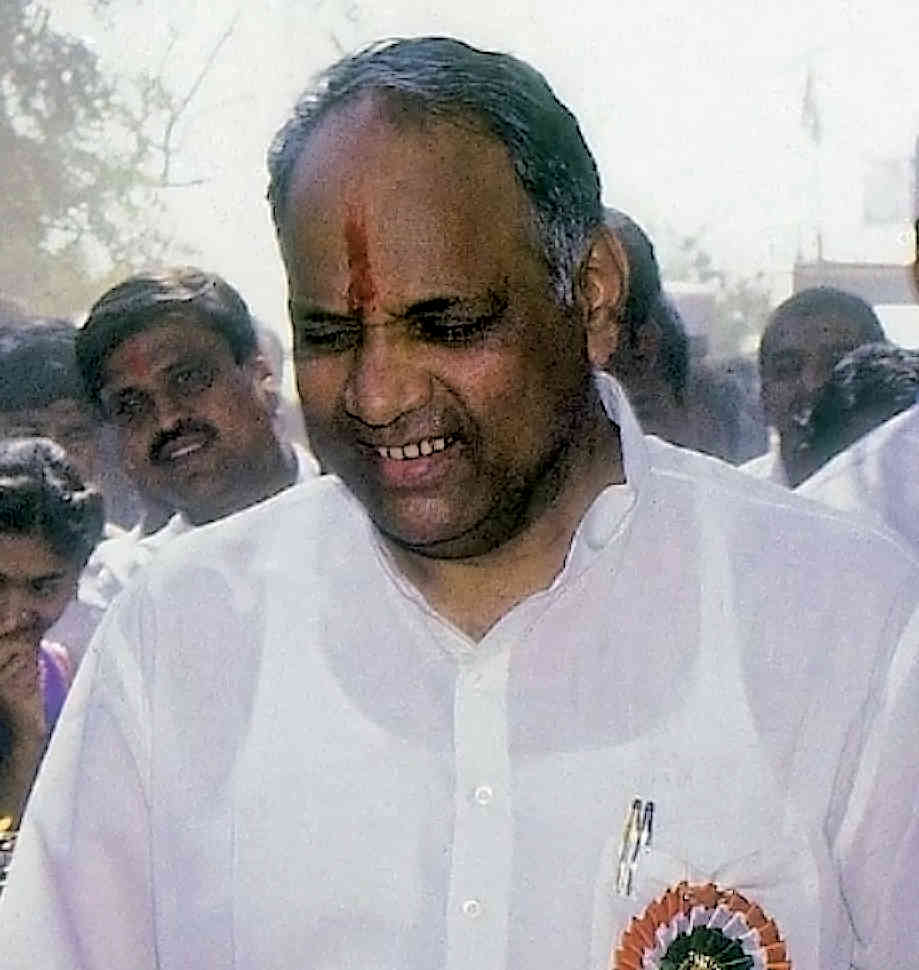
| Prime Minister Rajiv Gandhi (left Wikimedia Commons), and Incoming Chief Minister of Maharashtra, Sharad Pawar. Courtesy: JVNarlikar’s Blog | ||
As they say in a Sanskrit shloka, misfortunes never come alone.
DasGupta clarified the situation. The University would be informed only after fait accompli.
The fait accompli was televised. Sharad Pawar had succeeded Shankarrao Chavan, in a political reshuffle. To show that he meant business, he had the local TV channel cover the `event’ of the CM handing over documents of IUCAA to its Director. Only the previous day I had attended an informal discussion with a largely hostile university faculty on whether or not IUCAA should be welcomed. A vociferous minority’s opinion was against welcoming IUCAA, although the silent majority was for giving it a try. Of the former group, many would assure me that the government would not allow any `outsiders’. Although I knew that the government had already made the decision to welcome IUCAA, I did not mention it, as I expected that the announcement would come from the government, as it did the following day.
Rules and Bye-laws
Finding the right balance: Administrative support for scientific freedom
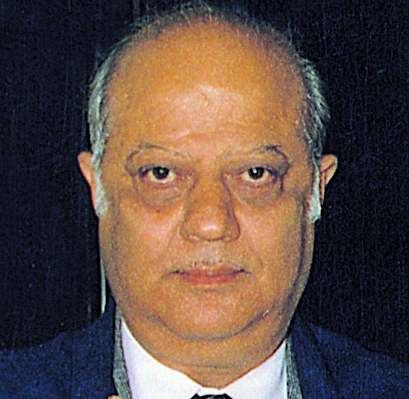
The IUCAA rules and bye-laws were formulated in 1988, and we were fortunate to have enlightened senior bureaucrats to advise us. Indeed, I have pleasant recollections of discussions with the UGC Secretary Sudarshan Khanna and his junior colleague Mehta. Once, the latter even advised me, “Sir, if you have a procedural query special to your field, please go ahead and take your own decision. It will set the norm. If you ask us, we may not be able to advise you properly”.
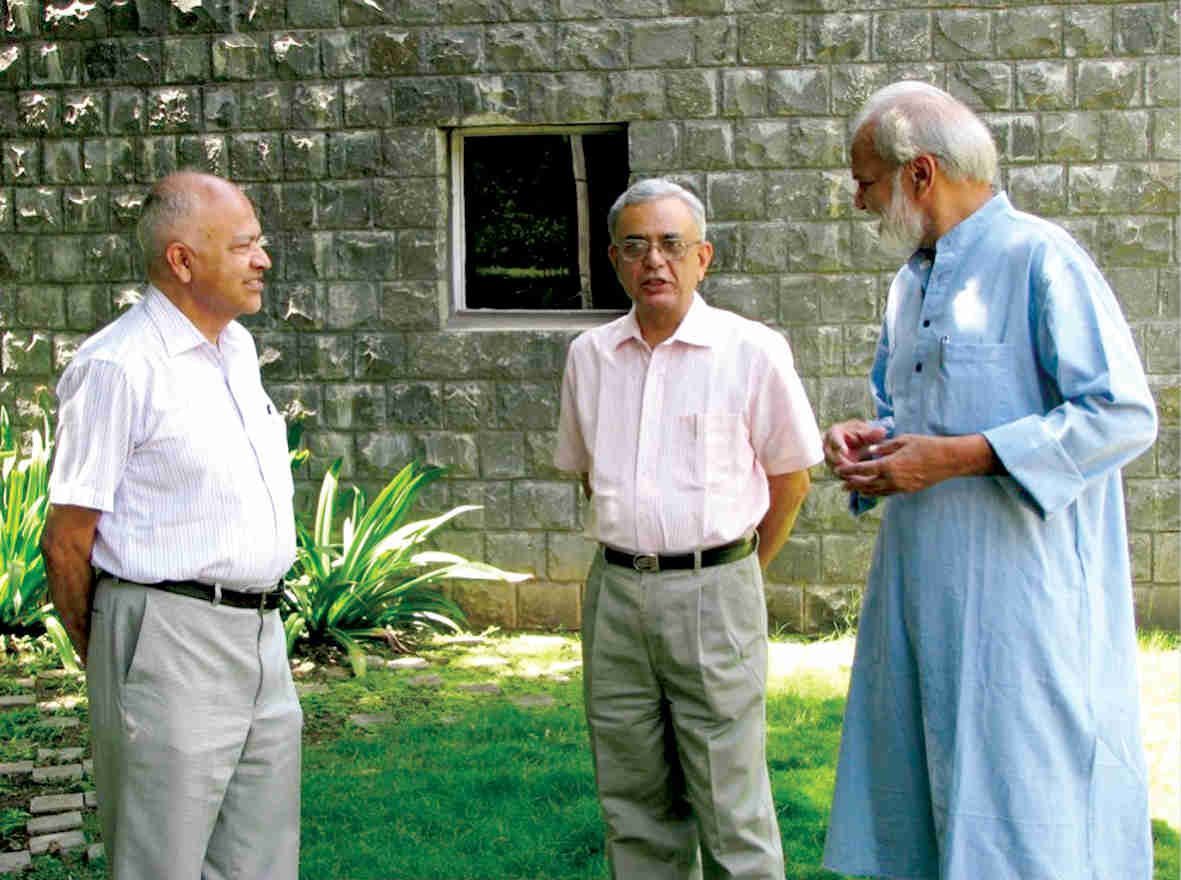
However, ultimately, it is the Director, or the Head of the institution, who must practise full autonomy and take the crucial steps to really `direct’ the institution along its proposed path. Often, one hears of complaints of lack of autonomy, whereas the real complaint can be traced to an unwillingness to practise the autonomy that is already available. Many universities suffer because their VCs have willingly surrendered their powers to the bureaucrats within the university or those in the government. The fact that the university registrar often becomes the centre of power is an ample indication of the misplaced priorities between the academic vs administrative battles. If the university has been created to nurture and disseminate knowledge rather than encourage the growth of political centres of power, then academics must have priority over administration. Homi Bhabha made a great contribution by underlining this premise in the institutions he created.
Get me to the church on time
Navigating delays, riots, and strikes to celebrate a landmark
As I looked back at the year 1988, I realized how incredibly fast the project IUCAA had advanced. The Centre was approved by the GoI, it acquired land from the Government of Maharashtra in July, it was registered under the Societies Act on December 29, it had its Foundation Day, it had an eminent architect to create an elegant campus—and now we were looking forward to its dedication to the Nation. Having discussed this with Yash, I fixed the dedication date to December 28, 1992.
In deciding on this date, I took into consideration the inputs provided by the architect and the construction managers. Allowing margins for delays, they felt that they could get the work completed by early December 1992. We wanted the Nobel Laureate Subrahmanyan Chandrasekhar to give the Dedication Lecture. After some correspondence, he agreed, and the date of 28 December 1992 was confirmed for the ceremony. Again, I felt incredibly lucky that the whole project had moved so fast.
How did we fare with its construction? Before coming to this question, I wish to make a comment. A typical government-supported institution requires funds for its various academic activities as well as for the housing of its staff. Of these, the former is given priority. When the academic needs are met, the funding agency runs out of cash, and the stock response is: “We will build staff housing when GoI makes funds available’’. In the case of TIFR, the institute started receiving funds by the mid-1940s, but staff housing had to wait until the mid-1960s.
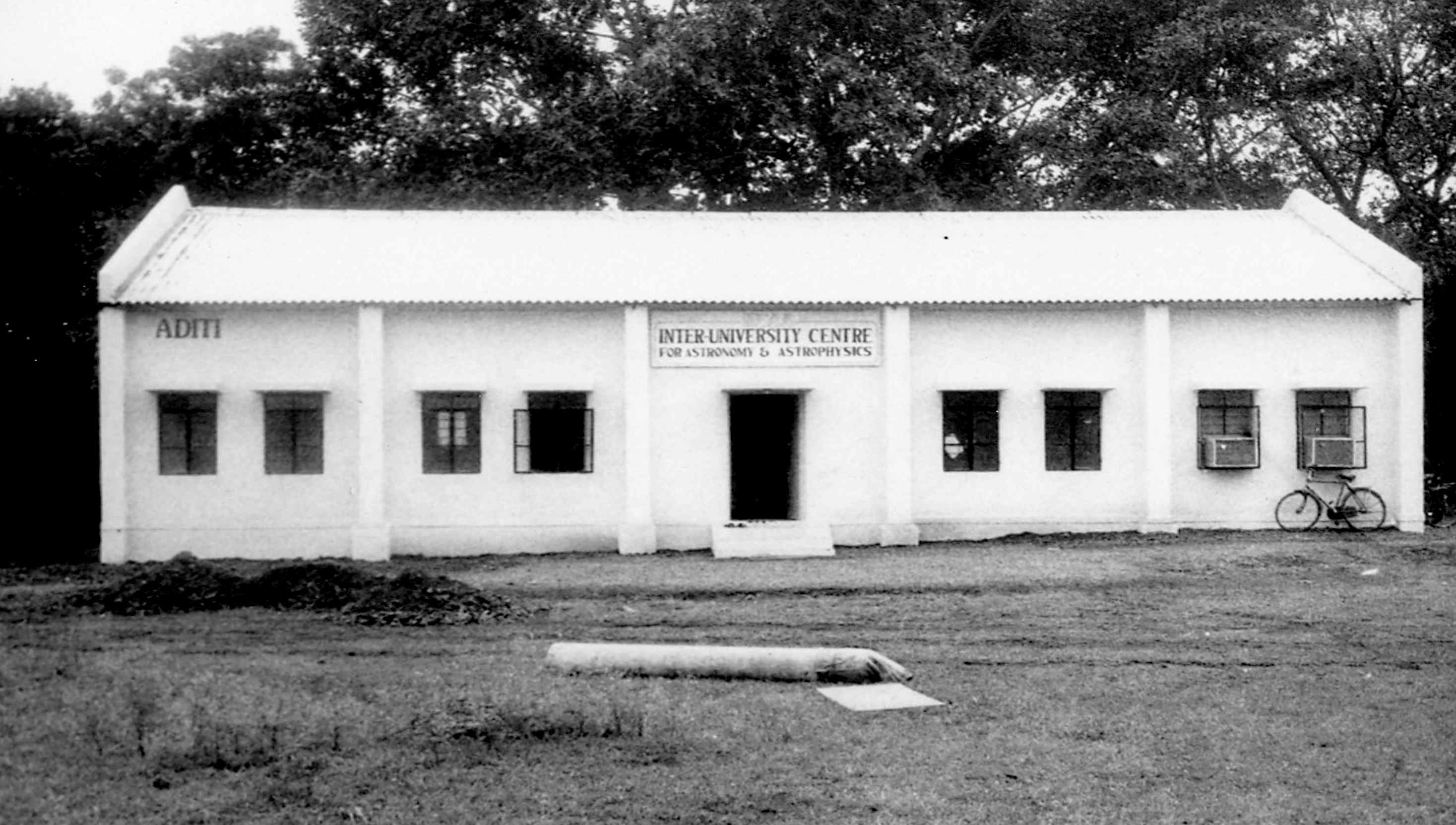
To avoid getting IUCAA in that situation, I adopted a different policy. I had housing built first and academic activities next. My request to UGC for modest funds to initiate staff housing was accepted, and the so-called phase I was completed in about 20 months. The Director’s residence, ten Type-V and ten Type-IV houses (quarters) were built. At that stage, there was hardly any staff, and I was asked: building staff quarters when there was no staff—was it not a waste of money? My reply was that the empty quarters were to be temporarily used for academic activities. Thus, one quarter was used for the IUCAA library, one for housing IUCAA’s first computer, one for instrumentation, etc. Some quarters were used for housing students and associates—so there was no empty quarter.
Thus, the building programme proceeded as planned. Charles was expecting to complete Phase II by early December. There had been minor hiccoughs but they were sorted out without any difficulty.
But the “unexpected” lurked around the corner. On December 6 came the news that the Babri Mosque was demolished. This event soon led to nationwide disturbances. In Mumbai, they were particularly severe. Even after they subsided, some areas were considered “dangerous” for movement. It so happened that some Muslim artisans, who were needed to put finishing touches on the IUCAA main building, dared not stir out of their residence. Charles and I sent messages to them guaranteeing safety. Finally, they agreed to come—but by then, the calendar had moved to December 26. Having taken stock of the work needed from them, they promised to complete it, even if they had no sleep.
 |
 |
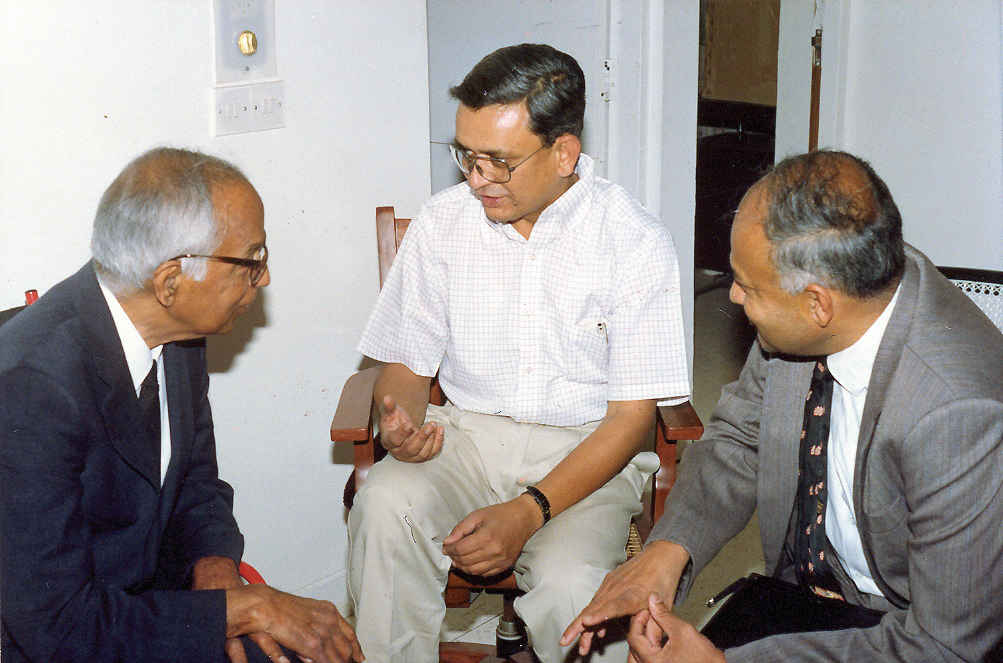 |
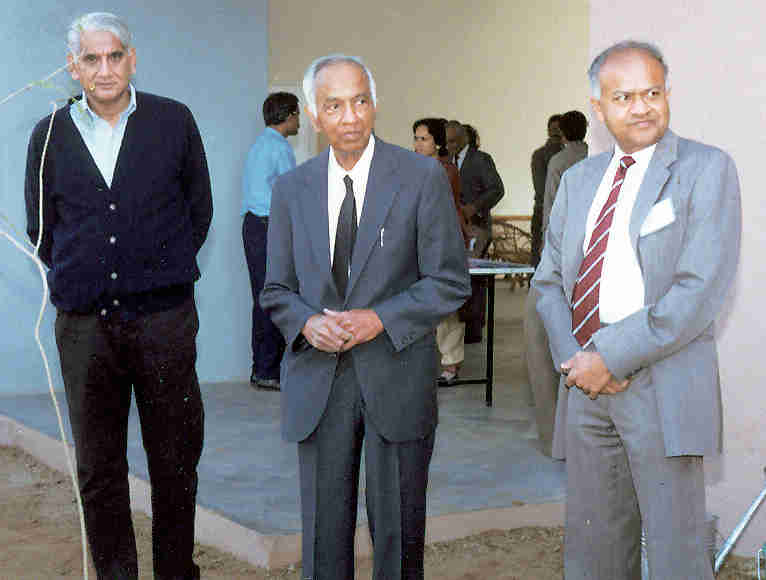
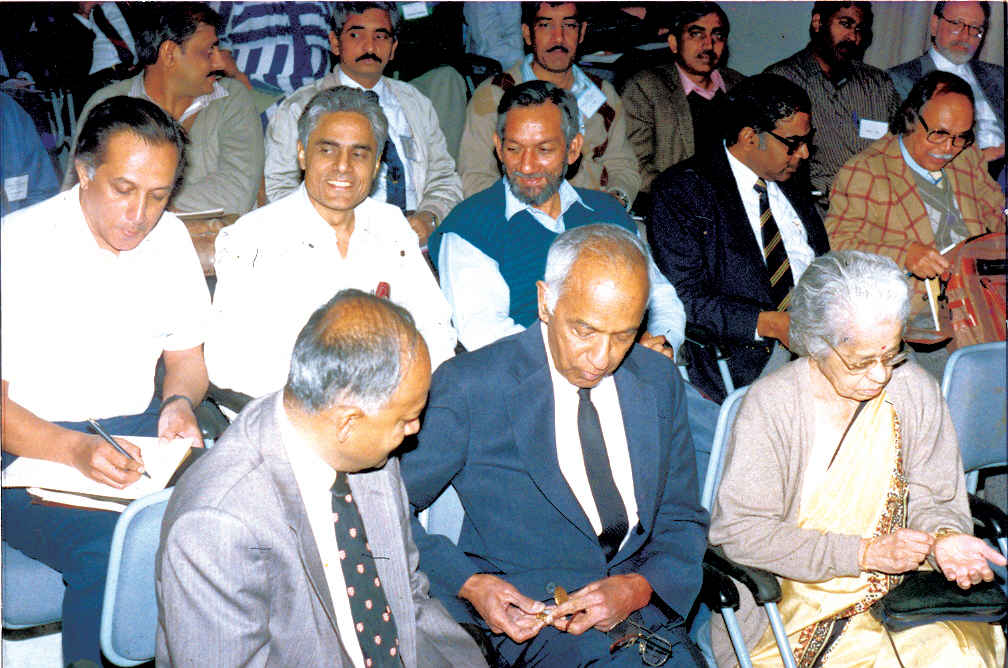
| Images from the dedication ceremony. Charles Correa, S. Chandrasekhar, and the author (left); at the dedication ceremony (centre); S. ChandraseKhar, Ajit Kembhavi and the author (right). IUCAA | ||
Nor had Charles any sleep on the night of December 27. He wanted to ensure that the decorative stone plating at the entrance was completed to his satisfaction. On my last inspection tour of the campus, I saw him standing at the entrance, checking the work being done.
While we were breathing a sigh of relief, we were in for another possible problem. Two VIPs of our function, Professor Chandrasekhar and Professor Ram Reddy (who had succeeded Yash Pal as Chairman of the UGC), were to travel by air. A lightning strike of pilots of Indian Airlines put a question mark on their participation. However, the resourcefulness shown by IUCAA’s budding travel section made the impossible possible. They arranged for our guests to arrive on an alternate, still-functioning route.
The dedication ceremony went off smoothly, and all of us felt immensely relieved. There were other important events like the annual Foundation Day Lecture, a meeting of the SAC-IUCAA, the establishment of the IUCAA Library, the Computer Centre and the Instrumentation Centre. All concerned staff members were working at a 200% level. I thanked them all and felt confident that the same `frontier level’ spirit would drive them to future achievements.
The Eightfold Way
Blending Research, Education, and Public Wonder Through Architecture and Outreach.
The Project Report of IUCAA, which I had submitted to the UGC, was centred around an “Eightfold Way” of what the Centre should do. Apart from being a Centre for Excellence in basic research to help academics from universities upgrade their work, IUCAA was expected to conduct several pedagogical activities like schools and workshops, guiding PhD students, etc. Additionally, IUCAA was to guide university users in using national and international facilities in observational astronomy. The SAC-IUCAA was to play an important role in this programme. Last but not least, I also initiated a science popularization programme for schoolchildren and the general public.
 |
 |
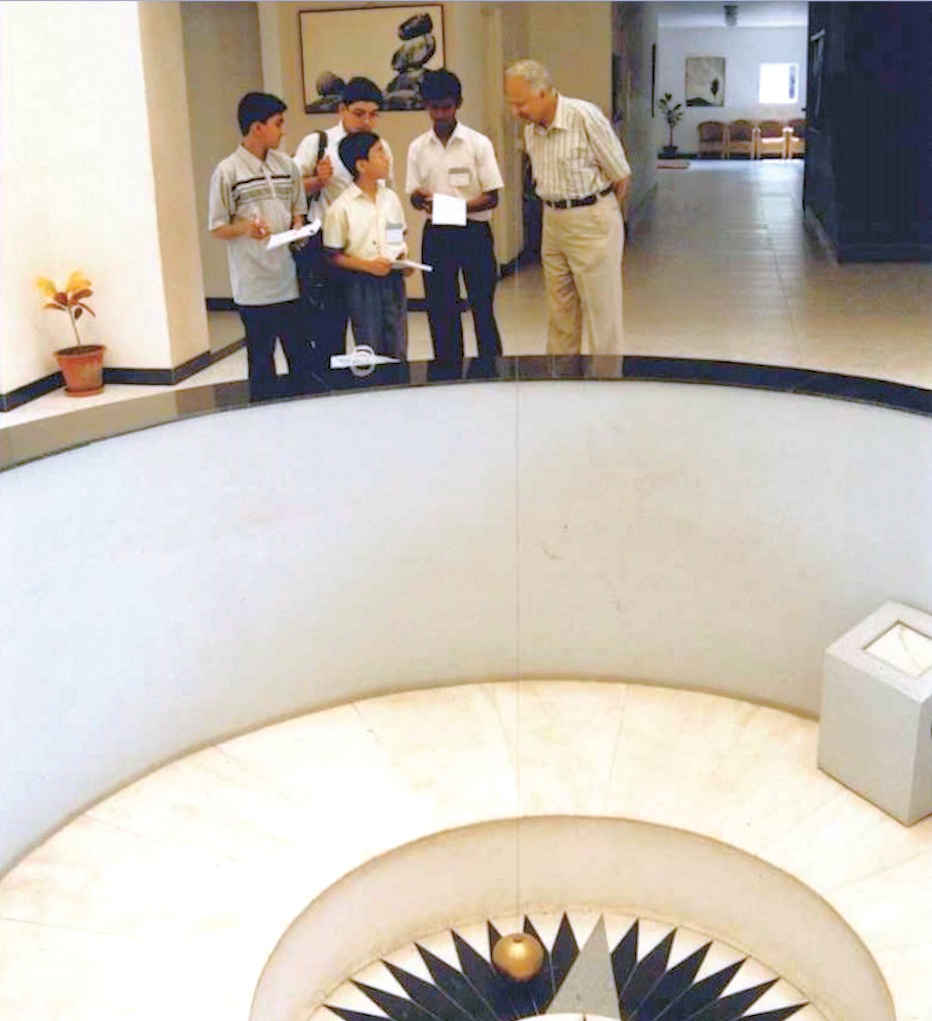 |
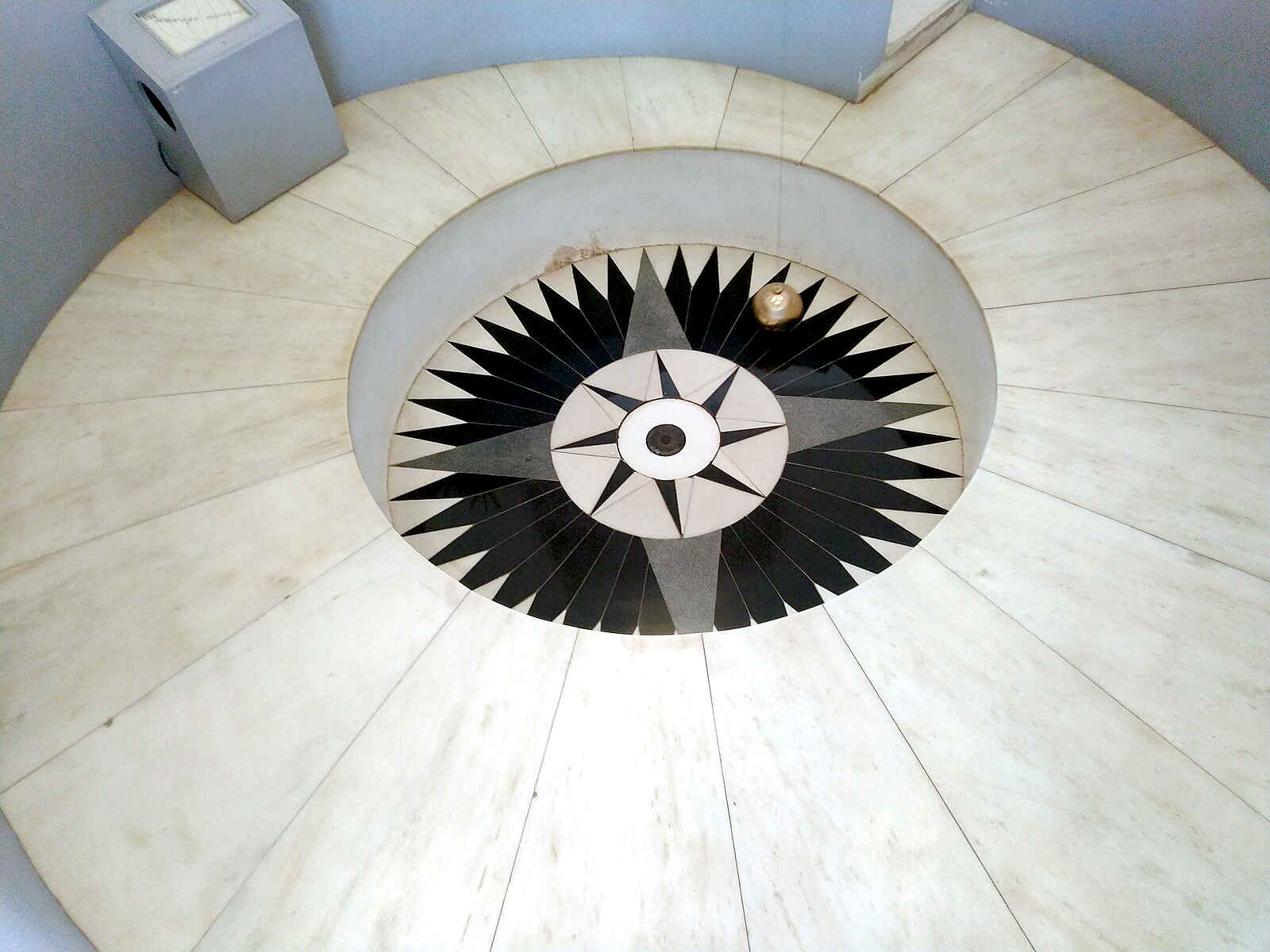
| The Foucault Pendulum at IUCAA. IUCAA | ||
After Phase II of IUCAA’s building programme was completed, we continued with Correa as our architect for Phases III and IV, involving a 500-seat Auditorium and a Recreation Centre. All along, I felt that instead of a formal structure with long corridors of monotony, the IUCAA buildings should be architecturally pleasing and carry scientific information for the casual view. The idea resonated with Charles, and many such items were identified. For example, having seen the original pendulum installed by scientist Foucault in the Pantheon building in Paris, my wife Mangala suggested installing a Foucault Pendulum in a central place in IUCAA. This was done, and the dedication of IUCAA started symbolically with the pendulum.
 |
 |
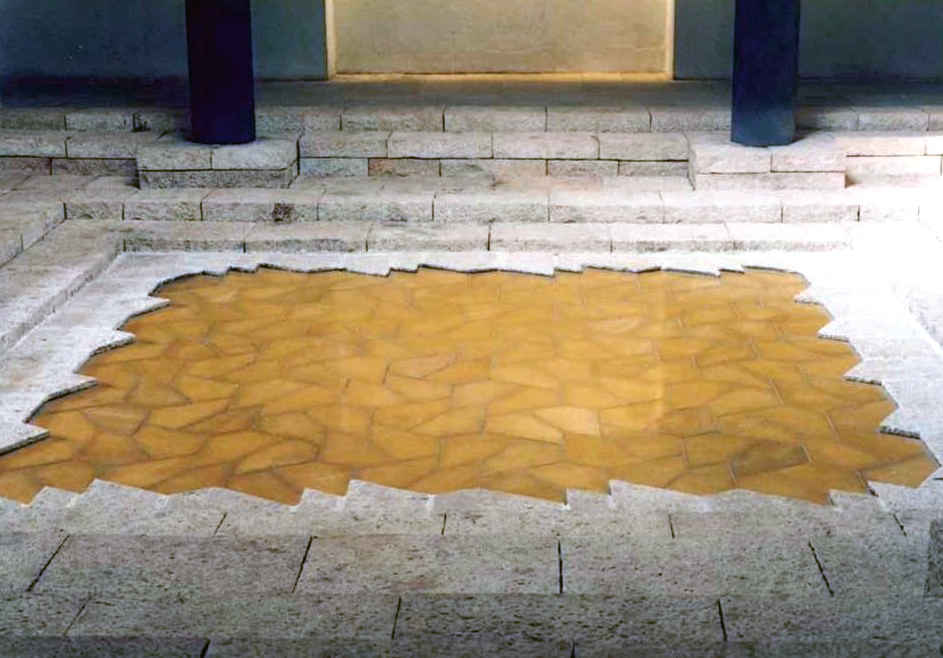 |
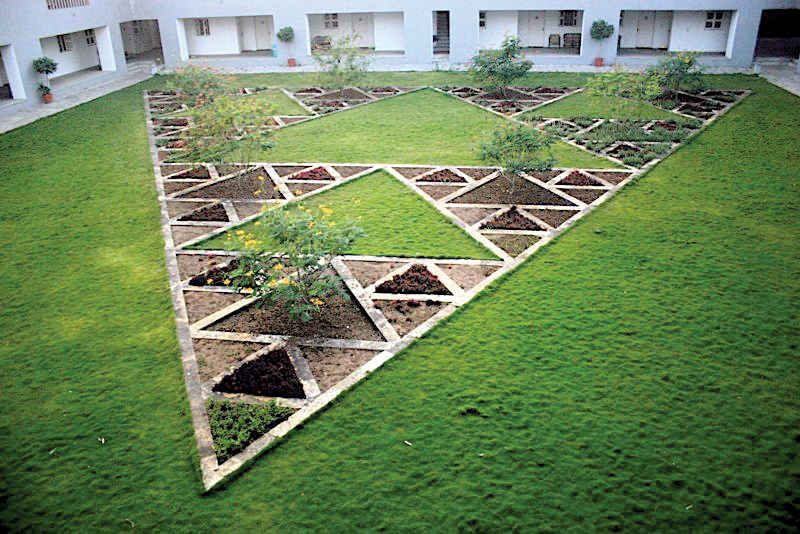
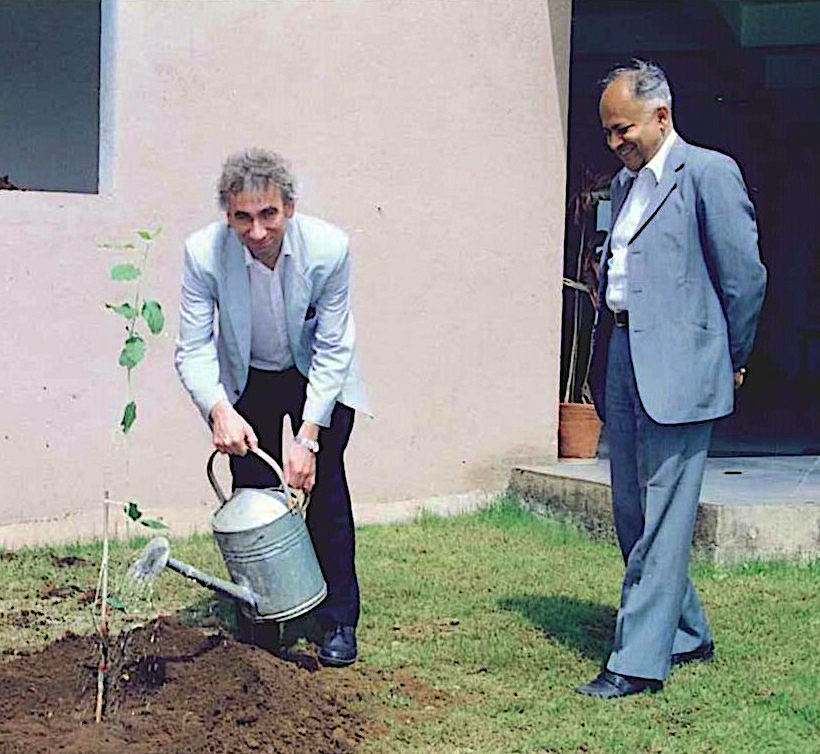
| The fractal garden (left), Richard Ellis planting the apple tree (center), and the Penrose tiling at the Chandrasekhar Auditorium (right). IUCAA | ||
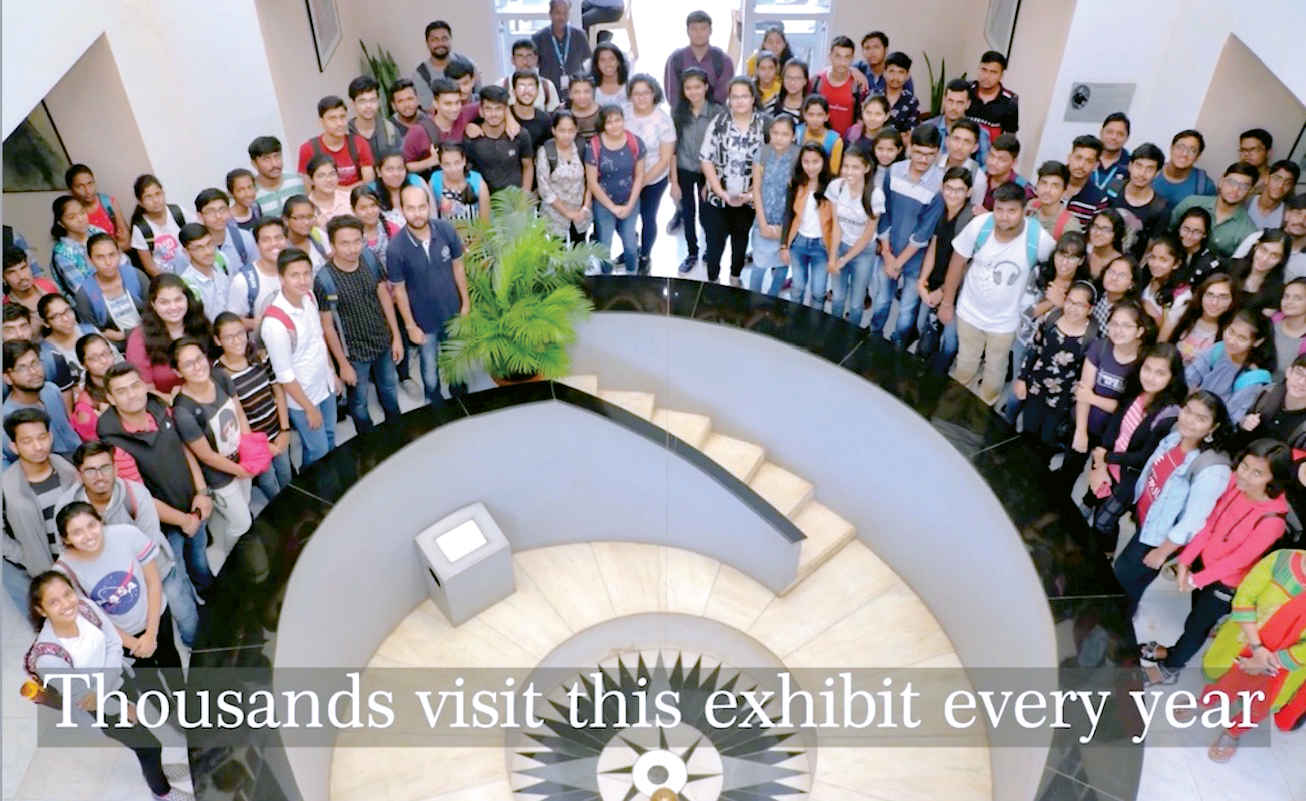
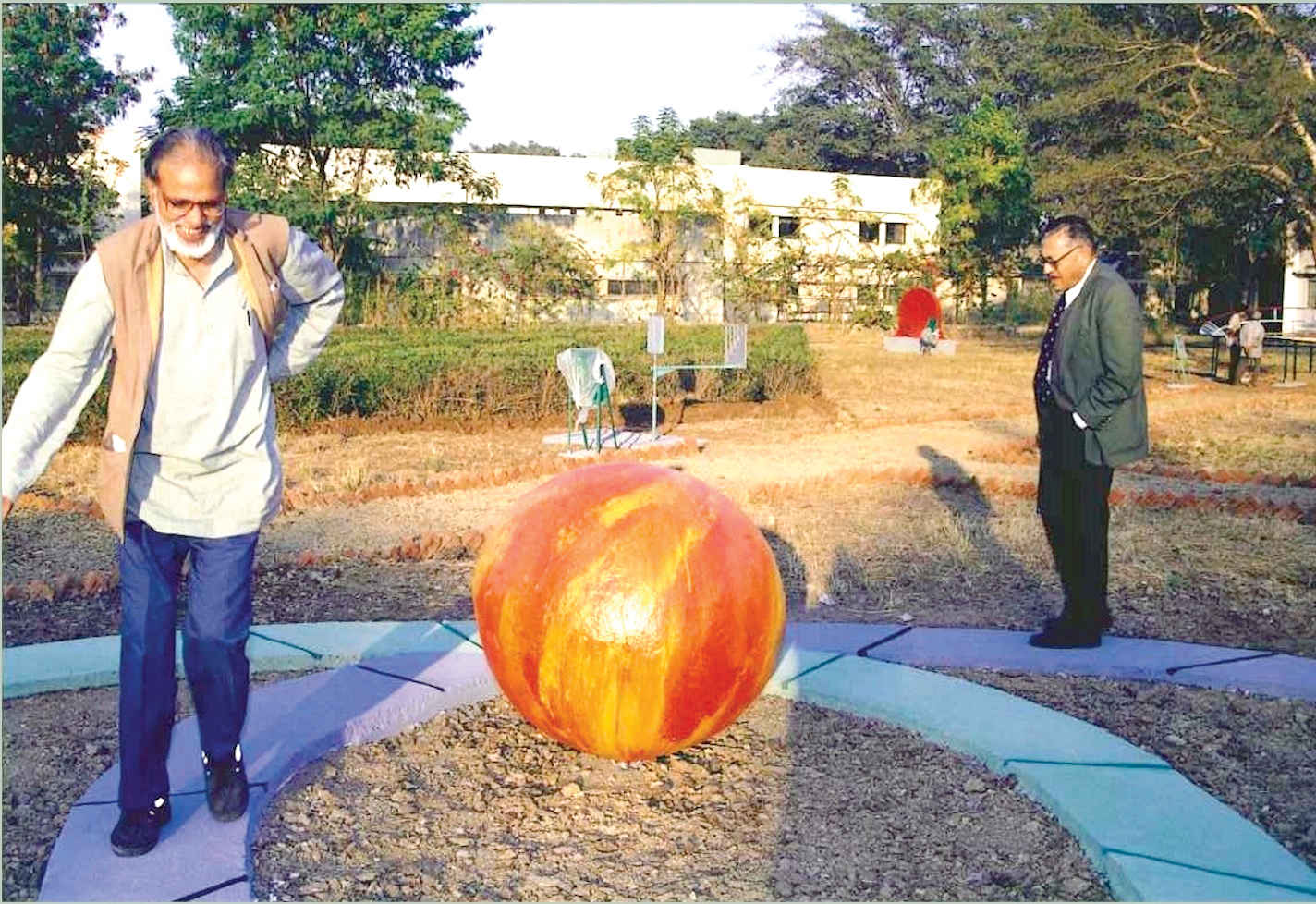
To bridge the gap between science and society, exhibits like these have a role. Some of them may be mentioned: larger than life size statues of four scientists (Aryabhata, Galileo, Newton and Einstein), an authorized descendent of Newton’s apple tree, Sierspinski’s gasket as an example of fractals, a small scale replica of the maze in the grounds of Hampton Court Palace near London, Penrose’s design of flooring with irregular shaped tiles and, of course, several models in IUCAA’s Science Park.
 |
 |
|
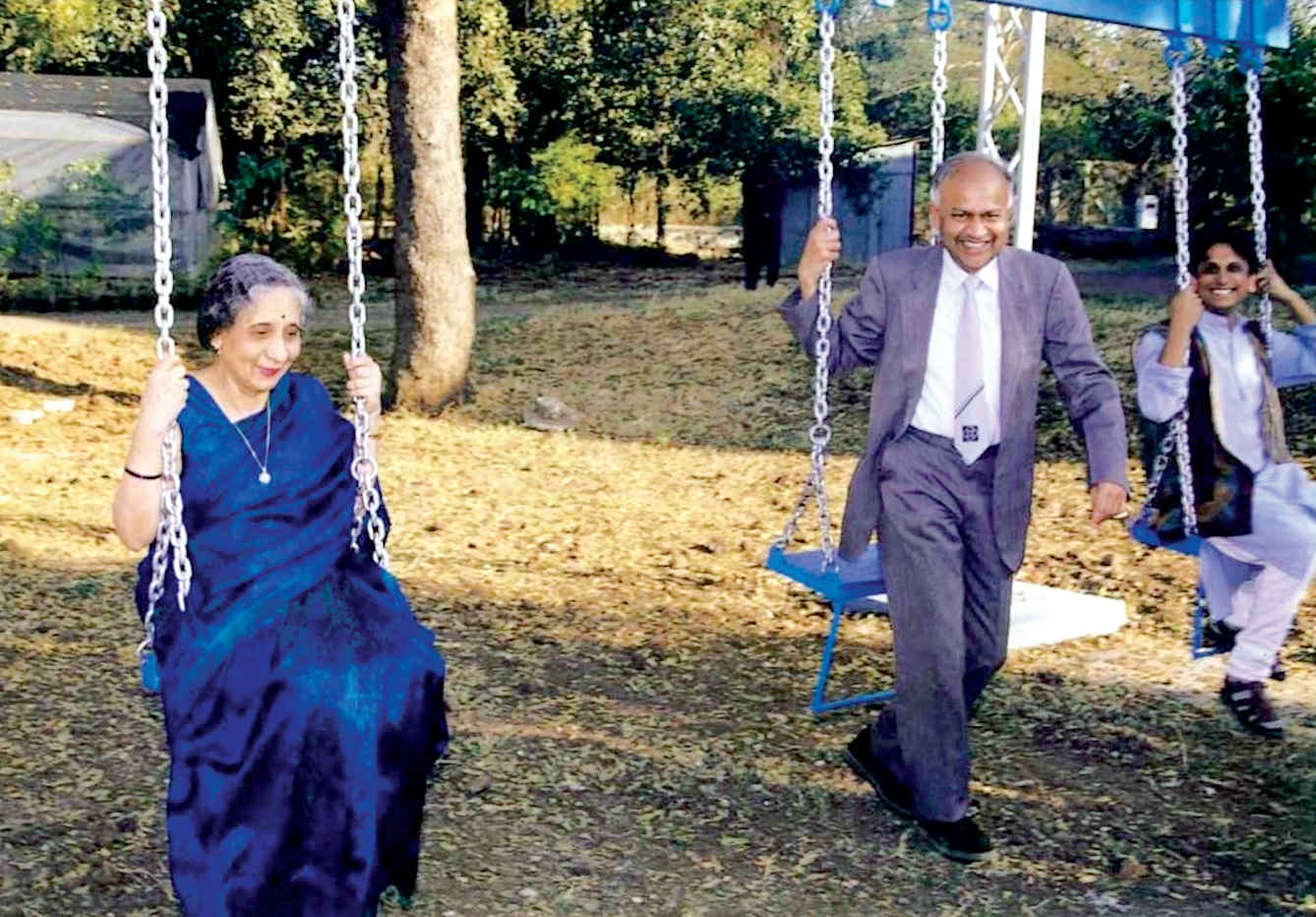
| Naresh Dadhich showing the Science Park to a visitor (left), and the author demonstrating the “sympathetic swings” to the UGC chairperson Armaity Desai (right). IUCAA | ||
The public-oriented activities of IUCAA have established a reputation that prompted the literary couple, the late P.L. Deshpande and Sunita Deshpande, to donate funds that UGC or other government grants cannot support.
The aftermath
Beyond the Blueprint: IUCAA’s True Test
This is where the IUCAA story is supposed to end. However, describing how the Centre has performed since its dedication to the Nation, will make the story too long! So here I conclude with a few comments.
I have heard many people complain that the administration or management of an institution takes up so much time that one cannot do anything creative. My own experience has been otherwise: I discovered that by letting your colleagues share the burden through delegation of responsibilities, you can find more time for your cherished activities—in my case, for research, teaching and writing. Even so, it becomes important how one manages the twenty-four hours that all of us are allotted every day and night. In this instance, I heard an excellent anecdote that I wish to share with you, as it reflects the strategy I have been following in this regard.
Once a teacher brought a jar to the class, along with stones, pebbles, sand and water. He proceeded to fill the jar with big stone pieces. When he could put no more in, he asked if the jar was full. “Yes”, said the class. “Wrong” replied the teacher as he proceeded to put in small pebbles, which went into the many interstices. When he could put no more pebbles, he repeated his question. “No” roared the class, this time aware that there was still some space left for the grains of sand. After filling as much sand as he could, the teacher asked again: Is the jar full? Again the class answered, “No”. “Correct’’, said the teacher as he filled the remaining space with water. “What do you learn about time management from this experiment?’’ The teacher asked. The class answered: “In between your major tasks there is always time available to carry out your many minor duties.” “Excellent!”, said the teacher. “But there is more to it”, he said and proceeded to perform another experiment. This time he started filling the jar in the reverse order, first with sand and then pebbles. However, when he came to the stones, there was no room left for them! The moral? “If you spend more time on your smaller tasks, you may find that you have none left for your big and important activities!” So it all boils down to getting your priorities right and then fitting all things big and small in the right order!
Before the IUCAA adventure, I had close experience of two famous institutions: the Institute of Astronomy at Cambridge, founded by the famous astronomer Fred Hoyle and the Tata Institute of Fundamental Research, founded by Homi Bhabha.
 |
 |
 |
||
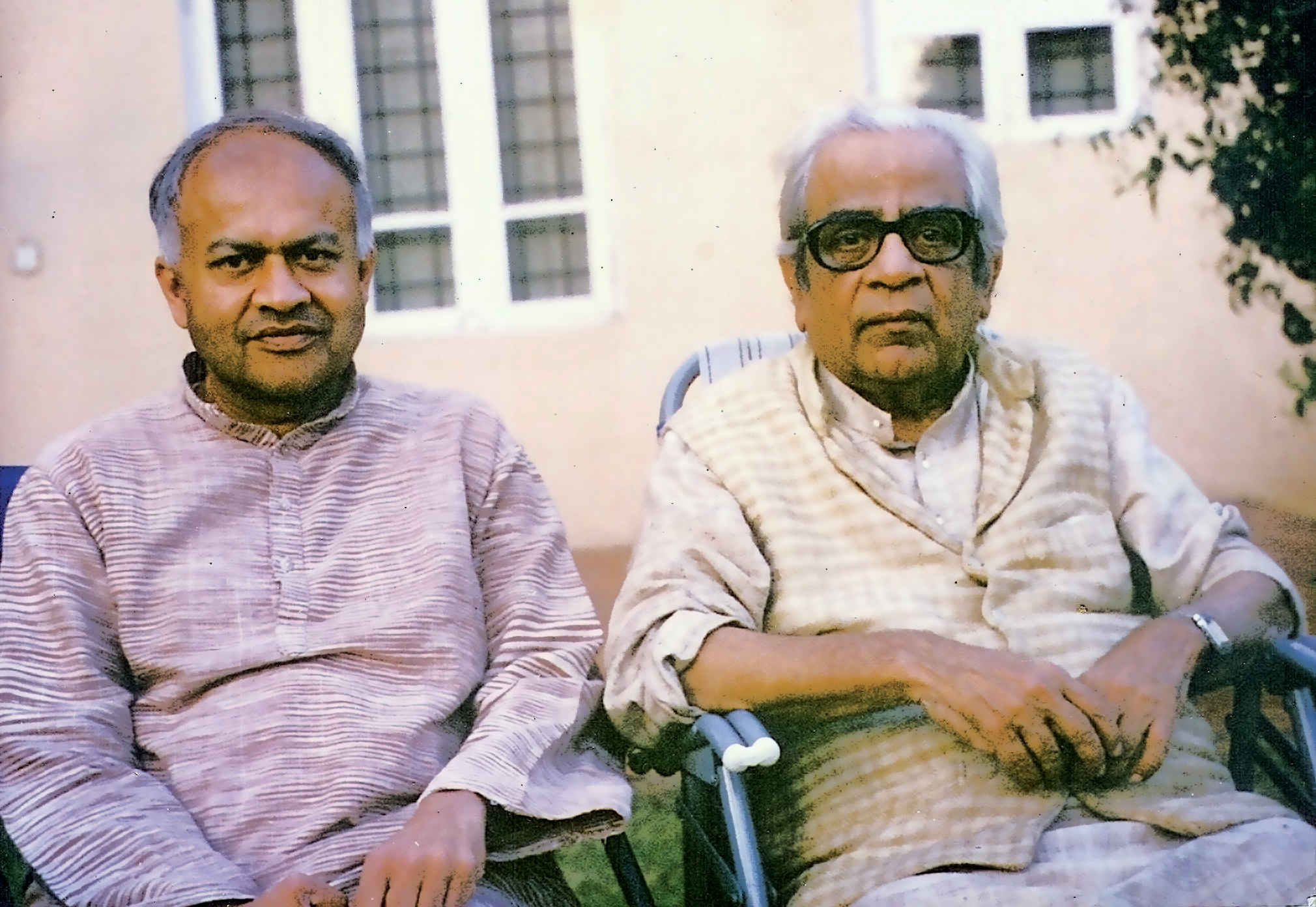
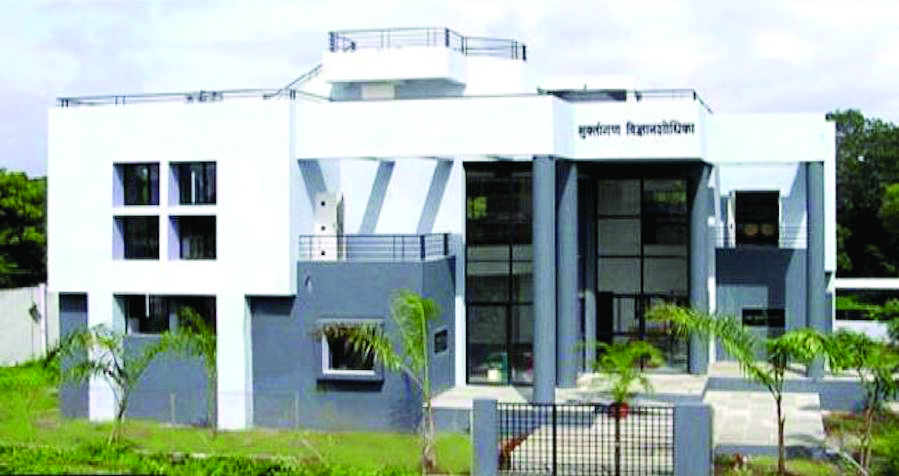
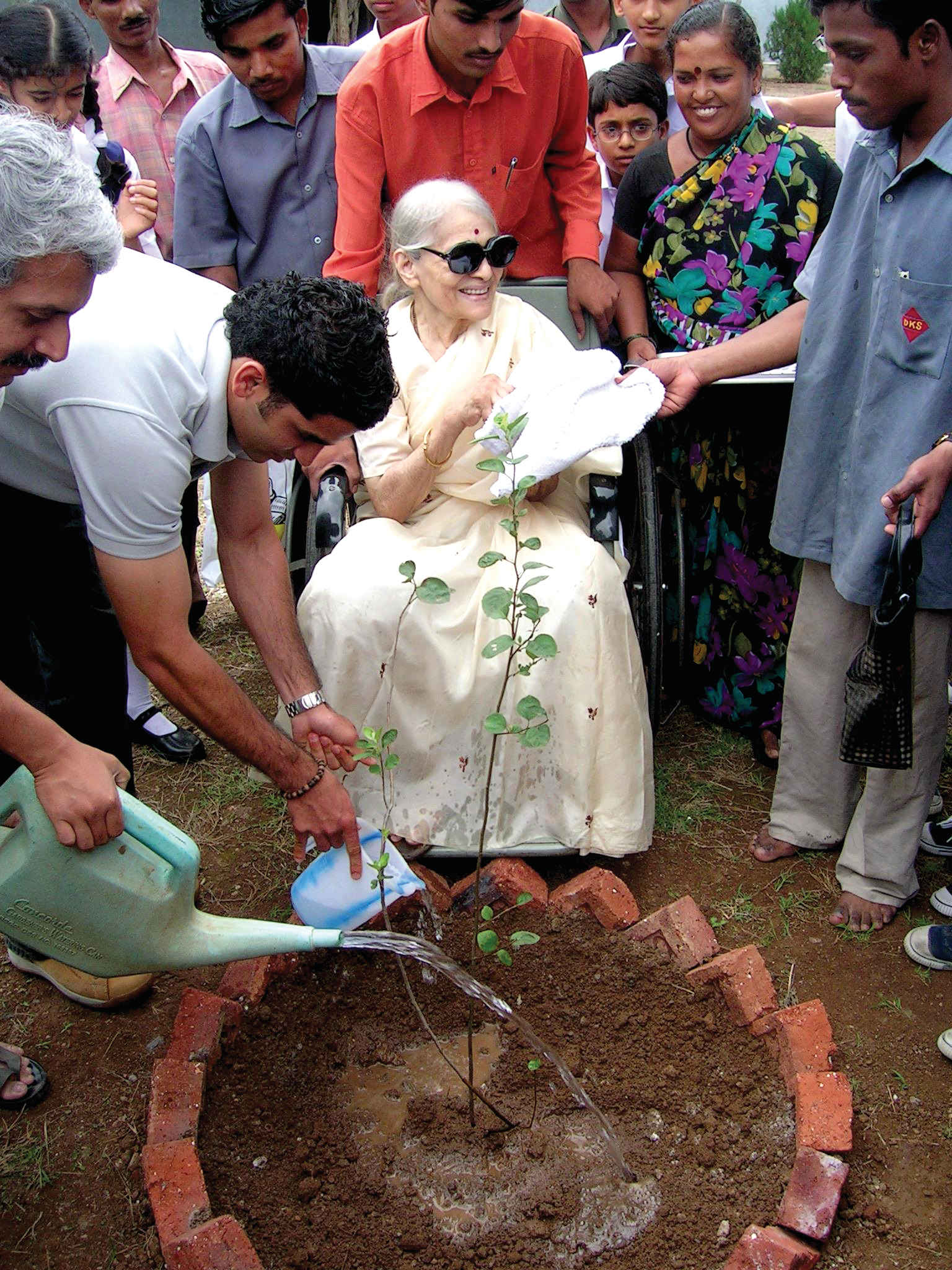
| The author with P.L.Deshpande at IUCAA (left), the Pulastya building that houses science related activities (centre), and Sunita Deshpande planting a tree after the inauguration of the Muktangan Vidnyan Shodhika complex (right). IUCAA | ||||
Fred Hoyle resigned and left Cambridge when the first six years of his institute were over. The institute, combined with the optical observatory next door, reemerged in a larger form. Homi Bhabha had two decades at the helm of the TIFR, during which time the institute grew in strength and moved to its present premises on the shores of the Arabian Sea. I am sure both these founders had a sense of satisfaction at achieving something of lasting value, something which generations of scientists and students can benefit from. A Founder Director of a successful institution has this enviable sense of satisfaction.
There is always a feeling of insecurity when the Founder Director of a successfully run institution moves away from the scene. The founder may have contributed enormously to the institution, from its genesis to its state of glory. However, the real test of their achievement lies in how the institution performed after the founder was gone from the scene. This is when its inherent strength would be tested. The best of scientific institutions, like the Cavendish Laboratory in Cambridge, College-de-France in Paris, or the Institute in Göttingen, have had their ups and downs, as science itself goes through wave-crests of high excitement and activity interspersed with relatively fallow and dull periods of modest productivity.
 |
 |
|
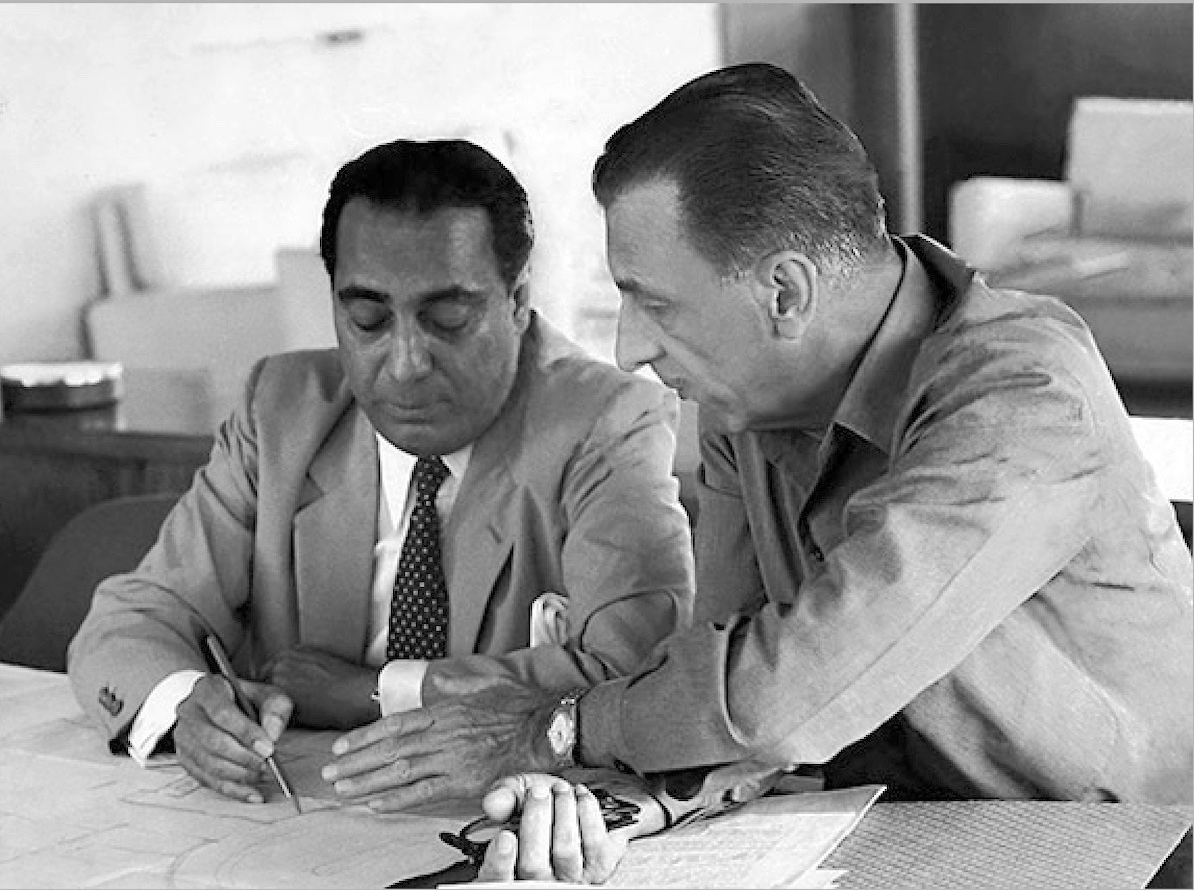
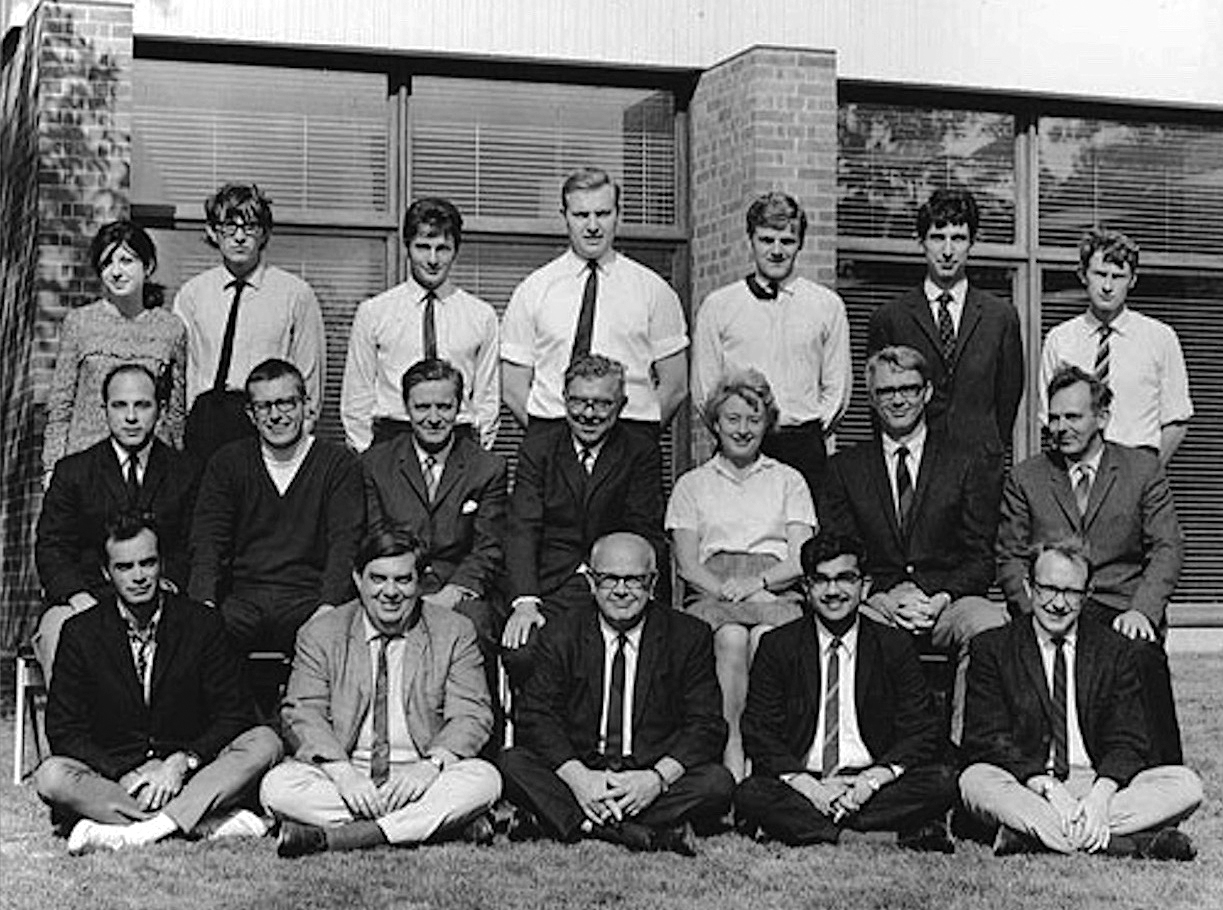
| Homi Bhabha describing the TIFR plans to J.R.D. Tata (left TIFR Archives), and Fred Hoyle with the initial members of the IOA (right IUCAA). Both images are from the 1960s. | ||
These ups and downs should not be judged in the same way as the profits and losses of an industrial unit. The essential feature to look for is whether the institution has an inherent strength, a group of first-class research scientists, state-of-the-art facilities, and a competent support staff, all covered by rules and bye-laws that are intelligently designed to help fulfill the basic aims and objectives of the institution. Given these fundamental strengths, the organization will ride through the fallow periods and once more attain peaks of glory. Though people who have been fortunate enough to create successful institutions enjoy being at their helm, they are even more fortunate if they wisely relinquish the responsibility to others when the time is ripe, and watch the progress of their creation from a distance in a detached mood. The Karmayoga advocated by the Bhagavadgita shows the way for a graceful exit.
Around the genesis of IUCAA: Recollections of Naresh Dadhich and Ajit Kembhavi
Towards the end of his IUCAA Story blog series Jayant Narlikar says, “[T]here is always a feeling of insecurity when the Founder Director of a successfully run institution moves away from the scene”. Picking up on that sentiment, the Bhāvanā team talked to two of his long-time colleagues, Naresh Dadhich and Ajit Kembhavi, just managing to catch them before they left for Silchar for yet another of their important journeys to keeping IUCAA as vibrant as they found it. They both led IUCAA as directors successively after Narlikar retired in 2003, with Naresh serving from 2003 to 2009, and Ajit from 2009 to 2015.
“IUCAA is his greatest gift to science and the nation”, Naresh Dadhich opened the conversation talking admiringly about Jayant Narlikar. Earning his PhD in 1971 under the guidance of his father Vishnu Vasudev Narlikar, Naresh’s academic association with Jayant Narlikar goes back a long way:
This was very pertinent and urgent in view of GMRT – the largest telescope in meter wavelengths – being built by Govind Swarup, not far from Pune. Govind had, in his GMRT project report, envisaged an inter-university centre for conveying the excitement of the newly emerging field to university faculty and students. IUCAA was thus conceived as a common university facility. It was the most opportune moment that, while on one hand, Jayant was thinking of moving out of TIFR and looking for something challenging, on the other, Yash Pal, ever hungry for new ideas and projects, was in command of UGC. Thus, it was a very fortuitous circumstance that gave rise to the idea of IUCAA. and Jayant instantly took up the challenge. The rest then followed beautifully.
For Ajit, who joined Jayant Narlikar for his PhD during the latter’s years at TIFR and knew him in different capacities, first as a teacher and later as a senior colleague, it was a close association for almost his entire academic career. Cherishing a special pride working alongside his mentor during the genesis and creation of IUCAA, Ajit began:
Sometime in the middle of 1987, when we were at TIFR, Mumbai, I heard indirectly that he was thinking of setting up a new institute. Without knowing any details, I went to him the next morning and said that I would be happy to join the venture, regardless of what it was and where it was going to be. He smiled and mentioned the idea of starting a centre for the universities in astronomy and astrophysics. We informally discussed the matter over the next few months until the contours of the centre emerged. Soon after Naresh joined the discussions, the ideas became concrete in 1988 when formal structures emerged. Finally, in December 1989, at the first International Conference on Gravitation and Cosmology (ICGC) held in Panjim, Goa, a meeting of senior relativists from India was arranged at which the new centre was announced to the community.
Working with a small group of students in the area of relativistic astrophysics in Pune University, and nobody else to interact with there, Naresh visited TIFR every week, right from the mid 1970s, thanks to the presence of Jayant Narlikar. He felt himself to be a part of his astrophysics group at TIFR. That was also the time Govind Swarup was looking for a suitable site for GMRT, and Naresh was his team’s host in Pune. Eventually, a site some 80 kms north of Pune was chosen for GMRT. With the idea of upgrading his group activity into a centre simmering in his head, Naresh saw that it would be a dream coming true for him to set up an A&A Centre in Pune, where all the celestial bodies concerned were perfectly aligned to make it happen. To quote Naresh: “Any seeming hurdle appearing in the way was soon overcome by the formidable goodwill Jayant had in the government as well as elsewhere.’’
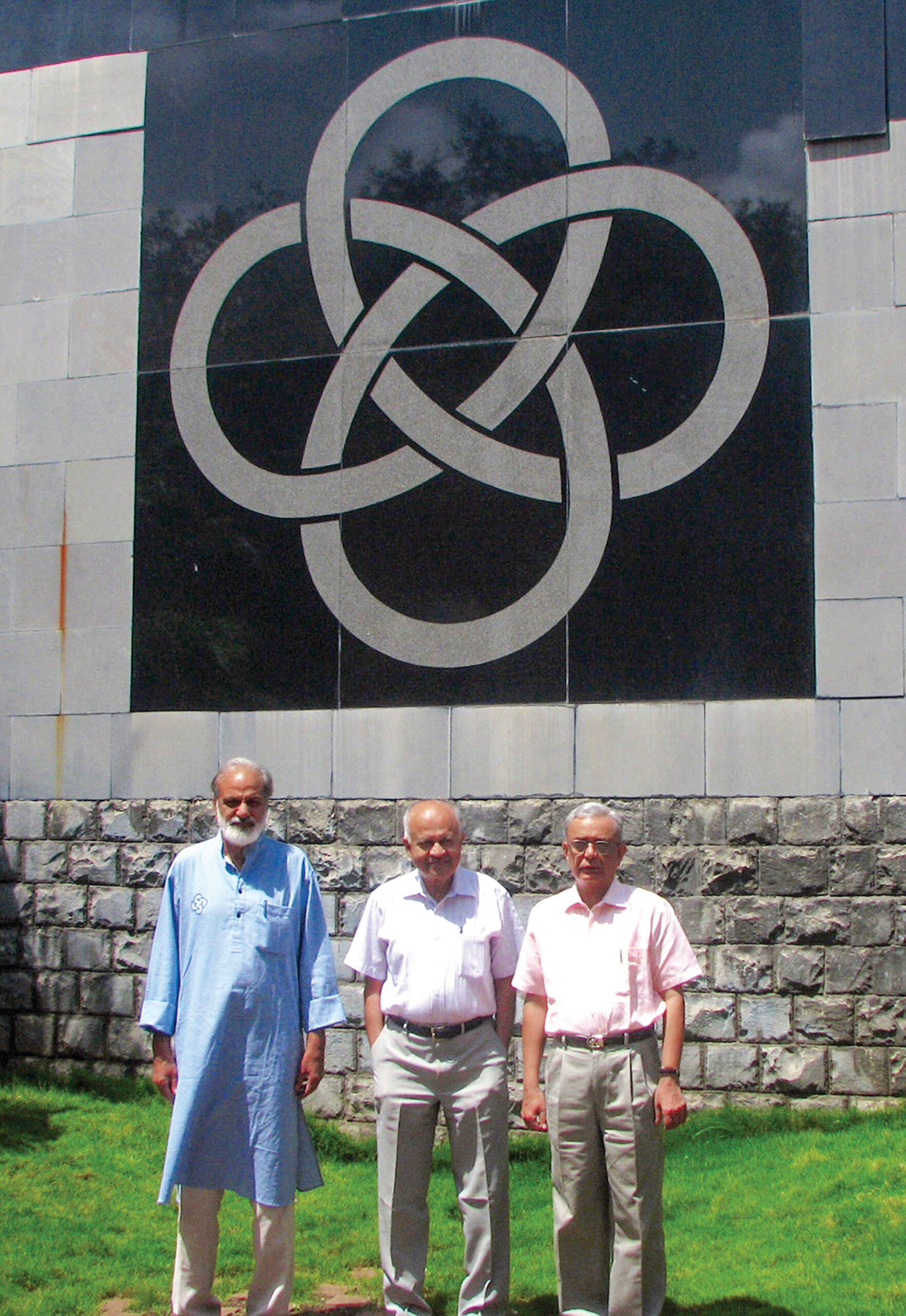
Any large vision and planning requiring its own time to shape and start functioning, Ajit recalled that creating the facilities first and setting up a community of users, ensuring that long-term projects go on smoothly, with some of them working at the international level and, at the same time, keeping up with the rapid changes taking place in the IT field in the 90’s were all handled by coming up with new ideas, working together diligently and learning to get things done in an optimal way. “Over the years, we developed deep bonds with the university community by going to distant campuses multiple times to organize events there, getting them to visit us, creating research collaborations with them, often creating facilities for their needs, and developing personal rapport and affection through continuous interactions”, Ajit crisply summarized the hard work put in during the beginning years to establish a seamless connection with the universities across the Indian landscape. Playing a key role in the developments at IUCAA, it is no wonder that, among many other projects, he is deeply proud of the crowning achievements – enabling IUCAA to become part of the Thirty Meter Telescope (TMT), and getting the project `LIGO-India’ approved.1

IUCAA has also set an example of participative and democratic functioning, where everyone feels involved and engaged. All the responsibilities including financials are shared by all the faculty members who actively participate in the decision making. In Naresh’s characteristic words: “The director has very little to do as I can vouch from my own experience. The key is to make everyone feel involved in whatever they are doing by giving functional freedom. As directors, this is the legacy we had set to carry forward, and I hope that we have performed well on that count.”
As our conversation wound to a close, both Ajit and Naresh were almost in unison, while answering our last question about what newer plans has IUCCA to offer in future, that they are now setting themselves out to accomplish: “IUCAA was a shared vision, and all that we have spoken about is a reflection of that. Jayant was indeed very happy and content with the way IUCAA has traced its trajectory in his own lifetime, and felt gratified. Big projects may not be in our initial vision, but new paths develop and emerge as you walk. He set us all walking on that trajectory, and we are confident that, along the way, newer paths will surely emerge.’’\blacksquare
Footnotes
- LIGO-India is a planned gravitational-wave observatory in Hingoli, Maharashtra, India, that will serve as a third detector alongside the two existing LIGO detectors in the United States of America and the Virgo detector in Italy. A collaboration between Indian institutions and the US LIGO Lab, the project is designed to provide the whole-sky coverage needed to pinpoint gravitational wave sources. Construction is expected to be completed by 2030. ↩