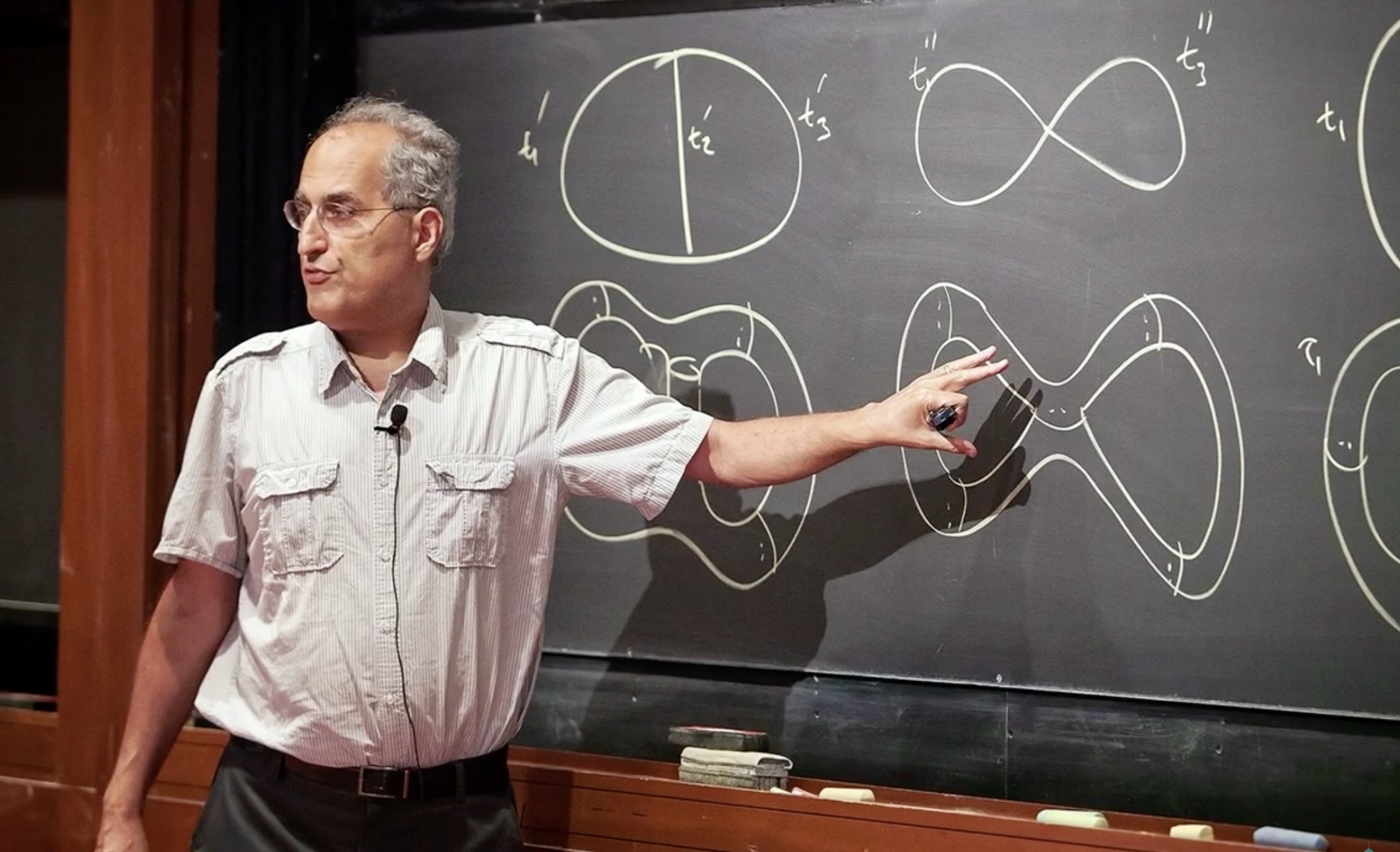
In this special article, Bhāvanā brings together two complementary portraits of Witten’s life and work as he turns 75 this year. The first is a wide-ranging conversation with C.S. Aravinda, where Witten reflects candidly on the early influences in his life, the distinct perspectives of physicists and mathematicians on rigour and intuition, instances of his work building on that of mathematicians such as Mirzakhani as well as physicists such as Ashoke Sen, and finally his travels in India.
This conversation serves as a contextual preamble to the centerpiece of the feature: the republication of Witten’s inspiring biographical memoir, Adventures in Physics and Maths, based on his 2014 Kyoto Prize commemorative lecture, where he gives readers a glimpse into his personal journey of perseverance, excitement, and discovery in science.
Welcome to Bhāvanā. It is indeed a great privilege to be engaged in this conversation with you. Let’s begin at the same place that your Kyoto Prize talk began, namely, one of your boyhood delights of viewing the rings of Saturn through a small telescope and which you felt was a striking moment. Do you have any other exciting recollections from that time, or even later, of viewing through a telescope or a microscope?

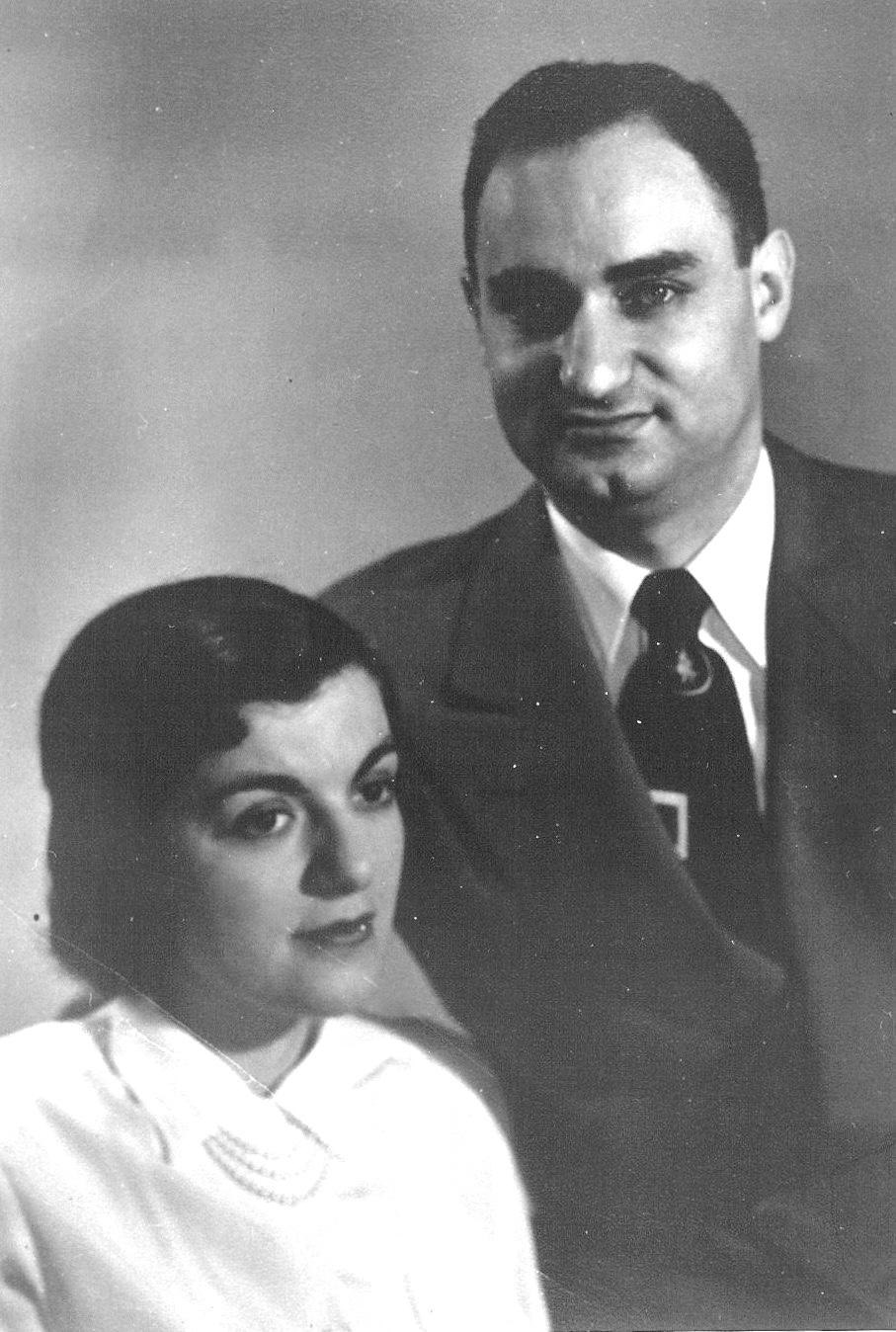
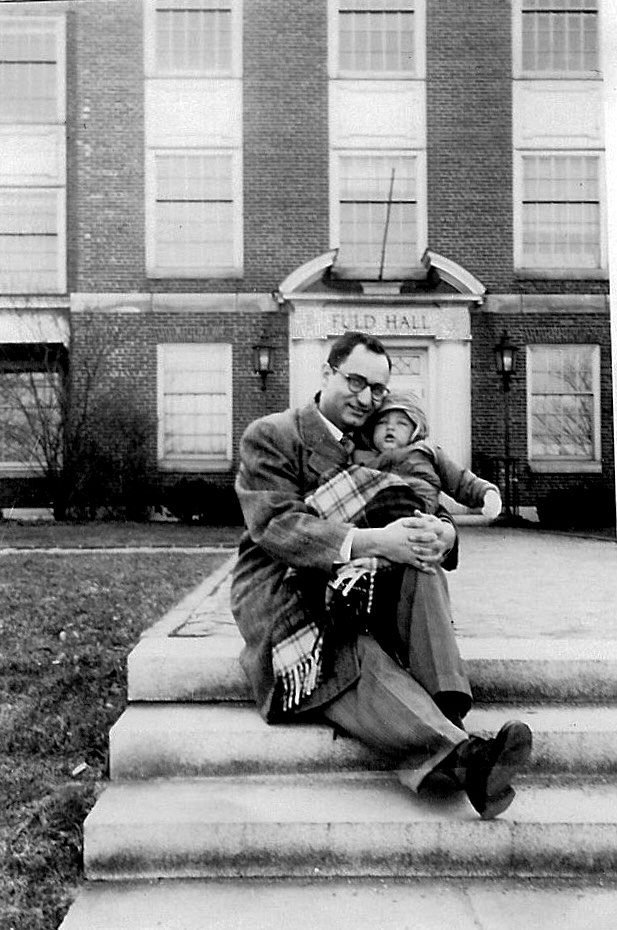
You mention that your father is a theoretical physicist himself, who presented you with some relatively advanced maths books when you were about eleven years of age. It was also incredible to hear that he turned 105 earlier this year, on the 13th of April. Could you recount some of your defining moments with him, both during your growing up years, and your own evolution as a frontline physicist?
What about your mother? Was she also an academic?
Astronomy is perhaps one of the major entry points to a fascinating world that lies beyond one’s immediate vicinity. You mention that you came to realize that maths and theoretical physics are where you had the most talent. Was this a gradual process or was there any singular experience that led you to this?
However, you graduated from Brandeis University with a degree in history rather than either physics or mathematics. Could you recall those early days of your academic life, and what triggered the transition to physics?
How would you describe your learning years? Did you socialize much or were you happy just reading and working things out?
By your own account, trying and failing to understand the so-called notion of quark confinement turned out to be a turning point in your evolution as a physicist. You mention that while there is ample evidence that points to the truth of the existence of this phenomenon, both from real experiments and from computer experiments, “we do not really have a human understanding of why’’. Do you think this is one of the points that exemplifies a distinguishing feature of a physics perspective from the mathematical?
We are confident quark confinement is real because of a combination of real experiments and computer experiments; we also by now have been able to convincingly establish quark confinement in some simpler models (but not in the model that is believed to be directly relevant to quarks in the real world). I would compare it very roughly to why mathematicians may strongly suspect the validity of an unproved statement like the Riemann conjecture: knowing that many consequences of the statement are true plays a role somewhat similar to the role in physics of real experiments and computer experiments. And of course, mathematicians do also make use, as you say, of computer experiments.
At this interesting point, I want to recall a statement made by Paul Dirac, when Harish-Chandra complained to him that his own proofs were not rigorous, namely: `I am not interested in proofs but only in what nature does’. I would like to hear your reflections on this.
This seems somewhat akin to how conjectures work as informed guesses that may or may not be true. You went on to win what is deemed the highest honour in mathematics—the Fields Medal—at the 1990 ICM in Kyoto. Was this an unexpected surprise?
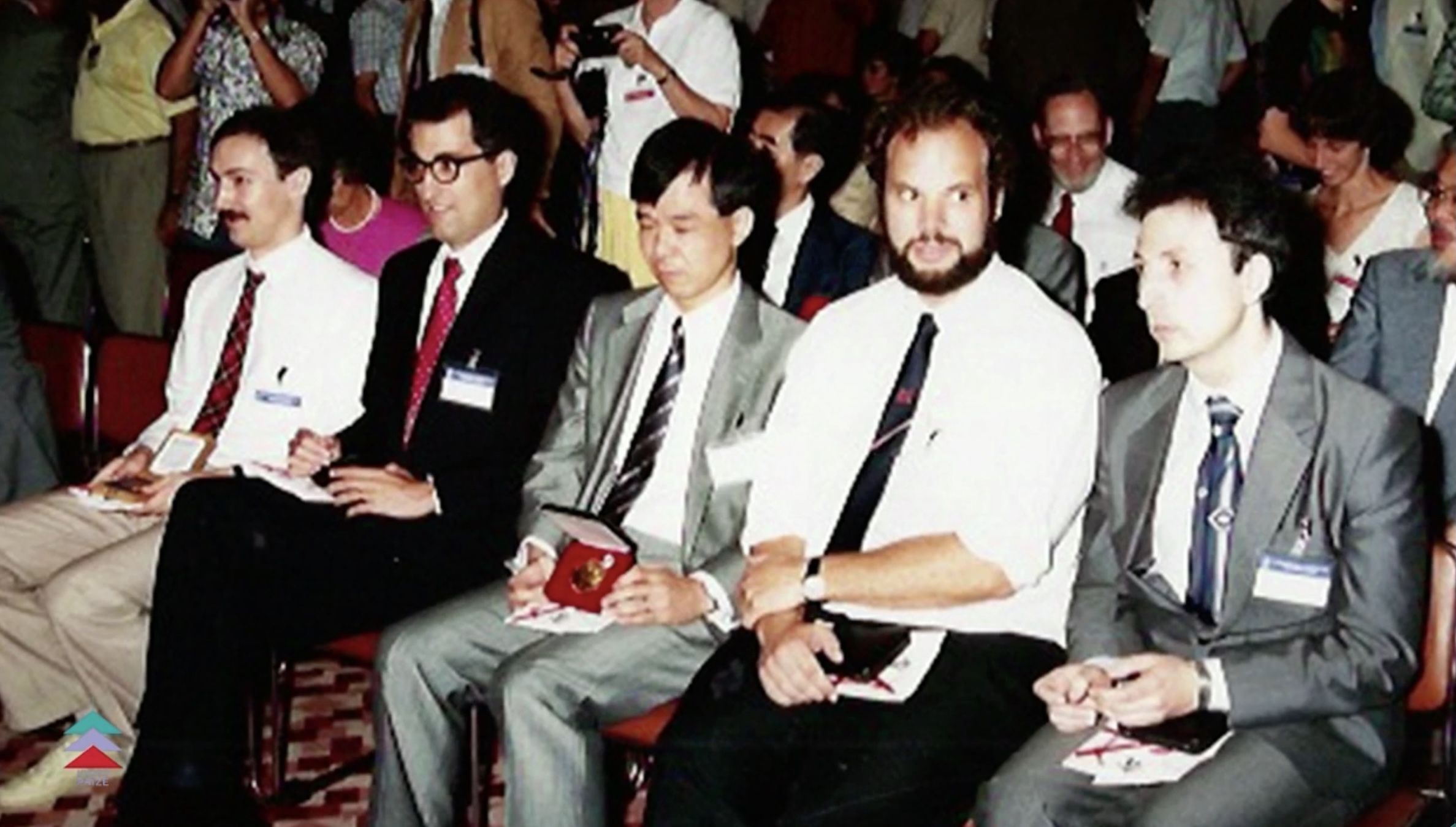
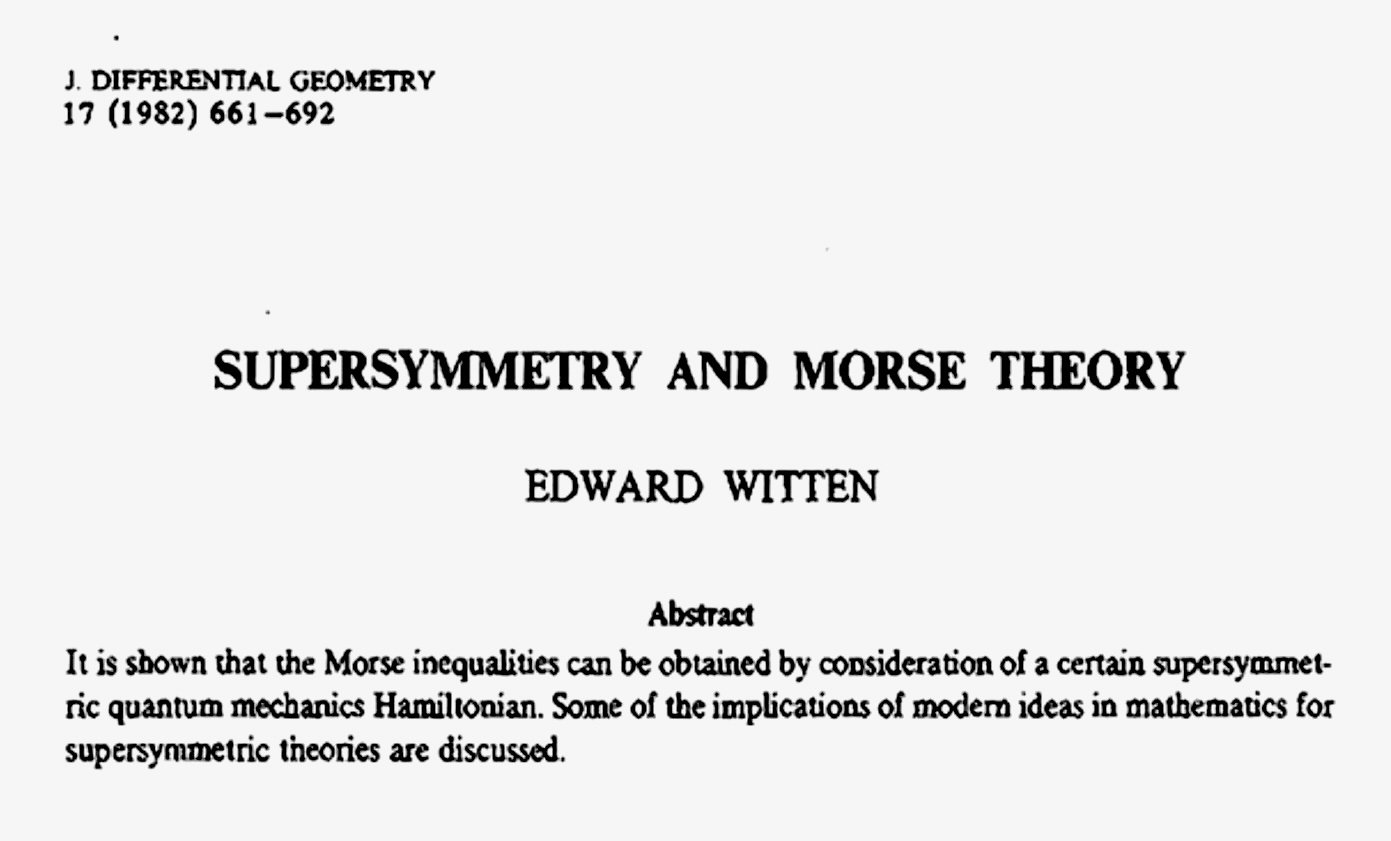
Let me quote some of Atiyah’s words, as it appears in the proceedings of the Kyoto ICM: Although he is definitely a physicist (as his list of publications clearly shows) his command of mathematics is rivalled by few mathematicians, and his ability to interpret physical ideas in mathematical form is quite unique. In fact, your 1982 paper, published in the Journal of Differential Geometry, is titled “Supersymmetry and Morse theory”. Could you reflect a bit on how this paper came about, and what was its main purport?
Talking about interactions between maths and physics, Maryam Mirzakhani gave a new proof of the formula (conjectured by you and proved by Maxim Kontsevich) on the intersection numbers of tautological classes on moduli space of certain Riemann surfaces. Have there been instances where such newer proofs have helped enhance physical insights?
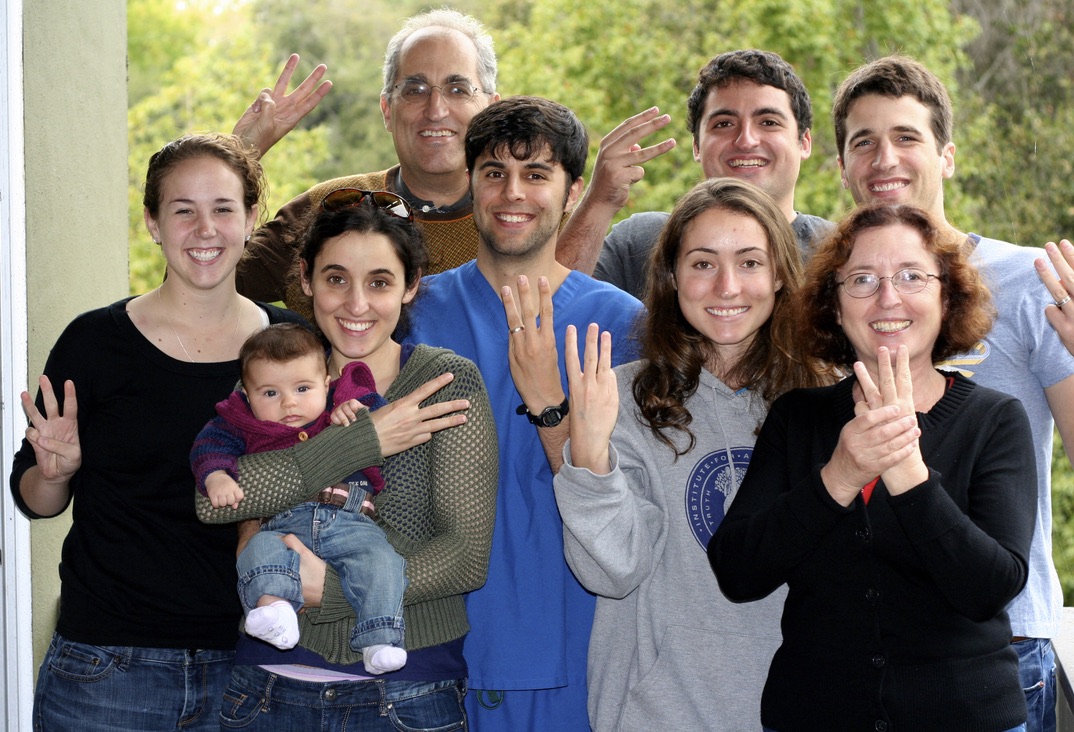
Yours is a highly academic family. Your wife Chiara Nappi is also a physicist, and that is how the two of you met. You have written papers together. What about your children?
I would now like to hear about interactions with physicists from India which may have had certain bearings on your own work. You mention one of your collaborators John Schwarz being excited about the work he was doing with Ashoke Sen. I note that there is a paper from 2015 in the arXiv that you have yourself written with Ashoke Sen. You have other collaborations as well. Could you tell us some about the circumstances these collaborations arose?
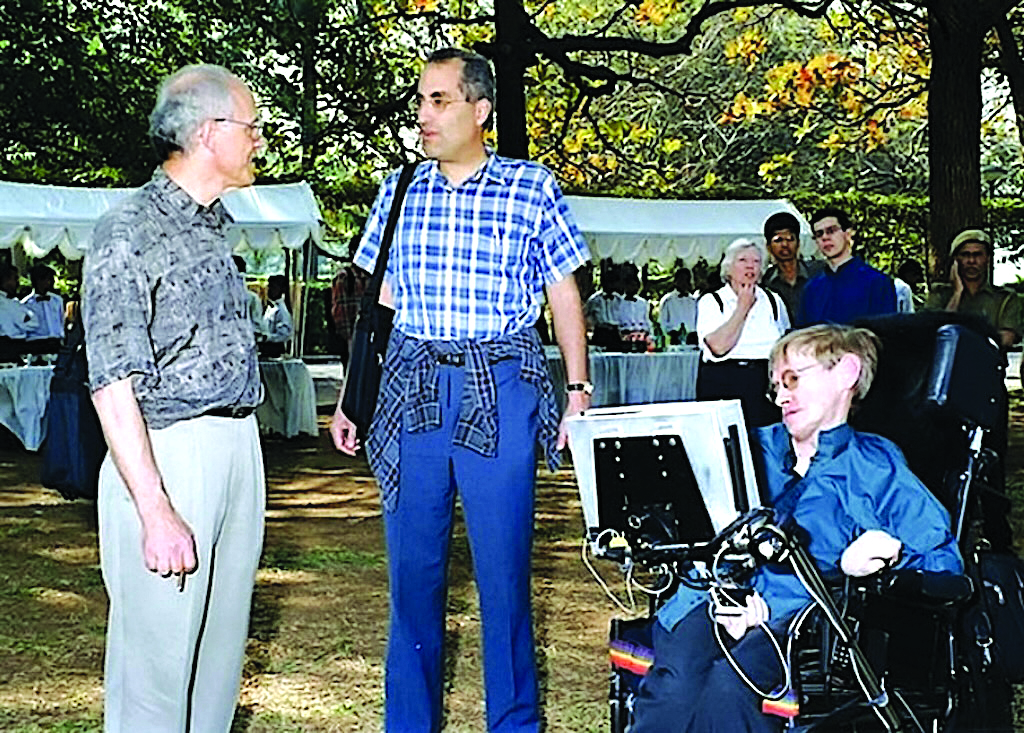

You have visited India twice, I believe? Have they been mainly at conferences or have you also visited for collaborations?
However, both times we came before or stayed on after for quite a lot of sightseeing. The first time we came with all three children and visited Delhi as well as Rajasthan and Mumbai (and we went on to Bangalore for a couple of days). The second time, we did quite a lot of sightseeing roughly in the region between Bangalore and Mysore.
Thanks ever so much for talking to Bhāvanā. It has been a pure delight to meet you and talk to you.
Adventures in Physics and Maths1
From a young age, I was fascinated by astronomy. This was not exceptional because the late 1950s were the start of the space race and everyone was excited about space. I really cannot remember how much my interest in astronomy predated the space race. At the age of about nine or ten, I was given a small telescope (a 3 inch reflector) and one of the highlights of my growing up years was to see the rings of Saturn. Something that puzzles me in hindsight is that in those days I thought Saturn was hard to find. By now, having assisted several children with their own small telescopes, I am quite aware that Saturn is one of the most obvious objects in the sky and easy to find from almost anywhere on Earth in any small telescope on any clear night when it is above the horizon. It will not look like it does in a professional photo, but it is a striking sight through any telescope.

At about age 11, I was presented with some relatively advanced math books. My father is a theoretical physicist and he introduced me to calculus. For a while, math was my passion. My parents, however, were reluctant to push me too far, too fast with math (as they saw it) and so it was a long time after that before I was exposed to any math that was really more advanced than basic calculus. I am not sure in hindsight whether their attitude was best or not. However, the result was that for a number of years the math I was exposed to did not seem fundamentally new and challenging. It is hard to know to what extent this was a factor, but at any rate for a number of years my interest in math flagged.
At about age 11, I was presented with some relatively advanced math books
Eventually, however, I understood that math and theoretical physics were the fields in which I had the most talent, and that I would really only be satisfied with a career in those fields. I was about 21 years old when I made the decision between mathematics and theoretical physics, and I made this decision based on very limited knowledge about either field. My choice was theoretical physics, in large part because I was fascinated by the elementary particles.
This was in the early 1970s. For a 20 year period, beginning roughly when I was born, there had been an amazing succession of discoveries about elementary particles. At the beginning of this period, the proton and neutron and the atomic nucleus had been the smallest things known. The modern concept of elementary particles barely existed. But beginning around 1950, there had been an explosion of discoveries. This had resulted mostly from new technologies, especially but not only the ability to make particle accelerators in which elementary particles are accelerated artificially to very high energies.
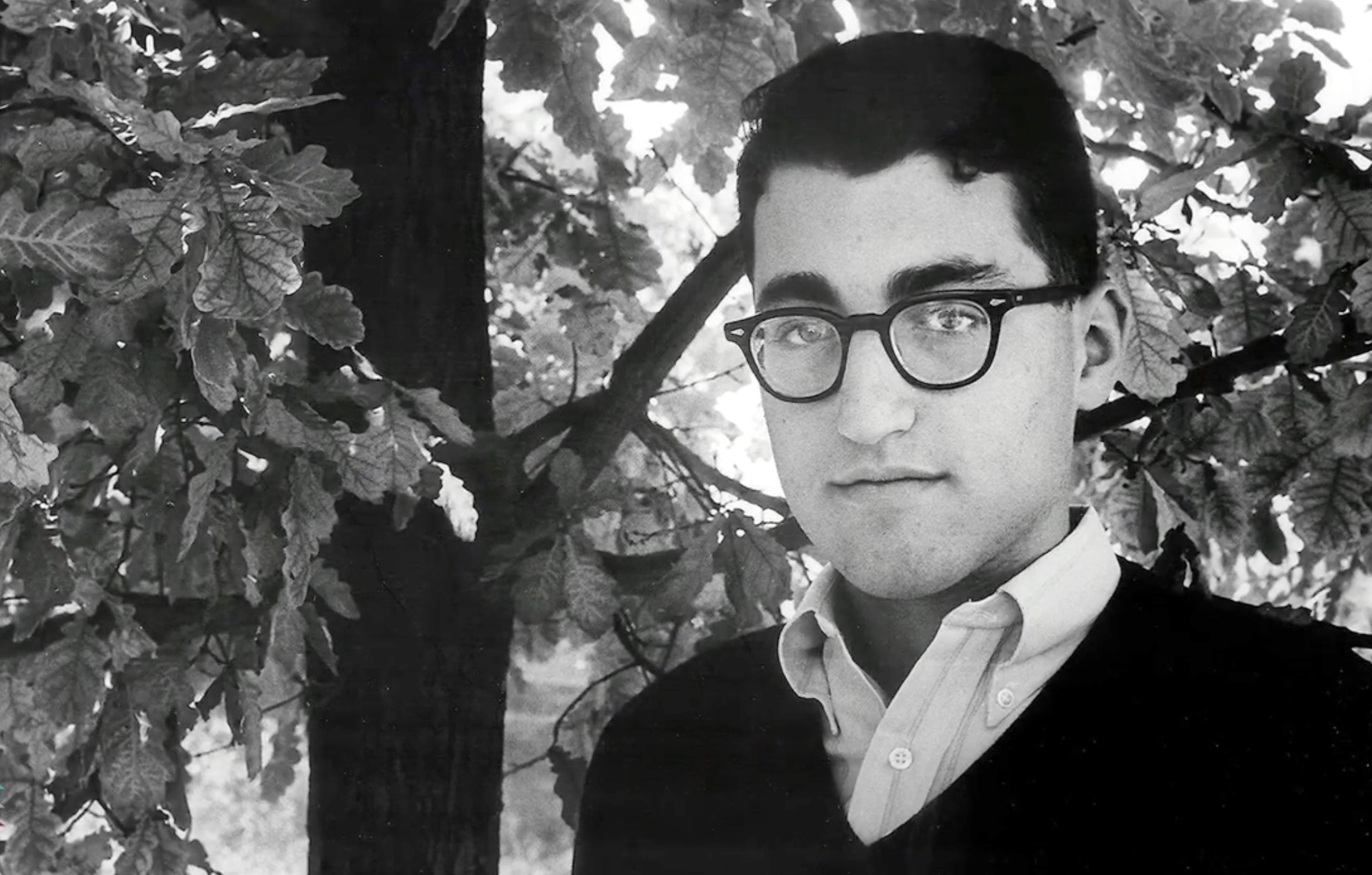
The period of perpetual revolution in the world of elementary particles actually continued during my graduate days. One of the biggest discoveries of all was announced on November 11, 1974. This was the discovery of the J/\psi particle. Though its lifetime is far less than a nanosecond, it was astonishingly long-lived for a particle of its mass and type. It was such a dramatic discovery that it led to a remarkably speedy Nobel Prize for the heads of the teams that made the discovery, and people used to talk about the November revolution in physics. To those of you who are too young to remember the Cold War or who might want to brush up on your history books, let me just say that there is another event that used to be called the November revolution.
Anyway, by November, 1974, I had just about learned enough about elementary particles that I could understand what the excitement was all about and what people were saying, but not quite enough to participate prominently. After what looked to me like some initial confusion, it was realized in a few days that the J/\psi particle was made from a new kind of quark. As I say, to me it looked like this realization followed a few days of initial confusion, but it may be that things were clearer even sooner to the senior professors, and their understanding just took a while to filter down to us students.
I have gone into so much detail about this to try to explain what my interests were as a graduate student in the mid-1970s. In short, when I was a graduate student, the era of perpetual revolution in particle physics was still in full swing. I assumed it would go on and I was hoping to participate in it. But in hindsight, the quick success in understanding the J/\psi maybe should have been a hint that the scientific landscape was going to change. In fact, it turned out that the surprising properties of this new particle made perfect sense in the Standard Model, and even had been predicted before, though I don’t know how well-known the papers making this prediction had been. Certainly I had not known about them.
Meanwhile, I developed another interest as a student, which in a way contained seeds of some of my later work. Here I should explain to those of you who are not physicists that one side of what theoretical physicists do is to try to understand the laws of nature, and the other side is to try to solve the equations in different situations and work out predictions for what will happen. The separation between these two sides of the subject is not always so clear. For example, there is no hope to understand what are the correct laws of nature without at least some ability to solve them and find their predictions. But in practice, much of what physicists do is to try to understand the behavior of matter in situations in which, at least in principle, the appropriate equations are known. This can be easier said than done; for instance, it is one thing to know the Schrödinger equation, which describes the behavior of electrons and atomic nuclei, and another thing to solve the equations and understand the behavior of a piece of copper wire.
As a particle physicist, my main goal in principle was to understand what the fundamental equations are. However, the emergence of the Standard Model created a novel situation. Some very new fundamental equations were in the process of being established just as I began my graduate studies, and some of them were really very hard to understand. In particular, the Standard Model said that protons, neutrons, pions, and other strongly interacting particles are made from quarks, but no quarks were to be seen. To reconcile the contradiction, one had to believe that quarks are “confined,” meaning that no matter how much energy one pumps in, quarks can never be separated. The catch was that the Standard Model equations that are supposed to describe quark confinement are opaque and difficult to solve. So it was hard to understand if quark confinement would really happen.
As a particle physicist, my main goal was to understand what the fundamental equations are
I gained a couple of things from this experience, even though I was not able to solve the problem I wanted. One was negative. I learned the hard way what I regard as one of the most important things about doing research. One needs to be pragmatic. One cannot have too much of a preconception of what problem one aims to solve. One has to be ready to take advantage of opportunities as they arise.
Reluctantly, I had to accept that the problem of quark confinement that I wanted to solve was too difficult. To make any progress at all, I had to lower my sights considerably and consider much more limited problems. (As I will explain later, I eventually made a small contribution to the problem, but this was almost 20 years later.
I have learned quite a bit while always feeling like a beginner
On a more positive note, in accepting this and making what progress I could on more limited problems, I began to get some experience thinking about what physicists call the strong coupling behavior of relativistic quantum systems—the behavior of these systems when the equations are hard to solve by standard methods. This experience became important in my later work.
Here I should again explain to those of you who are not physicists that when the coupling is weak, everyone who goes to graduate school in physics learns what to do. When the coupling is strong, a large variety of questions and methods come into play. As a result, I am not sure that there is any such thing as being an expert on how quantum systems behave for strong coupling, and in any event certainly I myself never have become such an expert. I have learned quite a bit while always feeling like a beginner.
In 1976, I completed my PhD at Princeton University, and moved to Harvard University for what proved to be four years of postdoctoral work. It was also a very eventful time personally. Chiara Nappi, whom I married in 1979, arrived at Harvard as a postdoctoral fellow at the same time that I did. We had met at a physics summer school in the French Alps in 1975. She was invited to Harvard by a distinguished mathematical physicist, Arthur Jaffe. Our first child was born while we were still at Harvard.
At Harvard, I learned a lot from many of the senior professors, originally the physicists and then some of the mathematicians as well. I do not want to go into too much technical detail but I will try to give a flavor.
One senior colleague at Harvard was Steven Weinberg, who was a Standard Model pioneer (and 1979 Nobel Laureate). There were certain fundamental topics in physics that I had had trouble understanding as a graduate student. I think Steve thought that many of the physicists had some of the same confusions I did. Whenever one of these topics came up at a seminar, he would give a small speech explaining his understanding. After hearing these speeches a number of times, I myself gained a clearer picture.
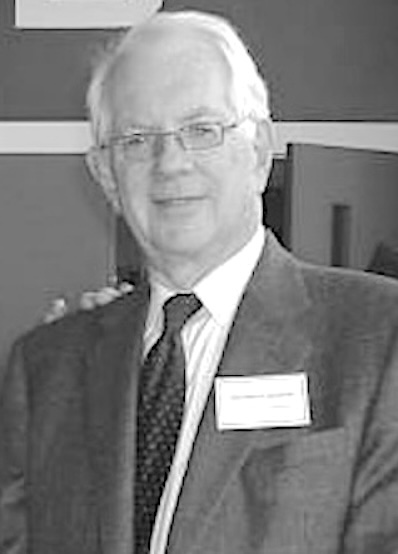
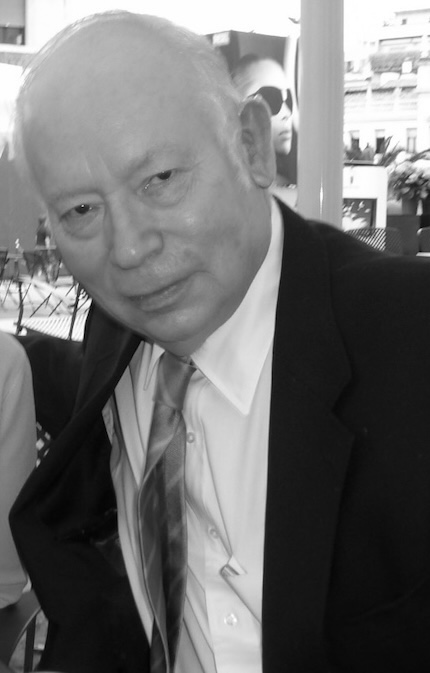
I also learned a lot from Sheldon Glashow and Howard Georgi. Glashow was a senior professor and another Standard Model pioneer and 1979 Nobel Laureate. Georgi was a junior faculty member, just a few years older than I was. In fact, office space was scarce at Harvard and Georgi and I shared an office.
|
|
| Sheldon Glashow (left) American Institute of Physics (AIP) and Steven Weinberg (right) shared the 1979 Physics Nobel Prize with Abdus Salam. University of Texas, Austin | |
Glashow and Georgi, among other things, were experts at building models to explain the results coming from particle accelerators. I learned a lot from them, and had the age of perpetual revolution continued, I probably would have aimed to learn to do what they did. But as I have already hinted, the nature of experimental progress was changing at just this time. Great advances have continued, in areas ranging from neutrino physics—which is well-developed here in Japan, by the way—to cosmology. Important new particles have been discovered, most recently the Higgs particle. But rather than perpetual revolution, the surprise coming from particle accelerators during these decades has been the fantastic success of the Standard Model. It works much better, and at much higher energies, than its inventors must have anticipated.
Although I certainly did not realize this at the time, the changing landscape meant that I would find more opportunity in somewhat different directions. That is why my interaction with yet another senior physicist at Harvard, Sidney Coleman, proved to be important. He was a legendary figure for his insights about quantum field theory, and was the only one of the physicists I have mentioned who was actively interested in strong coupling behavior of quantum fields. The others appeared to regard such questions as a black box, not worth thinking about.
On a number of occasions, Coleman drew my attention to significant insights that I think I would otherwise just not have heard about, or at least not until long after. Often these insights involved fundamental mathematical ideas about relativistic quantum physics, or its relationship with other areas of modern mathematics. There are many topics that were important in my later work that I had simply no inkling of until I learned about them from Coleman. At the time I could not make much sense of what I was hearing, but luckily I remembered enough that it was useful later. Just to give one example, I can remember Coleman explaining to me an insight, originally due to the [Soviet-American] mathematician Albert Schwarz, that certain surprising results of physicists working on the Standard Model actually had their roots in the “index theorem” of Michael Atiyah and Isadore Singer. This was actually a major theorem of 20th century mathematics, but I had never heard of it, or even of the concept of the index, or of the names Atiyah and Singer.
My graduate education in physics had occurred at a time when there was not much engagement between cutting edge mathematics and physics. Like the other physics graduate students I knew, I had not learned the sort of things one would want to know if one wished to grapple with contemporary questions in mathematics. It was typical of a physics graduate education of the time that I had never heard of the Atiyah-Singer index theorem or most of the other things that I heard about from Coleman.
Developments such as the role of the Atiyah-Singer theorem made some of the most prominent mathematicians curious about what physicists were doing. I started talking a lot to some of the mathematics professors at Harvard, especially Raoul Bott and David Kazhdan. I also got to know Michael Atiyah and Isadore Singer. Atiyah invited me to visit Oxford in the winter of 1977–78 for the first of what turned out to be many visits. Atiyah and Singer were important influences in my later work.
I was interested in what the mathematicians had to say and I certainly learned a lot of new things. At the same time, I was reasonably skeptical of whether the mathematicians could shed light on the physics problems that I was interested in—especially the problem of quark confinement, which I mentioned before.
In fact, I wasn’t entirely wrong in this skepticism. The renewed interaction between mathematics and physics that was developing in the late 1970s has proved to be far more robust and significant than I anticipated at this time, and also far more important in my own work than I expected. However, it has remained difficult for mathematicians to grapple with quantum field theory, and the importance of modern mathematics for physicists has come mainly because of new problems that have emerged from physics.
Only gradually, I started to see a payoff from what I had been learning from the mathematicians. At first, each time this happened, it seemed like an exception. I will describe one of the first instances. This occurred soon after I had joined the faculty of Princeton University in 1980. I was interested in supersymmetric field theories, which seemed to have the potential to solve some problems left open by the Standard Model of particle physics. I was puzzled in trying to understand the nature of the vacuum in these theories. The behavior I found was simpler than seemed to be explained by standard ideas of physicists.
My graduate education in physics had occurred when there was not much engagement between cutting edge mathematics and physics
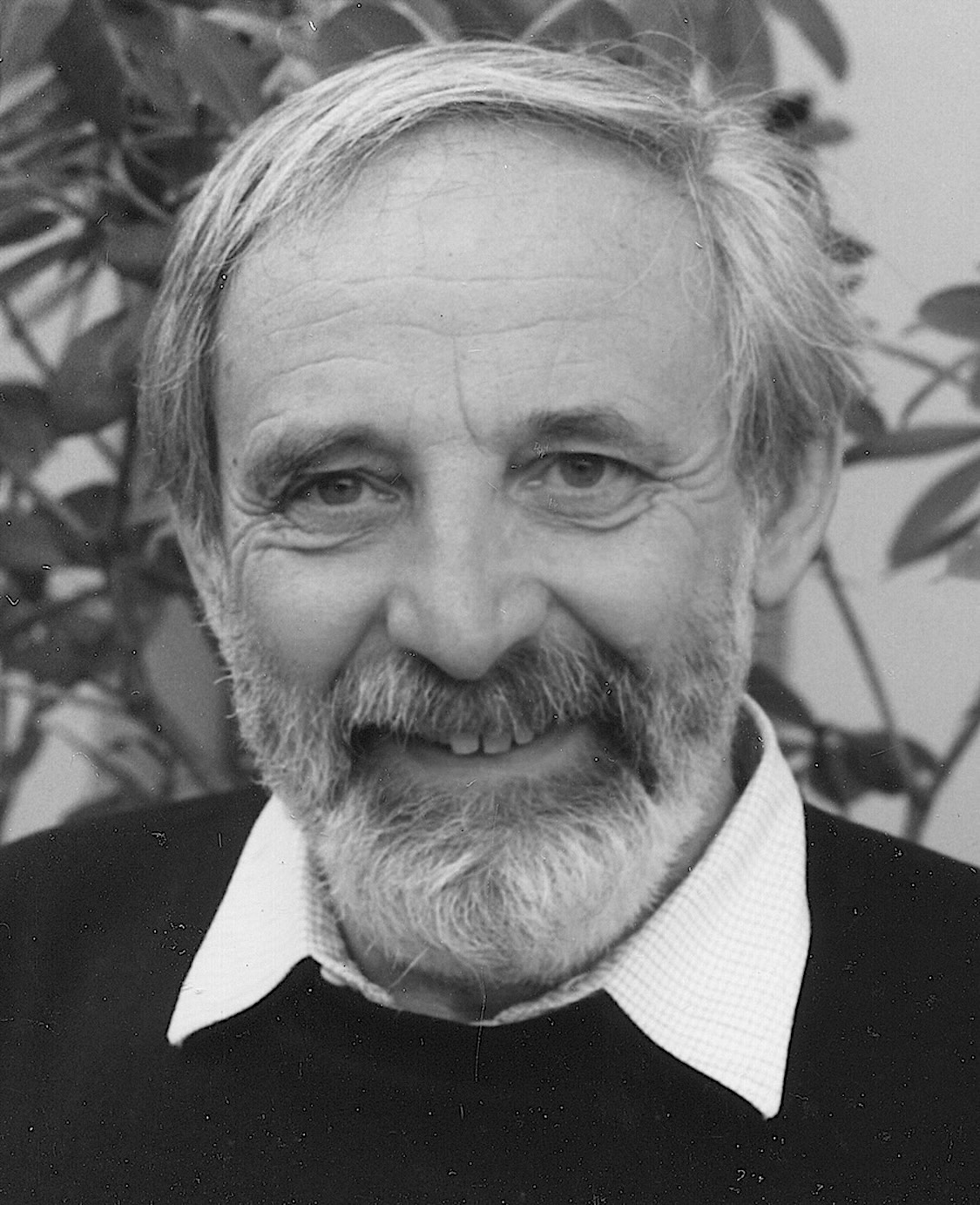
A different way of saying much the same thing is that one could apply basic tools of quantum physicists to get a new understanding of Morse theory. My paper linking these two subjects is called “Supersymmetry and Morse Theory”. My original motivation was to understand supersymmetry, but the paper has probably been more important for its influence on Morse theory. It is probably the first paper I wrote that is well-known in the mathematics world. Or at least it is better known than any of my other papers up to that point.
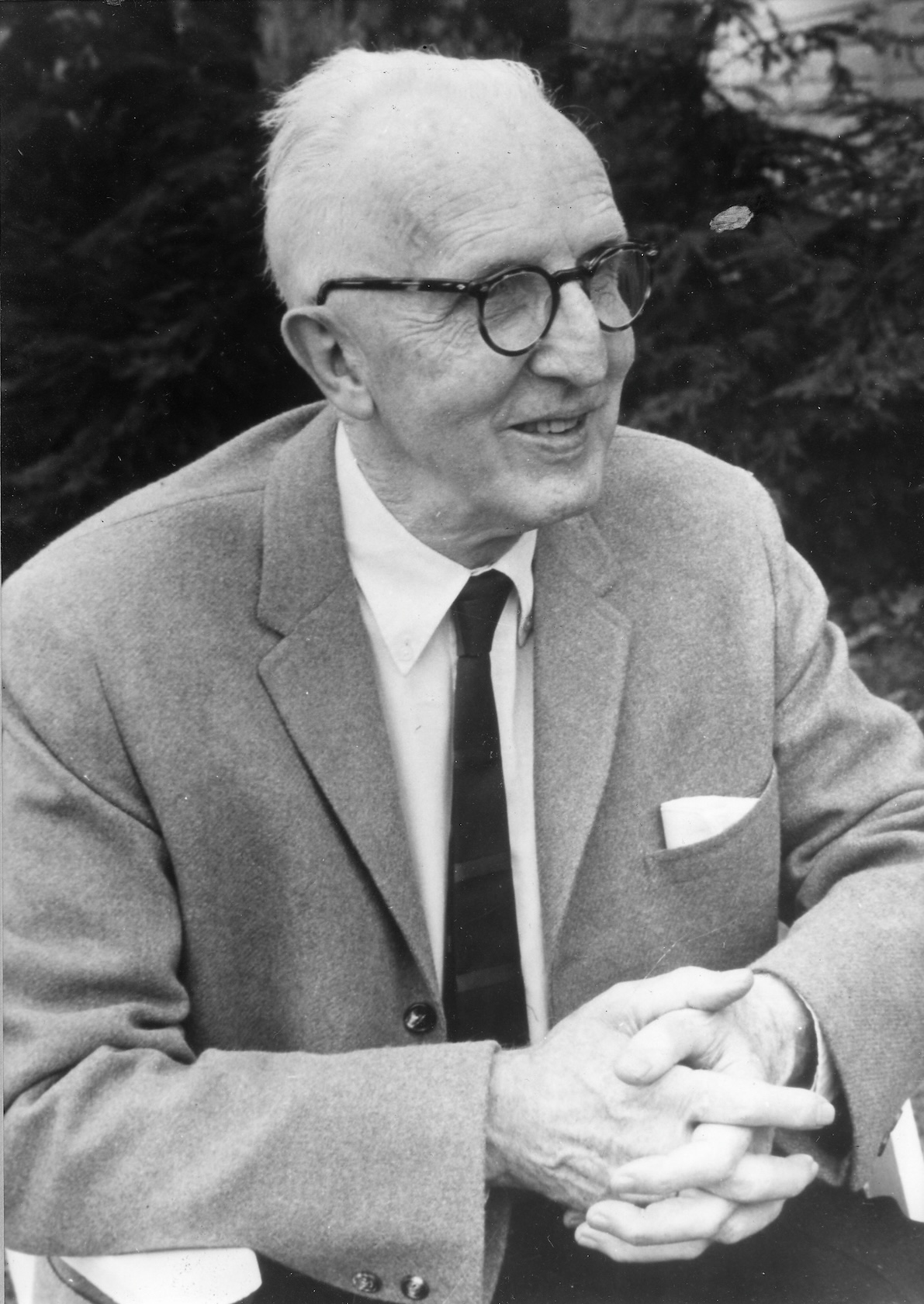
There is actually a human side to this that I would like to mention. Marston Morse, who had invented Morse theory starting in the 1920s and 1930s, was from 1935 onwards a professor at the Institute for Advanced Study in Princeton, where I work. He died at an advanced age in 1977 and I never met him. However, his widow Louise Morse remains well and active at the age of more than 100.2 I got to know her after my work on Morse theory. She has continued to host gracious receptions for the mathematical community in Princeton until very recently.
Before saying more about the relation of my work to mathematics, I should tell you about the major influence on my physics that I have not mentioned so far. This is String Theory.
Updating Einstein’s theory of gravity to take Quantum Mechanics into account has been a dream of physicists since the 1930s. But it is a tough challenge, and direct experimental clues are scarce or nonexistent, beyond the bare fact that General Relativity and Quantum Mechanics both exist and are important parts of the description of nature.
The basic idea of String Theory, to state it naively, is that an elementary particle is not a point particle but a little loop of vibrating string
Both then and, in my opinion, to the present day, direct assaults on this problem have yielded little insight. This is actually an illustration of something that I explained before: the need to be pragmatic in research. One generally should not have too much of a preconception of what one is aiming to do. At a given moment, the time may simply not be ripe to solve a particular problem. Progress on something else may be needed first, and the key may eventually come from an unexpected direction.
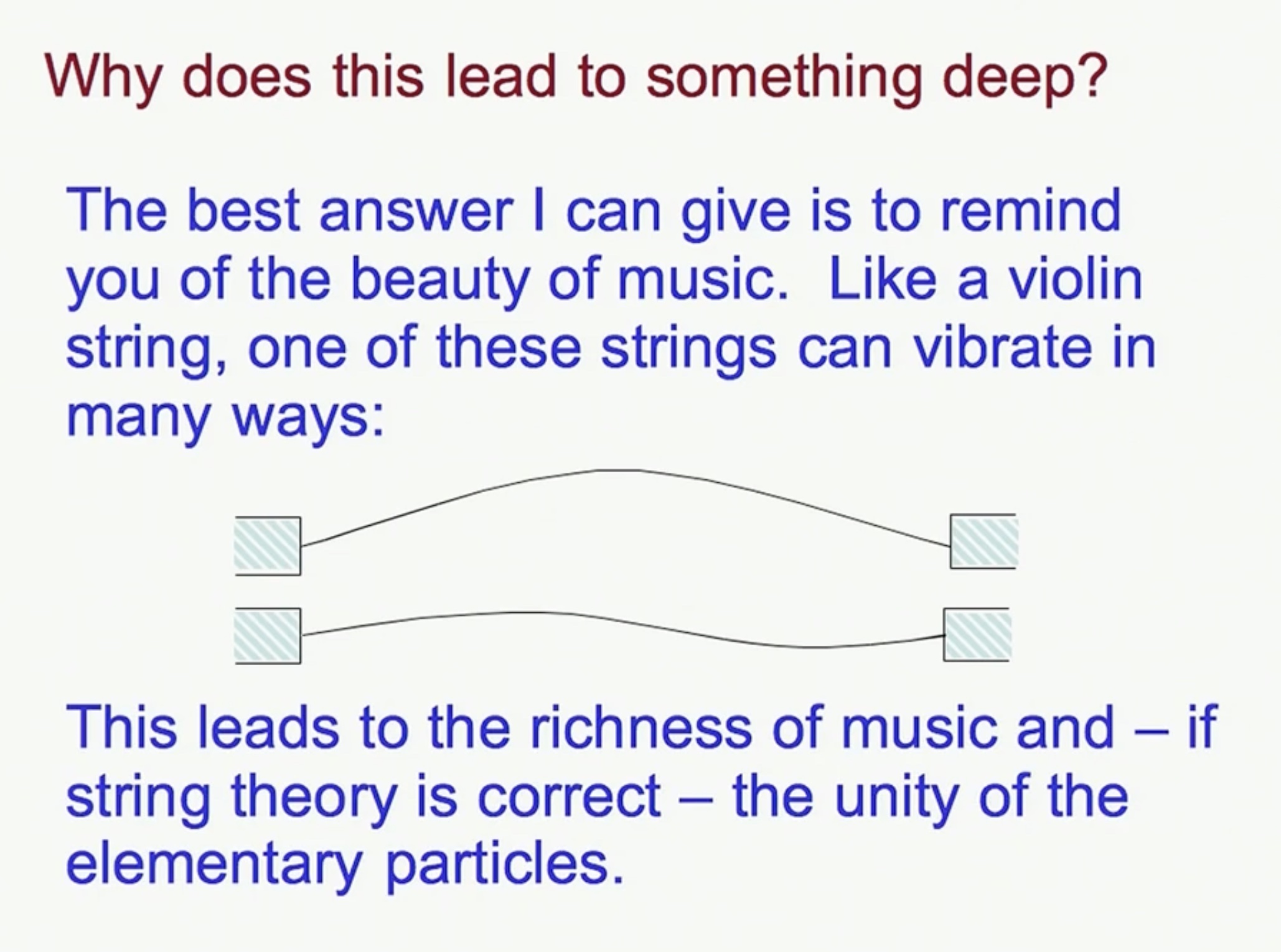
The basic idea of String Theory, to state it naively, is that an elementary particle is not a point particle but a little loop of vibrating string. If one asks why this simple idea leads to a deep theory, the best I can do by way of a non-technical answer is to remind you of the beauty of music. The many different ways that a string can vibrate lead to the richness of music and (if String Theory is correct) the unity of the elementary particles.
By the early 1980s, Schwarz was developing this idea with Michael Green (and sometimes with Lars Brink) and they were obtaining very interesting ideas. I became aware of and fascinated by what they were doing. I was reluctant to be involved, in part because I thought that even if the theory is right, understanding it would be an incredibly long-term challenge. (In fact, among the criticisms of String Theory that are made by some prominent physicists, I personally think this is the most cogent one, to the present day.) Still, I became fascinated, and for example I spent most of the summer of 1982 trying to learn the theory by studying a review article that Schwarz had written.
In 1982–83, though I remained reluctant to become wholeheartedly involved in String Theory, I did a few things that were relevant. The work of Green and Schwarz had the potential not just to combine General Relativity with Quantum Mechanics but to unify gravity with all the forces of the Standard Model. But I realized that there was a problem—a theory like they were building was going to have trouble accounting for the peculiar “handedness” of elementary particles. Technically, this was because of something called “anomalies.” These had to cancel to make the theory work.
One day in the summer of 1984, I learned that Green and Schwarz had discovered a new way to cancel the anomalies. To me this was electrifying news. It had been clear to me for several years that the problem of anomalies was the main obstacle to make theories of physics derived from String Theory significantly more realistic. So it was obvious that one was going to be able to do much better, and this was certainly borne out by work in the following months.

This paper was interesting for physics because we showed how to get semi-realistic unified models of physics out of String Theory in a rather elegant way. It also had an impact on the relationship between physics and mathematics because the construction used rather modern ideas in differential geometry in an essential way.
In fact, once one took String Theory seriously, one soon found a lot of reasons that physicists would have to pay attention to previously unfamiliar topics in more or less modern mathematics. For example, at a basic level, a string moving in spacetime sweeps out a two-dimensional surface with the property of what mathematicians call a Riemann surface. Riemann surfaces are an important topic in the mathematics of the last century, and they became important for physicists primarily because of String Theory.
From my vantage point, all this made the interaction of physics with more or less contemporary mathematics far more robust and significant. Opportunities to apply physics-based insights to “purely mathematical” problems stopped seeming like exceptions.
In my own work in the years just after 1984, the development that is most worth mentioning here involves topological quantum field theory. This was partly motivated by hints and suggestions by the mathematician Michael Atiyah, who pointed to mathematical developments that he suggested should be better understood using physical insight. Other hints came from developments in physics.
Each problem here involved applying physics ideas to a problem that traditionally would have been viewed as a math problem, not a physics problem. These were all problems that I would not have seriously considered working on until String Theory broadened our horizons concerning the relations between mathematics and physics. In each case, the aim of my work was to try to show how a problem that naively is “purely mathematical” could be approached by methods of physicists.
I will just tell you about one of these problems. It involved knots in ordinary three-dimensional space. A tangled piece of string is a familiar thing in everyday life, but probably most of us are not aware that in the 1900s, mathematicians built a deep and subtle theory of knots. By the time I became involved, which was in 1987–88, there was a puzzle, which Atiyah helped me appreciate. The mathematician Vaughan Jones had discovered a marvelous new way of studying knots—for which he later received the Fields Medal. Vaughan Jones had proved that his formulas worked, but “why” they worked was mysterious.
It may be hard for someone who does not work in mathematics or science to fully appreciate the difference between understanding “what” is true and understanding “why” it is true. But this difference is an important part of the fascination of physics and mathematics, and I guess all of science. I will say, however, that the difference between “what” and “why” depends on the level of understanding one has at a given point in time. One generation may be satisfied with the understanding of “why” something is true, and the next generation may take a closer look.
the difference between “what” and “why” depends on the level of understanding one has at a given point in time}
Anyway, getting back to knots, I was able to get a new explanation of Vaughan Jones’ formulas by thinking of a knot as the trajectory followed by an elementary particle in a three-dimensional spacetime. There were a few tricks involved, but many of the ideas were standard ideas of physicists. Much of the novelty was just to apply the techniques of physicists to a problem that physicists were not accustomed to thinking about.
This work became one of my best-known contributions, among both mathematicians and physicists. But it is also an excellent illustration of something I said in my acceptance speech the other night. No matter how clever we are, what we can accomplish depends on the achievements of our predecessors and our contemporaries and the input we get from our colleagues. My ability to do this work depended very much on clues I got from work of other scientists. In several cases, I knew of these clues because colleagues pointed out the right papers to me or because the work was being done right around the corner from me by colleagues at the Institute for Advanced Study in Princeton. It also helped at a certain point to remember some of what I had learned from Sidney Coleman back when I had been at Harvard, involving yet another insight of Albert Schwarz.
By this time in my life, I had basically spent about two decades working on quantum field theory, but this work involved a sort of split personality. The early part of my career had involved conventional problems of particle physics, which in the Standard Model we understand in terms of quantum field theories in four-dimensional spacetime. Starting in the late 1980s, when I worked on problems like knot theory, I was basically studying somewhat similar field theories, though with rather different goals. The rest of my work was in string theory and largely revolved around a quite different and rather special class of quantum field theories, in two dimensions.
The bifurcation of my interests in two different classes of quantum field theories, studied with methods that are often quite different, felt a little strange. What happened in 1994-95 was that a larger perspective emerged in which all quantum field theories in all dimensions play a role. Many physicists contributed to this. My own contributions basically had two parts.
With Nathan Seiberg, I developed in 1994 what both mathematicians and physicists call Seiberg-Witten theory, though this phrase means rather different things to mathematicians and physicists. I want to explain this in some detail because it reflects the differences in outlook that still exist today between physicists and mathematicians.
To physicists, Seiberg-Witten theory was our new way of understanding how certain quantum field theories behave when quantum effects are big.
When one is doing research, the trick is to find a problem simple enough that one can solve it but interesting enough that solving it is worthwhile. Seiberg and I managed to do this by finding quantum field theories that were simple enough that we could solve them and subtle enough so that we could learn useful lessons by solving them. Among other things, Seiberg-Witten theory enabled me to finally make a small contribution to the understanding of quark confinement, as I had dreamed to do as a student. It is instructive to look back and realize how far out of reach this contribution would have been in my student days, when I had first worked on this problem. As I told you before, another lesson about research is to not have too many preconceptions about what one might be able to accomplish at a given point in time.
My work with Seiberg also had mathematical implications to the study of four-dimensional spaces. These implications are what mathematicians usually refer to as Seiberg-Witten theory. This is actually an interesting illustration of the fact that although in some ways, mathematics and physics have grown much closer together during my career, in some ways they remain far apart. The goals of the two fields and the tools that they can reliably use are quite different. Mathematicians using what are called Seiberg-Witten equations (along with other tools) have made wonderful discoveries in geometry, but usually without much reference to the quantum side of Seiberg-Witten theory.
With Nathan Seiberg, I developed in 1994 what both mathematicians and physicists call Seiberg–Witten theory
The following year, drawing among other things on the experience from Seiberg-Witten theory, I proposed a somewhat similar picture of the behavior of String Theory for strong coupling, when the standard methods of calculation are not adequate. In doing this, I built on and extended the work of quite a number of colleagues. It will not be practical here to explain all of the clues, but I want to mention that at the annual string theory conference that was held in Berkeley in 1993, John Schwarz had been very excited about work he was doing with Ashoke Sen which in hindsight was on the right track. I had never seen John so excited except at the beginning of 1984, a few months before he and Michael Green made their epochal discovery about anomaly cancellation. So I listened carefully and this was one of the things that pointed me in the right direction.
Quantum field theory and String Theory contain many mathematical secrets. I believe that they will play an important role in mathematics for a long time
At any rate, the picture that emerged was that all the string theories as traditionally understood are different limiting cases of a single richer theory, now called M-theory. This theory is the candidate for superunification of the laws of nature. The traditional string theories are alternative descriptions of a bigger reality; they each tell part of a richer story. All quantum field theories in all dimensions are part of this richer story.
I have often been asked why I used the name M-theory to describe the richer theory that has the traditional string theories as limiting cases. M-theory was meant as a temporary name pending a better understanding. Some colleagues thought that the theory should be understood as a membrane theory. Though I was skeptical, I decided to keep the letter “m” from “membrane” and call the theory M-theory, with time to tell whether the M stands for magic, mystery, or membrane. Later, the membranes were interpreted in terms of matrices. Purely by chance, the word “matrix” also starts with “m”, so for a while I would say that the M stands for magic, mystery, or matrix.
Perhaps I should conclude by briefly explaining my view of the significance of the mathematical and physical work that I have been involved in. It actually is more simple to explain my opinion on the mathematical side. Quantum field theory and String Theory contain many mathematical secrets. I believe that they will play an important role in mathematics for a long time. For various technical reasons, these subjects are difficult to grapple with mathematically. Until the mathematical world is able to overcome some of these technical difficulties and to grapple with quantum fields and strings per se, and not only with their implications for better-established areas of mathematics, physicists working in these areas will continue to be able to surprise the mathematical world with interesting and surprising insights. I have been lucky to be at the right place at the right time to contribute to part of this.
On the physical side, though there is no definitive answer, there are many circumstantial reasons to believe that String Theory and its elaboration in M-theory are closer to the truth about nature than our presently established theories. String/M-theory is too rich and its consistency is too delicate for its existence to be purely an accident. Another strong hint is the elegance with which unified theories of gravity and the particle forces can be derived from String/M-theory. Moreover, where critics of String Theory have had interesting ideas, these have tended to be absorbed as part of String Theory. Finally, String/M-theory has repeatedly proved its worth in generating new understanding of established physical theories, and for that matter in generating novel mathematical ideas. All this really only makes sense if the theory is on the right track.\blacksquare