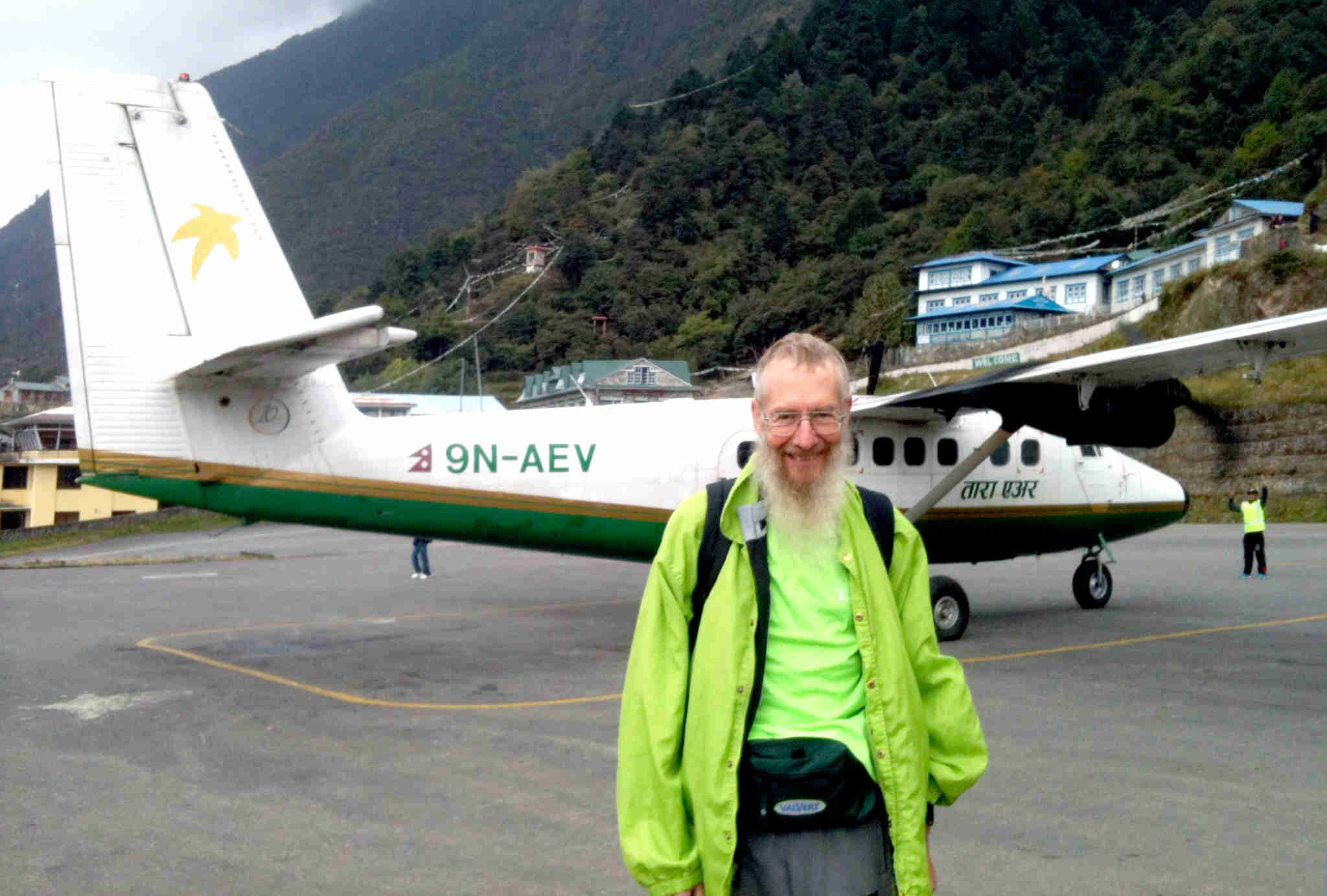
Michel Waldschmidt, Professor Emeritus at Sorbonne University, is one of the foremost living experts on transcendental numbers. Fit as a fiddle at 80, a number he acquired on the 17th of June, his zest for life, spontaneity, positive disposition, and his quintessential childlike curiosity all make him a delightful mathematician to engage with in a long conversation. Adventurous in spirit, generous in helping out, forthcoming in the multitude of academic services he has rendered, and coming from an enviable experience of travelling in over 80 countries, Michel was exuberant talking about his life and work in this interview, conducted at one of his favourite destinations in India – the Institute of Mathematical Sciences.
Michel’s association with India spans from his very first visit to TIFR Mumbai in 1976—at the invitation of K. Ramachandra, upon whose foundational papers on transcendental number theory his early research was built—to several return trips thereafter. The intensity of his energy for research is matched only by his boundless passion for running and travelling.
Michel Waldschmidt was awarded the 2021 Bertrand Russell Prize by the American Mathematical Society, in recognition of his contributions to spreading mathematical awareness in developing countries, and for his sustained, tireless commitment to building bridges between mathematical communities around the world. The Bhāvanā team takes this opportunity to wish Michel on crossing yet another milestone – of completing 80 years.
Welcome to Bhāvanā, Michel! Having known you for many years, and knowing your affinity towards India, it is a great pleasure. You have visited India several times and have been a part of several projects, and, therefore, it’s an honour to talk to you. Let us begin with your childhood and your upbringing. You have spoken earlier about your grandfather who was in World War I (WWI). Please tell us a bit about your family – perhaps starting with your grandparents.
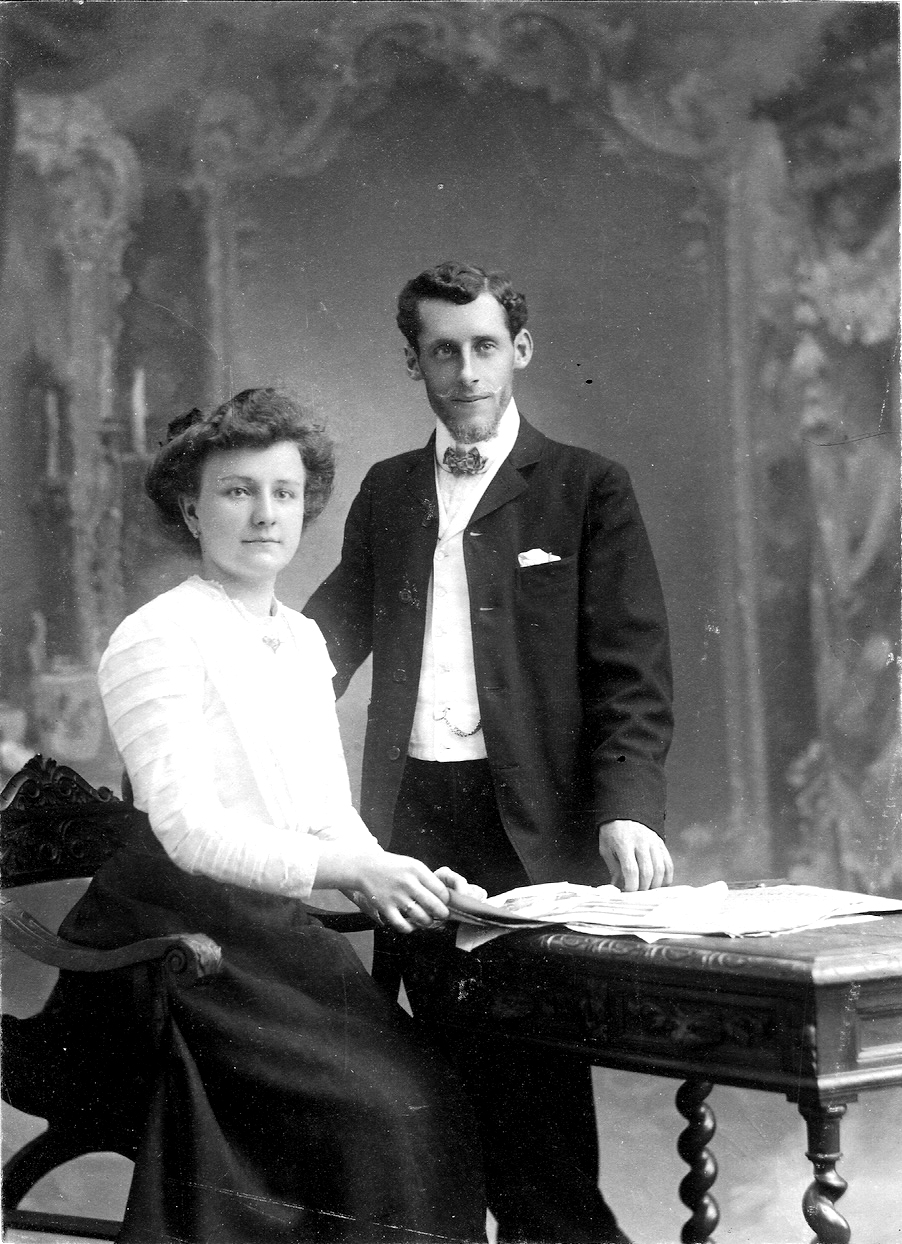
MW: Thank you! Yes, my grandfather was in the French army when he went to WWI. My father was born in 1913. His father passed away during the War in August 1914, when he was only 31, and his wife 26. This is less than a year and a half after my father was born. So my father essentially never met his father. His mother – my grandmother – who was a widow, lived with us all her life. She was very much a part of the family. We were always together. So I had three parents – my parents and my grandmother! She passed away in 1962.
Could you tell us a bit about your siblings?
MW: I am the second child to my parents. I was born in Nancy and I stayed there until I was 22. I also did my high school and university studies in Nancy. My elder sister, Françoise, was born two years before me in 1944, and I have two younger brothers: Daniel, born four years after me in 1950, and the other, Jean-Marc, six years after me, in 1952.
You have also mentioned earlier about your father being your first mathematics teacher. This was when your father helped you solve a puzzle or a question.
MW: Yes, that is true from a certain point of view. This is a fond memory for me. When we were in school we had to solve some problems. One class of problems is called problèmes de robinets, or in English, the Water Tap problems. A typical problem is about a bathtub or a tank having one or more taps with differing rates of inflow of water, and possibly also having leakages from where the water is flowing out at some other specific rate, and one asks: how long will it take to fill the tank completely? My father used some algebra. He wrote on a paper some letters, x, y etc., and solved the problem. He then explained the solution to us without using algebra. I found it really mysterious as well as fascinating, to see that it was possible to find the solution using this kind of tool. I was 10 years old then.
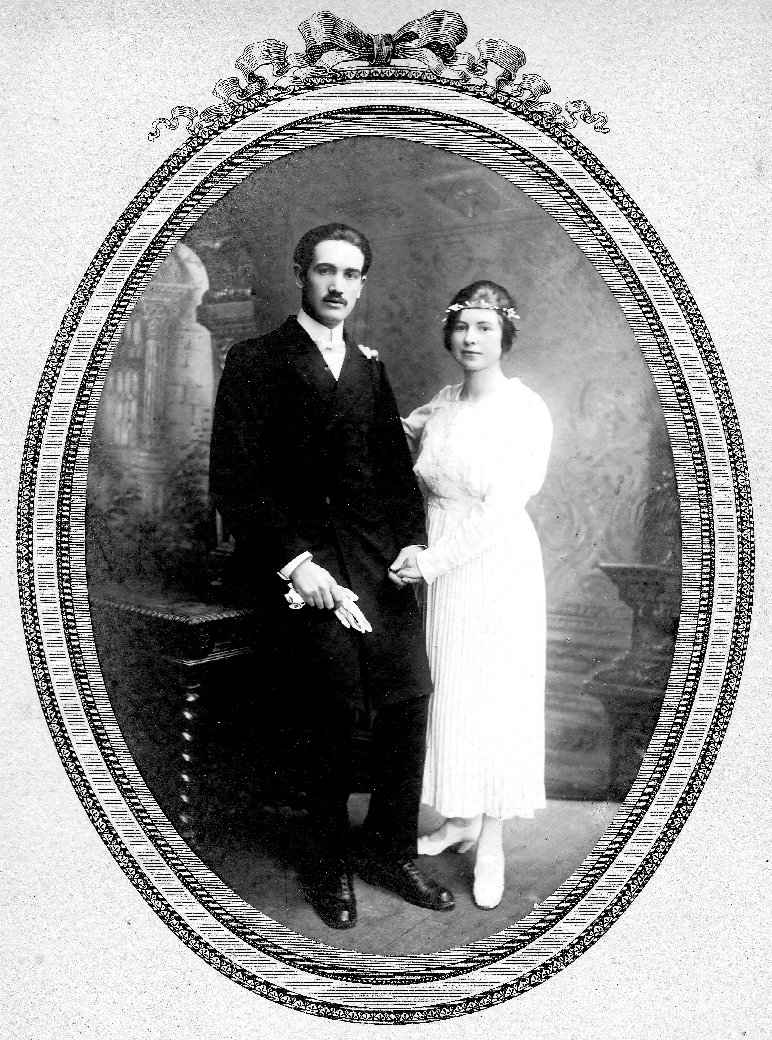
My father was rather good in school, but because his father died in WWI as I mentioned, it was a bit difficult for him. His family was poor, and though he was accepted to high school, he became very ill at that time and could not join. When he was in the hospital, a friend of his, a priest, came to see him. My father was lying motionless but he was listening to the ongoing conversation in which the doctor was telling his friend, “it is good that you came to see him because probably he may not survive for long”. But my father survived. He was probably 18 then. After that, he had some education in science, though not a high level one – not as high as he could have done. It was not unusual for us to go to him for help with our studies.
My mother was from the countryside, from a farming family. She lost her mother when she was only seven years old. My mother was the first of five children of her family, which means that her mother had a child almost every year. Later, my mother’s father married another woman who did not like the children. So my mother was sent to an orphanage and did not have a strong education. In spite of that, she knew that education was something very important. So she insisted, and my father was also in agreement with her, that the children should have good education. This was despite the fact that some of our other relatives did not like it at all that we did some studies. They felt that we were being pretentious. But we siblings were very lucky to have such parents.
So in their own way they thought differently.
MW: Yes. And when I say we, it’s because all the four of us did higher studies.
Are you the only mathematician in your family? What about the others?
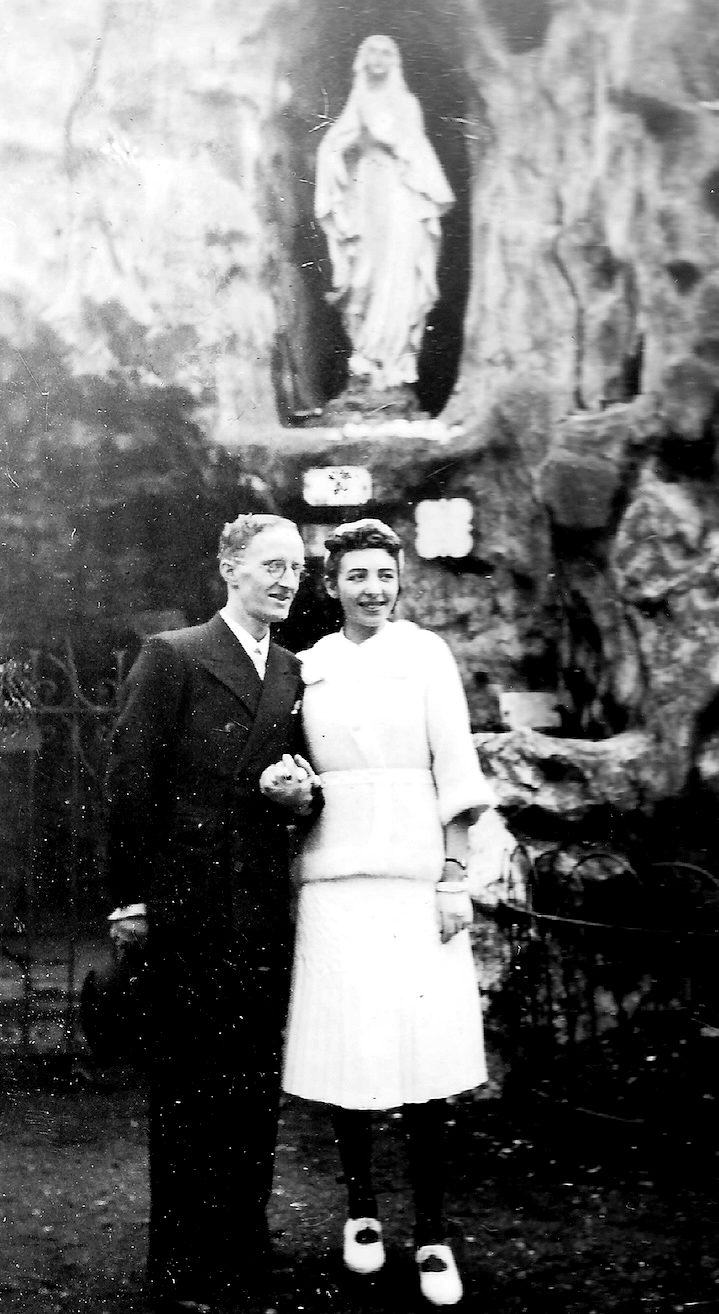
MW: Yes, I am the only mathematician in the family. My sister was a French teacher. She retired a few years ago. I rely a lot on her. I correspond with her very regularly. When I have some problems with grammar or some problems from the French language I consult with her.
As for my two brothers, the first one served as the head of a Centre for Disabled adults, before he retired. The younger one studied chemistry. He also retired a few years ago, as a chemical engineer.
Your entire education, I believe, has been in French, which is your mother tongue.
MW: Oh yes, and until very late, which means that all my courses were given in French. Even much later, when I had a position in Bordeaux at the beginning of my career, very few people there spoke English. At Bordeaux University, Michel Mendès France spoke English fluently, and he was one of the very few professors in the mathematics department of Bordeaux speaking English. When some of the visitors who came to the department gave a lecture in English, it was difficult for all of us, because all the other lectures were in French. Of course, now it’s completely different. I think everybody knows English, which was not the case in 1968. Since everybody spoke French there was hardly any contact with other languages.
When I was young, foreign language teaching was very poor. I learnt German for seven years, but at the end I was not fluent in speaking. I was only able to speak a little, which I soon forgot. Even for English, I was not able to speak the language at the end of my studies. I started to learn German as the first foreign language at the age of 12, and English as the second foreign language three years later. But now one starts much earlier, which is very good.
And I think one talks about language because it reflects culture in a way. For this reason, I think, perhaps learning the local language may also make you understand the culture.
Language reflects culture
Speaking about different cultures prompts me to ask you about your surname, Waldschmidt, which doesn’t sound French!
MW: Yes. One of my brothers, Daniel, did some genealogy studies. He found that we had some ancestors in Germany in the early 19th century. So we definitely have that connection. But if you look at all of my ancestors, some are from other places. Some of my ancestors from my mother’s side are from Italy. So though I have ancestors from several places, the name definitely comes from German – there are very few families with that surname in France. When I was in Marburg in Germany, I looked in the directory and found that there are a lot of people with Waldschmidt as their surname. Wald means forest in German.
It is interesting you say this because from our previous conversation I recall you mentioning that you go for your morning walks in the forest near your home in France!
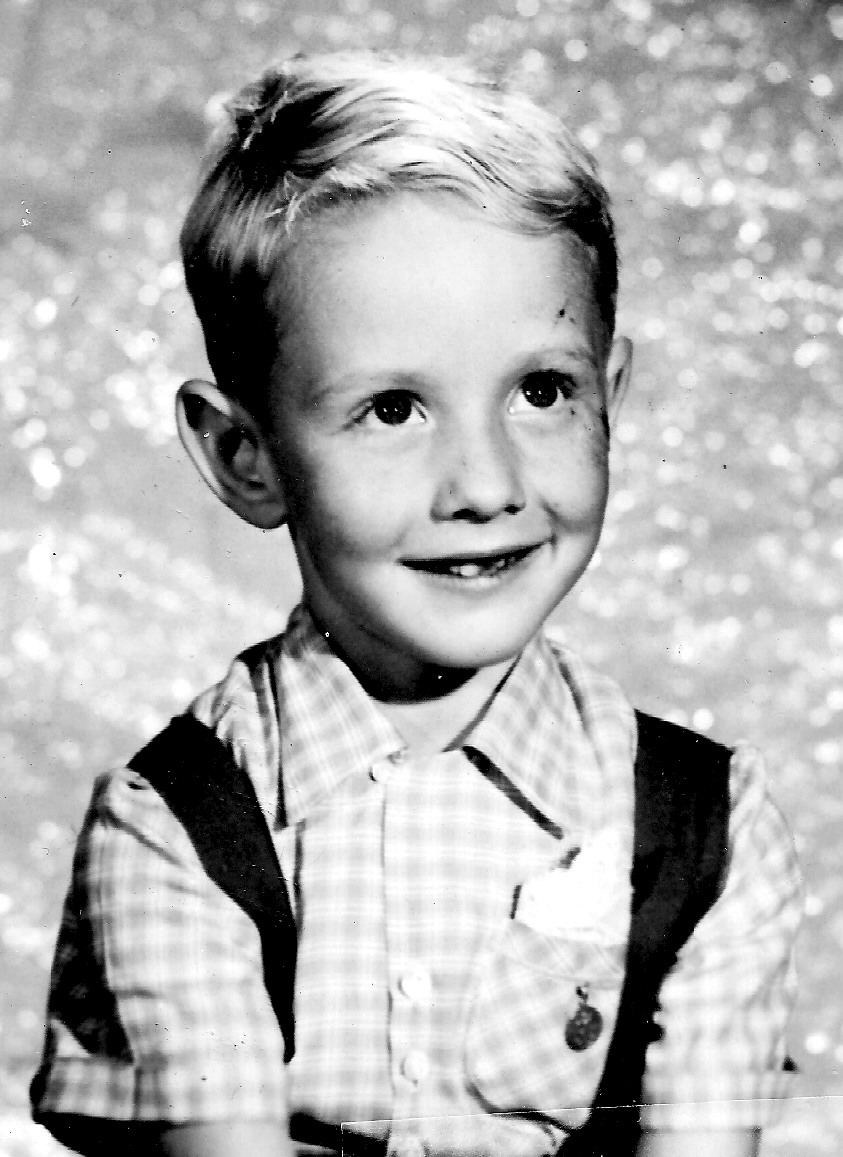
MW: Yes, that’s true. Just one more word about my siblings. My sister, who is a bit older than me, has something called synesthesia. It’s not a disease, it’s a peculiarity which a number of people have. She associates two things that are not quite related, and for her it is numbers and colours. Starting with 1, the digits, for her, are on a path, not linear but a kind of maze. They have colour for each number, for instance 2 is red with a black border. She was, however, never attracted by mathematics, and chose literature instead.
While describing your childhood, you said you had three parents. I think you were very fortunate. Could you please tell us about your grandmother as well?
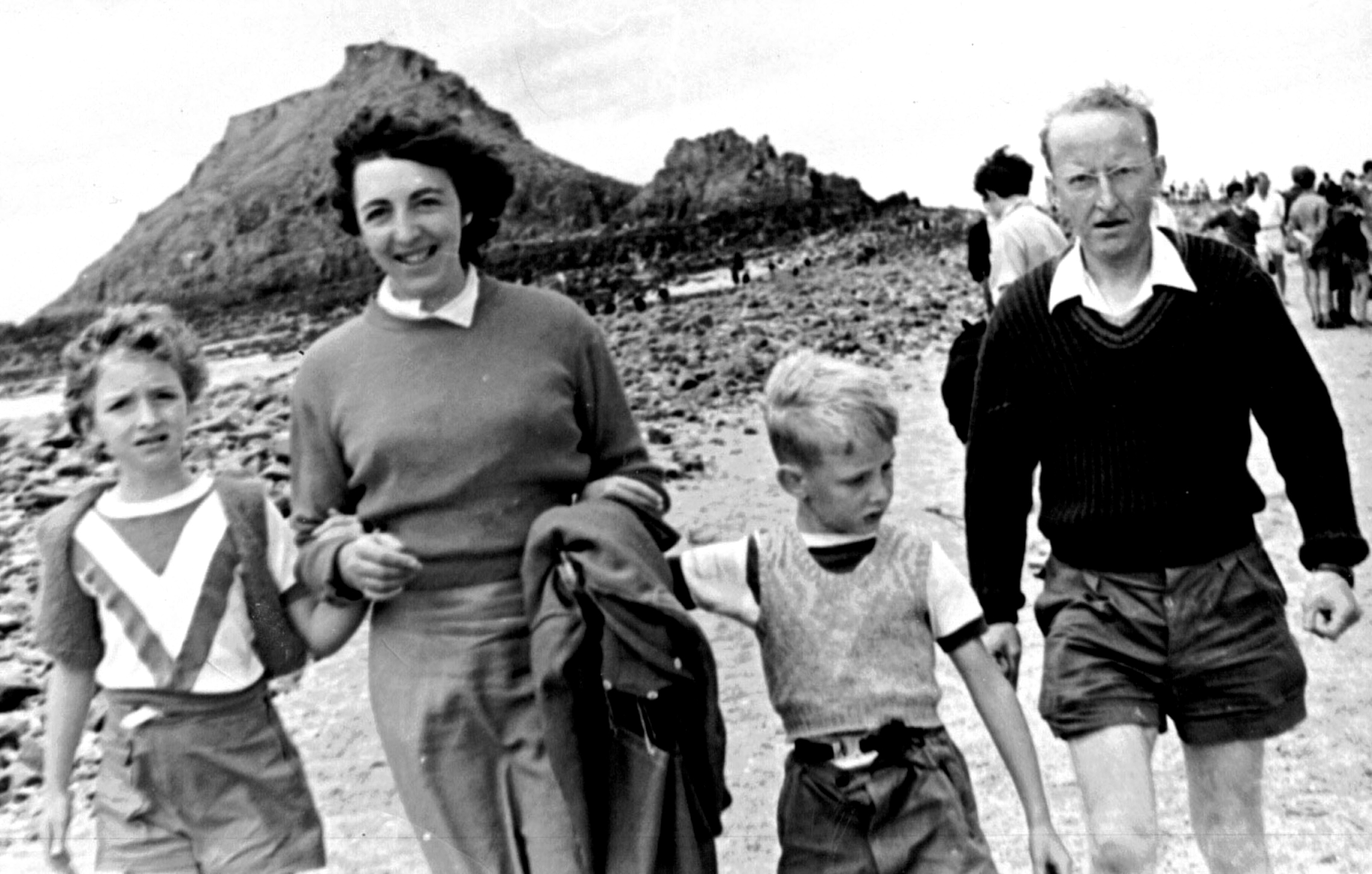
MW: My grandmother was a widow when she had a young boy, and she had a hard life. She was a school teacher for some time, and also worked for the French railway as a secretary. She worked all her life and she was the only support of her son in early years. She lived with us. She was very much educated, and helped us with our school homework. She always dressed like a widow all her life and she would never go out of the house without a hat. She also went to the church on a regular basis.
Perhaps she had an inbuilt sense of respecting the culture and tradition in some way…
MW: Yes, absolutely, very strong. And I remember that near the end of her life, when she saw some television programme where there were some dancers, she was shocked by the way they were behaving, so she was very strict.
So you used to go to church with your grandmother?
MW: Yes. Every Sunday. It was very important – we could not miss, no excuses. We had to learn the Bible. We also learned a lot of other things. We also attended some courses on religion. This was separate. It was not part of our schooling. My school in Nancy was a public school and probably most of the students at the school were Catholic.
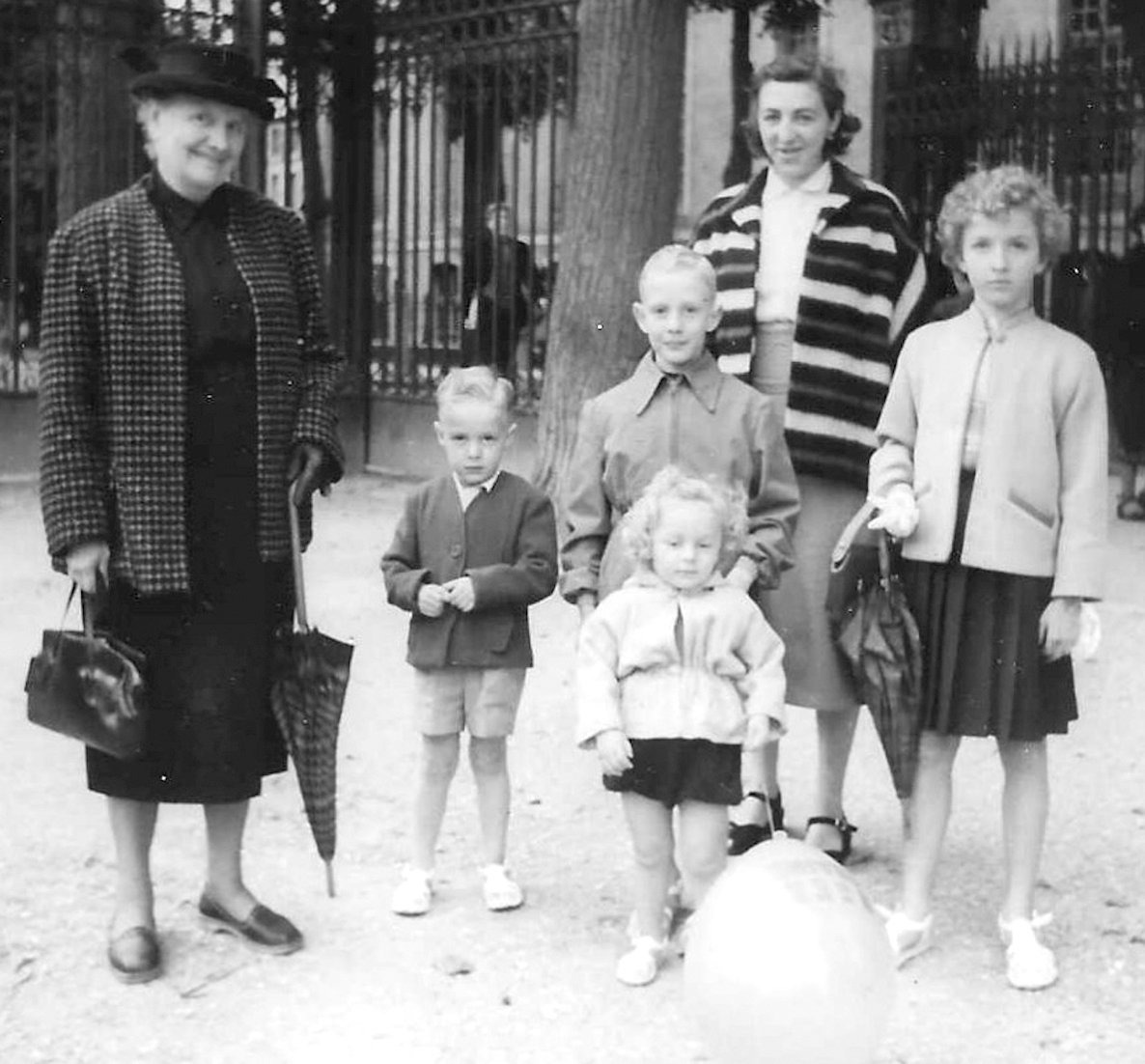
My mother was educated in a Catholic orphanage where the nuns were very nasty to the children, and almost all the people there, possibly with one exception, gave up religion because of the education. By the way, my mother passed away recently in 2022, when she was 102 years old. My father passed away accidentally in 1966.
What things fascinated you as a child? Things that you enjoyed doing in your childhood…
MW: I was a very quiet child and did not want to be nasty or disobey. It was paramount for me to follow the dictates at home. My mother reminded me of a time when we were very young. We were at a restaurant and children at another table were making a lot of noise. At our table we were four children and we were very quiet. And the parents at the other table, looking at us, said, “They are just quiet but they are not happy, they cannot enjoy because their parents are too strict.” Perhaps I am not able to put it correctly, but for us, we were not sad. It was our way of behaving, and it was fine for us. We were content.
Any hobbies, games you liked to or enjoyed playing?
MW: I am not too fond of playing in a team sport. Hence I did not participate much in the usual sports such as soccer at that time. I learned to swim but did not practice any specific activity otherwise. There is this thing called the Boy Scouts. My parents did not want us to go there because they said: “you would be away from the house on Sundays too”. Therefore I do not remember any hobby that I had. I liked to run a little bit, but did not have the opportunity to do serious running until much later.
I was a very quiet child
I learnt some music during this time – I learnt to play the violin. My mother liked the violin very much. So when I was about ten years old, there was an opportunity to learn violin. It was also possible to get a violin, like on a study loan for free, including lessons. So, I learnt it for seven years. I was a member of an orchestra for children under 15. As a member of the orchestra, I was always playing the second fiddle because I was a very poor player. At some point, my parents bought me a violin and thus, I continued with learning and playing it more out of commitment but without much enjoyment or skill. Finally there came a point when I decided to stop learning, as well as playing, the violin.
Many years later, in 1972, when I left Bordeaux for Orsay with my wife, we had a flat in Palaiseau. By coincidence, this was the place where Jean-Marc Deshouillers knew a teacher of music. He used to play the flute, and he mentioned to me that if I was interested, he could ask his flute teacher if he would be willing to teach me. So I contacted his flute teacher and took some lessons. I bought a flute and, similar to my violin learning, I learned to play flute for seven years. One day, when I was practicing, my son, who had just begun to speak, said,“ Stop, it is not nice!” And, I thought he must be correct – for the truth comes from the children! Also, sometimes while listening to people sing or play, I had observed that the music they were producing was not very good. I thought to myself that perhaps I too was doing the same! And so I completely stopped playing.
I concluded that I like music, but music does not like me (laughs). In fact, it is a pity that I lost my flute. I do not know where it is. I donated my violin so that some young children can benefit from using it. I do not play any music now, but I like listening to it.
It appears that you have a good aesthetic sense for music. Do you attend concerts? And what is your favourite music?
MW: Nowadays, I do not go to the opera that often. I have attended a few times, but not very often, as these days one can watch it on the television. I often listen to music on television in the evenings. We have a lot of concerts that are available online – I connect the television and watch it on the screen! My wife and I watch together – either an opera or a concert. Simultaneously, I also do some work while listening or watching, on and off. So, yes, I listen a little bit, but not much. I like Baroque music. Among composers, I like to listen to Bach and Mozart.
How was your typical day or week at school? What was the school schedule like?
MW: It was from 8 to 11 am, then we would be back home. We would again be at school from 1:30 pm to 4:30 pm or so. We had classes on Mondays, Tuesdays and Wednesdays, and Thursdays were free; then again on Friday and Saturday mornings. So at that time it was Thursday which was the free day. Nowadays it is Wednesday which is the free day. I remember that on Thursday afternoons we used to meet friends of our age at a neighbour’s house to watch a television programme for young people. At that time there was one channel on the television and hence one programme in the afternoon, maybe at 4:30 pm or so. This was the only time in the week when we watched the television. Incidentally, we did not have a television at home. We were living in a small apartment for seven people, no bathroom for instance, and the only source of water was in the kitchen. There was a small garden where I liked to play with my sister – a piece of wood became a horse for playing Cowboys and Indians. We were imaginative. A piece of string was a stethoscope for playing to be a doctor. When our parents bought us a doctor panoply, we stopped playing that game. When we played school, my sister was the teacher and my brothers and I were the pupils. We also played family with my sister as the mother, I was the father and our young brothers were the children. I do recall having a toy electric train which was part of the things that we played with. My sister was in charge of the wagon restaurant and prepared improbable recipes.
Any special teachers or books or any other things that influenced you during those school years?
MW: Yes. I had some very good teachers in France. During the first two years of high school there was a very good teacher of French who also taught at the university. And another one, the year after. These French teachers were very good, very clever. They were very cultured, so I liked to listen to their courses.
The high school in Nancy, where I was a student, used to be the Lycée Imperial when Henri Poincaré was a student there
This high school in Nancy, where I was a student, is the Lycée Henri Poincaré. It used to be the Lycée Imperial when Henri Poincaré was a student there. This Lycée where he completed his high school, which is now named after him, was a very good Lycée. When I entered the third year of high school we had a teacher of mathematics who was the only teacher with a PhD. At the beginning of the year, we were noisy in the class, and he was there but could not do anything. We were having a good time. But we were quite reasonable because after a few courses like this, we realized we were wasting our time. So one day we decided to be quiet. We entered the classroom and were ready to listen. But we did not tell the teacher before. He was not prepared. As a matter of fact he was not able to teach. We complained, then we had another teacher, a very young one, who was very enthusiastic. He was excellent. This is really when I started to become interested in mathematics.
We had another teacher two years later who taught us for the next three years. His name was Chipon. In his first course, he explained how one should conduct, how to write mathematics and such, but nothing concrete as far as mathematics was concerned. I was a bit disappointed that we did not do mathematics, and at that time I thought we wasted our time. But, I now realize that I should have been more attentive – what he said was probably extremely important.
In fact, after that first course, he taught us mathematics. He was an excellent teacher. I truly enjoyed doing and learning mathematics from him. He asked us some geometry problems. This was the fourth year of high school, and we did some problems about circles, triangles, and proving that certain three points are on a straight line. I liked it very much. I spent a lot of time playing with that. It was truly a great pleasure to do mathematics.
That is when I realized that I liked mathematics more than any other topic. I was not at all good in physics and chemistry. It’s a bit strange that I was not good at it given that physics is not very different from mathematics. Maybe it’s because in physics we did many computations, and I always made mistakes while computing. Even if my reasoning was right, my answers were wrong, resulting in poor marks. Also, I did not understand, or was not good at, applying the laws of physics properly. I found it very confusing. In such situations, I would blame the professors rather than myself. I was more at ease with mathematics because it was not confusing for me.
When we played school, my sister was the teacher and my brothers and I were the pupils
So it was geometry that fascinated you in those early years in high school. Perhaps this was also a deciding factor to pursue mathematics further.
MW: I did seven years in this high school. After that I could have entered the university at that time. But there is also some programme, which is for two years, to prepare for the so-called Grandes écoles, the École Polytechnique and École Normale Supérieure. I entered this programme. I did what is called Mathématiques Supérieures (commonly called Maths Sup), and Mathématiques Spéciales (commonly called Maths Spé). It is called the Classes Prèparatoires aux Grandes Écoles (CPGE). During these two years, we had a lot of work to do, and I enjoyed it. This is also the time when I spent all my time working, especially in mathematics. But I soon realized that it was a bit too much for my personality, and I wanted to bring a balance. That is when I started to run. I had a friend who was running, so I joined him. I liked running even before, but did not really practice. However, I realized that I needed something. So these two years were extremely active.
How old were you then?
MW: You know what the Baccalauréat is? So this was just two years after the Baccalauréat. It corresponds to the two years of college.
That means you were probably 19 and 20.
MW: Yes, I would say 18 and 19. I was one year younger than most of my classmates. In fact, when I was in elementary school, I skipped one year because I knew how to read when I started. I was always one year ahead from then on, and I was very happy about that.
Now I think that it may not have been the best solution. Because I was somewhat immature in several things, especially in mathematics. So when I was in this classe préparatoire, I was not among the best. I was not at the level of applying to enter École Polytechnique or École Normale Supérieure. It’s not because there was any age related requirement to apply to enter these institutions, but it was because I was not mature enough. And I had not mastered the subjects sufficiently well. Also the professors, the teachers, told me that I had no chance. I did not want to become an engineer either, though that would have been a natural career path to follow.
But those two years were quite hectic and I was busy all the time. When I entered the university, I had much more free time. I worked almost as hard as before, much more than other students at the university. That was when I first became better than the others. Since I had some free time, I started to earn a little bit of money, which was 10 francs per hour, which is 1.5 euros for one hour of teaching. I was very happy when I got my salary at the end of the month. I was teaching mathematics at the level of the second, third, and fourth year of high school. That was my first experience of teaching. The money was not much, but it was a very important experience for me to learn how to teach at a very young age. I did not have my BSc, I was just preparing for the BSc, and I liked teaching very much.
That was an important experience for me. I gave some lectures in high schools, but also public lectures, like on the number \pi, or things like that. Nowadays, the way they prepare students is to say that we should not make things too difficult for them. I think it’s just the opposite. The interesting mathematics is when it is difficult, if you have a flat path and if there are no challenges along the path, it’s boring. In the present school programme, children are not challenged and they do not understand why mathematics is so attractive. To repeat what is already taught is boring.
The interesting mathematics is when it is difficult
Most of us in India are fortunate to be taught in government or government-aided institutions. Perhaps France still has a mostly free education system. However in India, even primary education has become way too expensive. What are your views on privatization of education and public spending on basic education?
MW: My education was in the public institutions. And it is the same for my children and for my grandson. So far, the public system is working well in France. But I hate the fact that education is related with funding and with finances, and that education would be only for the rich. I think this is very bad. Perhaps this is the way that things are moving, which is very sad. But, it’s also difficult to go against prevailing trends.
Is it also moving in that direction in France?
MW: Yes, but not as much as what you say prevails in India. I know it is so in many other countries I have visited. In countries like Nepal and Cambodia, you see advertisements for private schools. It is a sign that education is now good business. It’s of course possible for the teachers to earn more, and I will not blame the colleagues from Cambodia, where the university teachers are paid very little or not paid at all. So they teach in private institutions where students can afford high fees. What is going on is really sad. We in France are fortunate that it is not like that, at least as of now.
That’s very good. In my generation and the previous one, a typical home would have at least two children. But the parents never had to worry about education because it was either free or not that expensive. But now, financing even a single child’s education is a very serious effort.
MW: The way it is going in France now is not very good, especially for the universities. They decided to increase the fees quite a lot, especially for the foreign (non-European) students, which is terrible. Thankfully, many universities – as far as I know, my university is one of them – refused to do that. But on the other hand, the government gives less and less money to the universities, saying “you have to find the money”. There is a neighbour of mine with whom I used to run, and who is in a private business. He told me that university is a company like any other one, and we have to use the rules of all the companies. And the rules are that the patrons are the ones who decide. So in all education, the ones who decide are either the students or their parents, which is something I consider as completely silly. It’s the opposite of what one would prefer, and I am afraid it will become like that in France too. These developments are very sad.
I liked mathematics, and I was among the best in my class
Could you please talk about your transition from being a student to being a professional mathematician?
MW: I liked mathematics, and I was among the best in my class. In the other topics, I was not among the best. I remember that when I was in the first year of high school, my parents went to see the headmaster, who was a professor of French. They asked him how I was doing in school. He said that I was in the middle range, to which my parents responded:, “oh, we are happy to hear that”. And he said, “no, no, you should not be happy, he should be on the top.”
I was in the upper middle in most of the topics, but was almost never the best. However, mathematics was certainly one of my favourite topics. I did not know what I would become. When I passed the baccalauréat, at the end of high school, I received good marks in mathematics. With the desire that I should do what I like, I attended the two year CPGE, though without being fully aware where that would take me!
When I entered the university, I had the option of receiving grants (IPES: Institut de Préparation aux Enseignement du Second Degré) to support my education, provided that I commit myself to teaching for the next five years or so. But I did not want to commit myself, and so I did not accept the grants. In hindsight, I think I lost considerable money by not doing that. But I wanted to be free, and to see what I can do. While I knew that it was possible to have some position, such as teaching, I did not know that there was also the future possibility of doing research. The fact that one can go on to do research in mathematics was not so clear to me at that time. It became progressively clear.
I recall mentioning to my professor at the University of Nancy that I was interested in algebra. The reason for this is interesting, and it happened like this: During the year 1967–1968, Shokichi Iyanaga was visiting there. He was invited by Jean Delsarte, who is a founding member of Bourbaki. They knew each other. During his visit, he taught a course on `Algebra’, which I liked very much. Later on, I found out that the `Algebra’ course he taught was in fact a course on algebraic number theory as it was based on the book titled Algebraic Theory of Numbers by Pierre Samuel! It is a very nice book and he was teaching from that book. I liked it very much.
The main professor at the university at that time, Pierre Eymard, suggested a few places, including Bordeaux, for further study where there were some people working in number theory. And it is there that I found that what I thought was algebra was in fact number theory! And the course of Iyanaga was called a master’s course. We called it differently at that time. It was Diplôme d’études approfondies (DEA). This was excellent for me because I could then go step by step.
When I got a permanent position in Bordeaux, the professor who welcomed us told us that those who want to do research will receive a tenure, and the others won’t! So I said I would like to do research, and got a tenured position. At that time, I just had the BSc (Licence in France), and nothing more. I did not have a master’s degree. This was in 1968. And so I started to do research at that time. I was also a bit afraid because it was quite clear to me what it meant – that I had to do something entirely new that nobody found before. My doubt was more about how! Naturally, I was a bit scared.
As you may know, in May 1968, there was a turmoil in France
So, I had Iyanaga as a professor in Nancy. With Delsarte, I was also preparing for the agrégation, which is a nation-wide exam. While I was in Nancy, on a Saturday of May 1968, I got the information that I had a position in Bordeaux and the written part of the agrégation would take place starting next Monday. These exams continued for the entire week. Some of them were six hours long, with a long problem to solve. It was quite challenging. As you may know, in May 1968, there was a turmoil in France – it was a period of widespread protests, strikes, and civil unrest.1 I was accepted to the oral exam, but there was a student strike. I got married at the end of July, the same year, and we went on a honeymoon by car. I was buying the newspaper every day to know whether the oral exam will take place or not. And in the car, I had kept my study material to prepare for the exam! The strike was going on as we continued on our honeymoon trip to Spain. However, in Spain, there was no newspaper to give me any news of what was happening in France. So I decided to give up. When I came back early September, I learnt that the leaders of the movement had passed the oral, but not all of them. So there was a special oral the next year, which I was able to appear for!
What was the agrégation for?
MW: It was officially for high school teachers. I was not looking to become a high school teacher, but as a member of the University of Bordeaux, the agrégation would have given me a better salary. Due to the delay in my oral exam, I lost some money in the first year during my assistantship at Bordeaux.
Where did you meet your wife? Please tell us her name.
MW: Anne. She’s also from Nancy. When I was a student, my sister had a friend who was part of a choir who used to sing. This choir had the practice of travelling abroad every summer for a month. And the choir would visit from place to place and perform for money, thereby partially supporting their travels. As such my sister was not in the choir. However, just before they were about to travel to Portugal one of the singers could not travel; so my sister’s friend requested my sister if she could take her place. Thus my sister travelled with the choir. This is how I became aware of the choir’s existence and I decided to participate in the choir as well. Anne, who was then also a student at the same university, was a member of the choir. Come to think of it, neither Anne nor I were good musicians or singers, but we definitely enjoyed being part of the choir. We met at Chorale Universitaire de Nancy for the first time in 1964 or 1965, and got married in 1968. This was four years before my PhD in 1972. In 1979 when we moved to Limours, the place where we still live, my wife and I became members of the local choir.
You said that you like music, but music does not like you, but it seems like it was music that brought the two of you together!
MW: Yes (laughs). At the time I joined the University of Bordeaux, I had a colleague who was my office-mate. Instead of research, he had opted for teaching, and was also giving private lessons. He was earning a lot of money. And for me, I didn’t feel up to it. My wife gave some French lessons in the private school and was earning more money than I was in the university. In hindsight, I would say that I made the right choice by going for research. I enjoy thinking about mathematics very much. I recall that when we went to the beach sometimes, I saw everybody playing, while I was thinking and trying to solve some problem. I was really enjoying it. It was not a duty or a forced activity for me, it was out of my own volition, it was really a pleasure.
Did you have a childhood fascination for travelling, to India especially?
MW: Yes, to Asia, Southeast Asia. I had an uncle, my maternal uncle (one of my mother’s brothers), who went to Vietnam for the war. He was in the army. I became very much interested to see Vietnam. I was reading a lot of things about India, Vietnam, Cambodia,…, all these countries. I think I was maybe about 10 years old then. I was very much interested to know more about Asia than about Africa. Africa as well, but less so. I was also interested in geography in general. There was a book which was gifted to me, called Les Explorateurs Célèbres (The well-known explorators). There were a few chapters with a few pages about each of them. I was fascinated by the life of these people.
It was my passion, but it had remained just an idea and I had not travelled beyond Europe, beyond even France, Belgium, Germany, Switzerland. I had travelled only to very nearby countries, that’s all. And to travel was one of my dreams. Now I do mathematics and I travel!
to travel was one of my dreams. Now I do mathematics and I travel!
Very nice. So you got married in 1968, and your PhD is from 1972. Were you teaching while doing PhD or was PhD a part of a scholarship or something?
MW: I had a permanent job in 1968. The teaching duties at that time were three hours per week for the professors. And for the assistant that I was, it was, if I remember correctly, maybe six hours, but not much. It’s much less than it is now. One of the professors would teach the course and the assistant would conduct tutorials and problem solving sessions with the students. And the very first year, I was in Bordeaux and the professor teaching the course, Jean Fresnel, was to become my thesis advisor. He had to teach a course on algebra. He decided to teach something which he liked and not the official topic. At that time, Fresnel was working on p-adic L-functions, and was working with his thesis advisor, Yvette Amice, who was a student of Charles Pisot; they have a joint paper on p-adic L-functions. He wanted to change the topic, and do something else; in fact, he wanted to learn rigid geometry and algebraic geometry. He wanted to learn schemes.
So Fresnel decided that the course on algebra will be on schemes. He told me that it is a difficult topic, so much so that it will be more difficult to do exercises than the course. He said: “I will give you the book, you will teach the course, and I will do the exercises”. That is how I learned from the book. The author was I.G. Macdonald. The title of the book is, Algebraic Geometry: Introduction to Schemes. The book was good enough that I could reproduce things in class, but my understanding was very superficial. I did not really follow what was going on. Fresnel did the exercises. I met some students of this course much later, and they said that it was extremely hard.
While it was really hard, it could have been an opportunity for me to learn algebraic geometry and to be familiar with it. Anyway, I started my research soon after that. As soon as I found some results, I spent essentially all my time doing research. It is often difficult to find a good balance between learning and research.
Over the years, Fresnel became a specialist of rigid geometry. As for me, I made multiple attempts to learn algebraic geometry. It is a kind of language. I have read the introduction in the book Algebraic Geometry by Hartshorne many times. When reading it, I got the feeling that I understood it, but later on, I forgot. I can say that I did not succeed to understand deeply enough. I think I missed the opportunity to learn it properly. Instead, I utilized that time to do research.
While I did not succeed in learning algebraic geometry myself, it is interesting that my students and grand-students speak algebraic geometry. We have to make choices.
How did your thesis problem come about?
MW: When I was an assistant, I attended the seminars every week. One day, it was on non-commutative algebra. And the speaker asked a question which I could solve. I didn’t publish anything, but I told him that I solved it. One of the professors there, Martinet, asked me whether I had a research subject. I said no. He said, “I can give you one”. And he suggested to me to look at the prime numbers of the form x^2 + 27 y^2 . He did not say anything more. And I had no idea how to proceed, or what to do with it. I did not look at the field of the rational numbers with square root of -27 attached, which is the same as the field of the rational numbers with square root of -3, \mathbb{Q}( \sqrt{-3}). And a little bit later, Jean Fresnel asked me, “Do you have a research subject?” I said, “yes, but I am stuck.” And he said, “if you like, I can give you another topic.” This is how I really started doing research – my journey had begun.
Very recently, I was with Peter Stevenhagen in China. He was giving a course from Cox’s book: Primes of the form x^2 + n y^2. And I told him that I had this problem suggested by Martinet during my PhD. Peter spent quite some time writing the solution of this exercise on the blackboard. It’s a very interesting topic. But at that time, in 1967 or so, Cox’s book was not available and there was no internet. It was quite difficult to get any information. And I was younger and I had no idea.
I recall you mentioning at some point that your first problem was Leopoldt’s conjecture.
MW: Yes, Fresnel suggested this as a research topic. Every Saturday, he spent the entire afternoon with me explaining. Typically, when I would arrive to meet him, I would say that I have solved the problem! He would ask me to explain the solution. As I went about explaining my solution on the blackboard, he would find a mistake, and then he would suggest a way to correct it. I would think that I was rushing it, would rethink my approach, and come back next week with a `corrected solution’.
It went on like this for a few weeks. All along I was using elementary methods. And after a while, Fresnel suggested that I should try to use some deeper tools. And added that there are two ways to attack the problem. One is cohomology and the other is the theory of transcendental numbers. He asked me which one I would prefer. I had no idea either! They were simply two names for me. So, I mentioned to him that I couldn’t choose between the two. He hesitated – sometimes he said one, and sometimes, the other.
Later on, he suggested that I should study the paper by Brumer, which is on the Baker-Brumer theorem in the case of abelian extensions. And also on abelian extensions of imaginary quadratic number fields. As the paper by Brumer relies on Baker’s paper, I started to study Baker’s paper first. Indeed, once one understands the paper by Baker, it’s easy to adopt it. However, Baker’s paper is really hard to study. Then I found in the library a book by [Theodor] Schneider, which was translated into French by Pierre Eymard, who was my professor at the University of Nancy. I studied the book by Schneider. At the end of this book were eight open problems that I was interested to work on.
It’s only later that I found the book by Gelfond. These books have some similarity with Baker’s paper, which is that they say we will prove this theorem, and the proof is the following. Then they start the proof, but they do not explain why they do that. Much later, when I found the book by Lang, I understood the method. I could follow the arguments by the other papers, but to understand why people do that, I learned it from Lang’s book.
I had solved the eighth problem of Schneider using results from the two papers by Ramachandra extensively.
When I sent my first paper to Siegel, I received a reply from him in which he wrote, “I see that you refer to Lang’s book. However, you should be careful because Lang’s book has 105 pages, but I have found more than 150 mistakes, and some of them are serious!” This was in 1975.
I think Siegel himself has a monograph titled Transcendental Numbers.
MW: It is good. But I prefer Lang’s book. While it is true that Lang’s book is full of mistakes, and though it is at some places locally wrong or incorrect, when one reads it, one understands what is the main idea. One can take another paper on transcendental number theory, and observe the construction of auxiliary functions, one then knows why those functions are constructed. Other authors do not explain this.
Unfortunately, I lost the letter of Siegel. I do not throw away many of the papers, so I have plenty of papers everywhere. I would like to find this letter. In fact, I remember asking my wife to translate it, and she wrote its French translation with a pen below Siegel’s handwriting. Siegel had written his letter in German and Anne translated it. I am afraid I may have lost it.
I met Siegel, but much later. At that time, I was teaching a course in Hannover. Norbert Schappacher, who attended my course, told me that Siegel was in Göttingen and was just out of the hospital, recovering from an eye problem. This was in 1980. And Siegel passed away in 1981. Norbert told me that Siegel usually does not like to meet people. But when he comes out of the hospital sometimes he agrees to have one visitor. That’s how I went to see Siegel and I could meet him.
Oh, that’s so nice.
MW: When I entered his flat, he said, “Bonjour, cher collègue” in French. Then he spoke in English. He asked me whether I have some news from André Weil. Then he told me that the two of them used to correspond very often, but he had not heard from him after they had some exchange about the publication of the volume of Weil on his work. He had written to Weil to congratulate him, to which Weil answered that a similar volume on Siegel’s own work should be published. Siegel replied that he was not willing to do that. And he had not heard from Weil since.
How did your visit to India come about?
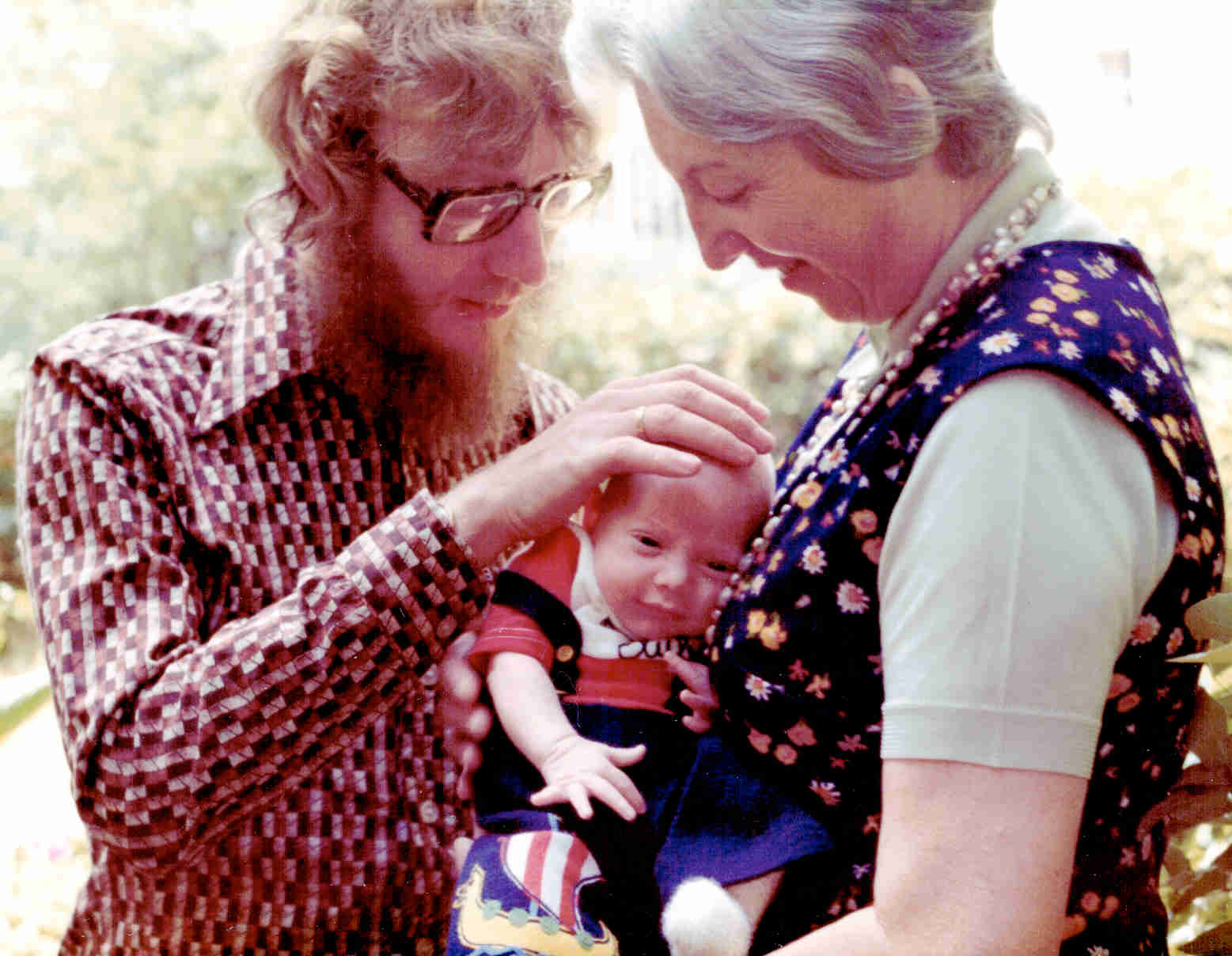
MW: I was eager to come to India. I received the invitation from Ramachandra at TIFR (Tata Institute of Fundamental Research, Mumbai) in 1975. I came in 1976, and I wanted to come with my wife. She was pregnant with our son, who was born prematurely in May 1976. So we decided on not travelling together and I came alone, especially because my son was ill when he was born. Travelling together was ruled out. I was at TIFR for three months. When I came back, I had not seen my son for four months. And he was not so happy to see me because he thought I was a stranger! So it was in October 76 that I came to TIFR for the first time.
You were in India but your mind was always back home because your son was just born and wasn’t well.
MW: Yes, and it was difficult to get news from home. You see, I wanted to call my wife. And in TIFR at that time, if I wanted to call France, the way was the following: In the morning, when I arrived at the institute, I would tell someone that I would like to call this number in France, and give the number. And I would wait all day in my office. Then at the end of the day, I would go back to the telephone operator’s office saying, “okay, we’ll try again tomorrow”. And the same routine the next day, and if that were a lucky day, the TIFR telephone operator would come to my office and say that we have established phone contact with France. Then I had to run down to go to the lounge immediately and answer the call. Those were interesting but difficult days.
Years later, when I visited India again, there was progress – there were these ISD (International Subscriber Dialing), STD (Subscriber Trunk Dialing) booths that made things much easier. I thought, oh, that’s perfect! And now, we have our own personal cell phones (and WhatsApp and what not)!
So your first visit to India was for three months. And your host was K. Ramachandra, who had invited you because of your work on Leopoldt’s conjecture.
MW: In 1976, I did not have results on the p-adic regulator related to Leopoldt’s conjecture but I had solved the eighth problem of Schneider using results from the two papers by Ramachandra quite extensively. Following what he had done, I carried it a little bit further. Ramachandra’s paper was very important for my work and Ramachandra was aware of it. My thesis was essentially a development of his work. I published my thesis in the Acta Arithmetica where Ramachandra’s paper was published prior to mine.
How were the two of you communicating?
MW: There was no email then. We were communicating via letters, which would take about one or two weeks to reach. It will be very nice if I can find those letters by Ramachandra and, as such, any correspondence related to my first visit to India.
Due to various constraints, your wife could not join you during your first visit to India. Have you had the opportunity to visit India with your family later on?
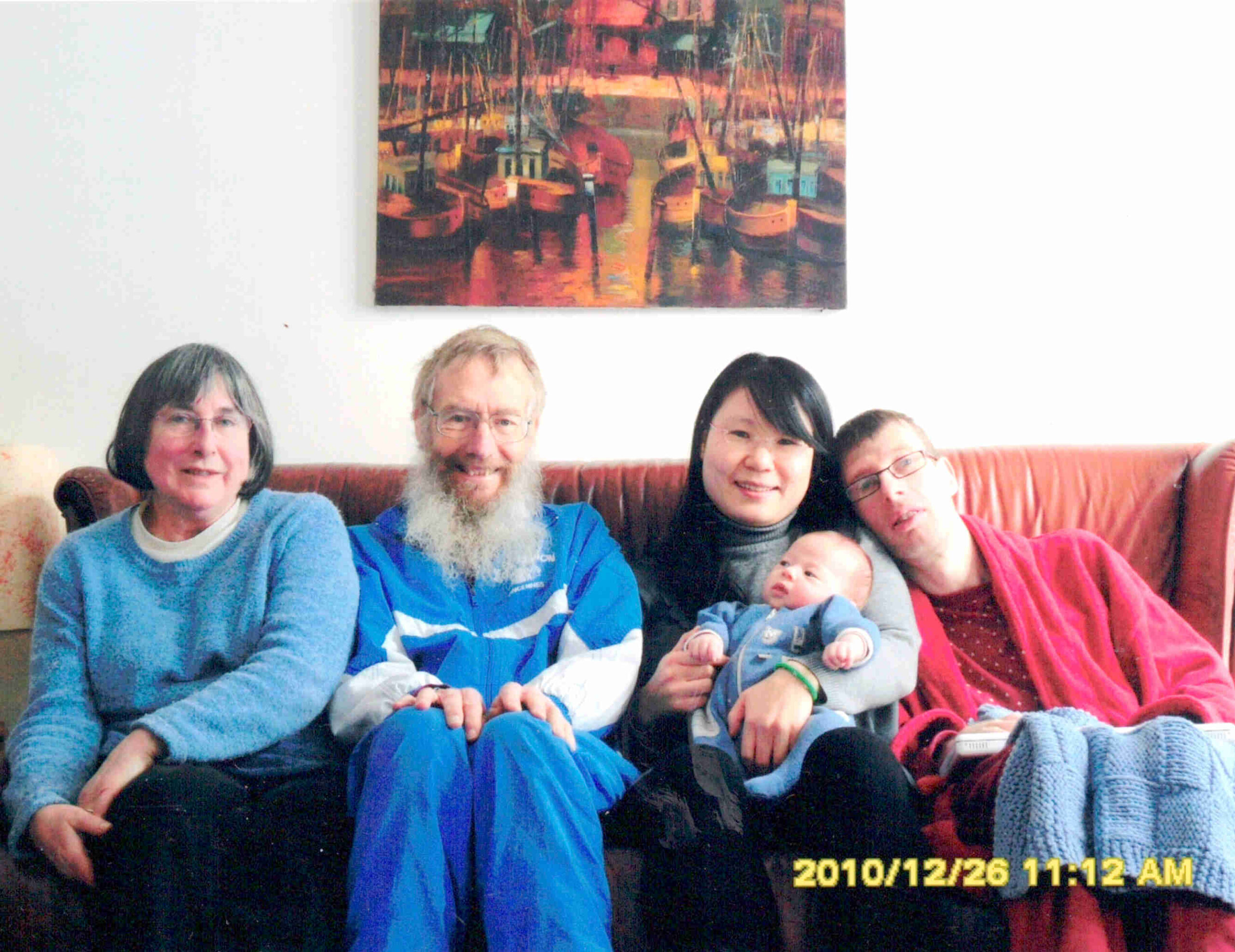
MW: Yes, we did in August 1988. I visited TIFR with my wife and my son, Alexis, who was 12, and my late daughter, Hélène, who was 10 years old then.
How was that visit? And, how long?
MW: One week. It was pretty hectic! On the way from Australia to Bombay, my daughter was a bit ill, nothing serious, but she was not feeling well. During that entire visit in India, she was not able to eat properly.
We were in Bombay, at TIFR. We travelled to Chennai from there, and then to Pondicherry where we were hosted by Sinnou David and his family. His father was a judge at the Madras High Court near the Adyar Bridge in Madras. They had houses in Madras and Pondicherry. We stayed with them at both places which made our stay quite comfortable. My children liked it, so much so that my daughter later came back to visit India twice. It was likely my fourth visit to India – my first visit to India was in 1976, my second visit to India was in 1985, I think, because I was also invited to the IAS in Princeton the same year. I spent three months at Princeton, and just before that I was in India. When I came back I was a little bit ill, but still I could participate in the New York Marathon in October 1985. A third visit of mine to India took place in 1987 on the occasion of Ramanujan’s birth centenary celebrations. Then I visited India with my family again the year after.
In 1987, several events were planned. One of them was at Anna University in Chennai, but it was cancelled due to the demise of MGR (M.G. Ramachandran), the then Chief Minister of Tamilnadu. But I had left Chennai just before that. I travelled to other conferences related to Ramanujan birth centenary, including in Kumbakonam.
I was very excited to be in this country, so I wanted to see as many places as possible!
What were your impressions of India, during those initial visits? Back then, it must have been very different – limited access to the internet and email, buses and railways were different and it was not easy to reserve seats, fewer flights, and such?
MW: Oh, no! On the contrary, in 1976, I took a lot of flights! I had never taken so many flights before, because I went from Mumbai to Chennai by flight, and I visited Ajanta and Ellora caves, and I probably went by flight. I flew to many places. In fact, I was very excited to be in this country, so I wanted to see as many places as possible! I went to Goa. Maybe I went by bus or train, but I remember coming back by boat! Indeed, there was a ferry service then. So, indeed, I visited many places, and often by flights.
I remember Madras, which I liked very much, but it was not looking at all like it is now. There were many cows in the street. I was very fascinated by Madras. Another difference, but this is quite another thing, was that the best place in India for mathematics then was TIFR by far. There were a few other places but the people there considered that TIFR was the only place which was very strong. There were good mathematicians outside TIFR as well, though fewer in number perhaps. The Institute of Mathematical Sciences, in Chennai, then Madras, founded by Alladi Ramakrishnan in 1962, was a small institute in 1976. Now I will say that the TIFR is one among the best places in India as there are good mathematicians everywhere in India. That is really a very big difference.
I also visited Chandigarh in 1976. And I travelled to Bangalore and Mysore, but as a tourist. I was travelling every weekend! I was teaching from Tuesdays to Thursdays, and on Fridays, I would take a flight and travel, and be back on Mondays. So I was doing a lot of traveling.
One other thing that I find remarkable about you is, I’ve never seen you complain. I have never seen you ever irritated or frustrated. I want to know how you achieve that.
MW: I choose not to complain. The other day one of the two lamps was not working in my office, but I accepted this fact. I prefer to be positive.
But at times, this can be a problem. For example, if I am a member of the hiring committee, and when I listen to someone, I see mostly the positive things, and I do not see the negative things. And it happened quite a few times that I contributed to hiring someone who was not the best fit for our department. So, yes, it’s my personality – it has both advantages and disadvantages to it! I am a positive person, I see more of the positive things, and less of the defects.
You mirror your own personality. Perhaps that was a part of your upbringing, and your parents were like that.
MW: I don’t know. My parents were Catholic, but my grandfather, who passed away in the war, was Protestant. And I don’t know if you are aware, but among the differences, Protestants are rather strict in life, and it must have rubbed off on my father.
Once, we had a small garden, and my mother had found in the nearby bush a shrub cutting to be transplanted. She brought it home. When my father saw it, he said: “where did you find it?” And she said, “oh, in the bush there”. He said, “it’s not ours, you should go and put it back where you took it”. So he was extremely strict. And what is interesting is that my son has the same temperament, he is also very strict. So I am in between, and I don’t know how my grandson Louis will be!
Maybe Louis will be more like you! Coming back to visits to India, I think you have visited Chennai more than any other place.
MW: Ah yes. Well, in fact, my daughter spent some time here, and for me, I like to be here, to remind that she visited this place, so this is part of the reason why I like to come back here.
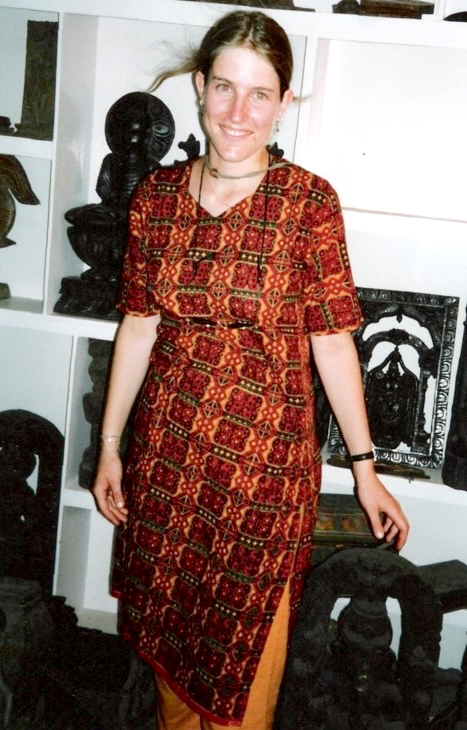
Yeah, I remember that visit when she came here in 2001, I think she had lost her passport at some point.
MW: Oh yes, that was a bit tricky. She had it in the bag, in the front, and someone took it in the bus. So she alerted the bus conductor, and then everybody had to leave the bus, and she went to the police. Later it was found. But her credit card was stolen. At that time, she was working at Apollo Hospital in Chennai. I even remember the day – 14th of July, 2001.
In another recollection of yours, when you visited with your family in 1988, you recall that your son remembered Ramachandra, because he wore a pink shirt.
MW: Absolutely. Yes, we visited the museum together in Bombay. It’s something which we do not see so often, a man with a pink shirt. Yes. I’m sure that if I speak to Alexis of Ramachandra, he will say: “oh, the man with the pink shirt”.
What’s your favourite food in India?
MW: I like the breakfast, the South Indian breakfast. I like the Dosa, I like Pongal. Also lassi, and mangoes.
Similar to India, are there other countries and their culture that you like? I suppose you have visited maybe about 80 plus countries? And some of them multiple times over, I believe.
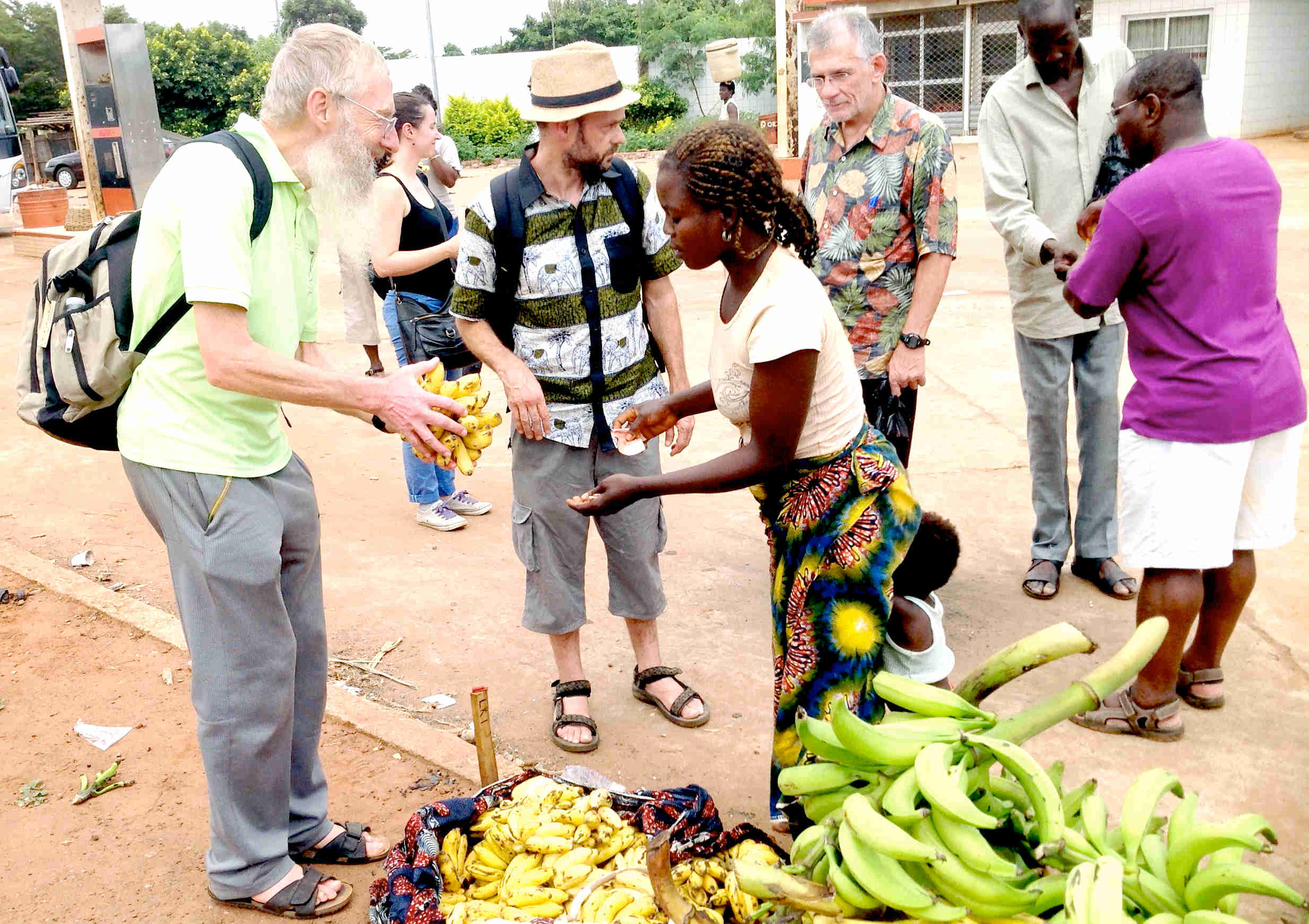
MW: Yes. I spent some time in Nepal, which I like very much. I went several years in a row to Cambodia, and I like the place there. The Institut de technologie du Cambodge (ITC) is good, but not the university. And among the places which I visited, there are two places which are more exotic than others, and I would like to have the opportunity to go back. One is Bhutan. I was with Sinnou David for helping the colleagues there to build a curriculum for Master studies, and I would like to just visit again. And another one where I have been twice is Papua New Guinea. It’s a very fascinating country, very different from the other ones. I visited Vietnam several times, and I like it. I was in Japan in February. And also Thailand. I have been to Thailand a couple of times.
How about Africa?
MW: Though I like to go to Africa, I do not have the same connect with Africa as with Asia. I am more comfortable in Asia, for cultural reasons.
But I like to teach in Africa, it’s quite interesting. Very often the students in Asia are shy and it’s difficult to have some reaction from them. Several years ago, I went to Nouakchott in Mauritania, and I was teaching a course. I started my course by saying to the students, “don’t hesitate to ask questions. I want you to react”. After half an hour, I had to tell them “please think a little bit about it before asking a question”. They thought that they would please me by asking questions, and were asking questions which were mostly nonsense. It’s quite a different behaviour.
In all these places you travel to, it appears that food is not a problem for you. Are you able to adjust easily?
MW: I can adjust, yes. Last time I was in Delhi, in October, during the last week I was not feeling well, because of food. But it’s my fault. I had taken the juice from a street vendor, with some ice cream on it. When I saw it, I should have just thrown it away. Instead I took it and was not feeling well for one week in India, and one more week after that. By the time I went to Japan another week later, I had recovered. So, it took me two weeks to recover. Food can sometimes be a problem, but not that serious.
And wherever you go, you do make time for your fitness!
MW: Oh, yes. In fact, you see, if you think about our day-to-day work, we spend all the time inside. This morning I went for a walk for one hour and fourteen minutes, and I could benefit from the surroundings. And when I go to a conference, I go very early for my daily walk. Earlier, I used to go for a run or a jog, and nowadays, I go for walks.
You balance and plan your day very well. I recall your mentioning that you started running when you were 18 years old.
MW: I liked to run when I was young, but by myself. I knew that I was able to run fast, but it was without any regular practice or training.
When did you start long-distance? Did you initially start with running shorter distances?
MW: Yes, in fact, in Nancy, when I was young and starting to practice, we did not run a long distance, we did some interval training.2 We warmed up a bit, and then did some races of 200 metres, 400 metres, 500 metres. And when I started regular practice, I used to compete in 800 metres, thereafter moving on to 1000 metres, 1500 metres, 3000 metres ranges. The maximum I did when I was young was 3000 metres. I was a different kind of runner then. It’s later that I went on to do long-distance running.
When did this change from a competitive runner to an endurance runner happen?
MW: The change happened gradually. When I was young I wanted to run longer distances and to run a marathon. But people told me that I was too young, I was about 19 then. So I was running what is called a demi-fond. The name fond is used for longer distances and demi-fond is in between. Maybe I did some 400 metres race as a competition in the beginning. I don’t remember very well. For me it was more between 800 metres, 1500 meters and 3000 metres later. Those were my favourite distances.
I used to run until I met my wife. She reminded me that I had promised to stop running when we got married. So I more or less stopped for a rather long time. I ran very occasionally but not seriously. Later, maybe about 10 or 12 years after we were married, I felt I needed to run seriously, and she told me that I could resume if I wished. So, I started again by becoming a member of a running club.
Then in 1980, I remember very well, I was invited to Grenoble because they wanted to know about my recent research. There I met a couple of mathematicians, Jean-Paul Bertrandias and his wife Françoise Bertrandias who used to run marathons. I spoke with them. I remember that Françoise told me: “we will have lunch together, but Jean-Paul will not join us because he is on a special diet, and that he has a marathon coming up very soon”. Later I discussed with both of them and I told them that when I tried to run, I got injured very often. They told me that they wear special shoes for running, which was something new in 1980. So the next day I bought those special shoes and I started to practice. One year later, I did a half-marathon. What is interesting is that I completed it in 1 hour and 20 minutes, which matched my timing for the same distance 12 years earlier! And in 1982, I ran my first full marathon, just under 3 hours.
Are there any other components to your fitness apart from running, possibly supplementary to running?
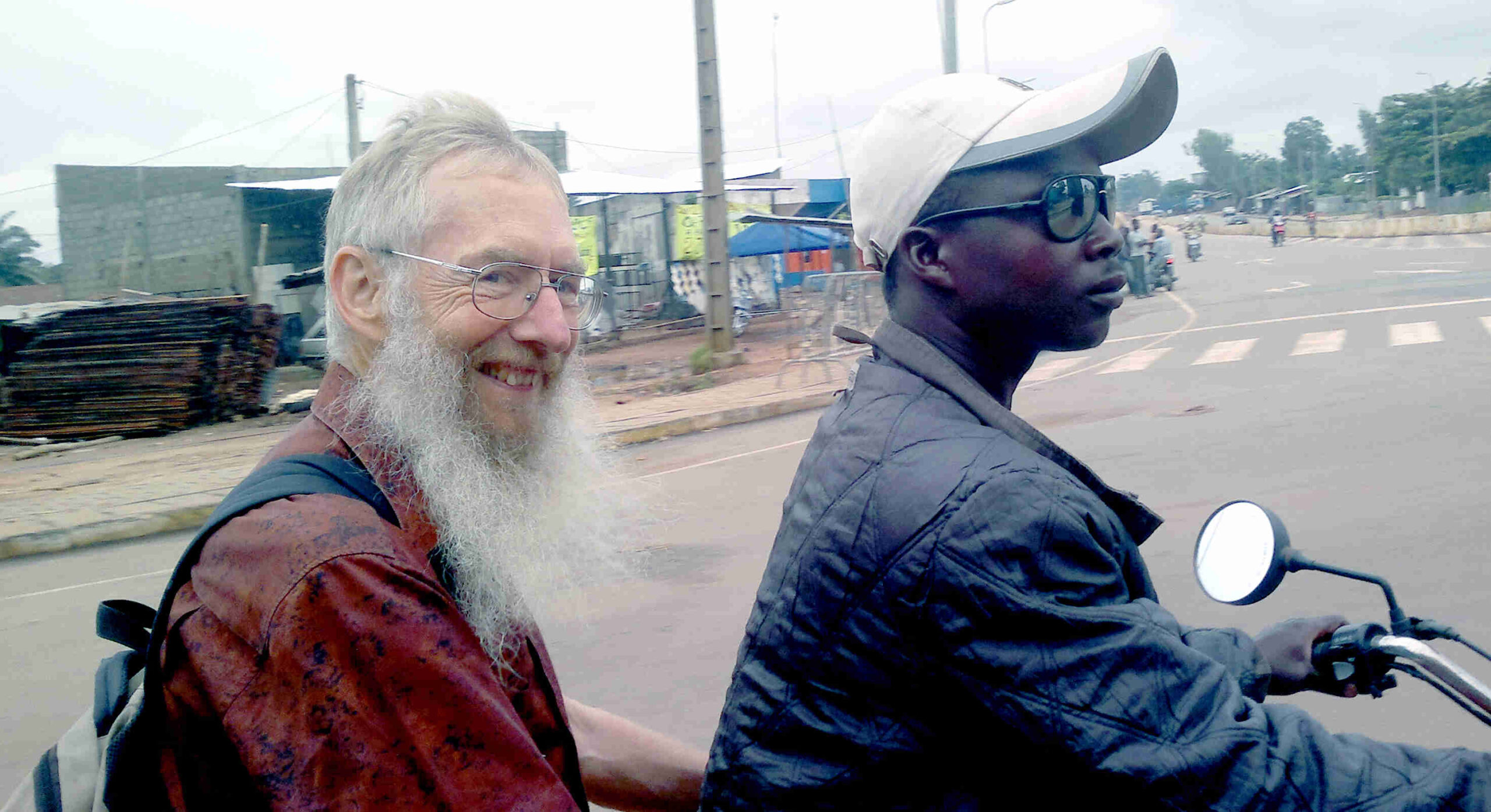
MW: Well, in fact, I started bicycling in the year 2000. I do it rather regularly now. I try to go for a trip of 100 kilometres every year. So I do one every year, but I have to practice and get used to it before I go. I did the most recent one at the end of August 2025.
You do this in one day?
MW: Yes. 100 kilometres in something like 5 hours.
That prompts me to this question: In what way do these activities help you, leaving aside health benefits? Do you engage yourself simply because you really enjoy running or bicycling?
MW: One of the points is that being good at running makes me feel good about doing something I am capable of and enjoy. When I started, it was essentially because I felt I needed to have some activity apart from doing mathematics. For example, I tried to play chess, but it was not the same as running. Running is much better for me, for my mind. It could be chess and running, but not chess and mathematics.
So my initial goal was to have some activity just to get my mind free from mathematics. After a while, I found that it was very nice to participate in competitions and so I took part in it. I still continue to participate in some races because I enjoy it. Some people, like my wife, do not like competitions. But I look at competition not as a goal of being better than the other, but bettering myself to do the maximum that I can.
You are your own competitor.
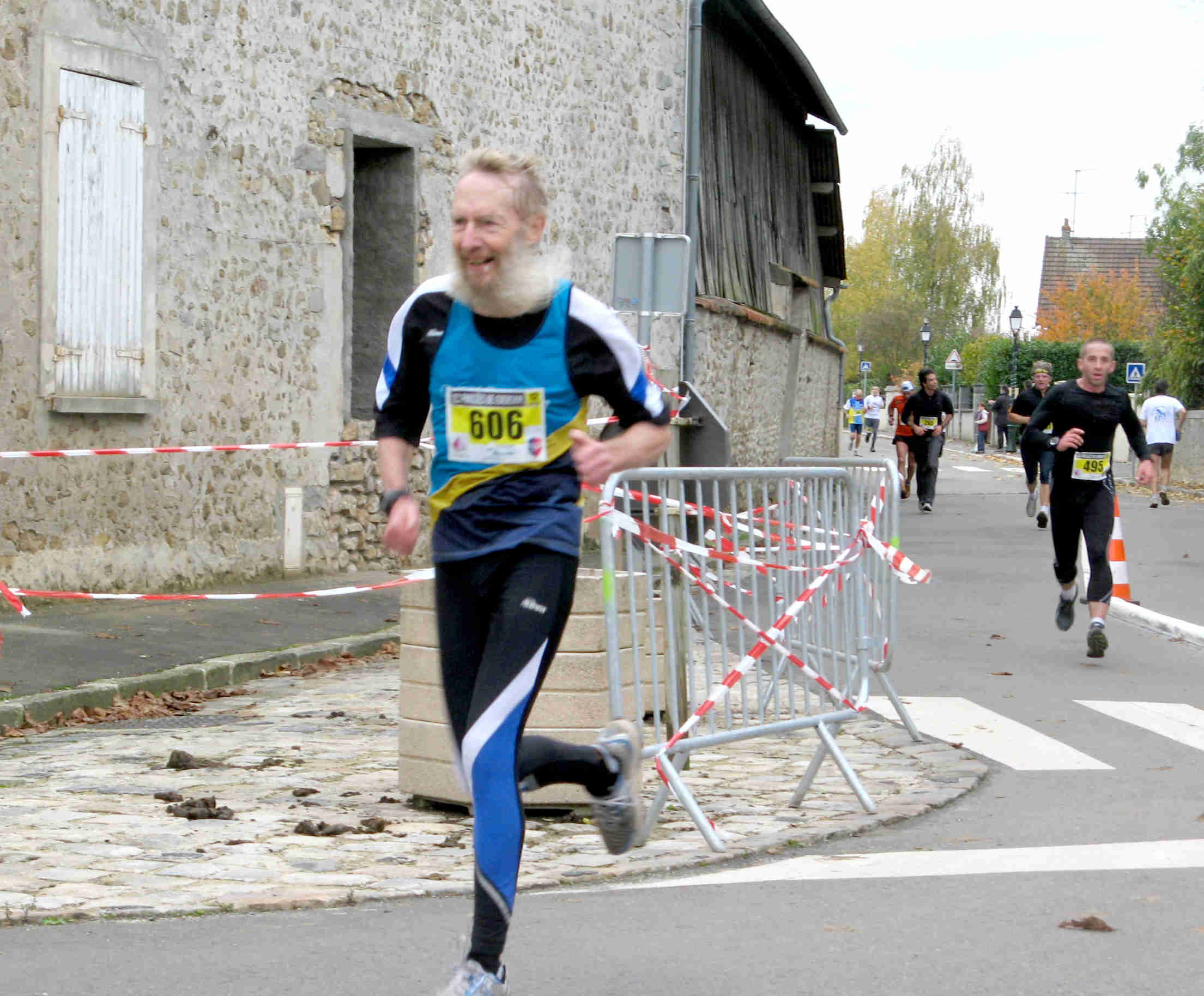
MW: Yes. I do not look at the other participant as an adversary, but someone who enjoys it the same as me.
It also seems to go with your general philosophy in research as well, that you would like to compete with yourself rather than with anyone else. That is, better yourself as much as you can.
MW: Yes. I like to go to the maximum I can do to reach the limits. It’s of course difficult to know if you are at the limit. If you are able to go past your previous record, you know that you have done better. This is a challenge which I like very much.
I did something like 31 marathons. I thought that I would shift to even longer distances once I am not able to improve my best time for a marathon. I still wanted to. But, you know, when you have a curve going up, you expect that it will continue. If it starts going down, you say: “okay, maybe I will be able to go back”. It took me a long time before I decided that I would not improve my best time, which was in 1987 with 2h 39m, and then I went on to longer distances.
I do not look at the other participant as an adversary, but someone who enjoys it the same as me
In fact, it’s about the same time when I was considering going longer distances that I learnt there are some trails that go into the mountains or forest as part of the races. So I started participating in them. The first one I did, I think, was near my place. We live in a department3 which is assigned number 91, and they organized a trail run of 91 kilometres. I enjoyed participating in that. It was in 2004 that I did this `91′ race. As we were passing, along the way, I heard a young boy asking his mother, “why are they running?”. ‘ I like this question very much. Further down, another young boy, seeing us running, asked: “Did they start one after the other?” But, of course, we all start together and then somewhere in between we get one behind the other. So during that race, I thought, why are we running? It’s a kind of addiction. We have to be aware of that. We need it though. And now that I cannot run as I did before, well, I miss that `high’, especially because I know that my younger colleagues continue to run together. And now in the place where I live, there are many people running and every day there are several groups who organize activities that suit them. It was not at all like this before. There was hardly anyone apart from me!
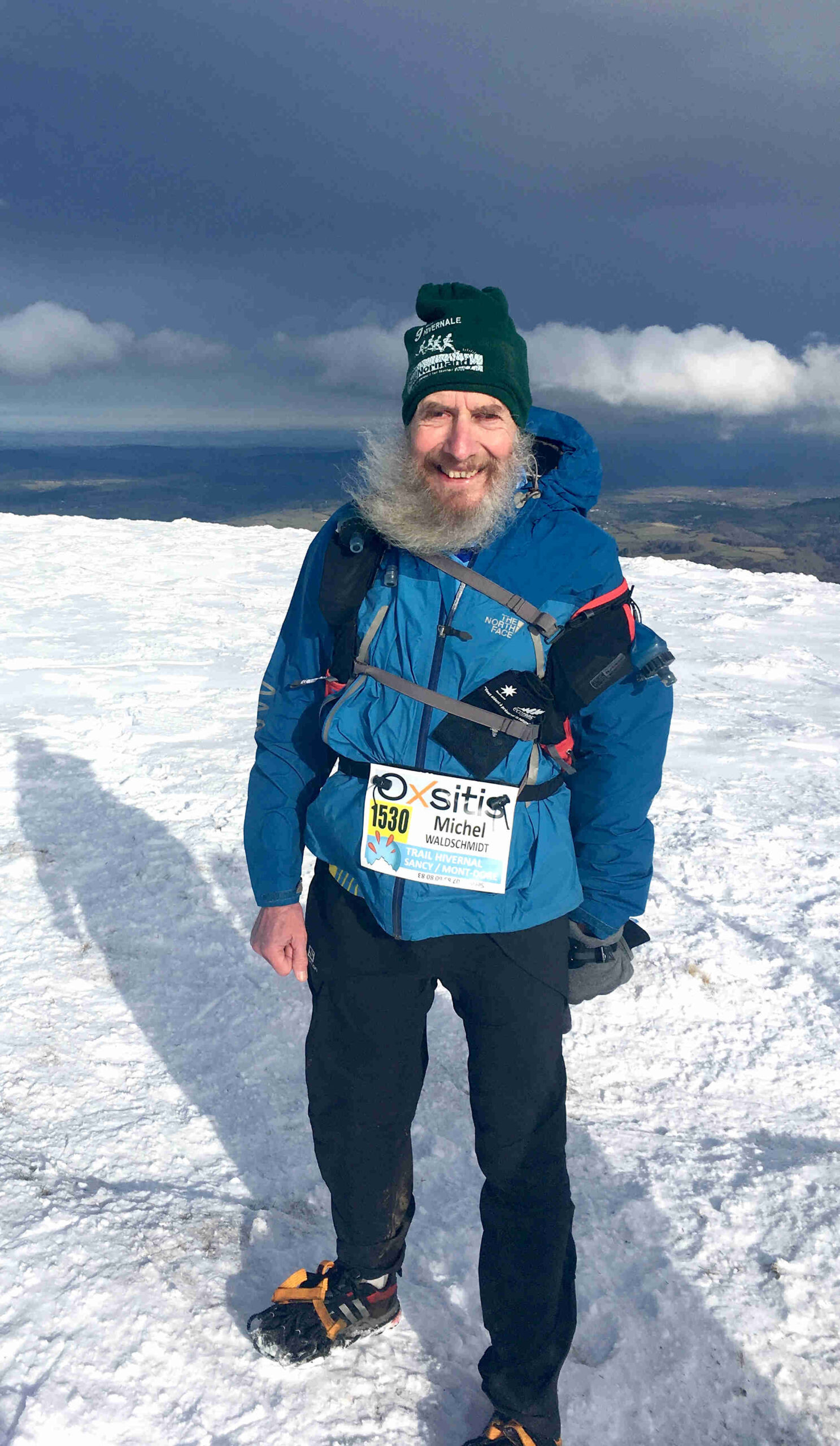
I also realized that when I was running or practicing, if I had to solve a problem, particularly a mathematics problem, I could run slowly and think about it. It happened quite often that I was making some computation by hand on paper, and realized that it was time to go running. So I would go out, thinking about what I was doing, and see that it’s possible to avoid all the computation and go another way that avoids it. It happened quite a number of times. It also helped when I faced some difficulties, not just mathematical, that I wanted to overcome. And by running fast, I was forced to not think about my problem as I had to breathe and recover. The speed depended on differing situations!
You also did some mountaineering! I remember that you went to Everest base camp. Could you recall that experience?
MW: In 2010 when I went to Nepal for a CIMPA (Centre International de Mathématiques Pures et Appliquées) School at Kathmandu University, I visited the Mountain Museum in Pokhara. I showed a map of the Himalaya to Ajaya Singh, a colleague from Tribhuvan University (TU) in Kathmandu. I told him: “there seems to be a path around the Annapurna”. He answered: “Indeed, this is a very nice trek, I can go with you there, but you should not wait too long given your age!”. The year after I did it with him. Then, for several years in a row, I went to TU teaching a course on Galois Theory for the Nepal Algebra Project organised by the Roman Number Theory Association. I used to teach for two to three weeks and go hiking also for 2 to 3 weeks. In 2012, I went to the Everest base camp and Island Peak with another colleague Jorge Jimenez Urroz. These are fond memories. When I went to the Himalaya for trekking, I saw many people who found it very difficult and they suffered during the trip. I did not suffer at all, because I was trained. As I was with other people, we went up rather slowly. It’s important for the breath, for the oxygen. But I did not find it hard at all in general, with one exception when I went to the Island peak (Imja Tse) in Nepal, which is more than 6,100 metres. To climb that was quite challenging, and I found that it was a bit exhausting, but I used all my energy to be on the top. And on the top, I was exhausted, but I was so happy to get there. Then the problem was that we also had to get back down. Descending required using a rope, which I believe is called abseiling. I had that training with a guide the previous day. Though it was not perfect, I was able to do that. And, while getting down this peak, I was so exhausted that I could not do it easily. The guide was very upset. He was shouting at me. So the way down was quite difficult.
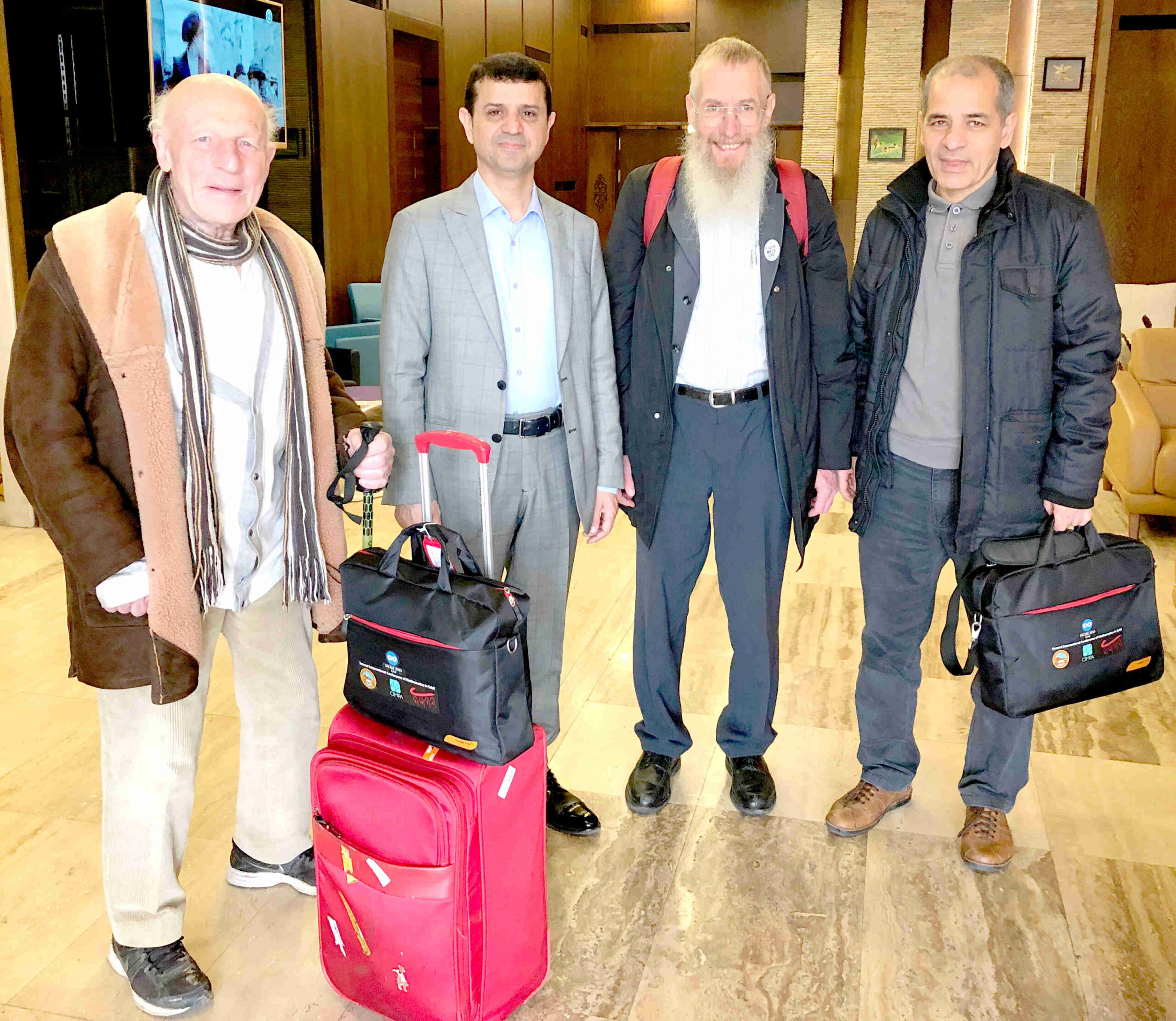
I had another experience. The last time I went trekking was in 2023 in Cameroon, where I was teaching a course at AIMS (African Institute of Mathematical Sciences) and had a free weekend. I insisted on climbing Mount Cameroon. There was a secretary who decided to join us, and there were three students who also came, and there was a guide. We started on Saturday morning, and by evening we reached a hut, in a small place, somewhere halfway. We spent the night there, got up very early, and proceeded to climb Mount Cameroon. The students did not have good cover for cold weather but I had an extra pair which I could give to one of them. The two other students who were very close to the top were freezing, so they went back. But I went with one of the students and the guide, and we reached the summit. I was very happy. But then we had to go down, and I am very bad at it. The knees were hurting, but I was also exhausted. I was walking very slowly, and the guide had a very hard time with me. We started from the top, maybe at 7 or so in the morning and reached the hut where we had stayed at night, around 12 noon. When we got down it was 2 pm and I was almost unable to walk, and was falling very often. Towards the end, the guide had to almost carry me. While I was very happy for myself, I was sorry for the guide. My balance was not very good for trekking. That was my main problem. I am afraid this may be my last trek.
How about the non-snowy mountains, like the Sahyadri hills near Mumbai? Did you go to any of those?
MW: Yes, I went with C.S. Rajan. He took me there. It was a weekend when I went to TIFR, and it was raining. He said: “we can do it the following weekend”. I told him that I hoped the weather would be better. He said: “it’s a perfect day for trekking when it rains”. For us Europeans, you see, when it rains, we don’t feel so good.
Yes, in Indian culture rain is joyfully celebrated. Back to your running activity, you also did some ultramarathons!
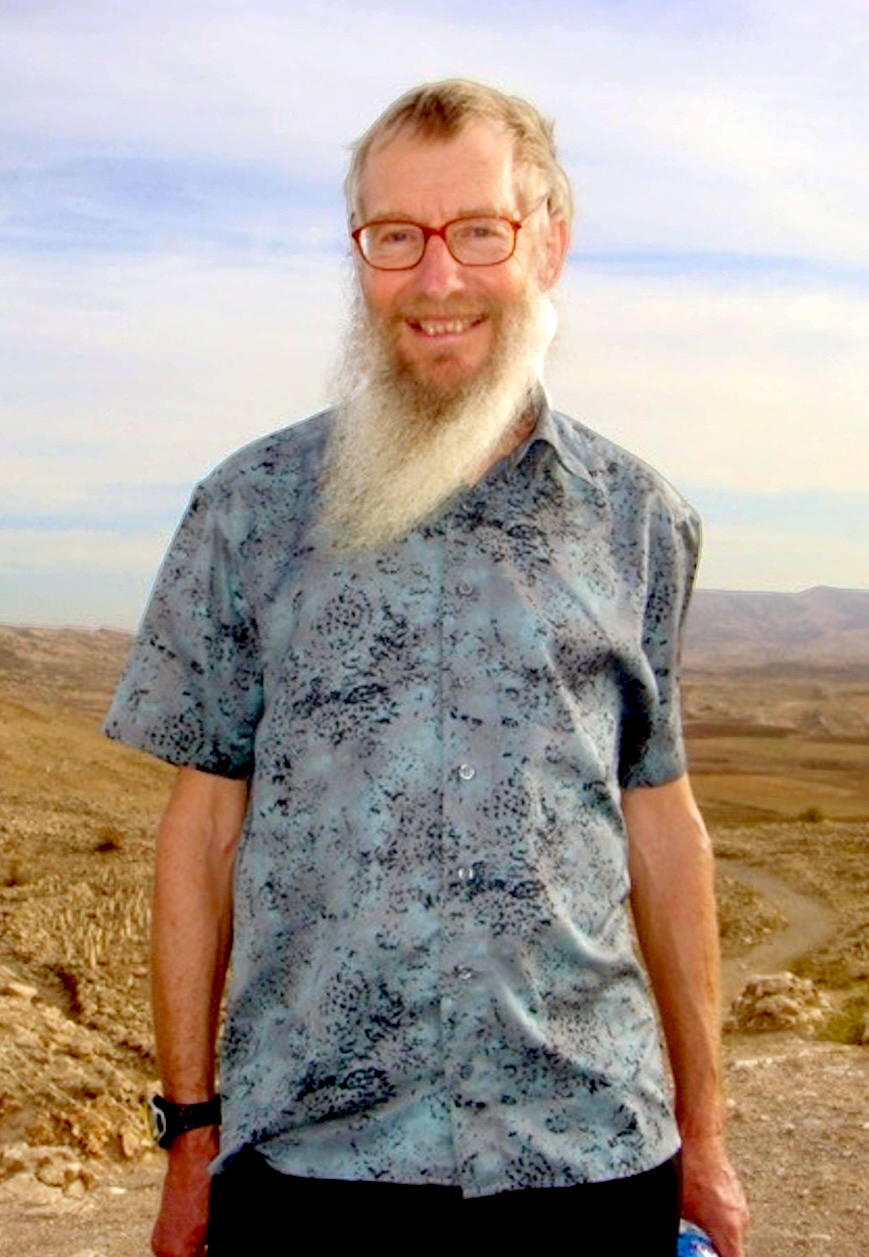
MW: Yes. So, after I realized that I could not improve my time on the marathon, I decided to participate in races of 100 kilometres, and I did a few of them. And the first one, I did it in less than 9 hours, but it was a 10-kilometre loop that we went around 10 times. When I was 1 kilometre away from the finish line, I was with a friend and told him, “I am not sure I will be able to make it to the end. He thought I was joking, but I was not. When I reached the end, I could not stand. In fact, they had to take me to my car in the ambulance, because I was not able to walk at all. My wife was driving my car as I was not in any position to drive. So, I really reached the limit that time. The second time I ran a 100km race, my son was there at the finish line. When he saw me, he said: “oh, but you are still able to walk.” I guess I managed much better the second time. Thereafter, I did some ultramarathons in the mountains. I did the Ultra Tour du Mont Blanc, which is a very popular race of 168 kilometre distance. I completed it twice, in 43 hours and 30 minutes the first time, and in 42 hours the year after. And the third time, I stopped 40 kilometres from the finish line, because I could not continue, I was exhausted.
At later stages, I guess it becomes either slow walking or walking?
MW: Oh, yes. If you count 168 kilometres in 43 hours, the average speed is less than 4 kilometers per hour (but it is on the hill, 9000m D+, meaning that the total altitude we climbed on this loop was 9000m). Of course, there are places where you can run, but at many stretches where it goes up, you just have to walk.
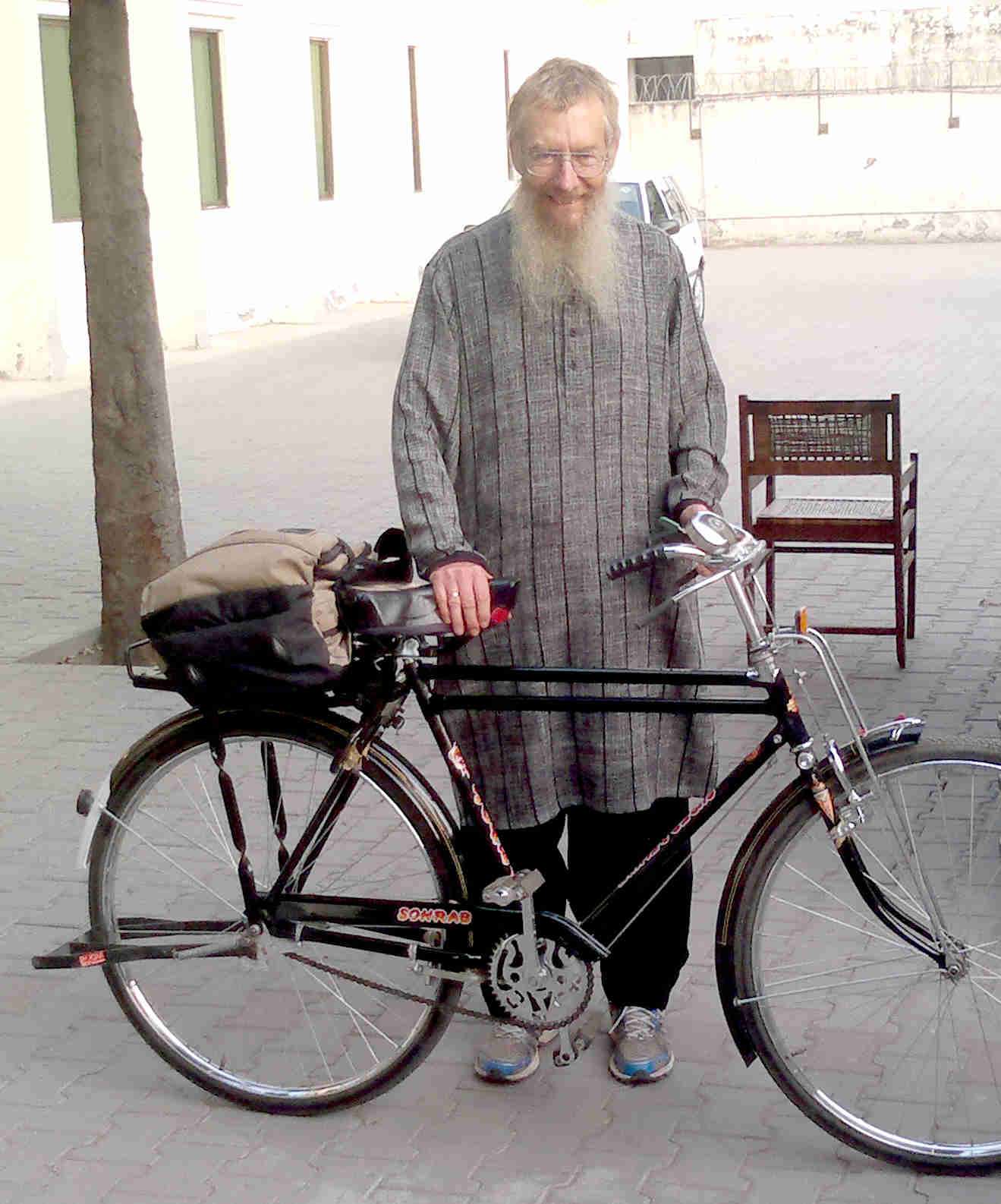
The longest distance I did was 178 kilometres, but it was flat, and it was a 24 hours race. I wanted to do it once, and after I completed it, I said I will never do it again, because it was just too good. I will never be as good at that. I was very euphoric, you see. I had a rather good speed for completing this race, and I really knew that it was the limit, and I enjoyed it very much.
Is it the same feeling when you prove a theorem in mathematics? How do you compare the two experiences?
MW: They may be a bit similar and there are some similarities, yes. It depends, because one is physical, and the other is mental. But yes, when I found the main point for proving the lower bound for the p-adic rank related to Leopoldt’s conjecture, it really was very euphoric. That’s true.
But I like to be tired after a physical effort. It’s something which I like very much. It’s more difficult for me to feel euphoric now with walking but I experience it in bicycling. When I went for the 100 km ride this year, I was a bit exhausted at the end. But not as much as when I did the long distance running races, where I was really exhausted. I like this feeling.
I am very curious to know your resting heart rate. Also, has it changed over the years?
MW: My heart rate has always been rather low. In fact I could tell you what it was two and a half years ago. When I was resting it was 35. And sometimes a little bit less. But there is a small problem with that, because two and a half years ago, I think in September, I was riding my bicycle, and I lost consciousness, and I fell from my bicycle. I was not hurt. And it was a small road, so someone came and called the police. I then saw a cardiologist who told me that because my heart is too slow, I have to have a pacemaker. Now I have a pacemaker, and my heart rate is not less than 50.
The longest distance I did was 178 kilometres, but it was flat, and it was a 24 hours race
This was in September 2023. I was going to visit Pierre Cartier. He was in the retirement house, and it is about 10 kilometres from my place. So I went with my bicycle. Before that I was quite happy as until recently, I did not need to take any medicine at all. I see so many people of my age who take a lot of medicine. I cannot complain that I am in good health.
I think you will be 80 this year.
MW: Yes, in June.
Let me ask you a bit more about India. With every place you went to, what’s your impression because things differ from place to place?
MW: In 2006 and 2007, I was invited by the French Embassy to participate in their programme, which was called, at that time, French Science Today. It was a programme of the French Embassy. They invited scientists, and I was invited two years in a row to go to some places where there is a so-called Alliance Française. And we give a lecture to students. The idea is to tell the students that it’s possible for them to come to France to pursue their studies. I participated in this programme two years in a row and I visited almost every Alliance Française in India, which means that I have been to more places in India than most people.

I think there are 28 states in India, and I have been to 22 of them. But, you see, it was like I went to a place, gave a lecture, and then went the next day to another place. Thus I visited many states, but I cannot say that I know all these states.
I very much like the national parks where there are wild animals. This is something I like. And I very much like the temples of South India. I’m fascinated by them. I’ve been to many of them. I cannot say most of them, because there are so many. Even here in Chennai, when I walked in the morning, I saw many temples around.
Yeah, many of them are quite old, even here in Chennai. Could you share something about your interactions with [Kanakanahalli] Ramachandra, mathematical and otherwise?
MW: When Ramachandra invited me, he had already published his paper on transcendental numbers. Eight years earlier or a bit less, but by the time I came, he had become interested in the Riemann zeta function. So when I arrived here, he was not so much interested in transcendental numbers. And I learned in May 1976, just before going to India, that I would have to give the Peccot course (Cours Peccot in French) in the Collège de France. So I prepared my lectures for this course and started to lecture on it at TIFR. I was speaking on algebraic groups, which is not something that Ramachandra liked very much. I am afraid that Ramachandra probably was not so happy with the course I taught. With some more experience, I could have taught another course here.
My notes of the lectures were lost in the process but I was able to recover them for my course back in the Collège de France. However, I started to discuss with [Tarlok Nath] Shorey at that time, in 1976. I met him quite a number of times. We wrote one joint paper with Michel Langevin, also a student of mine, and R. Balasubramanian.
You must have met or come across a lot of mathematicians. Would you like to share any reminiscences, or stories from your interactions?
MW: I was fortunate to have met and interacted with many famous mathematicians. I already mentioned some of them. I could add Paul Turan, André Weil, Atle Selberg, Theodor Schneider, Kurt Mahler, Laurent Schwartz, Alexander Grothendieck, and Enrico Bombieri.
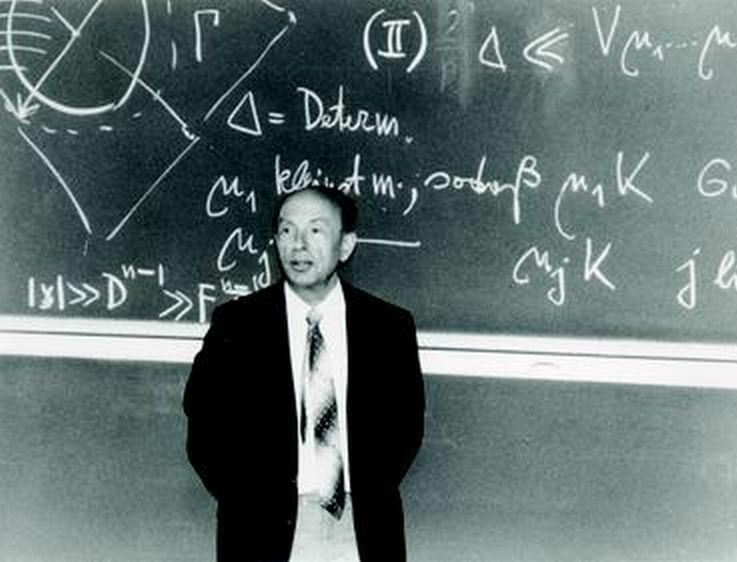
With some of them, such as with Wolfgang Schmidt, I had some very good contact. I meet him very often. He is a very kind person apart from being a very strong mathematician. His work is very impressive. He is the first mathematician for whom I proposed that he receive a doctorate honoris causa from my university (the second one was C.S. Seshadri, he received it later thanks to Sinnou David). I also knew Alan Baker. I met him a number of times.
I know Jean-Pierre Serre rather well. His power is just incredible. I like to see such people. You see, it is a little bit similar to when you look at sports, the people who are at the high level in sports, they are exceptional. And nobody says the contrary. We are fortunate to be mathematicians and to understand that in our field there are some people who are incomparable, who are really above the others and Serre is one of them! He turns 100 on September 15th, 2026.
And John Coates?
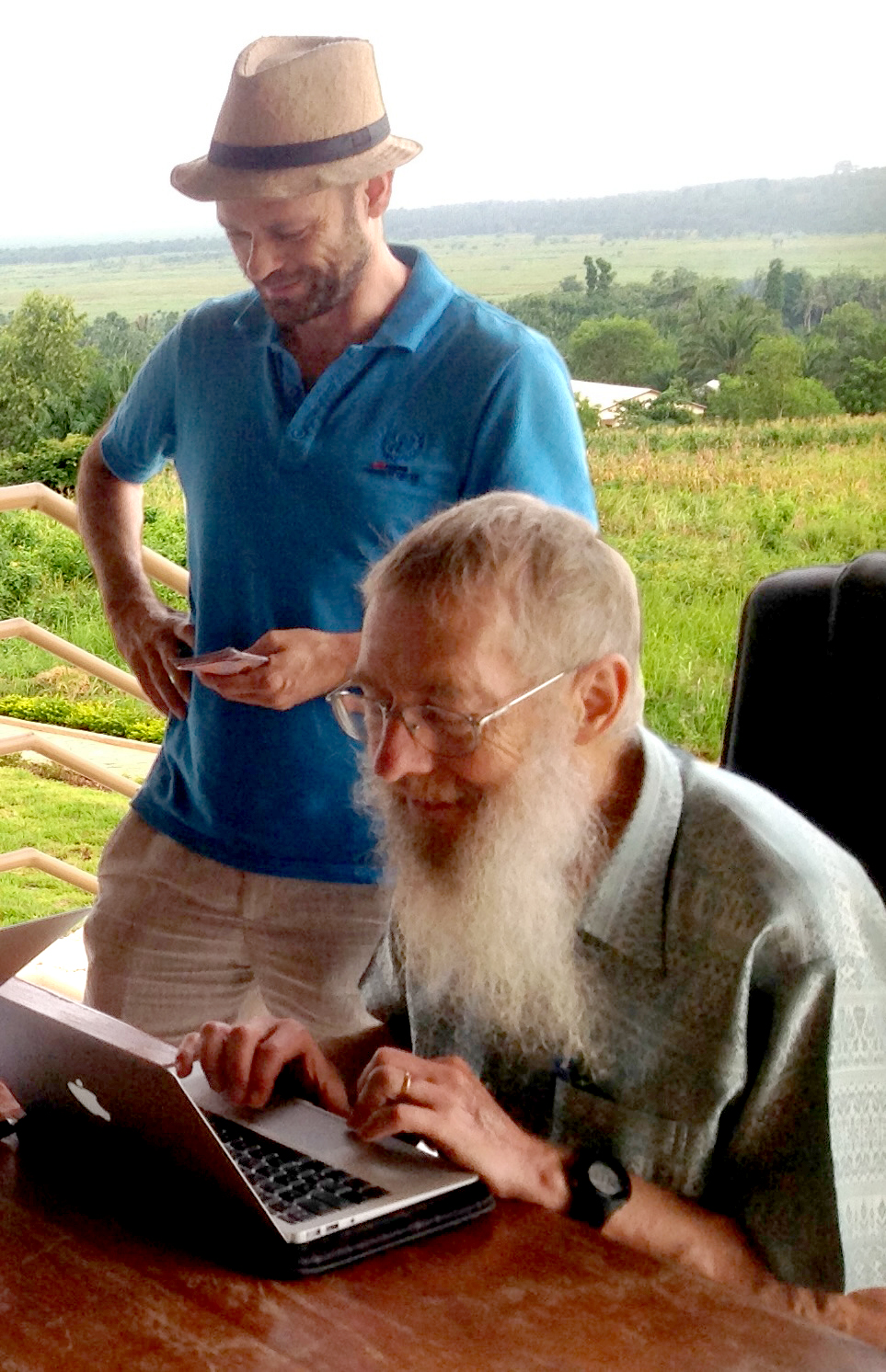
MW: John Coates, yes. I knew him. Probably the first time I met him was at the end of 1977. He was in Australia at that time, and there was a conference organized there. I was with my wife and my children. His children were about the same age, maybe a little bit older. We had a very good time with him, and I kept in contact with him quite often. I discussed a little bit of mathematics with him, and he was very helpful to me. He is the one who mentioned the problem of \ell-adic representations to me, which I did not know before.
Was this about the Hecke characters of type A_0, also known as Algebraic Hecke Characters?
MW: Yes, that’s right. I do not remember the details exactly, but I think it was at a conference in Australia that he suggested this problem of Weil and also to look at exponentials in several variables, which was the main tool I had used. John Coates was an influential mathematician.
Don Zagier is another mathematician I have met. I am interested in multiple zeta values, and Zagier is the one who started the topic after Euler. Essentially, you can say that after Euler, it was more or less forgotten, and Zagier renewed it. Don Zagier is a very powerful mathematician, and I would say I do not really understand the way his mind works. He is a very fast thinker. He also speaks very fast when he gives lectures.
Don Zagier is a very powerful mathematician.
I have also interacted with Pierre Cartier. He was living in the same group of houses as me, maybe 100 metres from my place, and we knew each other very well. I moved there in 1979 and he was there for a few years before, so we met quite often. He had so many interesting things to say. He was very talkative. It could be a bit boring to listen to many people who are talkative but not him. He was extremely clever, and there was a series of talks organized with him, a working group on multiple zeta values, but he was the one who did it. He explained the topic, so I learned everything from him. There were a lot of new ideas in what he said, and he did not publish much. He was not someone who would write down what he thought and understood. He would prefer to speak than to write. So it was very interesting to learn the topic with him. I went with him to several places abroad such as Pakistan, Vietnam, and Iraq. In fact, his last international trip was with me in February 2019. There was a conference in Iraq and he was the main speaker. At that time, he had some difficulty walking, and we helped him. He told me that he had no family doctor. I told him it was not a very good idea, and I gave him the address of my doctor. It happened later that we met at my family doctor’s waiting room. As per the doctor’s advice, he started to have some medical investigations, but it was a little too late. He had a stroke in mid-May 2019, and was hospitalized. After the stroke, I thought that it was not so bad, but then his health deteriorated, and he never came back home.
On a not too unrelated note, I believe you would have interacted with Jean-Pierre Bourguignon as well.
MW: Yes. He is also someone very exceptional. The way he has run the IHES (Institut des Hautes Études Scientifiques, Bures-sur-Yvette, France) is amazing.
When he was young, he was working with the late James Simons, of the Simons Foundation, which supports IHES, and is also supporting the upcoming ICM (International Congress of Mathematicians) at Philadelphia. From what I understand, they were working together and have jointly authored a highly-cited paper [together with Blaine Lawson]. They were very good friends. Bourguignon wanted IHES to be financially independent, and Simons supported it when he became very rich.
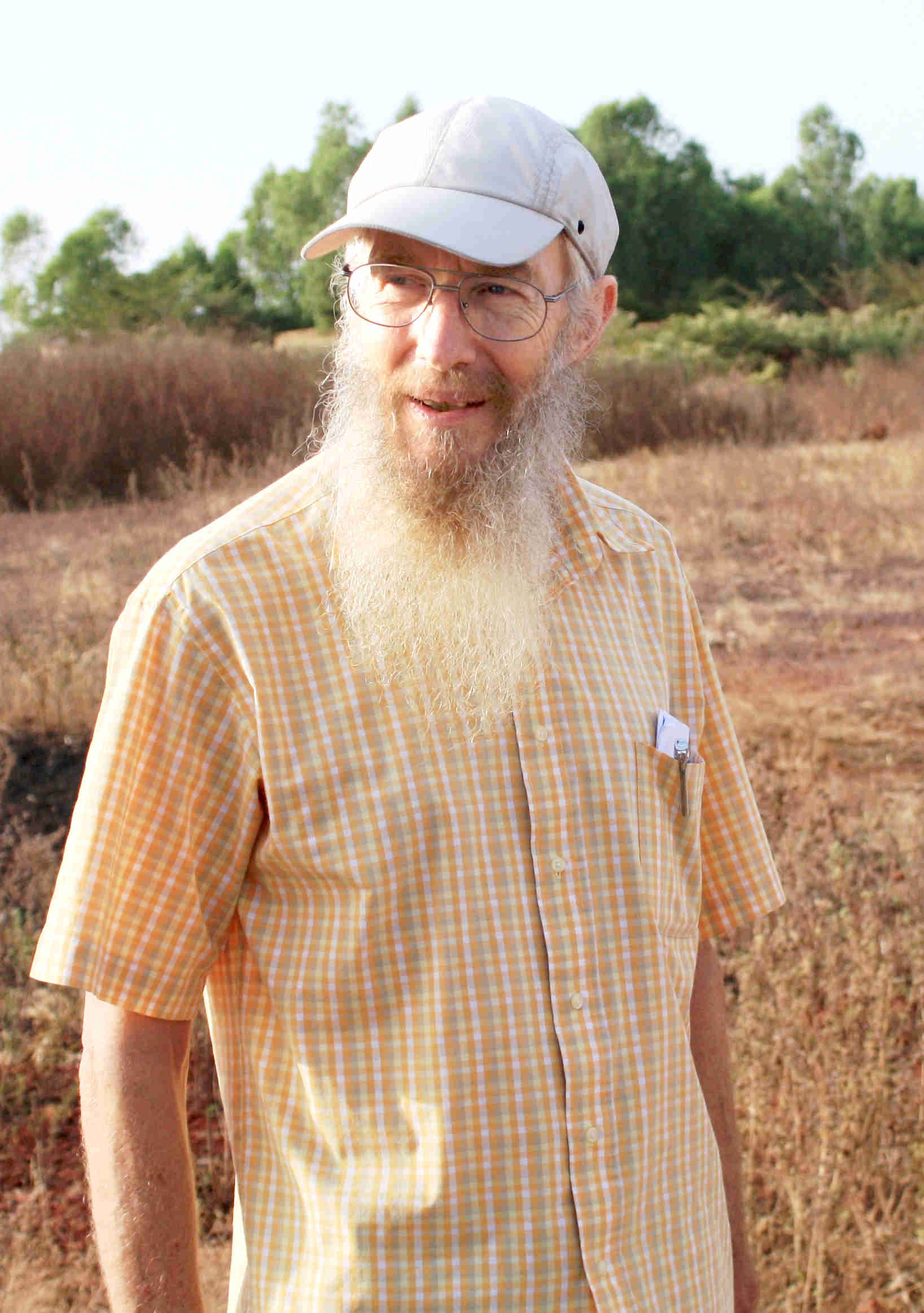
When Bourguignon was the director of IHES, following a suggestion of Pierre Cartier, he asked me whether I would agree to be the representative of IHES in India. He had succeeded in getting some funds from China, and perhaps Japan as well. I don’t remember exactly. He asked me to try to do the same for India. I came a couple of times for mathematical reasons, and I took the opportunity to meet some high-level people in the industry in India. But I got nothing. I did not get any support from IHES either. And after Jean-Pierre Bourguignon left IHES, I discussed this with the new director, Emmanuel Ullmo, and he said: “okay, you are still the representative, but India is not our priority now”.
Bourguignon ran the IHES in a very efficient way. When I mentioned his name to Fresnel, he said: “oh yes, but he stopped doing mathematics and decided to do administration”. It is something that in the academic world, at least in mathematics, if someone stops publishing research, they are considered like a retired person in many places. They do not count anymore. This reminds me of George Poitou, who coordinated building the University of Orsay Paris-Sud at the end of the 1960s (now Saclay University); he once told me: “there are other ways of contributing to the development of mathematics than proving theorems”.
I continue to do mathematics because I like it. Recently, I mentioned that to a colleague. I told him: “I like to be invited to conferences, and for that I need to have something to say, so I need to do research”. It is not the main reason, but it is a good excuse!
As far as I know, it is Serge Lang and you who brought algebraic groups and transcendence together. How did this come about?
MW: What happened was that Lang was invited to write a report for Bourbaki. The idea of Bourbaki is that people work together, but they publish as Bourbaki. If I remember correctly, when Lang was asked to write a report on group cohomology, Lang himself published the report that he was supposed to write for Bourbaki, and Bourbaki did not like it. But he attended some sessions of Bourbaki, and in one of them, he discussed with Cartier, who asked him two questions about transcendental numbers because Serge Lang was working on that.
there are other ways of contributing to the development of mathematics than proving theorems
Cartier’s first question was related to the Hermite-Lindemann theorem on the exponential function which states that if \alpha is a non-zero algebraic number, then the exponential of \alpha, e^\alpha is transcendental. Cartier suggested that it should be possible to generalize the Hermite-Lindemann theorem to algebraic groups – so to say beyond n=1. However, let me illustrate with an example that such a generalization is not that straightforward: Let \alpha be a nonzero nilpotent matrix in M_n (\bar{\mathbb{Q}}) for n \geq 2. Thus, some power of \alpha is the 0 matrix. It is then easy to see that the matrix exponential of \alpha, e^\alpha = \sum_{k=0}^\infty \frac{\alpha^k}{k!}, will be an algebraic matrix in GL_n (\bar{\mathbb{Q}}). This illustrates that the most obvious extension of this theorem from n=1 to n \geq 2 does not work. We have to be a little bit careful.
Lang solved the question, then I continued, and then it was continued by Masser, Wüstholz and others.
To sum up, it is not Serge Lang who introduced algebraic groups in transcendental numbers, it was Cartier. Lang followed up on Cartier’s idea and developed it, and I continued the work of Lang, but I was not the first either.
Cartier’s second question was about Siegel-functions, and he made a suggestion to Lang, but Lang did not pursue this idea. Lang mentioned it to me but he did not remember what it was. So I asked Cartier, and he did not remember either. Maybe it has been done in the meantime, and whoever did it might not know that it was already suggested by Cartier!
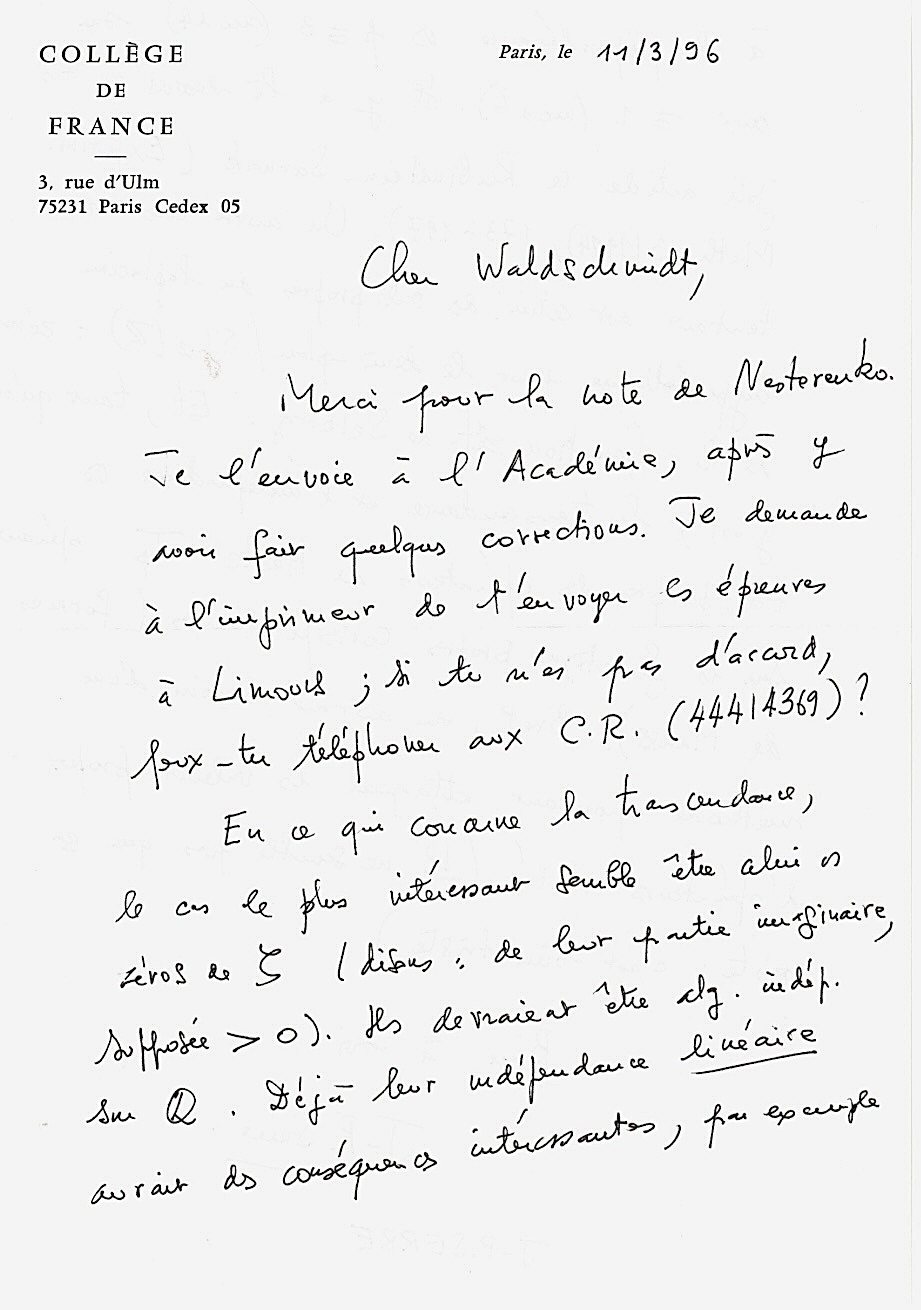 |
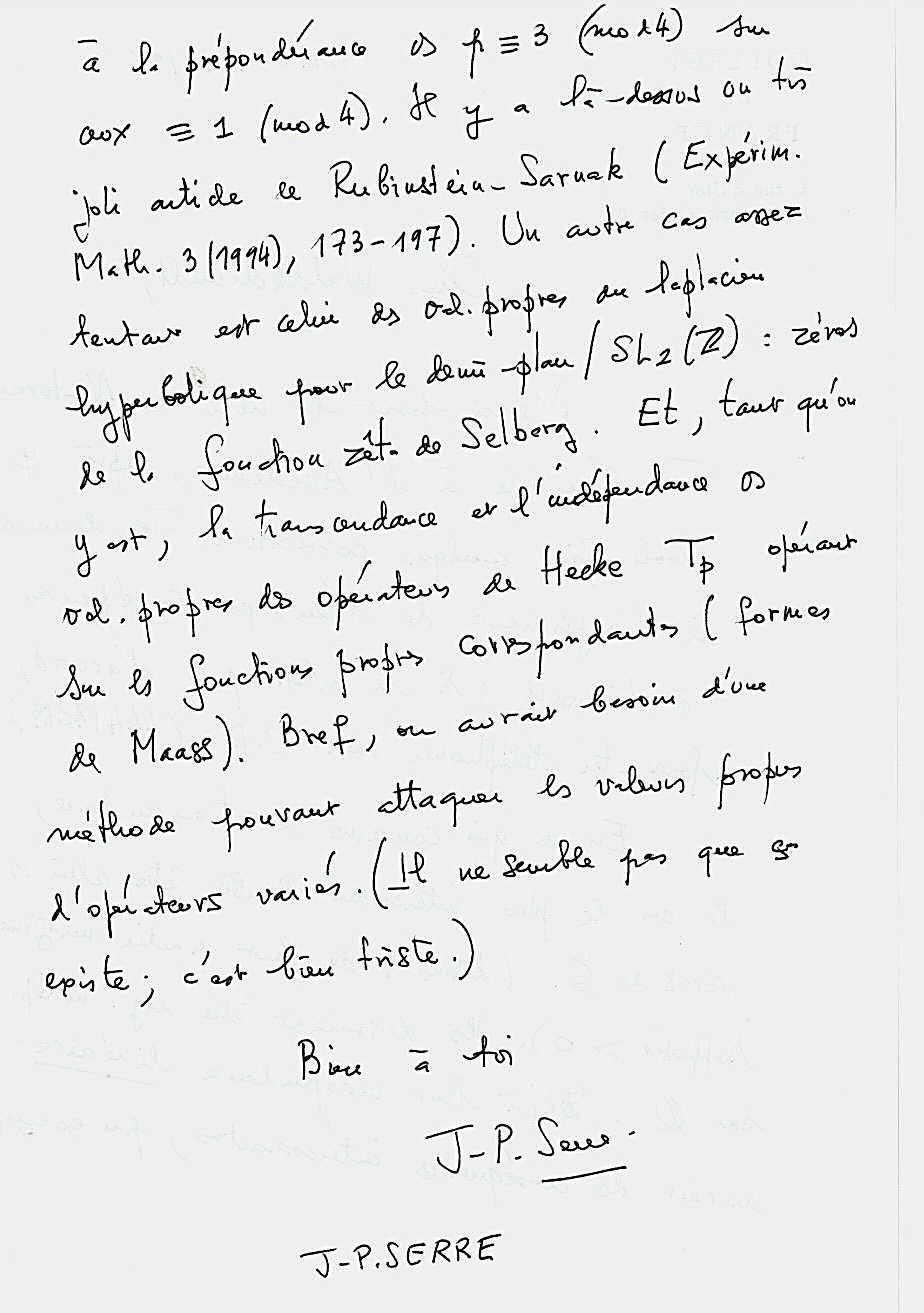 |
| A letter from Jean-Pierre Serre. Michel Waldschmidt | |
And this is the topic that you lectured on when you visited TIFR in 1976. Those are the notes that were lost.
MW: Yes. I recovered the notes, and wrote them again for my `Cours Peccot’ which are now published in Astérisque, in French. There are two appendices, one by Serre, and the other by Daniel Bertrand. Serre’s appendix is about algebraic groups and Bertrand’s one is about p-adic transcendence.
It’s an interesting story, how the book came about. When I gave the Cours Peccot, I spent quite a long time preparing it. I explained what Cartier did and what I did, and I explained the result of Siegel on elliptic functions and elliptic integrals. I mentioned that there were some results by Schneider, based on the work of Siegel, and it deals with elliptic integrals of the first and second kind. I said that it was not done for the third kind, because we were lacking some functions which would extend the elliptic function and zeta functions of Weierstrass. There was no known function associated with elliptic integrals of the third kind. And Serre said such functions were known already in the nineteenth century. He was writing me letters every week, and in one of the letters, he said: “OK, I did not find a reference, but this function exists, and here is the proof”. There were several things which were not known about the elliptic integrals of the third kind, and Serre said: “this is well-known”, and then he wrote down the notes. We did not find any other reference from the nineteenth century.
– From Serre’s letter (in translation)
Are there any interesting, hard or famous long-standing questions in transcendental number theory that you think are on the edge of being solved?
MW: You may know the story of David Hilbert (see his biography by Constance Reid – Zbl 0849.01032). In 1900, he lectured at the ICM in Paris and proposed 23 open problems. A few years later, in another talk, he mentioned three of the main open problems in number theory. The first one was the Riemann hypothesis, the second one was Fermat’s last theorem, and the third one was the transcendence of e^\pi and also the transcendence of two to the square root of two (2^{\sqrt{2}}). And he said: “for the first one, the Riemann hypothesis, we are not that far from the solution. For the second one, which is Fermat’s last theorem, maybe some of you, the youngest, will see the solution. But for the third one, nobody who is in the lecture hall will live long enough to see the solution”. As per Hilbert’s prediction this was supposed to be the last one to be solved; on the contrary, it turned out to be the first one. The transcendence of e^\pi was proved by A.O. Gelfond in 1929, the general case follows from the Gelfond–Schneider Theorem proved in 1934. Also, the second one to be solved was Fermat’s last theorem, proved by Andrew Wiles in 1995, and for the Riemann hypothesis, we are still waiting. So it may be tricky to talk about long-standing problems.
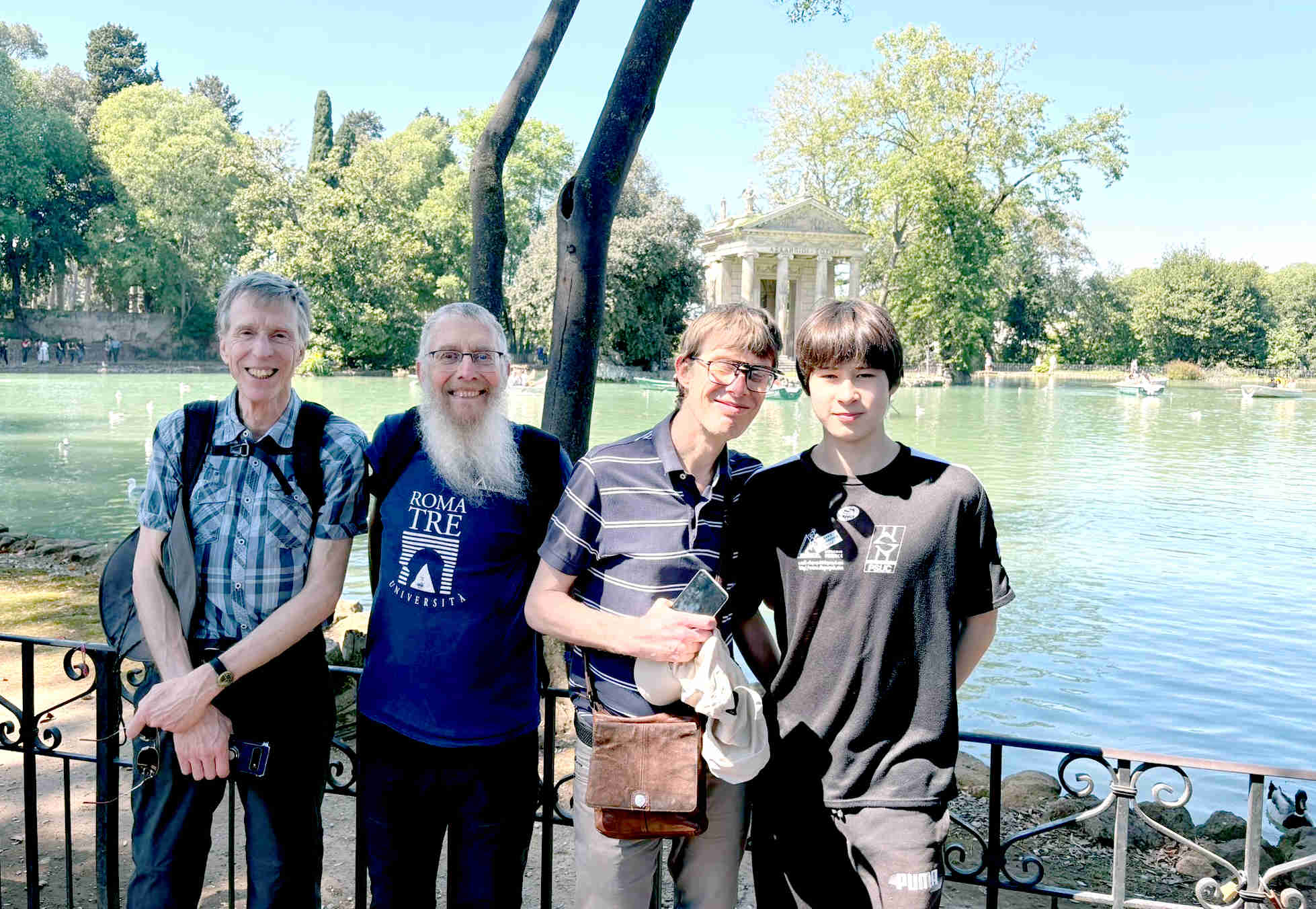
These days there are not so many people working in transcendental number theory and knowledgeable about the main tools. When Baker proved his result, there was some tradition. It actually started with Charles Hermite (for the transcendence of e, and then Ferdinand von Lindemann for the transcendence of \pi). Then there was a lull until Siegel came. Siegel renewed the topic, followed by his student Schneider. In Russia, there was Gelfond and his school with Shidlovsky who developed this topic.
Then it was a bit quiet until Baker came. The problem that Baker solved was considered as the main open problem, for which he was awarded the Fields Medal in Nice in 1970. I attended this ICM in Nice. There were many works on this topic thereafter, thanks to Baker. For me, if I worked in transcendental number theory, it is thanks to Baker because of the Baker–Brumer theorem. It was quite active for many years. Important progress was made in 1976 by Chudnovski, and in 1996 when [Yuri] Nesterenko proved the algebraic independence of \pi, e^\pi and \Gamma(\frac{1}{4}), and similar other algebraic independence results involving modular forms with Ramanujan functions P, Q, R.
I could tell you some more about the proof of these results, but I have the feeling that it is not so active nowadays. There was an attempt by Damien Roy to prove Schanuel’s conjecture in 1999, and I was very enthusiastic about that. Finally, there were no new results in this direction coming from this approach, but he had some equivalent statement of Schanuel’s conjecture, and the equivalent statement looks like something that one can prove. It’s more technical, but it looks like we should be able to do that. There is some auxiliary result which is missing, and when a chain is broken, nothing works. Damien Roy published several papers in this direction.
One of my favourite open problems is the Four Exponentials Problem, which is the first of the eight problems in Schneider’s book, and I tried to prove it. There is an interesting story about that. It was my first attempt to prove something, and I think it was early 1970 that I had a proof that I showed to Fresnel. At that time, Michel Mendès France, who was in the mathematics department of Bordeaux, went to Paris to attend the Séminaire Delange-Pisot-Poitou, and he met Pisot, and Pisot told him that he solved this problem. When Mendès France came back, Fresnel told me about this. I was just starting research, and he asked me to write down all the details. I wrote the details of my attempt for a solution but there was a mistake. However, my method for the first problem of Schneider enabled me with some change, to solve the eighth problem-–the last problem in Schneider’s book. So all was not lost!
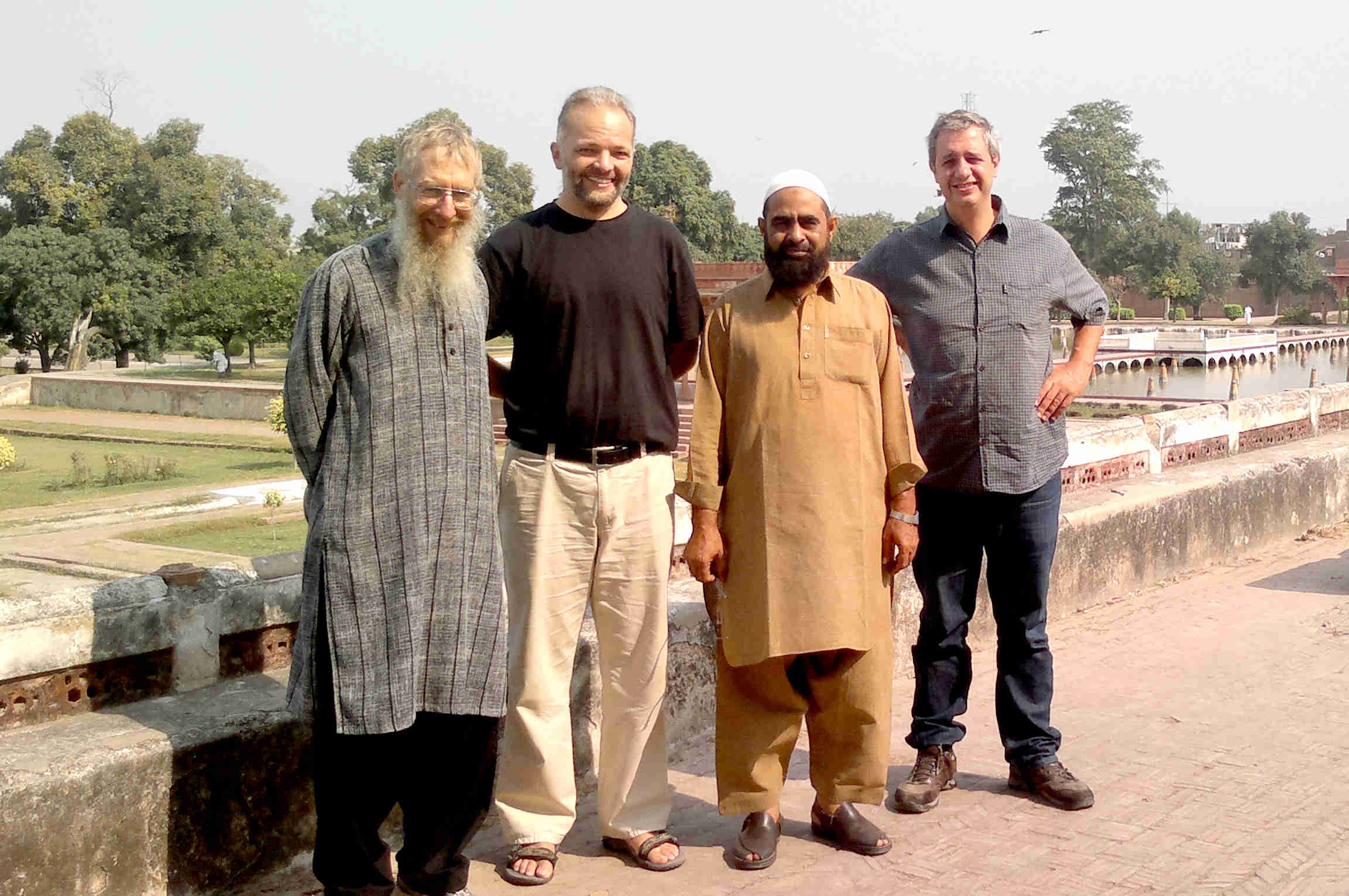
Coming back to Pisot’s proof, Michel Mendès France had told me that Pisot never makes any mistakes. But maybe it was the first one or the only one, and Pisot never published his proof. The problem is still open. It’s probably the problem I spent the most time on among all the ones I studied.
Here is a simplest case of this problem which is wide open: Let t be a real number such that 2^t and 3^t are integers. We expect that t is an integer. This would follow from Schneider’s conjecture. And so, will this special case be solved first, or will it be the more general Schneider’s first problem? We don’t know. It’s difficult to say.
When you were working on Leopoldt’s conjecture, you said Fresnel suggested that there are two ways to attack the problem: one using cohomology and the other using tools from transcendental number theory. Do you think that the times are ripe for combining both these methods, say using the algebraic, algebraic geometric, motivic methods with standard transcendental number theory methods?
MW: Maybe motivic, yes. You see, Baker and Brumer proved a special case of Leopoldt’s conjecture. Then we have something to build on. But I have no idea how cohomological method or algebraic method would work. I thought there would be such a method because I started to guess that I have a solution. In the paper by Françoise Bertrandias and Jean-Jacques Payan, “\Gamma-extensions et invariants cyclotomiques”, the authors quote a result of mine which I never published and had forgotten. At that time I was trying to use an algebraic method. And, well, I don’t really see how to combine them. Maybe there is something to be done.
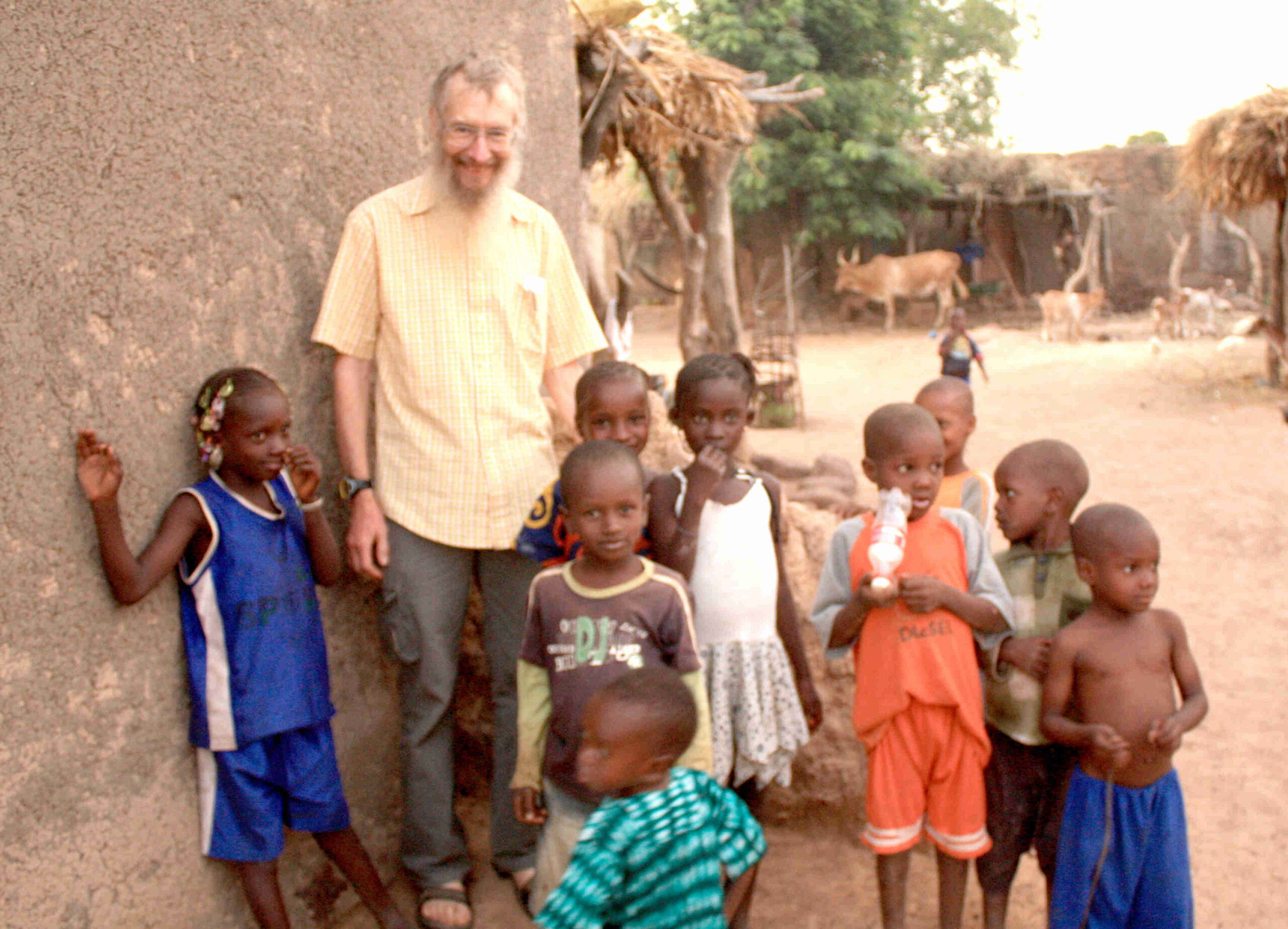
Of course, the p-adic method has to be there because Leopoldt’s conjecture is about p-adic numbers. You see, the transcendence of p-adic numbers is not as strong as the complex numbers.
There is a well-known example, which is the Lindemann–Weierstrass theorem. If the complex algebraic numbers \alpha_1, …, \alpha_n are \mathbb{Q}-linearly independent, then their exponentials are algebraically independent. It’s a special case of the Schanuel conjecture where \alpha is algebraic. We do not know the p-adic case. And the reason is that the exponential function has a radius of convergence which is finite, and so this method does not work in the p-adic case. Therefore, the p-adic methods are not as good. Very often, p-adic methods are more efficient because of the ultrametric inequality, but not for transcendental numbers. It could be that some specific p-adic argument would work. William Adams (1937–2024), in his PhD thesis (supervised by Lang), proved a weaker result and claims that with the same method he can prove that the two p-adic numbers 2^{2^{\frac{1}{3}}} and 2^{4^{\frac{1}{3}}} are algebraically independent. But as of now, nobody is able to prove this p-adic result. However, in the complex case it is known that 2^{2^{\frac{1}{3}}} and 2^{4^{\frac{1}{3}}} are algebraically independent.
Also, the Schanuel conjecture is about complex numbers. We have an analogous statement for p-adic numbers and it is also completely open. Whether this will be proved soon or not, we don’t know, it will depend on the method.
There is an open problem which was mentioned to me by John Coates which is to prove that the number e^\pi, which is known to be a transcendental number by a result of Gelfond, is not a Liouville number4. My guess was that we will prove this result at the same time as we prove that \pi and e^\pi are algebraically independent. This is because when we try the classical method they fail at the same point, so I thought that the two will be solved at the same time. However, the fact that \pi and e^\pi are algebraically independent has been proved by Nesterenko, and Nesterenko’s method does not give the fact that e^\pi is not a Liouville number. So it is an interesting open problem.
It is not known whether the Catalan’s constant defined as G = \sum_{n=0}^\infty \frac{(-1)^n}{(2 n +1)^2} = \frac{1}{2} \int_0^{\frac{\pi}{2}} \frac{x}{\sin (x) } dx is an irrational number. It is expected that it is a transcendental number.
So there are many open problems. We do not lack open problems. Which one will be the first to be solved in the future? Maybe the irrationality of Catalan’s constant is a good candidate.
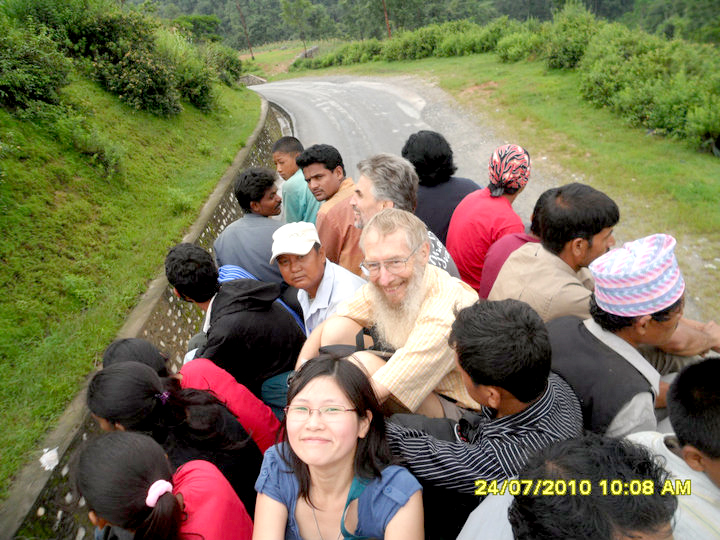
For the zeta values, that \zeta(5) is irrational, is an open problem, and whether it will be proved soon, it is difficult to know. There is a lower bound for the number of irrational values among the \zeta(2n+1), and also for the dimension of the space spanned by these numbers, the first lower bound was the logarithm of what is expected, and now it is a square root of what is expected. The early breakthrough in this area is due to Tanguy Rivoal who was a pioneer. Stéphane Fischler, one of my former students, who made further progress is a leader in this area. So there is considerable progress and it is impressive, but still far from what is expected.
How about function field analogues of these results?
MW: Oh, yes, there are a lot of results on function fields. Let me first come back to 1970. The first result which I proved was the answer to the eighth problem in Schneider’s book on the transcendence of one of the two numbers e^e and e^{e^2}, which I published in the Journal of Number Theory. At about the same time, the same journal published the same result by Dale Brownawell. We had found it independently, and had submitted it to the same journal, and the editor did not know that he was publishing the same result. When something like this happens, very often people fight. It was not the case at all with us. We are very good family friends. We meet very often.
We continued to work in the same direction after that. We have some joint paper, but then Brownawell shifted to go on the case of function fields, and he got some very deep results. The theory in the case of function fields is much stronger than the classical case. It is also equipped with some very good tools. Some of these tools and techniques are well developed by Brownawell and many others, and I would say that many function field analogues of various conjectures have already been proven. For example, there is an analogue of multiple zeta values, and they get the full analogue of the result expected in the classical case which includes the algebraic independence of \zeta(2n + 1) and \pi. This is known in the case of function fields. Many things are known, so it’s a better scenario there but unfortunately, as yet, it doesn’t reveal or provide any further insight in the case of the complex numbers.
What do you mean when you say classical method(s) in transcendence?
MW: For me the main method originates in Hermite’s 1873 paper where he proved the transcendence of e, and the paper of Hermite is amazing. I like it very much. Hermite developed the method and gave a proof. When I read it for the first time, I was puzzled by a sentence: “Mais une autre voie conduira à une seconde démonstration plus rigoureuse”(however another direction will lead to a more sound proof). It means that what he said before was not solid, so I had to understand what it meant. At one point, a few lines earlier, he introduces a determinant and then writes : “on ne peut, en général, admettre que le déterminant proposé s’annule”(one should not expect that this determinant vanishes), and concludes his proof by saying: “que le nombre e ne peut être racine d’une équation algébrique de degré quelconque à coefficients entiers” meaning that the number e is transcendental. But he never proved that this determinant is non-zero, and proceeds to give a rather complicated proof to complete the solution. I discussed this with Nesterenko which resulted in a joint paper. He wrote the first draft, and I wrote another version. In the version I wrote, we had to select certain parameters, and I explained how we select them. He said: “no, no, we should not publish that; this has to be on the back of the kitchen. We take these parameters, and the reader has to figure out why we do that”. But that is not my way of writing. Following Serge Lang’s footsteps who did not hide the arguments, I did not wish to hide the arguments, similar to his style. We explain that we need some parameters, we have these constraints, and then we have this solution. But Nesterenko said, no, we should hide those details. The way that many people write in transcendental number theory is that they do not make it user-friendly.
I would say that it’s Serge Lang who was the first person who tried to explain and de-mystify some of these methods. In fact, when I was a student and starting research, I was not as strong as many other experts then. The experts did not care much, and expected that the young non-experts would learn and understand on their own. However, I needed it to be explained to me. In my opinion, it’s important to help people understand the strategy behind the technical details!
So when I teach, I try to explain carefully in such a way that people understand. Recently I gave a course in a CIMPA School, and René Schoof was there. It was on transcendental numbers. At the end of the course, René Schoof told me, “I never understood transcendental numbers, but now I understand what you are doing! Could you give me your notes?” I consider that as a success of my teaching philosophy!
Recently, René Schoof again asked me: “what about your notes”? And I said:“I have to give another course and write them myself”.5 It is about the so-called Schneider-Lang theorem. Schneider has a result whose statement is one page long, with many complicated assumptions. However, the main result of Lang is very simple and easy to understand. It’s a statement which I like very much, because if you want to know why \pi, e, e^\pi are transcendental, this statement deals with everything. It contains all these kinds of results. It’s a little bit like Schanuel’s conjecture, which encapsulates many things. When we look at the statement, we say, OK, how could we prove that? It’s easy to build a method, because we start with functions which are algebraically independent. And we say, we will argue by contradiction. So we have these functions. We have to construct a non-zero polynomial which vanishes when we replace the variables by these functions. And now, to prove that this auxiliary function is 0, how do you do that? The idea is to say, we prove that this function has many zeroes, then more and more zeroes until we can say that it has too many zeroes. So now we have another problem. That is, we have a function. How to prove that it has many zeroes? Using the Siegel lemma, we can prove that there is such an auxiliary function having many zeroes, but only finitely many, which is not enough. Then we have to extrapolate in order to increase the number of zeroes (using bootstrap), until we reach the desired contradiction. All this is quite logical. If you look at some short proofs of the irrationality of \pi, people say, we want to prove that \pi is irrational. So you consider this integral. But why do you take this integral? Because the proof will work!
The work of Hermite is amazing, since nothing close to that was done before
So I like it when we understand the motivation and the way to do it. It’s part of the way I see things.
I told you that I was teaching middle school students when I was young. I had to explain things which were obvious for me, but not for them. The subject of transcendental numbers is considered to be difficult by many people. So I tried to make it as understandable as possible.
The main strategy for transcendence proof arises from Hermite’s original paper in 1873 (mentioned earlier) with his proof of the transcendence of the number e. In his paper, he starts by recalling the known results on simultaneous approximation of numbers, and explains that he will do something similar with functions. In Diophantine approximation, one compares | \alpha-p/q | with q for p/q a rational number. Instead of a number \alpha, Hermite considers an analytic function f (he deals mainly with exponential functions). He considers approximations to f by rational fractions P/Q: he considers P/Q to be close to f if Qf-P has a high order of zero at the origin. This is the birth of so-called Padé approximants. Only much later in the paper, Hermite says that his goal is to prove the transcendence of e. As a consequence, Felix Müller, who wrote the review for Jahrbuch über die Fortschritte der Mathematik (the ancestor of Zentralblatt für Mathematik, now zbMATH), wrote that the author proves some formulae for the exponential function, which are analogous to the formulae which are known for the approximation of numbers, and he misses to mention that the main result of this paper is the transcendence of e. Later, when he wrote the review for Lindemann’s paper on the transcendence of \pi, he wrote that in the previous paper by Hermite, the transcendence of e was proved.
This work of Hermite is really amazing, since nothing close to that was done before. Liouville produced the first examples of transcendental numbers and also proved the irrationality of e and e^2. But if you compare it with what Hermite did, it’s really on another level. After that, many mathematicians tried to improve the method of Hermite. Well, Lindemann succeeded to extend it with the transcendence of \pi. But then the next step really came from Siegel. Siegel was the main actor. Of course, Gelfond came into the picture with the transcendence of e^\pi, but the method of Gelfond for this result in 1929, using interpolation formulae (based on Pólya’s earlier work in 1914) was very much limited. A variant, giving the transcendence of 2^{\sqrt{2}}, was proved just after using a similar approach, but it was not possible to go further in this direction. We now understand things much better and know the situation well, and it is now more or less clear that this method has reached a dead end. They did all that could be done with this method. And what Siegel added to the ideas of Hermite was essential. I would say that all the developments are based on the method of Hermite and Siegel, including the work of Baker which used mainly the work of Hermite and Siegel. Baker was able to add some things that nobody found before. It is quite impressive what he did. But the basic method is that of Hermite!
Remarkable! Do you believe that, in your own experience, asking the right questions is also a way forward in research, in doing mathematics?
MW: Yes, finding good questions is something not that easy. When I had many students I was able to ask some good questions. I ask questions to my students so that they get started and work on it, but very rarely they solve the question. While working on the questions I had suggested, they were able to find something else. And that’s most often the case. You try to solve one problem and you end up solving another! This was also my experience with the problems of Schneider. I wanted to solve the first one, but ended up solving the eighth one. And very often you have to develop some method and see what you can solve.
One of my principles is not to publish a paper with someone who does not have a PhD. In France, some people do publish with their students, but they may be very few in number. I prefer not to do that. I have this rule because people otherwise may think that my contribution is more than that of the student.
There was some great progress on the long-standing Twin Prime Conjecture – or to be more precise, the related, Finite Gaps Conjecture by Yitang Zhang. After that breakthrough, later efforts have reduced the gap to 246, which is the status at present, I believe. What is your opinion about possible further progress on this?
MW: I have no feeling for the twin prime conjecture, I cannot say. On the other hand, I feel fortunate that I have been a witness to much progress in number theory from the time I started to study.
When I started, Mordell’s conjecture was still a conjecture, and in 1983 [Gerd] Faltings gave the proof that won him the Fields Medal in 1986 and Abel Prize this year. There are so many important results that have impressed me. The progress is fascinating, and I am fortunate because I am able to follow and appreciate the developments. I would say that we are privileged to see and understand what is going on.
You try to solve one problem and you end up solving another!
I like to compare it with sports when there is a world record. For many people, it doesn’t mean anything, but the ones who follow the situation, they are excited. Likewise, I am excited when I see some progress in mathematics, but I am not ready to make a prediction for the future. For example, something in my field such as Leopoldt’s conjecture; I can’t say when it will be solved. I don’t know. For the ABC conjecture, which I consider not solved yet, it is difficult to predict when it will be solved. It may even be false! As long as it is not proved, we do not know whether it’s true or not, but at the moment, we believe it is true.
I recall attending your lecture at ICTP where you talked about the ABC conjecture and its consequences. In fact, that was the first time I learnt about so many other statements that follow from the ABC conjecture. It was fascinating!
MW: This will be the topic of my talk next week in Pune. When I was invited to give the talk, I thought I would need to use something which I already have, because it is too short a notice to prepare something new, so I selected this topic.
That’s a fascinating topic, really. One of the nice things about your slides is that you have pictures of people associated with the results. In another direction, you also helped revive the Hardy–Ramanujan journal started by Ramachandra in 1978. You played a key role.
MW: I was very much impressed by Ramachandra. You see, for someone like me coming from France, he was a very special person. We do not know people like that in France. He was completely devoted to mathematics, and to Hardy and Ramanujan, and his disposition was something very inspirational. For me, he was really someone quite exceptional.
For me, Ramachandra was really someone quite exceptional
When I met him in 2005, I think, a few months after my daughter passed away, I discussed with him, and he frankly spoke with me of his personal situation, and despite the big age gap between us, it was moving that he explained all his difficulties with the health of his daughter. I was very moved to meet him and to discuss with him. To do something for his legacy after he passed away, I would not say it was a duty, but it was something which I think I needed to do. And to help the Hardy–Ramanujan journal is because of Ramachandra. He started the journal, and his legacy deserved to be continued. I am sure he would have been pleased to see how the journal is doing now, because the way he started is just amazing. To do it all by himself, without any support, and to start the Hardy–Ramanujan Prize, speaks of his devotion to the subject. Giving a small amount of money to the awardee from his pocket, who is supposed to use it to buy some books of Ramanujan or Hardy, it’s just amazing. And the fact is, the journal is now doing well. You see, it’s a seed that he sowed, and the tree is now bearing fruits, it is deeply inspirational. And I’m very pleased that it all worked out like this.
It must have been much harder for him, because he started in 1978. He had to find a printer, you know.
MW: Yes, yes. And he was not the kind of person who you would expect that he is able to do all these material things, but he did it. That’s true.
That’s a very interesting point. I think it’s the passion. If you really want to do something, you find a way. Would you like to say something about Ramanujan and his work?
MW: Yes. I met the widow of Ramanujan when I visited India to attend the Ramanujan birth centenary conferences in 1987. I remember asking her a few questions. But she did not answer on her own. There was a young person who answered all my questions. In that sense, I did not really speak with her.
As far as Ramanujan is concerned, I find it very interesting that even a common man on the street in India has heard his name. This is contrary to France! There is not a single mathematician who is so well-known there. In France, many may know Raymond Poincaré, who was the Président de la République from 1913 to 1920, but they do not know that Raymond Poincaré had a cousin who was a mathematician. Also, many people may know something about André Weil, but more because he was the brother of Simone Weil, who is better known in France.
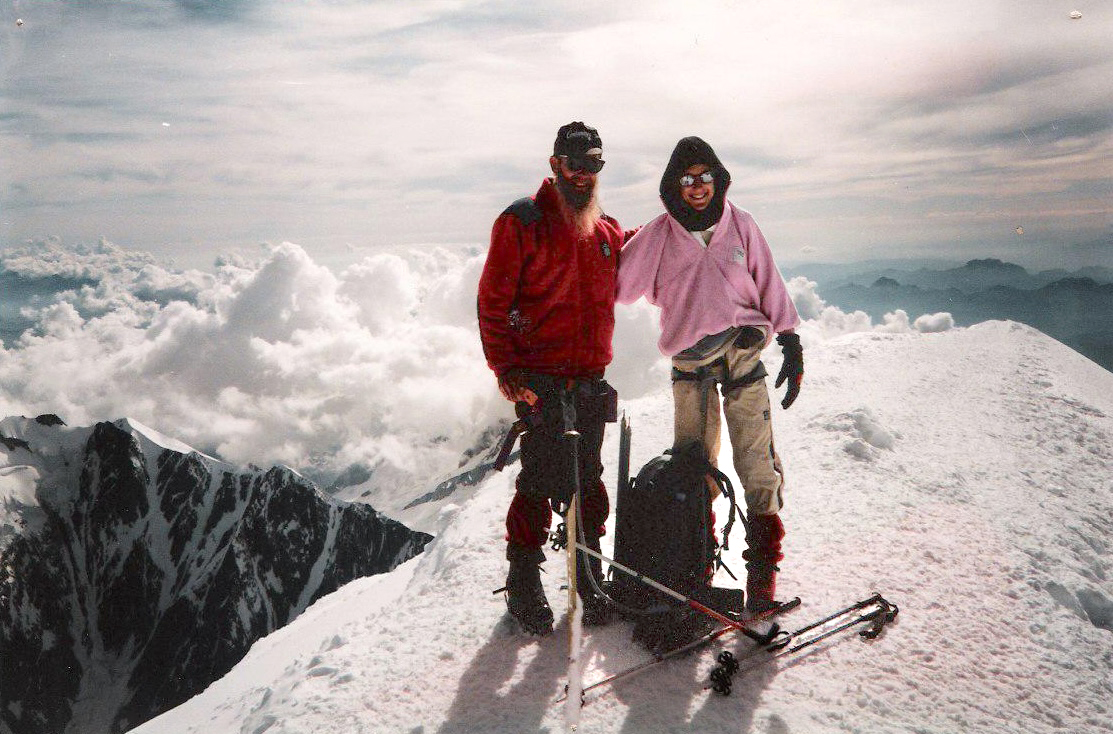
I read a lot of things about Ramanujan in connection with a lecture which was given in Paris for a programme addressing a large public which I initiated when I was the president of SMF (Société Mathématique de France) in 2004. The idea is to give some public lectures to a general audience to help them gain knowledge and insights about mathematics and mathematicians. It is held in the Bibliothèque Nationale de France, in a very big hall. It is now a very successfully running programme because there are some sessions and classes which are run before the lecture, and some mathematicians go and explain to the students what they need to know to understand the public lecture.
One of these lectures was about Ramanujan. To prepare high school students to attend the talk I learned a little bit of his life story and the work that he did.
The first time I learned something on Ramanujan was in connection with the first of Schneider’s problems, which is still open. It is also called the Four Exponentials Conjecture. Ramanujan had a well known paper on highly composite numbers where he claims that the quotient of two consecutive colossally abundant numbers is a prime number. Alaoglu and Erdõs pointed out that the proof of this claim relies on a special case of the Four Exponentials Conjecture. They asked Siegel whether the claim of Ramanujan was correct. In their paper they write: Professor Siegel has communicated to us the result that q^x, r^x and s^ x can not be simultaneously rational except if x is an integer. Hence the quotient of two consecutive colossally abundant numbers is either a prime or the product of two distinct primes.
The conjecture that the quotient of two consecutive colossally abundant numbers is a prime is still open, and is a consequence of the conjecture that I mentioned previously that states that if t is a real number such that for distinct primes p and q, p^t and q^t are both rational numbers, then t is an integer. This latter conjecture is in itself a consequence of Schneider’s first conjecture. So, there is this connection between my work, the first problem of Schneider, and the work of Ramanujan.
I must say I have been lucky regarding teaching in France
Regarding the Four exponentials problem, I would like to add that many well-known mathematicians, including Selberg, worked unsuccessfully on it. The first to publish the six exponentials theorem, a weaker version of the four exponentials conjecture, were Ramachandra and Lang, who proved it simultaneously but independently. While it is true that their proof is in some sense easy, one still has to build the entire transcendence edifice; constructing an auxiliary function, extrapolating using a zero-estimate and all that, and then get the result. Once you get a hold of the methods of Hermite and Gelfond–Schneider, it follows easily, but one has to do all the work.
A life involving any serious pursuit often demands long periods of deep focus. How did you balance time for family and time for doing research and other professional commitments including teaching?
MW: I would like to start by saying that my wife, Anne, was very supportive of me and she helped me quite a lot when we got married, especially in the early years. During the first seven years of our marriage, when we did not have children, she helped me, first of all, by not asking too much of me and not expecting much from me. If I was busy at work she would not disturb me. Also when I wrote my PhD, it was the time of typewriter and I had to type things out, and very often I wanted to correct something. At that time to correct something the only way was to go through a very cumbersome cut and paste process, actually using scissors and glue! My wife helped me though she did not understand what was being corrected.
Just before our marriage, I was going through a bit of depression because I was burned out. She supported me very strongly at that time. She did not complain about the fact that sometimes I was thinking mathematics and not participating in normal life, though I did my best to be friendly and to be socially available and active.
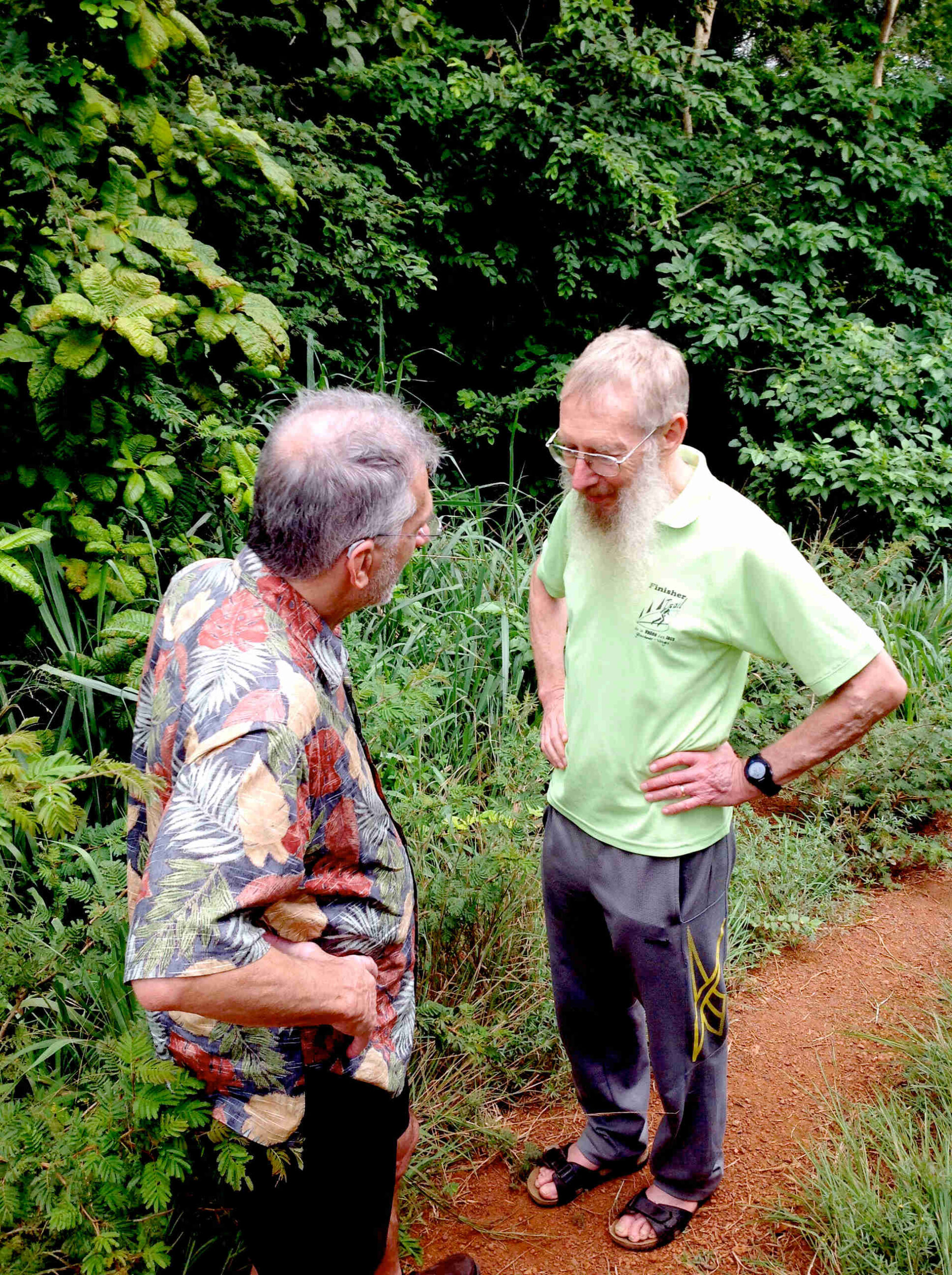
During the first years we lived in Palaiseau, which is around 30 km from Paris. Anne was teaching in the beginning. I used to do research mainly at home, not at the university in Bordeaux. Later when I was in Paris, where I had a position first in Orsay and then in Paris VI,6 I came to the university for teaching, for administrative duties, and for meeting my students. When we had our first child, several people told me that I had been able to work from home because I didn’t have children, but with a child at home it was not going to work. However, I continued the same routine and I had no difficulty being at home and doing my work. I continued to work from home even after the second child. I essentially did all my research at home and it was an environment most suitable for me.
You were ahead of time with the work from home culture! I suppose you have good discipline in the way you do things.
MW: What is true is that for many years I decided not to work after the dinner, which was something like 7:30 pm, but I worked a lot at other times. In fact it was not too difficult for me to concentrate on work at home. I needed some effort to de-concentrate to come back to real life and it is something I did not expect. Very often I would go running in the morning, as I live less than 1 km from the forest, and it was easy for me to go there. After working I would go running which helped me unwind, and when I came back it would be lunch time. Thereafter, instead of taking a nap, I would continue to work. I like to work, so it was not difficult for me.
I imagine that even for teaching you have the same disposition in the sense that if you are teaching a course, you make extensive preparations.
MW: Well, I must say I have been lucky regarding teaching in France. There are some positions in CNRS (Centre National de la Recherche Scientifique) which are research positions and one does not need to teach – if someone likes to teach, they can teach a course once every five years or so. Otherwise, one does only research. I was in Bordeaux for four years, and during the fourth year I was in the CNRS, so I did not have to teach. During my last year in Bordeaux, I spent all my time doing research and it was too much. I found that I was always working on mathematics. Also, I was not training or running, and I did not have any pastime at that time. I found that it was exhausting.
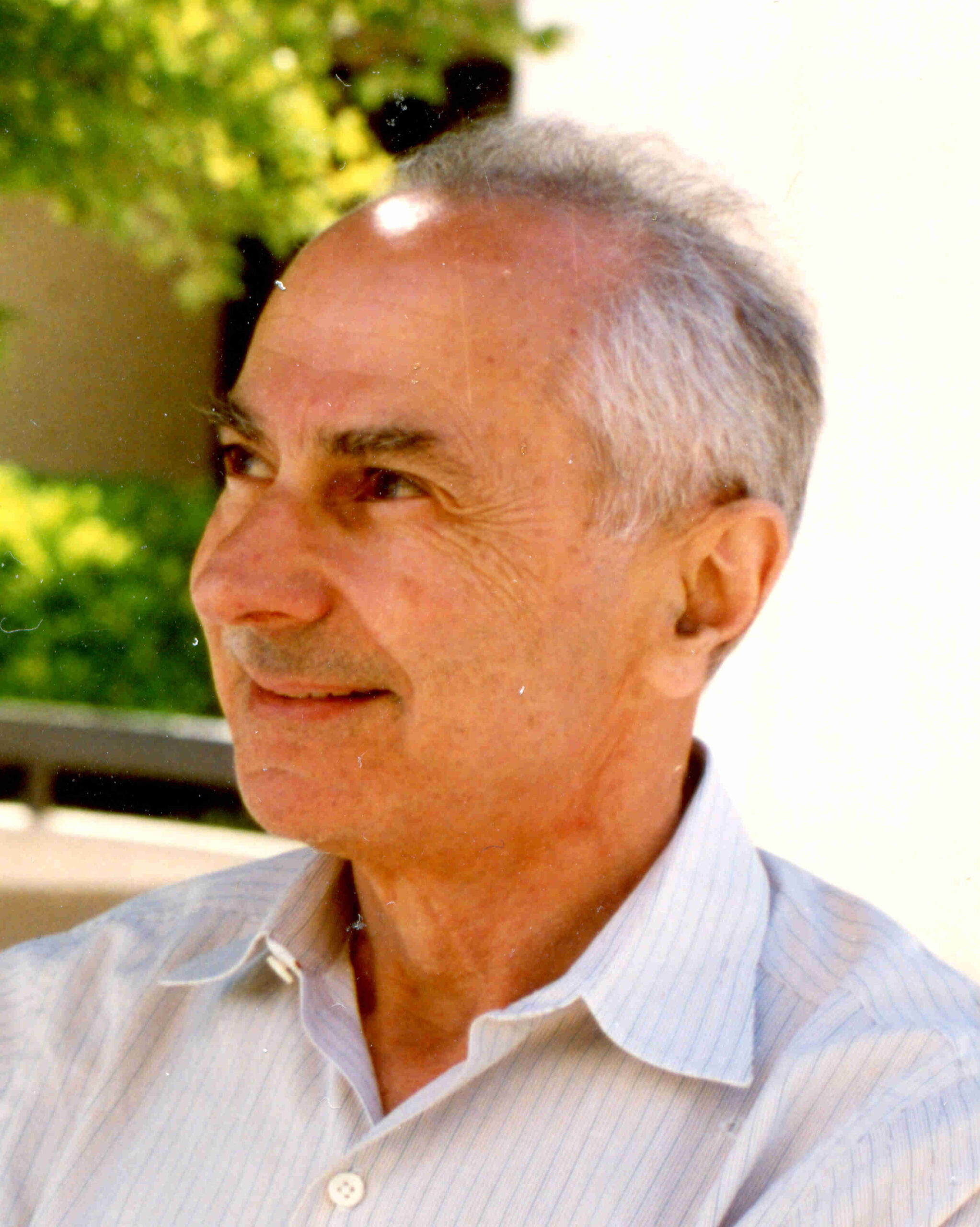
I joined the CNRS in October 1971, and there was a Bourbaki seminar in November. I met Henri Cartan in the seminar, who offered me a position in Orsay the next year. But I was not so enthusiastic. I was in CNRS for a month and half, and I found it amazing. Had I accepted Cartan’s offer, I would have had to leave Bordeaux, but I was very happy in Bordeaux. Besides, in Orsay, I would have had to teach, whereas I did not have teaching duties in CNRS. However, I could not say no to Henri Cartan as well. So I said to my colleagues in Bordeaux that I will go to Paris for one year, after which I will be back.
So it was in 1972 that I left Bordeaux for Paris. The first year I was there, I had a one year position in Orsay. Just at that time, in Paris VI, there was a professor, Madame Dubreuil-Jacotin7 who passed away. She was supposed to teach group theory to a large class of people. There were 300 students there if I remember. So they made it into two groups and were looking for a teacher. It was not a permanent position. I got this position in Paris VI. So during my first year in Paris, I had two places where I had to teach. I started with Orsay, where the first term was first-year studies.
300 students in two groups is still a large number. How easy or difficult was it to manage that?
MW: It was 1972, four years after the 1968 turmoil, and the students in Orsay were still very politically involved. There were a lot of demonstrations. Once they came in the middle of my course and said: “we want to say something to the students”. And I said: “you will do this either before my course or after, but not during my course”. They organized some agitation, and it was quite difficult. One day I knew which one was making some noise. So I wrote something on the blackboard, and said: “you should take note of this because it’s very important”. And I waited a little bit, I erased it, and I went to this guy and said: “could you show me the notes that you took?” He took no notes, and I said: “okay, you have to leave the room”. And he said, “no”. And I said: “then I will not continue my course until you leave the room”. I was young, and it was not easy. Finally, after some time, he left and I could resume teaching, but it was a difficult experience.
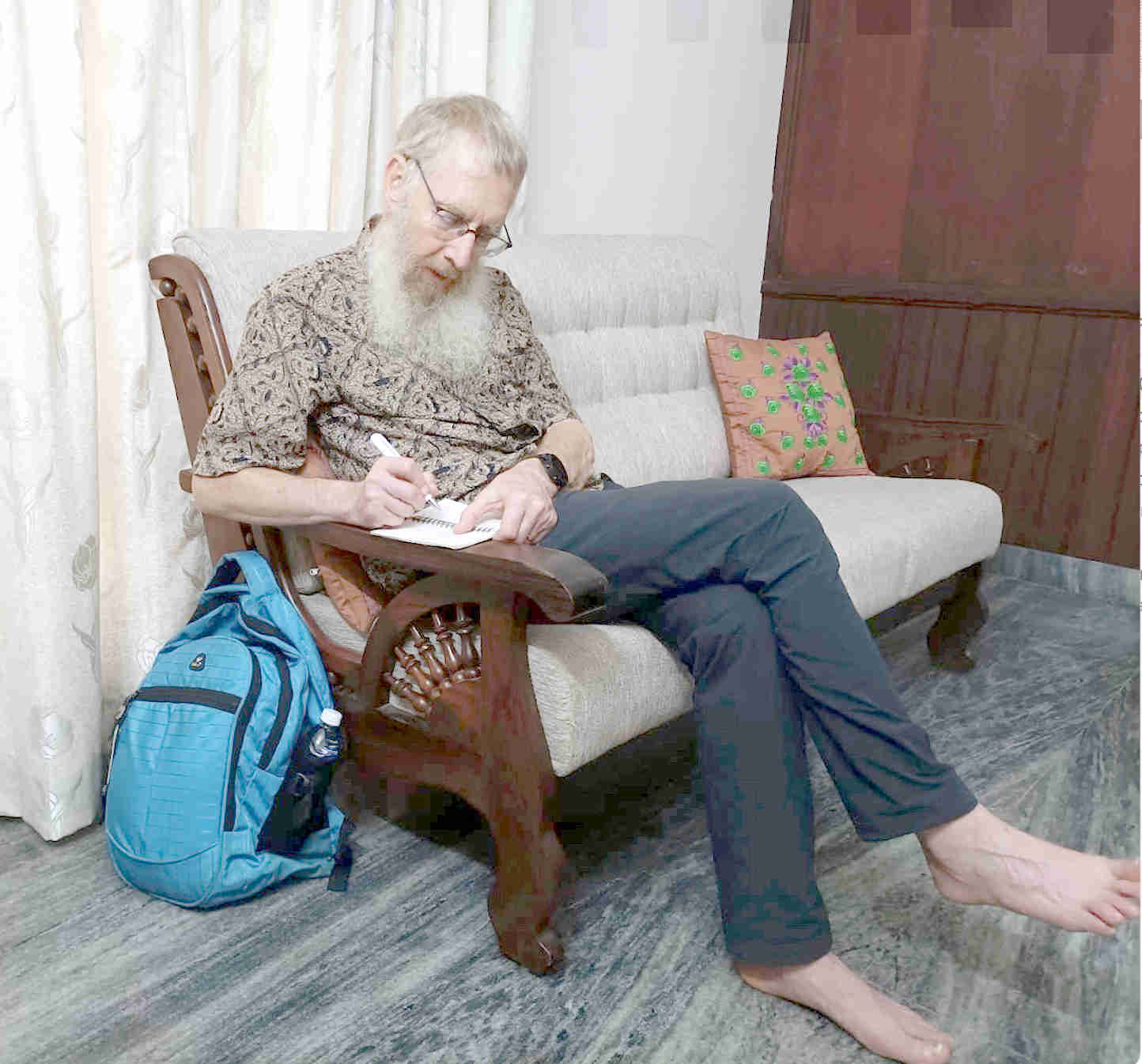
To teach the course on group theory in Paris VI, which I never did before, I needed to prepare a lot. For the second term, I taught a course on complex analysis in Paris VI, which again I needed to prepare. In Orsay, it was an advanced course on transcendental number theory, which I liked very much. And this is the course for which I wrote down notes. It is published in the Lecture Notes in Mathematics.
The way I wrote it was very much inspired by the book of Serge Lang on transcendental numbers. I went a little bit further, but I tried to be as simple as that. So my first year of teaching was very heavy. The next year, I got a position in Paris VI, a permanent position. After that, I had to teach three hours per week. One semester was a course like group theory or complex analysis, so it was not a very advanced course. And the second term, I could teach an advanced course, and I changed every year. I was teaching what I was doing in research. And so, teaching was not very demanding, nor was it too difficult for me.
Did any of these students go on to do their PhD with you?
MW: Yes. I think several of them attended my course in Orsay, the first course I gave. Then they attended courses I gave in Paris VI. In fact, this is one reason for which I stayed in Paris and did not go back to Bordeaux. It is that in Paris, there were very good students, especially the ones from the École Normale Supérieure or from École Polytechnique.
What practical advice would you give to early career mathematicians about choosing problems?
MW: That’s a good question. There is something interesting I have to say about that.
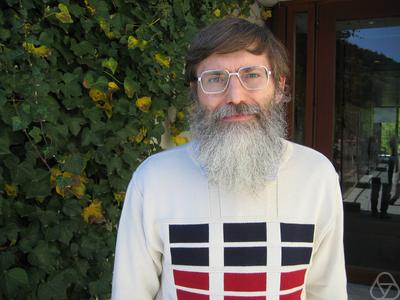
One day I was speaking with Serge Lang. You know, he came to Paris every May, for many years, at my invitation. When he came, he gave a course, which was very interesting. One day I told him that there is a new PhD student who has just joined and he wants to work with me. But I do not know which problem I could suggest to him. Serge Lang was shocked. He said, “What do you mean you suggest a problem? PhD students have to find their problem on their own”.
But this was not at all the way I did. Maybe I should have done that. Oesterlé wanted to do his master’s with me. When he asked, I said: “oh yes, I have a very good problem to suggest to you”. Because he was very strong, I thought I should give him my best problem. I learnt from other people later that Oesterlé had expected my answer would be, “it’s ok, you choose your problem”. In the end, he did not continue with me and went to work with Marie-France Vignéras. In fact, I solved the problem that I wanted him to work on sometime in the 1980s.
So the way I work is not the way Serge Lang worked. However, I think it’s not that bad to give an open problem, because people work on it and learn something. So I suggested problems to most of my students with one exception, which is Daniel Bertrand. When he came to work with me, he told me which problem he would like to solve. He did not solve that problem, but solved another one.
It’s important to start with a good problem, and to think of a good problem is something not easy. I would say that to start with the thesis advisor, it’s not bad that he suggests a problem, because he is more mature, he knows the situation, what is known, what is not known. It’s not that easy to know what is known when you are a student. Nowadays it’s easier, but at that time it was not so easy. So to essentially all my students, I suggested some problems, and they found on their own some other related things to work on.
I have another example, which is the case of Tanguy Rivoal. He told me that he was working on Apéry’s method. He attended a course of mine, and he wanted to do a master’s thesis with me. I suggested a topic, which was not right for him. I should have asked him to choose a topic. The topic I asked was about algebraic groups, and every week he came and explained what he understood, and after he explained that, he said, “can I speak with you about what I found in Apéry’s work?” It took me some time before I realized that it was better that he chose his master’s topic, which is what he did; then I suggested he works with Francesco Amoroso. And he worked with him. I think it’s Francesco who suggested to him the result that Tanguy Rivoal proved. He told him, it may be too difficult to prove \zeta (5) is irrational, but maybe you can prove something weaker. This is a good example where the idea of proving a weaker statement is very crucial, because the statement that he proved is amazing, though it’s weak compared to the irrationality of \zeta (5), given that so little was known at that time.8 So to have a good problem to work on is something not so easy.
Do you have any comments to make regarding dealing with rejections: paper rejections or job rejections?
MW: It’s something that we always face. My first rejection was when I applied for a position in 1973: the letter of rejection said that my application was not successful since there were better candidates. The same is the case for journals. Even now there are times when a paper I submit gets rejected. I have worked with some very strong collaborators who did some very good work, and they too have had a hard time publishing their work. Some of these are very well-known mathematicians, and it has become harder now, because almost all the journals have a long publication queue.
One should not pay too much attention to these. I know many people who are very sensitive. For example, I know several people who stopped working because of rejection. This is something that one should not do. Usually, I do not tell or advise people what they should do and what not to do. But to stop working because of rejection is not constructive.
to stop working because of rejection is not constructive.
Also, knowing how long and how much to persist on a problem, and knowing when to change direction isn’t easy I guess.
MW: My answer is an advice of André Weil, which is to have several irons in the fire. This is something I practice and I encourage people to practice, it’s good to work on hard problems. Because if you do not work on hard problems, chances that you will solve one of them are low. If you work only on easy problems, you will probably be able to find some publishable results. But then it’s not challenging enough. To work on several problems, some hard and some easy, is, I think, a good way of working. If you are stuck in a difficult problem, if the problem is very hard and an open conjecture, it’s normal; many have been stuck on it. You should not give up too early.
But if you are very enthusiastic about one problem and work only on that one, it may not be good if you do not make progress. If your attempts fail each time, you should not give up completely. Just come back to it from time to time, and sometimes you will get an idea, when you are least expecting it. But you can also work on easier problems for which you are confident that you will find the solution. There are several papers of mine where I started with an easy remark. Sometimes it gave rise to a very good paper, but it started from something very small, like a seed.
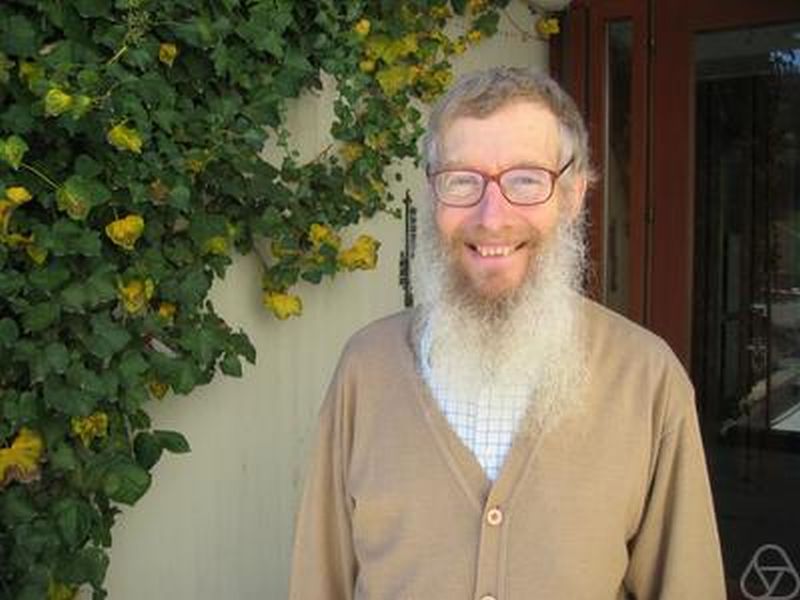
The main idea which I had for Leopoldt’s conjecture, I actually got it while brushing my teeth. I was working the day before. It was just before Easter 1980, and it was probably Wednesday or Thursday before Easter. I remember that my parents-in-law were at home. So the day before, I was working in Orsay with Patrice Philippon and Éric Reyssat, and we were looking at some work by G.V. Chudnovski. We were trying to understand this work and to make it simpler. I suggested to them to use an idea which I had developed with Maurice Mignotte in a quite different domain. I said, oh, maybe this idea will work in what you are doing now. And it worked. Then Reyssat wrote part of it, and Philippon wrote the other part. They could give a complete proof of some claim by Chudnovski which was a bit mysterious. It was not clear that the very sophisticated proof by Chudnovski was solid, the ideas were there, but to say that each step was exactly correct was not clear at that time.
Twenty years later Nesterenko and Philippon went much further, and did better. But in 1980, in Orsay, that afternoon, I suggested using something which was not related to their problem, but which came from another source. And the next day, I realized that the same idea, which I suggested for Chudnovski’s result, would work for my problem on Leopoldt’s Conjecture.
So you see, to have several problems is very good, because an idea for one may work for another. It is also the case for the problem that I had started with, Schneider’s first problem, the four exponentials conjecture. I had an idea that I thought would work which did not work for the first problem, but worked for the eighth problem!
Therefore, my advice is not to give up, unless it’s really hopeless. There are some problems where I gave up, like Lehmer’s conjecture. I spent a complete summer working on it. I was invited to give a talk at a conference for Schneider, after his passing away. The day before, leaving for Freiburg, I thought that I found the solution to Lehmer’s problem. Then I thought: “oh, I have to give a lecture. Do I speak on Lehmer’s problem, or do I give my talk on Schneider’s work?” And I thought: “let me be reasonable”. I spoke about Schneider’s work, and did not mention Lehmer’s problem. There was a dinner after my talk. After the dinner, I came back to the hotel and, that evening, while writing down the details, I found the mistake. The idea was clever, but it did not work.
Then I wrote some survey on Lehmer’s problem (Sur le produit des conjugués extérieurs au cercle unité d’un entier algébrique. L’Enseignement Math. 26 (1980), 201-209), but I never contributed to any improvement on it. There were many things to be done. In fact, I was trying to prove a result, which was a generalization of Dobrowolski’s result in several variables, but I failed. What I was trying to do has been completely done much later by Francesco Amoroso and Sinnou David. When I saw their proof, I understood why I did not find the complete solution myself. There were a lot of things to be done, and I had tried too early. So, while it is true that one should not give up completely, one must not spend all the time. I know some people who worked only on one problem, and not succeeding, they did nothing. That is not good.
Perhaps engaging in teaching helps deal with such situations.
MW: Yes. In fact, I like it very much. This is part of the beauty of being a teacher! One of the best times I experience happens when I teach. When I teach to students, and I explain something, I notice that they understand. This is really amazing, and it happens to me very often.
Do you have any favourite theorem or result among your own work?
MW: OK. It is not considered polite to talk about one’s work.
My first answer is that I am very proud of the work done by my research students and all the students of my students up to several generations. Their influence on the development of the theory is much more important than mine.9
I would also like to quote a result of mine on the characters of type A_0, which was a problem raised by Weil. I think it is one of my best results, and few people know it, so I am happy when people know it, because it is not such an easy statement. It is very closely related with my lower bound for the p-adic rank of the units of algebraic number fields which is something that more people know about.
One of the best times I experience happens when I teach
The most quoted result of mine is about a lower bound for linear forms in logarithms. I published a detailed paper in Acta Arithmetica. And when I look at the citation, this is the paper which is the most often quoted. It was a lot of hard work. I spent a lot of time checking everything, and it is very technical. People have used it. Now there are better results which are used. But I do not consider it as one of my best works.
Now, the other thing for which I am proud of is not a theorem, it is a mathematical object “Waldschmidt constant”,10 the name of which was given by people working in commutative algebra, that I introduced when I was trying to solve a certain problem in complex analysis in several variables arising from a transcendence question. I thought that several variables were needed to solve the problem of the characters of idèle class groups (at the end of the game I solved it using only results on one variable functions). So I studied the functions of several variables. I studied a paper by Bombieri on this, where he solved a conjecture due to Nagata. And I could simplify to a certain extent the paper by Bombieri by writing a Schwarz lemma for functions of several variables: the number of zeroes in the one dimensional case is replaced by the degree of a hypersurface. If you use this lemma then the proof of Bombieri becomes easy using what was known before. And to prove the lemma you have to use all the proofs of Bombieri on the solution of the \overline{\partial} problem using Hörmander L^2 estimates. But this is the lemma which I produced from Bombieri’s paper, and this lemma involves a constant which has been studied quite often nowadays. This constant which I introduced, I called it \omega, and now it is called \alpha! There are many people working on this constant in commutative algebra.
For the result in transcendental number theory which I like the most, maybe I would say the Schneider–Lang criterion. It’s such a powerful statement, very simple, still it contains a number of deep results. We can explain the proof and explain why this is true. And it really gives a view of the transcendental numbers which people can understand.
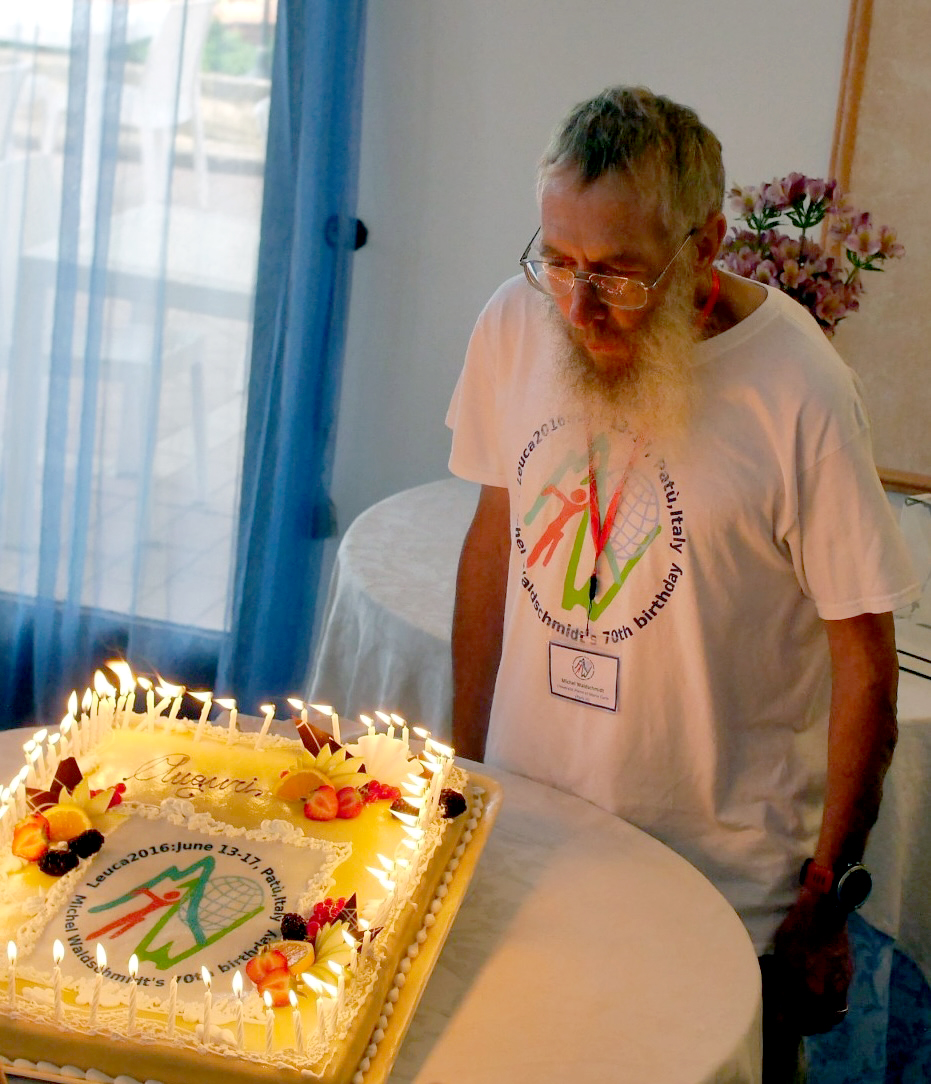
Since I did not think of this question before, I am trying to figure out now what my favourite theorem is. Maybe this would be my favourite theorem.
You have visited so many countries. Is India the country you have visited most?
MW: Yes, India is definitely the country where I have been most times. During many of these years, I have been here twice, and sometimes three times. I have a visa now which allows me only three visits per year. I don’t have so many joint papers with Indian mathematicians. I have a few joint papers with some. I also like to teach courses. When I go to India, and many other countries worldwide, there are students who are eager to learn. And that makes a difference.
What are your views on olympiads and that sort of mathematics, and the way it is encouraged these days, especially by a lot of parents who send their kids for competitive exams?
MW: Mathematical Olympiad is something very fashionable, very popular in many countries. Not in France though. The French are not so good in the number of medals in mathematical olympiads. The reason is that the way mathematics is seen from the perspective of the olympiads is not the way mathematics teaching happens in France, which is more in the spirit of Bourbaki.
There is some competition in France called the Concours Général. This is for the best students of the class in high schools and they are selected by the teachers. The teachers know which one has a chance of succeeding. Then these students have to solve some problems, but not at all of the kind that you see in olympiads. For the olympiads, you have to be clever, and you have to know the tricks. It’s not the kind of mathematics taught in France, which is developed in the Concours Général, or for the entrance to the École Normale Supérieure or École Polytechnique.
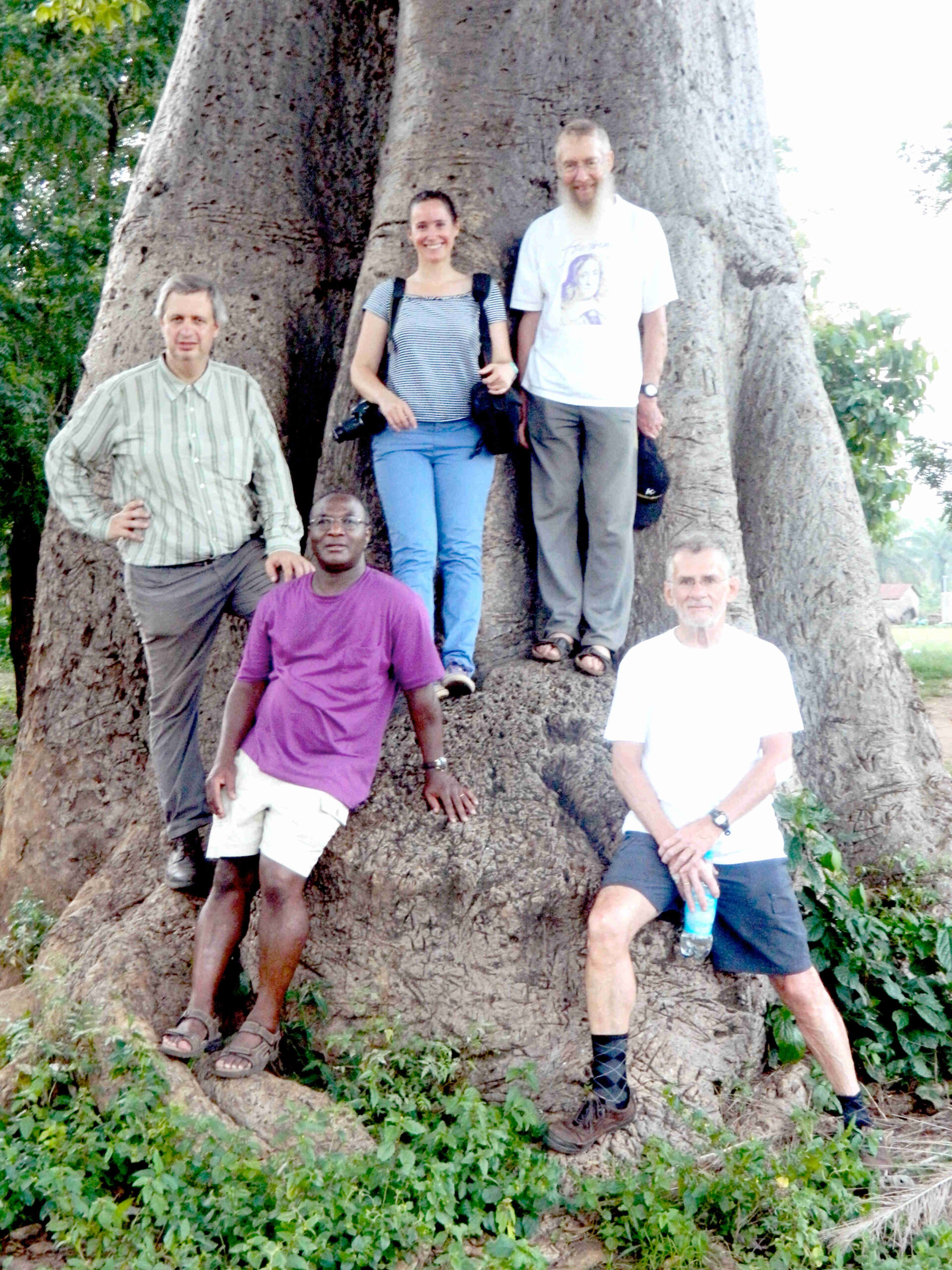
It’s a completely different style, leading to the agrégation that I mentioned. For this exam, you have a very long problem, at the end of which you end up having proved a theorem. But you have all the steps which are detailed, and you have to go step by step towards proving some theorem at the end. You are guided by the questions framed. In fact, I always suggest to my students that they read the problem completely, and then try to solve it. Because very often the questions are somewhat like, starting with a first question, is this set finite? And a few questions later the text speaks of the number of elements in this set. Hence you have the answer to the first question later in the subject of the exam.
So if you read it, you understand what is going on, where you are led to, and then it makes sense. But olympiad questions are not of this kind, which may be one reason why French people most often are not so good in the olympiads. There are some French olympiad medalists, but it’s rather rare.
But leaving aside what happens in France, I think it’s very good to have olympiads, because it opens up a kind of mathematics to the students different from the mathematics taught in schools. It’s quite attractive to them. I was surprised when I learned about this, to see the kind of questions asked there. You do not need to know theory, but you need to be clever and know tricks. In fact, there are many good mathematicians, like Terence Tao and others, who were very good at the olympiads.
The mathematics involved in olympiads is more for people who do, for example, elementary number theory, trying to prove something elementary, and not necessarily to develop some very strong tools. It encourages the young students to hone their skills in using tricks, but not necessarily knowing some deep theory, which is fine to start with. But I feel, even if it is not my case, that using a theory which is very involved will lead to stronger results. For example, there are many people who work on applying transcendental numbers to something, which is okay, but it doesn’t make progress on the theory. If you want to make progress on the theory, you need to develop the method and to know how to construct an auxiliary function to use a zero-estimate and so on. Nowadays, if you want to go further, you have to know algebraic geometry. And the olympiads are not going in this direction. So they are good, but… have their own limitations.
In recent years, we hear of several really good and promising young mathematics PhDs and postdocs who had to give up the dream of securing jobs in Indian academia, and shift to other fields, including industry. Typical reasons being complying with certain bars of the hiring committees regarding the number of published papers – quality vs. quantity of work and such. Is this happening in France? Do you think it could affect the future of mathematical research?
MW: Very good question. Let me first answer if this is a new phenomenon. I would say that it is new from my point of view. When I started my academic life, it was not at all like what it is now. But I believe that this change has been there for several years. There is a pressure of publishing which is silly. You see, when you look at what Wiles did, for several years he did not publish anything and I was told that some of his colleagues were a bit concerned about that, but he was just working to prove his main results and he needed a lot of time to do it. And if you ask people to publish papers regularly, it prevents them from working on very hard but important questions.
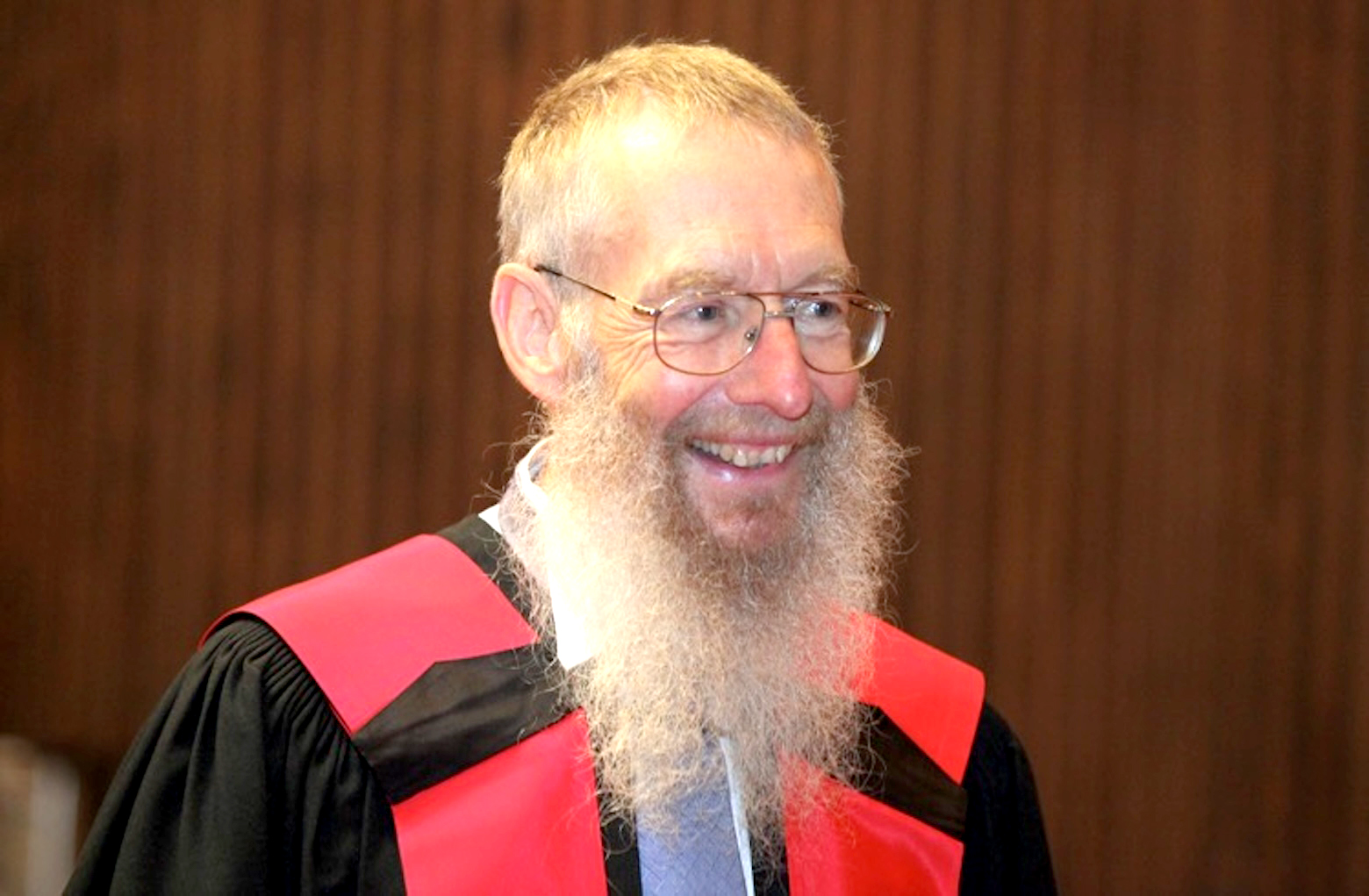
I know a bright young Indian number theorist who published a strong paper and recently applied for promotion; the committee gave supportive reviews but the head of the school declined citing lack of enough published papers. This is terrible and unfortunate because they encourage people to publish many weak papers rather than one strong paper. That is bad as policy goes.
Fortunately, in France, we are not facing this problem for those who are stable in academic life. When someone has a position in France, almost always, it is a tenure position. So, when they have the position there is no pressure for them to publish. The pressure which was always there is from the social relation with other colleagues. As I said before, if someone stops publishing, it may reflect on a certain lack of creativity, which creates a pressure of course. And in France, a tenured position is very secure. But unfortunately many stop publishing.
On the other hand, nowadays to get a position, people are asked to publish many papers, which is not the best thing. Again, to speak of France, we are not too concerned with that. Most mathematicians in France do not know things like the `h-index’. For instance, I do not know what my h-index is. That is not taken into account in France. We look at the results and, if they are important, we judge by its mathematics. But it is not like this in many other countries, and I know that it is not like that in India. To count the number of papers is completely wrong! It is definitely not a good policy to follow.
In case some applicants have more than 100 publications, and if one has to make a decision, it would be a bad solution to select the candidate by counting the number of publications. In such cases, one may select a few of the papers which are considered good. So I think there is a way out, which is to ask the applicants to select, say, five of their best papers in order to judge the quality rather than the quantity. Also, to eliminate applications with fewer papers is very wrong. In fact, there are guidelines published by the International Mathematical Union (IMU) about the use of the database of bibliometry.11 And bibliometry is something very wrong to use to judge the quality of someone. I often use the example of Riemann. I say that if Riemann were going to apply for a position in number theory now, people would say :“you have only one paper in this subject”!
Apart from the number of papers, there is another thing called the journal index. One needs to publish papers in journals which satisfy certain parameters. I think you once mentioned that in France this is not the case. Is that right?
MW: Exactly. We are not aware of that. In fact, CNRS stopped subscribing to some journals. And recently I was discussing something similar in Iraq, and we suggested that one should publish only in journals which are quoted in zbMATH or in Mathematical Reviews.12
Perhaps this is also related to resources and funding. How is it addressed in France?
MW: To give this example is good because France presently has a strong school of mathematics. It is not clear whether it will continue like this because the funding is decreasing, but so far it is a strong country. But my answer would be that the IMU is concerned with such issues. You can look at the publications of the IMU and they address this kind of thing, and they issue some very good suggestions. Perhaps the way to go would be to approach the people in charge of taking decisions and show them these suggestions by the IMU and say that this is an international body which says what should be done. I think this is the only thing we can do. In the end, I think we will have to hope that somehow a balance is found.
There is an ongoing debate about the role of AI and proof assistants in maths. Terence Tao, Timothy Gowers, Akshay Venkatesh, Kevin Buzzard, Jordan Ellenberg and many others have been making various nuanced comments about the use of Large Language Models (LLMs) and proof assistants (such as Lean, Rocq…) in doing research-level pure mathematics today. We would like to hear your perspective on these.
MW: I consider AI as a very fundamental progress, which we can compare to the introduction of calculators and that of computers. If you look at mathematicians like Fermat, Gauss, and Euler, they were very good calculators [by hand]. And I doubt there is anyone living now who is able to compute as well as they could, because to a large extent it’s not so important nowadays as we can easily use a computer to do those computations. So we may have lost that capacity, but we replaced it with new tools. I believe that AI may have a similar effect!
I have myself used AI to help solve questions. I have guessed an elementary lemma which I want to prove, and I have asked AI to prove it. Of course, I do make sure to verify AI’s statements and proofs. It is very much prone to error, but it is still a very useful tool. As it gets better it is likely to become more and more reliable. There are significant changes every week and progress on LLM tools is rather rapid. It will definitely help save time – time that I would have had to spend writing proofs for a few lemmas or steps! So I definitely think that AI will change a lot the way we work and do mathematics.
There is an environmental angle (energy consumption and carbon footprint) to using AI tools, and a lot of people are not aware of that. That being said, we can’t say for sure that there won’t ever be efficient and environment friendly AI tools. Perhaps it is too early.
There is also a related issue, which is to check a mathematical proof using Lean. To check the proof, now it is very primitive. But many things are developed now, and you can expect that everything produced by mathematicians, using AI or not, will be checked immediately by Lean, and we will know what is true and what is not.
There is an environmental angle to using AI tools, and a lot of people are not aware of that
Recently, there is much effort to formalize mathematics. There are also examples of mathematical papers that are formalized in Lean. Also, there are `autoformalization’ tools that help convert natural language mathematics (such as a standard LaTeX paper or PDF) into formal Lean code.
MW: So maybe this is the future of mathematics. It could be interesting. I doubt that I will see it myself, but in the future, it could be that this is how it will work. In the near future, I think humans cannot be replaced, but I do not know how it will work in the long run. I think it is already happening!
How has the profession of being a mathematician guided you? How has mathematics helped you grow as a human being?
MW: It’s a very interesting question. Well, there are several things to be said.
One of them is that it happened to me that I wrote a paper sometime back, and I read the paper several years later. It was hard for me to understand. After that, I decided that when I write a paper, I have to write it with sufficient details so that at least I can understand it years later. So, I changed a little bit with time by changing the way I write something. Also giving more details is a good way to avoid mistakes. So, I have some evolution that went like this.
There is a big change now. When I look at younger people, and see what they are doing, I admire what they do, and maybe I did something similar when I was young. But when I see a very complicated paper, I think, oh, they are very strong to be able to do that. I did write some very difficult papers, but I am not able to develop such machinery anymore. Perhaps it’s like in sports. I understand that we lose some capacity, but I continue to publish because I like it. I do not do things that require many difficult technical tools as I did before. I am not as flexible as I was when I was young.
For the second question, I remember once, it was in the ’70s I think, I was invited to Algeria by a colleague, and I was with my wife. My colleague’s wife, who was present, said to my wife, “it’s amazing how your husband reacts in life. We can see that he is a mathematician”. I had no idea that the fact that I am a mathematician is noticeable. I think it’s perhaps true that as a mathematician I have some logical reasoning that shows up in my behaviour which I’m not self-aware of.
I have always found you very calm, non-reactive, and I haven’t seen you angry or easily annoyed or irritated. How do you manage to keep your composure?
MW: I think that it’s a waste of energy to be angry. If I am not happy with something, I don’t think it’s worthwhile to be angry because it’s a negative attitude. If someone does something wrong, and if you become angry, then you are in a bad mood because of the other person. It harms you. If you do not pay attention to what that person did, then it is better that way. I prefer to feel happy and not to pay attention to what is negative.
Thank you so much for this wonderful and insightful conversation.
MW: Thank you so much. Thank you.
Acknowledgements We are grateful to Shilpa Gondhali for her ever willing help with timely transcribing of the audio recordings. We thank Amritanshu Prasad and IMSc, Chennai, for hosting us for this interview.\blacksquare
Footnotes
- The 1968 student turmoil in France, widely known as “May 68”, was a period of intense civil unrest that began with student protests against university conditions and government repression. ↩
- A type of training involving certain high-intensity workouts, interspersed with rest or break periods. ↩
- Equivalent to a district in India or a county in the USA. ↩
- A real number x satisfying the property that for every integer n > 1, there exists a pair of integers p, q > 1 such that 0 < | x - \frac{p}{q} | <\frac{1}{q^n}<br /> . ↩
- These notes are now available here https://webusers.imj-prg.fr/michel.waldschmidt/articles/pdf/Strategy.pdf. ↩
- Formed in 1971, Paris VI was a major public research university (Pierre and Marie Curie University) in Paris. In 2018, Paris VI merged with Paris IV (Paris-Sorbonne University) to form Sorbonne University. ↩
- Editor’s note: The second woman to obtain doctorate in pure mathematics in France. ↩
- Rivoal proved that there is at least one irrational number among \zeta (5), \zeta(7), \zeta (9), \zeta (11), …, \zeta (21), where \zeta is the Riemann zeta function. ↩
- Editor’s note: According to mathematics genealogy project’s on-line database, Michel Waldschmidt has 23 students and 160 descendants. ↩
- Editor’s note: There are connections with Seshadri constant and with conjectures by M. Nagata. ↩
- See https://www.mathunion.org/fileadmin/IMU/Report/CitationStatistics.pdf. ↩
- A good reference on this topic is https://ercom.org/awareness.html. ↩