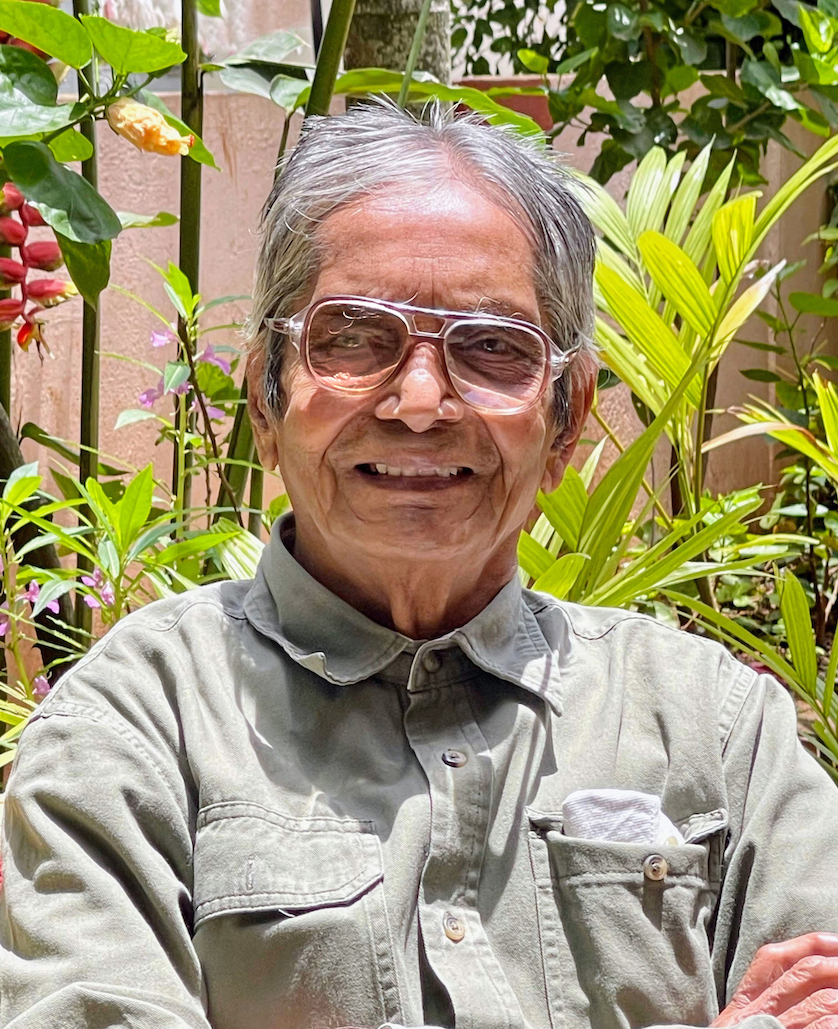
His classes exuded a child-like joy, opening gift boxes of results and theorems and igniting curiosity among the students. He was instrumental in introducing advanced subjects, right in the 1970’s, in the MSc mathematics course which even at this date very few Indian universities, if any, offer. In spite of his deep and wide-ranging scholarly pursuits, he always remained very approachable with genuine and humane concern for a student’s mathematical and personal well-being.
Ever the perfect host, he and his wife kept their home always welcoming to friends and students alike. Panduranga Rao loved to teach and was very generous with his time and knowledge to anyone willing to learn, and taught them till his last days. The students equally loved him too for his unmistakable simplicity, and for his unfailing love of the subject translating to his caring for them. The articles presented in the sequel bring out the multitude of sides of his seen from the eyes of his family, colleagues, friends and students.
Purnaprajna Bangere
My father as I saw him
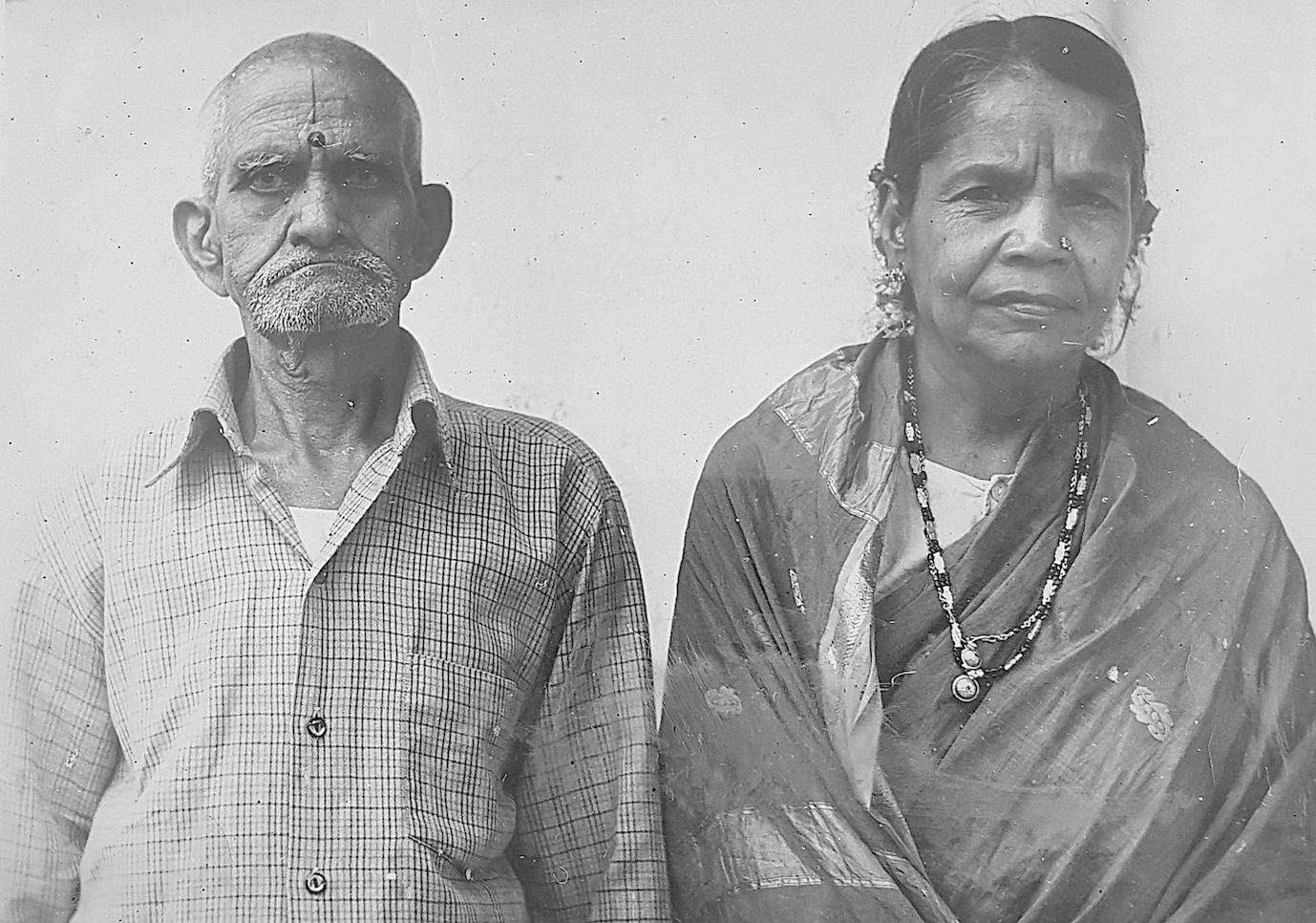
My father was born in Brahmasandra, in the Tumkur district, in 1935. His boyhood days were spent around Challakere in the Chitradurga district of Karnataka. My grandfather, Subba Rao, was a middle school teacher in Challakere and its surrounding areas. He was a scholar of Kannada literature. I remember that he could recite, from sheer memory, almost any stanza from early Kannada poets like Pampa, Ranna, Kumaravyasa, and others. Besides stories from others, I know this because I used to seek his help with my school Kannada syllabus and struggled greatly with old-Kannada. I would ask him for help in the late evenings, when he was already in bed. He would say, “What are the first lines?’’ I would begin haltingly, and he would then complete the entire poem from memory. I used to be startled by this. People who had known him for a long time told me that he would travel on weekends by foot, to study poetry in the government library, nearly ten kilometres each way.
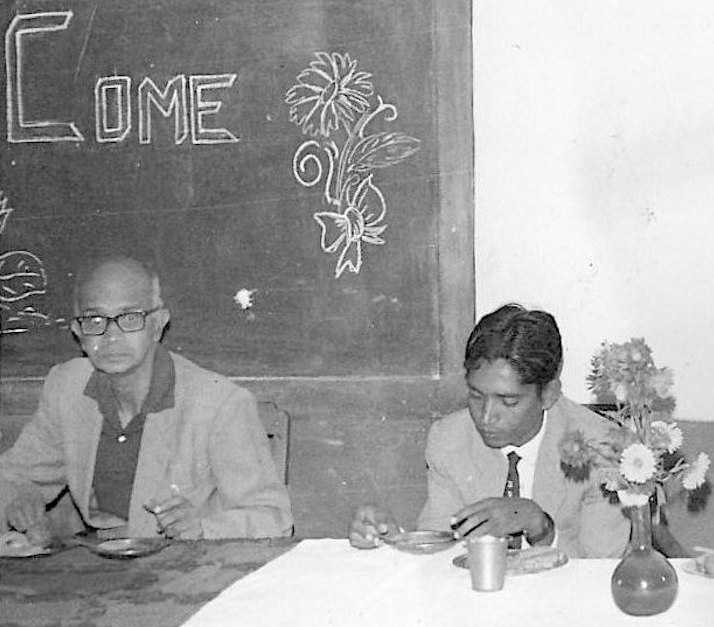
In those days, many poor boys studying away from their hometowns were informally enrolled in what was called “vara-anna’’. This meant that the student would receive a meal at the home of a more well-off family from the same community, since hostels did not provide meals on certain days of the week. At that time, many parts of Bangalore were quiet and lonely, lined with tall trees. My father once told me that it would be cold, and that he felt frightened walking several kilometres along those deserted roads toward evening, on his way to dinner at someone’s home far from the charity hostel where he stayed. He said it was a choice between making that lonely walk or going without a meal—a crushing choice for one so young.
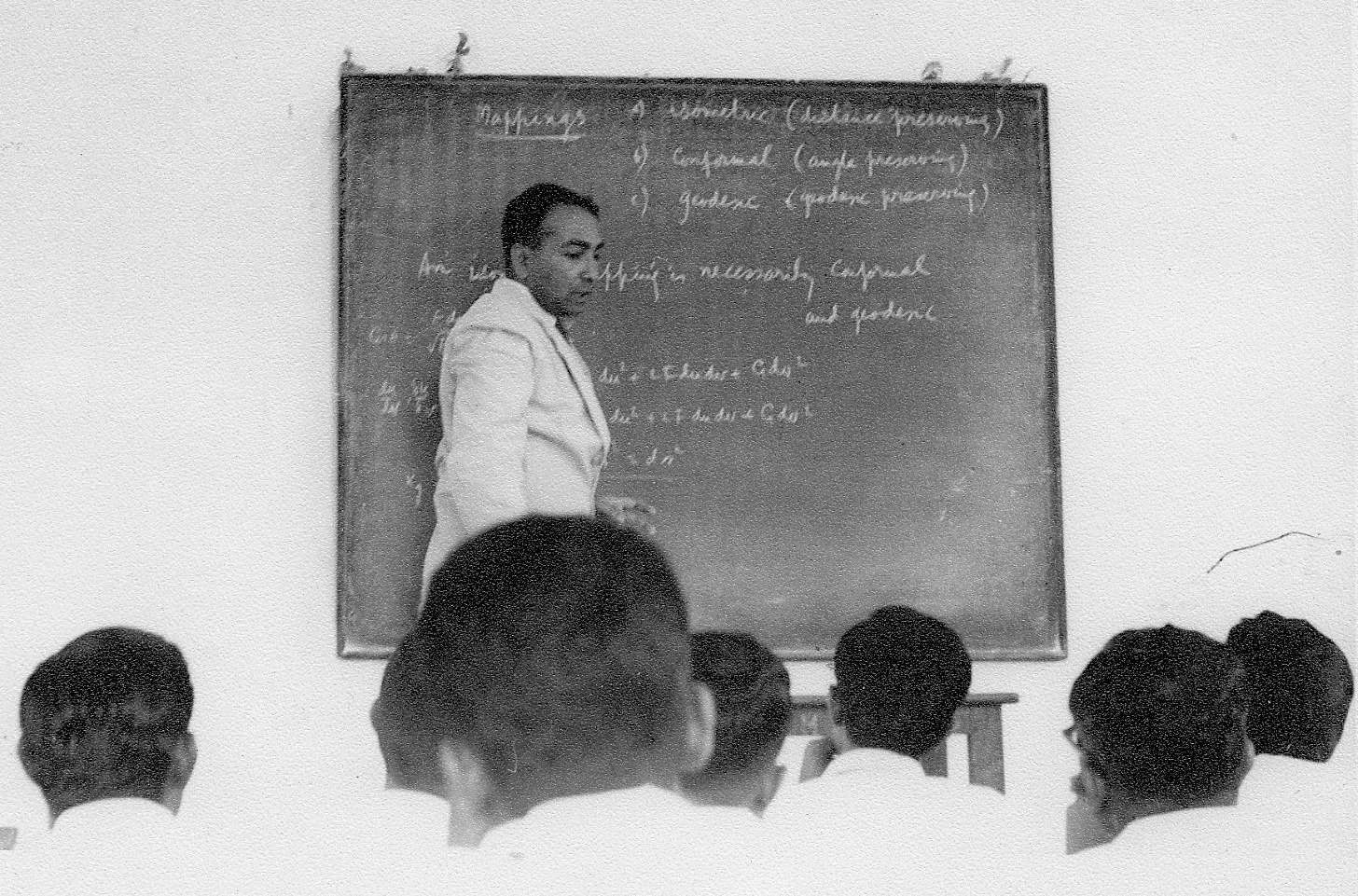
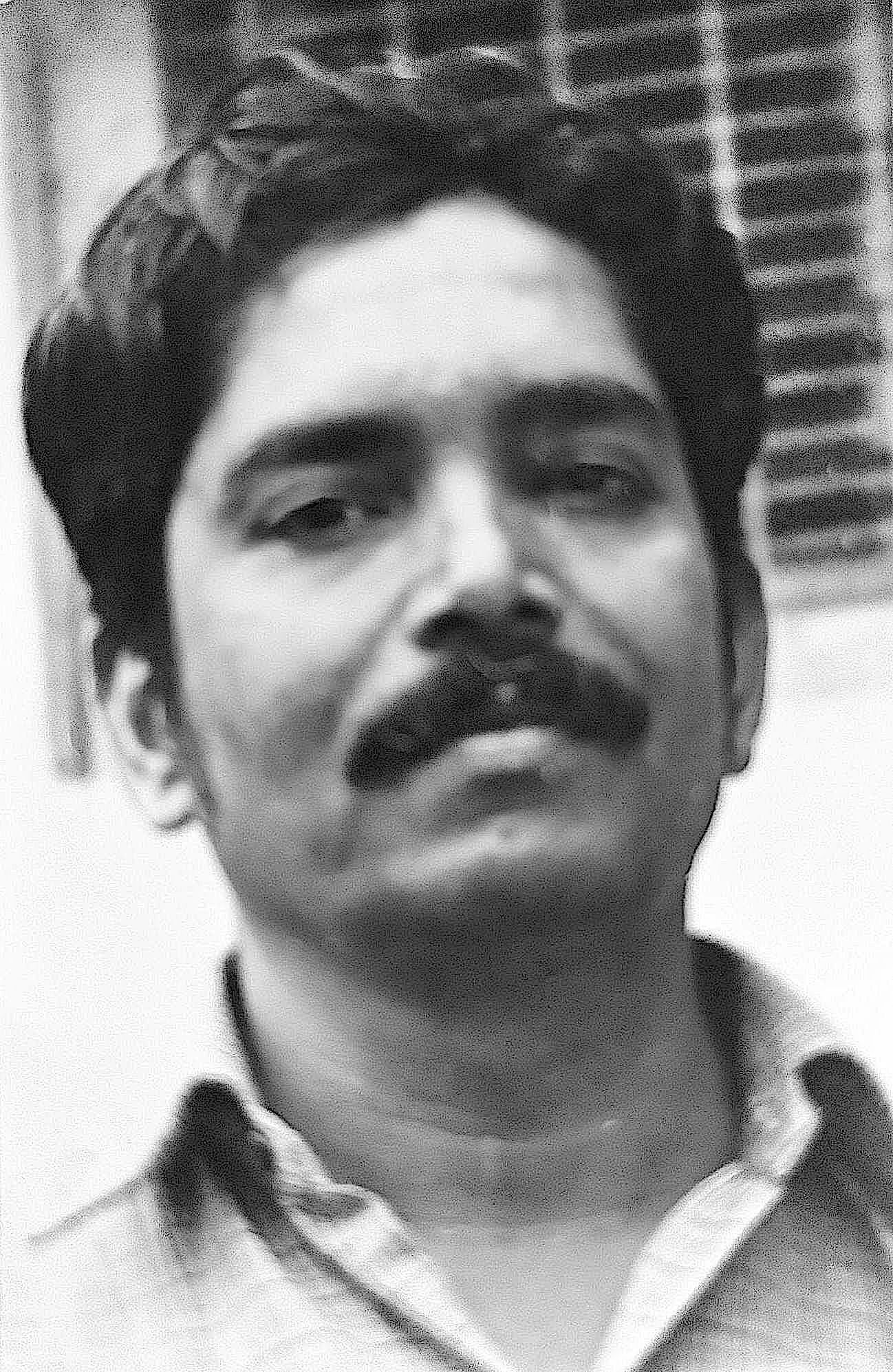
After finishing masters’ degree, he found himself at a crossroads: either to pursue higher studies by leaving his parents and his unmarried sister (a significant thing in Indian society of those times that should not be left unattended), or to remain near them and care for them. To my father, the choice was clear. To leave his parents and sister would have felt tantamount to abandonment, especially given my grandmother’s delicate mental health. So he stayed back. In the years that followed, he would forgo every opportunity that might have advanced his career in favour of caring for his parents. He had deep clarity about the choices he made—choices he never once regretted, but rather embraced with loving abandon. I was a witness to this throughout my boyhood and early adulthood. During the last years of my grandmother’s life, he cared for her with the help of his extraordinarily noble wife—my mother—doing tasks that today would ordinarily be entrusted to a nurse. My mother still speaks with great emotion of my father’s devotion to his mother until the very end of her life.
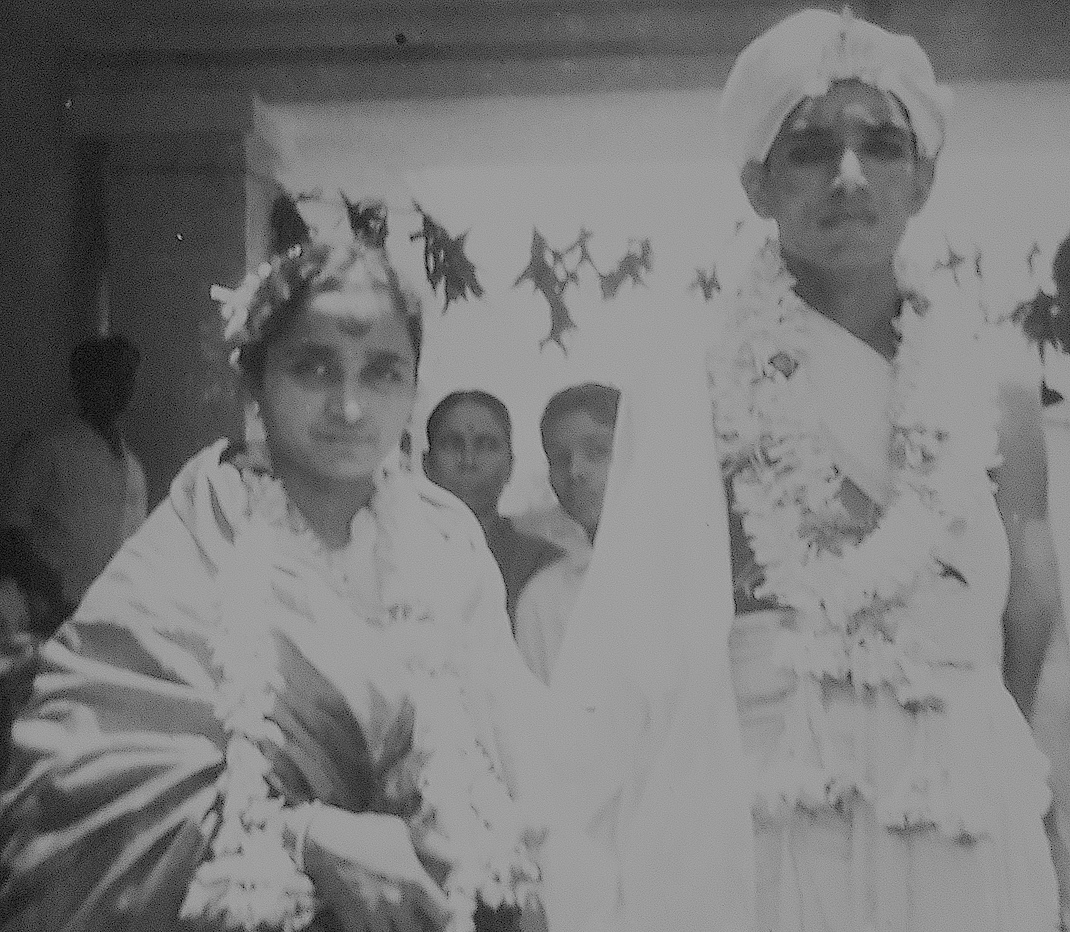
Outside India, I know he was in contact with at least two mathematicians who wrote mentoring letters on subjects that interested him and offered guidance: Raoul Bott and Lipman Bers. The correspondence with Bott lasted a few months in the 1980s, and Bott even sent him a book and his research articles. The exchange with Bers, in the 1970s, continued for a longer period. The University of Mysore had committed teachers and has certain importance in the Indian context, yet I remain amazed that these two distinguished mathematicians would engage in handwritten correspondence with someone so far away, at an institution not widely known for research, asking nothing in return. They must have been wonderful times—marked by a certain purity and an absence of the academic market forces that now engulf the modern enterprise.
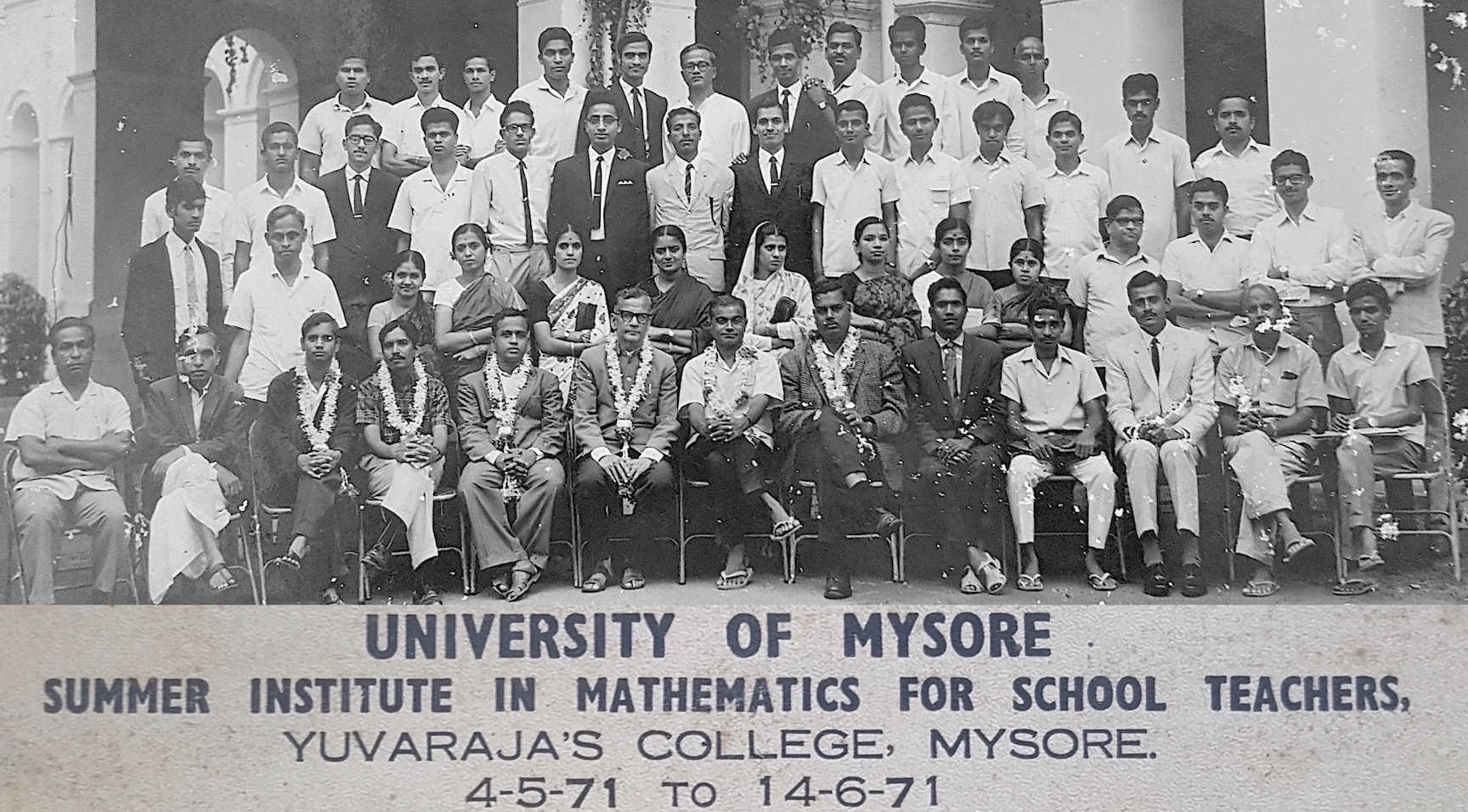
Training students, math pedagogy at the University of Mysore: Besides educating himself in current topics in mathematic, his main focus was spotting talent in students,training students, especially those in whom he discerned genuine aptitude. He prepared extensively for special courses for students he felt should pursue mathematics beyond the master’s level and enter research institutes. Records show that he offered special subject courses on a wide range of topics: Riemann surfaces, algebraic topology, partial differential equations, commutative algebra, several complex variables, and topics in differential geometry.
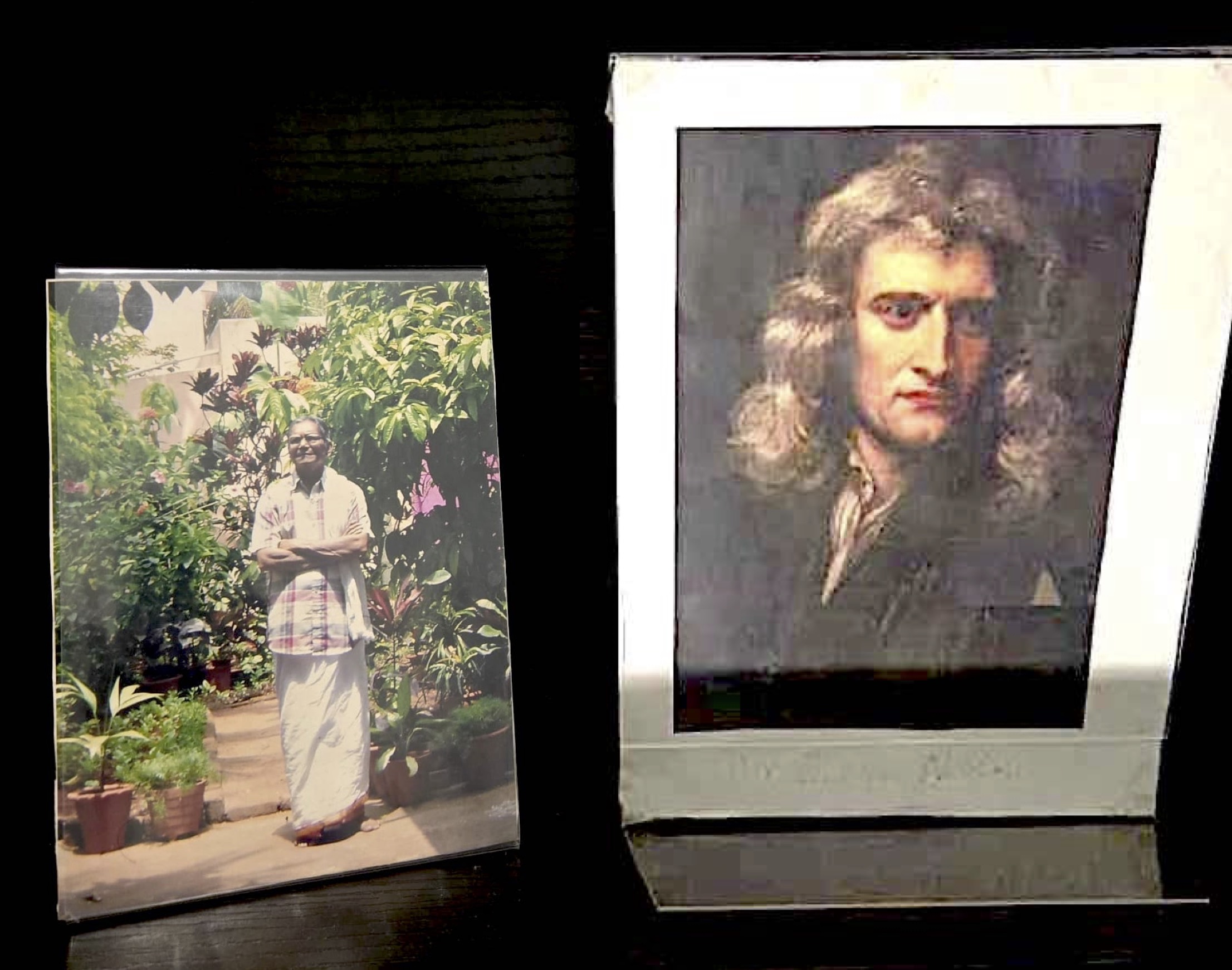
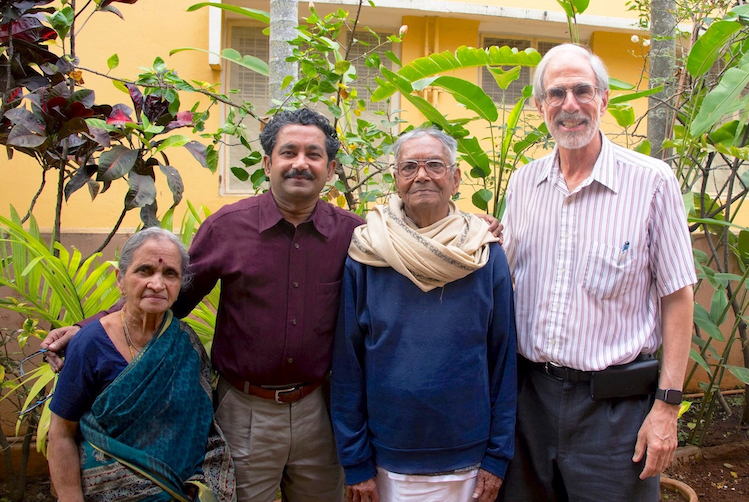
But it is this image that moves me most observed since my boyhood days: my father and his student—always one-on-one—sitting in the verandah of our home, my father explaining a concept, and at times bending over to examine how the student had solved a problem he had assigned. These sessions would last for hours. It was a beautiful sight. I remember my father’s excitement over an elegant solution a student had produced for homework. His desire was simple and steadfast: to find talented students, motivate them, and send them on to advanced research institutes for further study. His particular favourite was TIFR (and later CMI). The fondness he felt for that place and its people is lodged in my consciousness from my earliest boyhood. I recall mathematicians from TIFR and from institutions such as IMSc, CMI (whose faculty in its earlier years—then called Spic Science Foundation—consisted of people from TIFR), IISc, ISI, and University of Hyderabad visiting our home during my childhood and early adulthood.
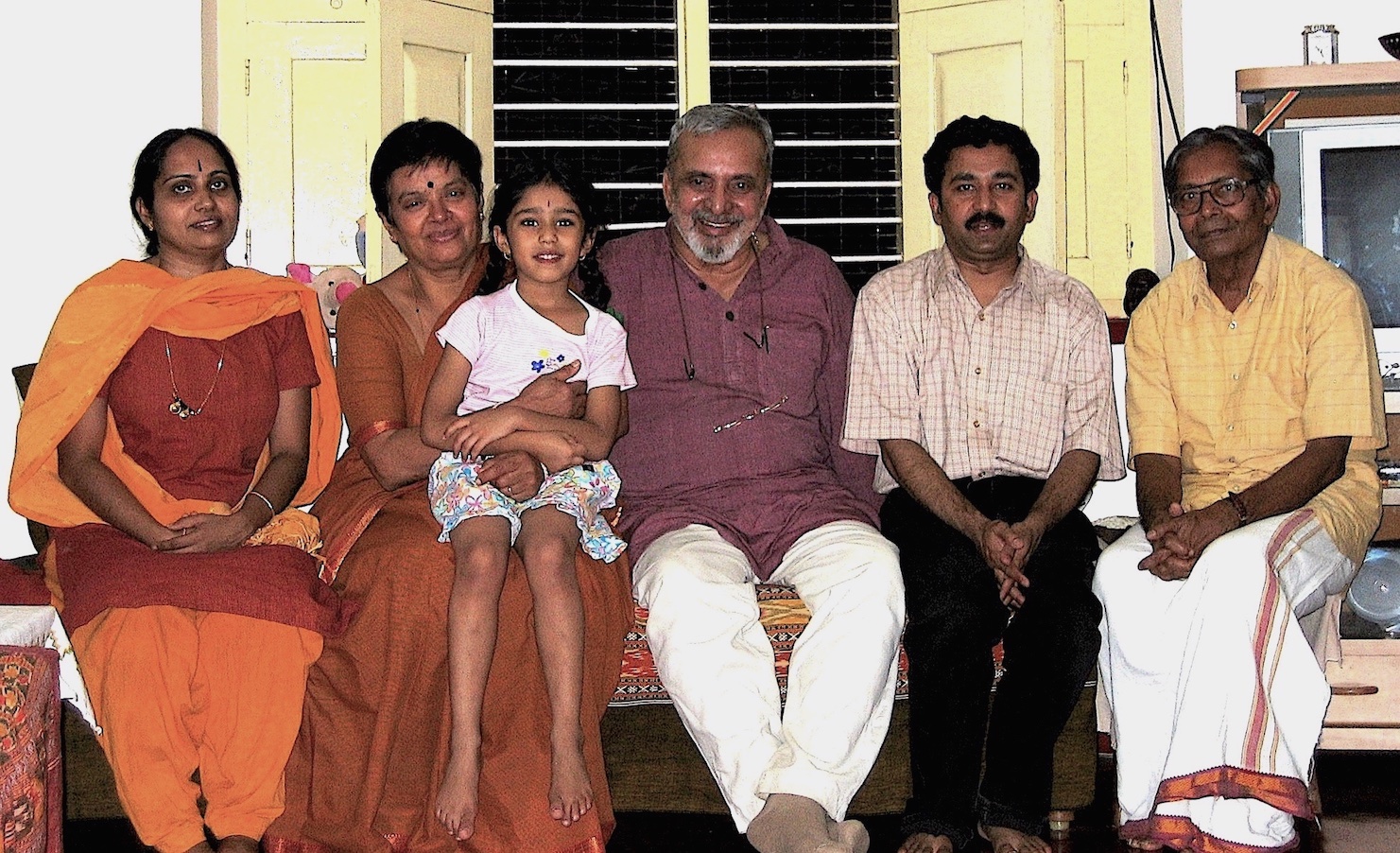
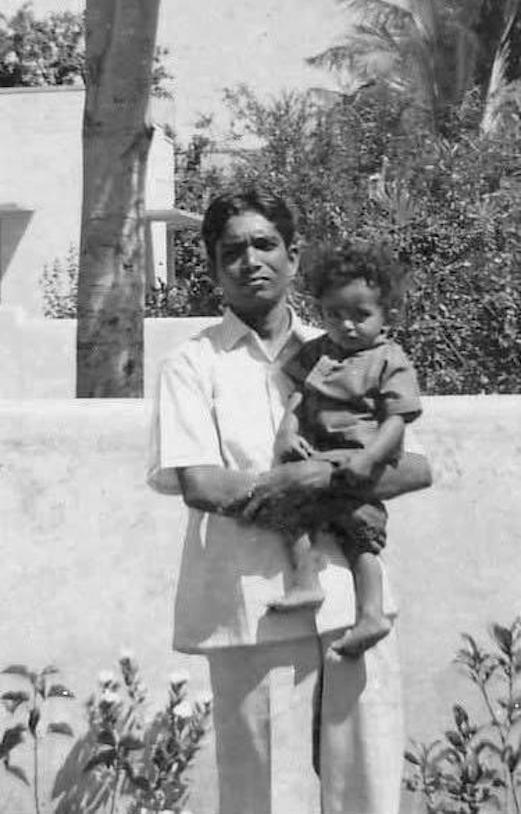
I realize now that without such love and largeness of heart, he could not have done what he did: educate himself, train students year after year, and live a life in harmony with his surroundings and with himself. This is why, even in his final days, many young people visited him almost daily. He was a figure of inspiration to them, and the sight of him engaging them with enthusiasm, compassion and youthful spirit was unforgettable. He loved them as they loved him. It was a relationship of rare and beautiful symmetry—like the symmetry he cherished in geometry, a subject so dear to his heart. I will miss my father.
Purnaprajna P. Bangere is a professor of mathematics and a courtesy professor of music at the University of Kansas. An accomplished musician, he effected a metamathematical framework for a new music system “Metaraga’’, inspired by the writings of Alexander Grothendieck.
B.P. Rekha Rao
My father was a man of high taste and interests, and was the very definition of a textbook academic, and more.
His precociousness, I have heard, was evident even as a child. One day, he apparently ran up to his teacher to show them something he’d just discovered. He had arrived by some intuition, a formula for the sum of an arithmetic progression entirely on his own, well beyond his grade level at the time! It was then that his teachers realized this child’s proclivity for numbers.
His intuition for mathematics seems to have come naturally to him. His mind was always solving a math problem or mulling over something interesting he had come across. Even after retirement, he would stay up at night studying his books. He was always up to date with the latest developments in his area of interest, and would often write letters to obtain papers or articles from abroad that he wished to read.
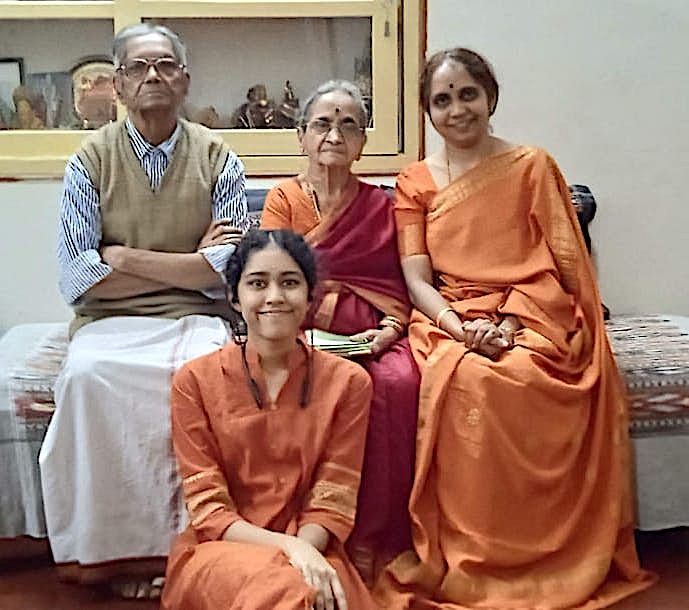
My father was a devoted family man, deeply invested in our lives as we grew up. He was the one who encouraged me to pursue dance classes as a child and my brother to pursue music. When we were younger, we lived with his parents. My grandmother needed care due to medical conditions, and he looked after them with utmost dedication. Of course, this family would not have been so well cared for without my mother’s help. She was extremely patient. Over the years, my father brought home many friends and students, and my mother was always there with warm conversation and delicious snacks.
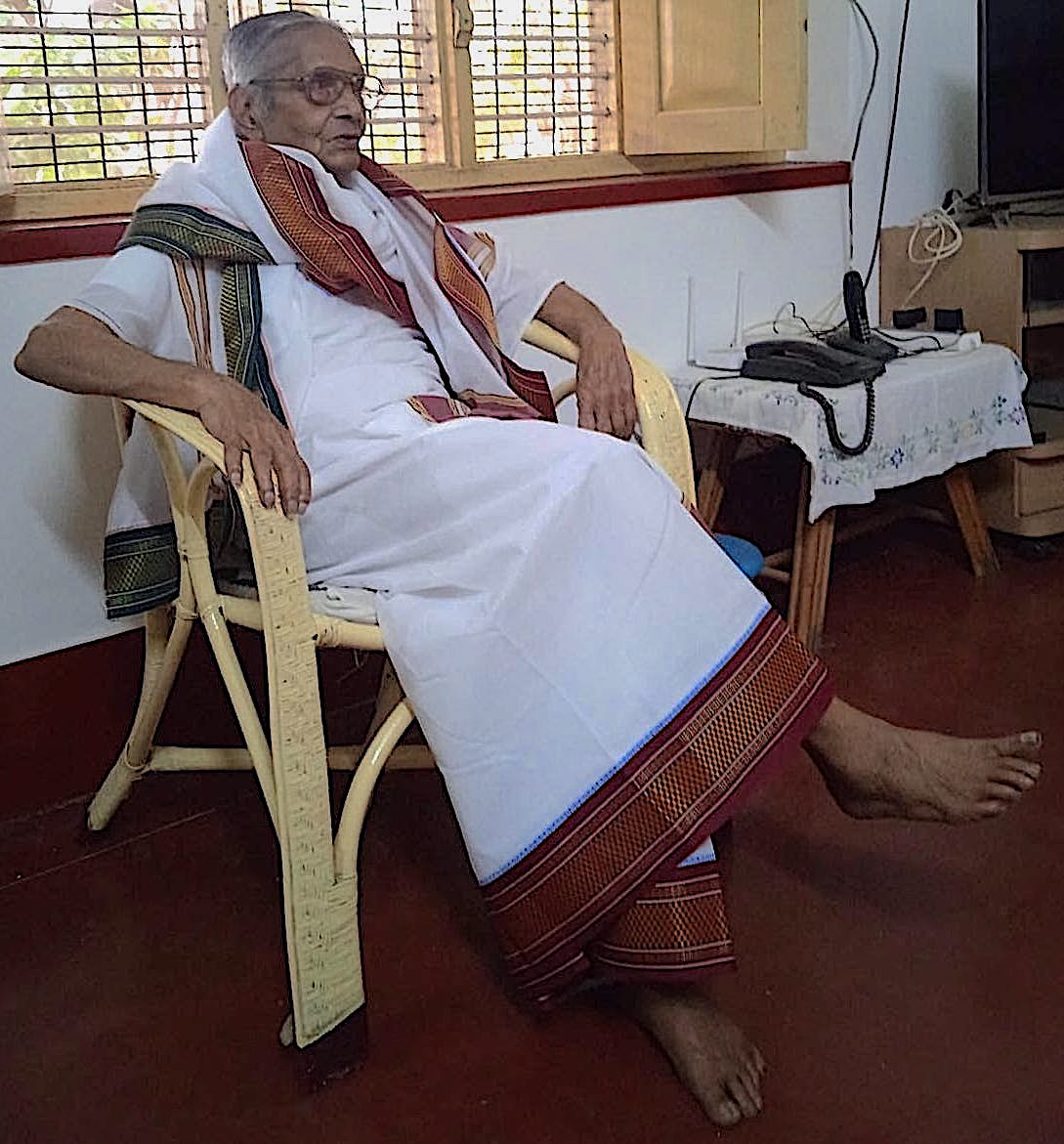
My father’s mind was an ocean of knowledge. Even after retiring, he continued teaching students who remember him fondly. We realized then how strict a teacher he could be. When my daughter was young, she once asked him not to scold his student, a memory that still brings laughter.
He also taught my daughter mathematics right from second grade all the way up to engineering. Although I was always too intimidated to venture down this path, I’m glad that my daughter did.
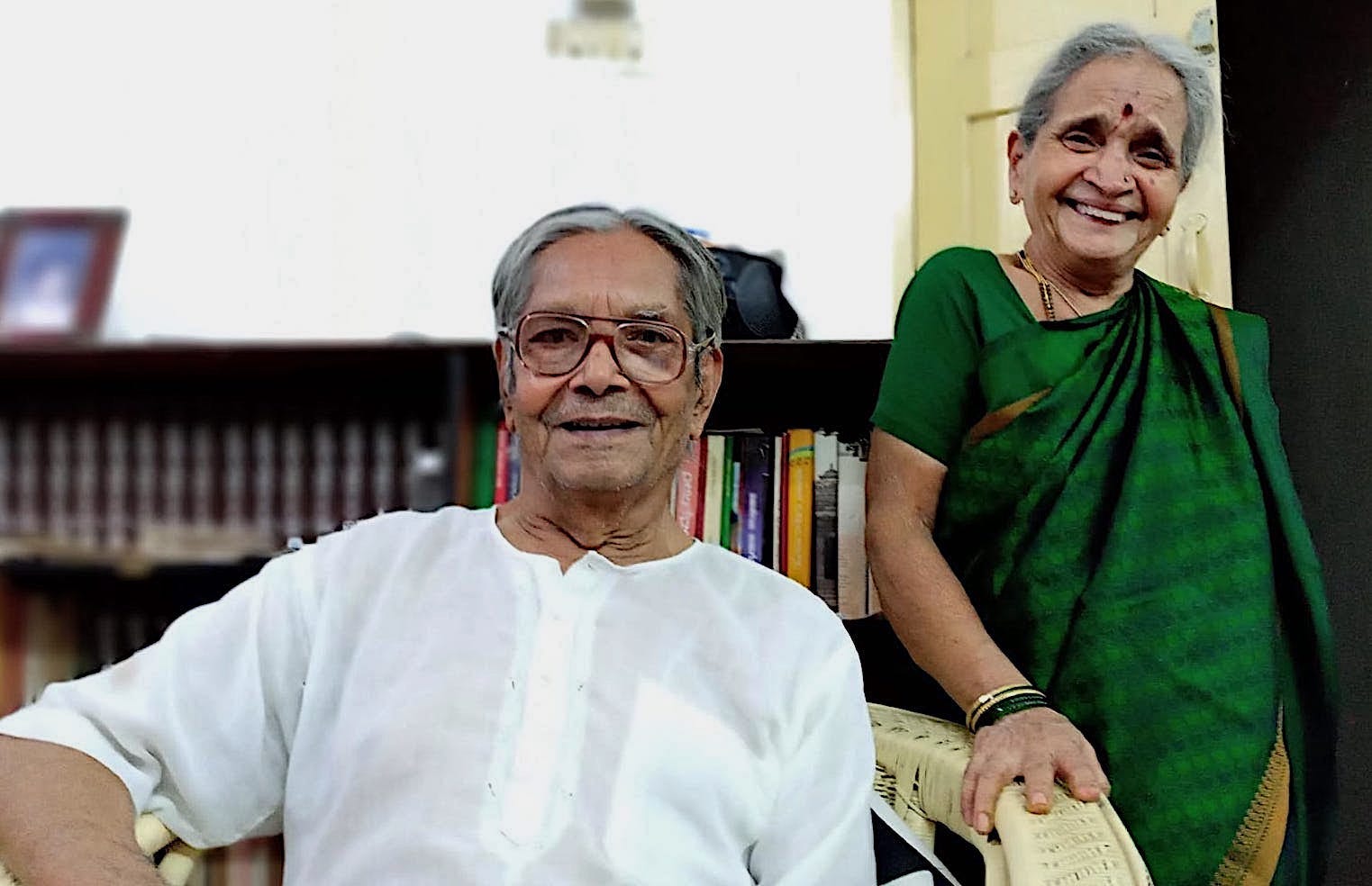
It was not just poetry that he’d read. Books ranging from technical material to political science and philosophy were lined neatly on the bookshelves of our Mysore home. We loved discussing politics, philosophy, and art at home! He always encouraged and welcomed differing viewpoints, even when he held strong opinions on the subject. Needless to say, all opinions were well-formed and backed by research, so if one were to argue with him, they’d have to be ready for a thorough fact-check.
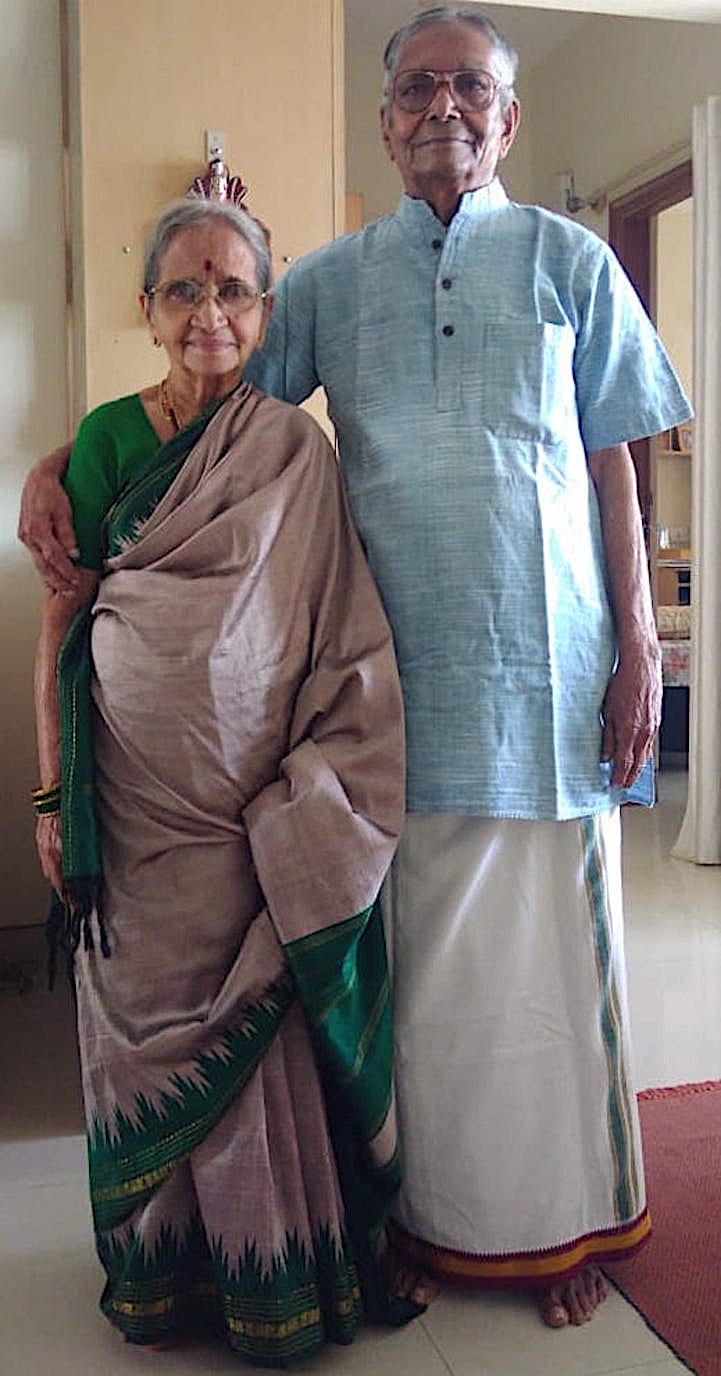
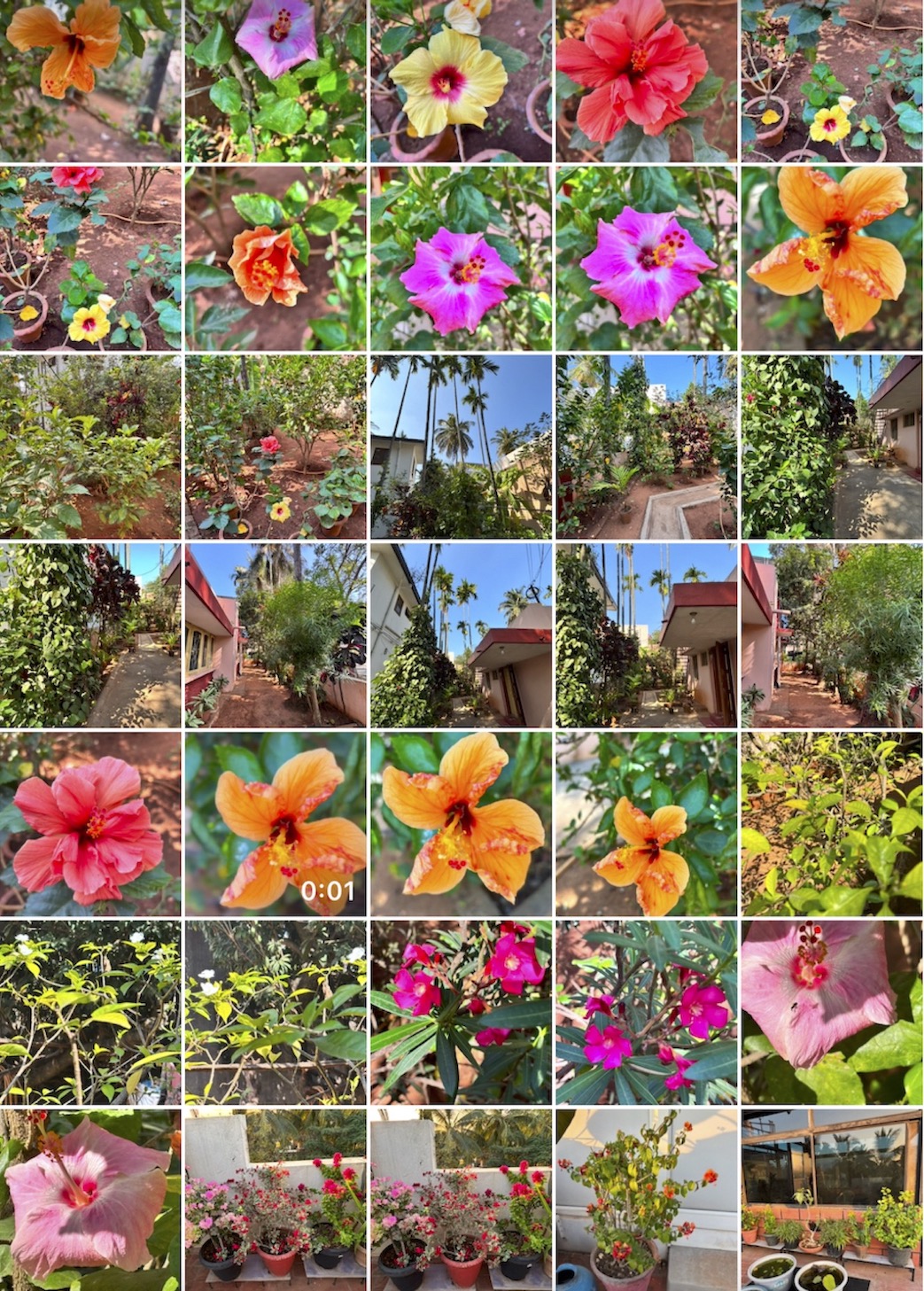
When I was little, he was so concerned about my safety that he chose not to plant roses in his lush garden, so I wouldn’t be pricked by the thorns. Some may say this was him being overprotective, but I find it a rather sweet memory of him.
Just as he left us, the flowers in his garden bloomed. I am not one for blind faith, but somewhere I believe that he smiled upon us all from beyond this plane of existence one last time.
While he may not be with us physically today, his memories live on in our hearts. Like beautiful poetry that touches the soul, the words leave, but the feeling lasts forever, etched in our minds.
B.P. Rekha Rao did her PhD in Economics under V.K. Nataraj at the Institute of Development Studies, University of Mysore. She is currently engaged in teaching at Brigade Institution in Bangalore. In addition to her academic career, she runs a Bharatanatyam dance institution named `Rasavrinda’, where she trains students and prepares them for advanced studies.
V. Kumar Murty
Professor Panduranga Rao exemplified the highest ideals of dedication to teaching and learning mathematics. He always reminded me of the ancient teachers who focused their lives on knowledge, both its acquisition and dissemination. He was literally following the teaching of the Taittirīya Upanishad: svādhyāya pravacanābhyām na pramaditavyam. Do not refrain from learning and teaching. Going well beyond the obligatory duties of a university professor, Panduranga Rao was ready and eager to teach mathematics to any student who expressed a desire to learn.
I came to know about Panduranga Rao through one of his students, K. Guruprasad, who at that time was working on his PhD at the Tata Institute of Fundamental Research (TIFR). When I visited TIFR as a postdoctoral fellow, I was given a room in the hostel which was just a few doors away from the room of Guruprasad. We became friends instantly as Guruprasad shared with me an interest in mathematics as well as philosophy. But he also knew many things that I was not familiar with, including music. With his help, we studied some basic Carnatic vocal music together. I found him to always be a very positive and bright person, full of warmth and friendship.
In the course of conversations with Guruprasad, I came to know that he had studied at a modest college in Mysore as an undergraduate, and that he had been mentored by a Panduranga Rao to such an extent that he was able to pass the very competitive TIFR entrance exam interview. This fact alone should be an ample tribute to the amazing manner in which Panduranga Rao could recognize talent and help it to blossom. We can imagine how rigorous his one-on-one teaching must have been in order for a student from a modest college to be able to successfully compete with students who had studied at more sophisticated schools and who had had access to better facilities, like books and periodicals. I was quite impressed and was interested in meeting him when an occasion arose.
That opportunity came soon enough, when in a vacation period at TIFR, Guruprasad arranged a visit to Mysore. I not only met Panduranga Rao, but also stayed at his home and was able to spend some time in lengthy conversations with him. At that time, I also met his son and daughter. His son, Purnaprajna, is now a distinguished algebraic geometer and professor of mathematics at Kansas. When I met him, he was a young boy and passionately interested in Carnatic music (especially as expressed through the violin) and in physics. He is still passionate about music and the violin, but his academic interests shifted from physics to mathematics. At that time, his scientific hero was Subramanian Chandrasekhar, and I remember the day during my visit when it was announced that Chandrasekhar had won the Nobel Prize. Purna was ecstatic, and that is all that he spoke of the whole day! One can imagine the gentle but powerful influence his father had on Purna that gradually directed his attention from physics to a career in mathematics.
I began by saying that Panduranga Rao reminded me of the ancient teachers who lived for knowledge. And like those ancient teachers, he was completely selfless and not concerned or interested in how, or whether, the world recognized his contributions. He was happy to live in Mysore and make his simple home available to guide, mentor, teach and offer his blessings and affection to students who had an eagerness to learn mathematics.
His love of mathematics lives on through the many students that he personally guided, or even nurtured, as well as the even larger number that he inspired. Whenever I think of him, I feel that he was the embodiment of the spirit of India, which Vivekananda expressed beautifully as “Like the gentle dew that falls unseen and unheard, and yet brings into blossom the fairest of roses, has been the contribution of India to the thought of the world’’. And so also is the contribution of Panduranga Rao to the learning and teaching of mathematics! May his example inspire many more to share their knowledge freely with the talented young people of India who are eager to learn!
V. Kumar Murty is a professor at the University of Toronto. He served as Director of the Fields Institute in Canada, and was recently appointed the inaugural Director of the newly founded Lodha Mathematical Sciences Institute in Mumbai. He works in the fields of number theory, arithmetic geometry, mathematical modelling, information security and mathematical economics.
V. Padmavathamma
I was a student of B.S. Panduranga Rao, BSP to us, his students, during 1968-70 when I was studying MSc in mathematics at the University of Mysore. In my first year, he was teaching modern algebra. This created in me an interest in algebra. He was an excellent teacher. His voice was very loud, so loud that people on the ground floor could easily make out that it was BSP Sir teaching.
After my MSc, I was appointed as a Lecturer and thus became a colleague of his. He was insistent that I go to TIFR for research. But my family circumstances did not allow me. He always recognized the talent in his students and encouraged them.
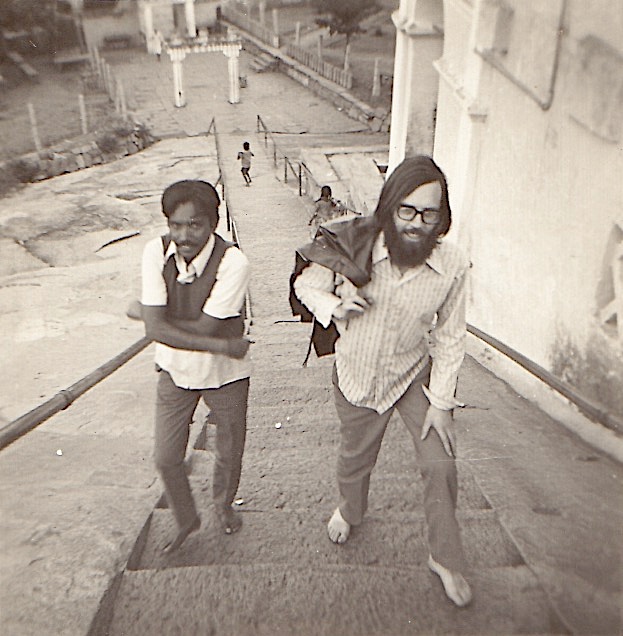
I still remember with great pleasure our trip to Shravanbelgola that I had arranged in 1971. BSP and his wife, their children, Purnaprajna and Rekha (fondly called Putti by BSP), joined the trip. Colleagues C. Puttamadaiah with his wife, Jagadish, and my classmates Uma and Vijayabai had accompanied us. All of us were pleasantly surprised to see that both Purna and Rekha climbed more than 600 steps to reach the hilltop. It was a memorable trip.
BSP’s death is a great loss felt by everyone who knew him. I certainly miss his presence deeply.
V. Padmavathamma joined the maths department after MSc there, and did her PhD with S. Bhargava on certain aspects of Ramanujan’s work while serving as a faculty member in the department.
Shobha Char
I joined the Mathematics Department at Manasagangotri in 1969. I had done well in mathematics during my undergraduate studies and was confident I would do well in the graduate programme. But, I was in for a surprise! I had not realized how abstract mathematics is at this level. In those days, even set theory was not taught at the undergraduate level, and suddenly everything was Greek to me!
He made me see the beauty and purity of mathematics, and I felt blessed to be studying this purest of pure sciences. Suddenly, it seemed like I knew the purpose of my life, and that was intoxicating! The two years I spent at Manasagangotri were the most memorable years of my life, and I felt intensely alive. The credit goes to BSP for inspiring such joy and dedication. BSP taught us algebra and then topology. He encouraged me to apply to TIFR, where I spent four years. Eventually, I got my PhD in algebraic topology at Ohio State University. I dedicated my thesis to my revered teacher, BSP:

Unfortunately, it turned out that I didn’t pursue mathematics as a career. However, I am married to an algebraic topologist, Zbigniew (Zig) Fiedorowicz!
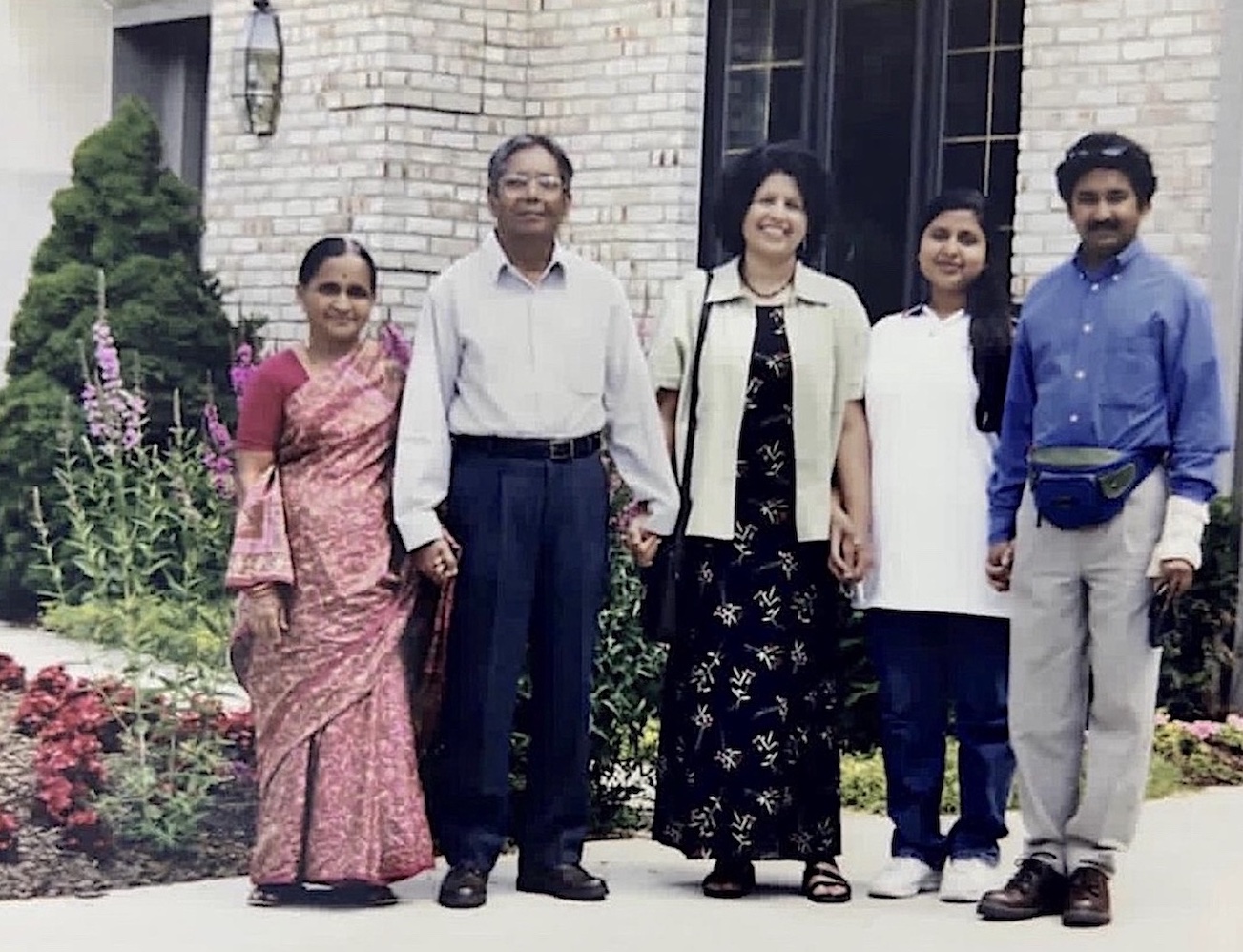
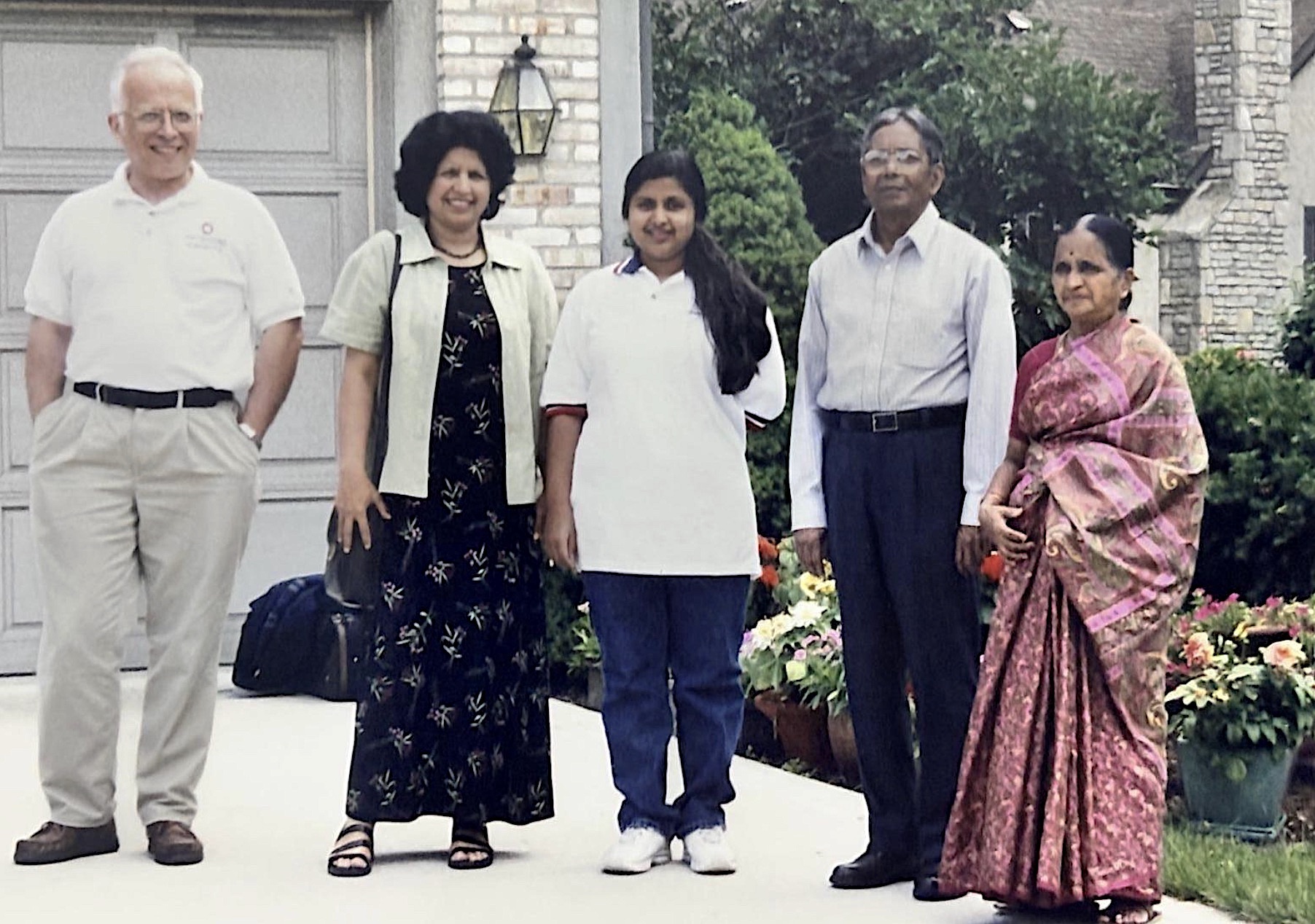
BSP visited me with Sunanda, son Purnaprajna and daughter-in-law Sunita in Columbus Ohio in 2001. My husband Zig too feels very close to BSP’s family, especially his son Purnaprajna.
I feel the demise of BSP deeply, and Mysuru doesn’t seem the same without him. He had gathered many admirers over the years who were regular visitors, and he will be missed by all who knew him. His conversation ranged over many topics, which is what attracted people of all ages. The enthusiasm and the love of mathematics BSP possessed were infectious, and he influenced many of his students to pursue mathematics as a career. May his enthusiasm continue to motivate his students and, in turn, their students.
Shobha Char has a PhD in mathematics from Ohio State University. She taught mathematics for a number of years and then joined Lucent Technologies (then AT&T Bell Labs) as an IT professional. She is currently retired and lives in Columbus, Ohio, and spends the winter months in Mysuru.
Juliet Britto
Panduranga Rao was a cherished pillar of the mathematics department at Manasagangotri, revered not only for his scholarly brilliance but for the profound and enduring imprint he left on the lives of his students. To step into his classroom was to enter a sanctuary of thought and curiosity where education was an active pursuit rather than a passive observation. He possessed a rare ability to invite every student into the joy of thinking, challenging them with questions that required them to pause, reflect, and engage deeply with the material. Under his guidance, complex problems became accessible pathways to building both understanding and self-belief.
What truly distinguished Panduranga Rao was his remarkable capacity to awaken a genuine enthusiasm for mathematics, even among those who had previously felt alienated by the subject. Through his unwavering encouragement, limitless patience, and sincere care, he gently dismantled their hesitation and replaced it with interest. He transformed the fear of failure into a curiosity to learn, and many students eventually discovered a deep love for mathematics simply because he believed in their potential when they did not.
His passing in September 2025 has created a significant void amongst his student fraternity. Nevertheless, his spirit continues to resonate powerfully in them. It is felt in the inquisitive nature of the students he mentored, in the difficult problems they now approach with quiet confidence, and in the lifelong passion for discovery that he instilled in them. His influence ripples outward as his former students carry his lessons into their own careers and lives, ensuring that Panduranga Rao leaves behind a legacy that transcends time. He lives on perpetually through the sharpened minds of innumerable students he shaped.
Juliet Britto was a research scholar at the centre of advanced study in mathematics, University of Mumbai. S. Raghavan of TIFR was her thesis advisor. She then joined the teaching faculty of Mangalore University, and retired as Professor in the year 2009.
N.S. Narasimha Sastry
I was a student in the course on topology that B.S. Panduranga Rao (BSP, for me since then) taught during the academic year 1971–72 for our batch of second-year MSc students. I was in touch with him ever since then.
The Bourbaki approach to mathematics was rather new in the Indian universities then: To wit, I came across the concept of a set only in my MSc first year, let alone anything more of `Cantor’s paradise’. BSP’s emphasis on our learning the axiomatic approach to mathematics through his various examples, counter-examples, and small facts to be deduced strictly using the axioms soon eased me into this approach.
He would insist on the students understanding the arguments in the classroom itself, sometimes to the extent of not allowing us to take down the notes and save it to be mulled over later. Though it was sometimes difficult, it turned out to be very effective for me. However, not everyone in the class was comfortable with this approach; and if any, not always!
His house was on the way some of us used to walk home after the classes. He would occasionally join us. Till we reached his home, he would be talking about mathematics, like how certain theorems should be proved; suggesting or asking for examples, to bring out subtle differences in various concepts.
In my subsequent interactions with him, he would mostly talk about mathematics, mathematics education, and how to train students in mathematics, though, in later years, he would occasionally mention his efforts to understand Indian philosophy, particularly Sri Aurobindo’s thought.
The emotional intensity of his love and enthusiasm for mathematics that he would express through his conversations was very inspiring to me at that very early phase of my mathematical education. All through, he was always interested in the progress of his students, was always encouraging and very generous with his wise counsel.
N.S. Narasimha Sastry’s PhD is from the University of Pittsburgh, USA. Most of his professional work has been at the Kolkata and Bengaluru centres of the Indian Statistical Institute. After his retirement he served as visiting professor at IIT Dharwad, and is currently serving as visiting professor at the Kerala School of Mathematics, Kozhikode.
Kottekai Krishna
Panduranga Rao, fondly known as BSP, was my teacher during my second year (1971–72) of the MSc programme at Manasagangotri.
From the very start, his unique approach to “Problem Solving’’ captivated me, and its impact extended well beyond that academic year. Thanks to his encouragement, I went on to become a Research Scholar in the mathematics department at Manasagangotri. During this time, I grew close to his family in Saraswathipuram, Mysore. I cherished our walks from the department to his home, where we would engage in stimulating discussions about various problems.
Eventually, I pursued my PhD at the University of Pittsburgh. After a few years in academia, I transitioned into geometric modelling, first with Intergraph and later with Unigraphics. The problem-solving skills I honed under BSP’s guidance played a crucial role in addressing challenges in modelling.
I kept up my connection with BSP, often visiting him during my trips to India. My most recent visit was on February 27, 2025. Despite being 90 years old, his passion for mathematics remained as vibrant as ever. I will truly miss him and wish his children, Purna and Rekha, all the best. I also cannot forget his wife, Sunanda, who graciously extended her hospitality to me during my time in Mysore.
BSP’s teaching style stands out distinctly in the academic landscape. He laid a strong emphasis on solving problems rather than merely memorizing theorems. Although we encountered exam papers that required us to reproduce lengthy proofs, BSP preferred to assign relatively simple problems, encouraging us to engage in one-on-one discussions about our solutions with him. This approach had a profound impact on my own teaching methods later, when I began preparing middle school students for competitive exams in the US.
During the two-year MSc course, students were required to give talks—or seminars—on topics of their choice. BSP developed a reputation as one of the toughest questioners during these seminars, a sentiment echoed by our senior students. However, I discovered that BSP’s probing questions would often come only after he received a solid answer from us at the outset. This understanding reframed my perspective on teaching and assessment.
Our department frequently hosted visiting mathematicians. After their lectures, the esteemed guests would often tour some of Mysore’s sightseeing attractions, like the Kannambadi Dam, more popularly known now as KRS (Krishna Raja Sagara). BSP would invariably accompany them, finding joy in conversing about mathematics with these practitioners. He relished interactions with them and would recount the details to me the following day, as I was a research scholar at the time.
Through his unique methods and vibrant personality, BSP not only fostered a rich learning environment but also inspired a passion for mathematics that extended beyond the classroom.
Kottekai Krishna’s connection with BSP grew over the three years after his MSc while he served as a research scholar in the maths department. He now enjoys a post-retirement life in the US after a fulfilling career that spanned teaching and industry work in geometric modelling at Siemens.
H.N. Ramaswamy
I did my maths masters at the Manasagangotri campus of the University of Mysore during 1971–73. In the first year, there were excellent faculty teaching algebra (taught by Padmavathamma) and analysis (taught by S. Nanjunda Rao). In the second year, topology was taught by renowned B.S. Panduranga Rao (BSP). He also taught algebraic topology as a special subject in which there was a close interaction, as there were only seven or eight of us students opting for it. The other part, differential geometry, was taught by S. Bhargava. BSP has planned for this course well in advance and taught us with much fervour and passion. Commutative algebra and functional analysis were the other two special subjects taught by S.V. Keshava Hegde and T.S. Nanjundiah, respectively.
When I returned to the Department to join as faculty in 1984 after completing my doctoral work at IIT Kanpur, BSP was there to happily welcome me and to guide me in all the academic activities of the department till his retirement. There used to be regular interaction, almost on a daily basis, regarding all academic and non-academic issues.
The history of the maths department, in my opinion, can be split up into three stages. For many years, in the beginning, there was a thrust to the master’s programme, updating syllabi periodically, introducing different special subjects, and giving utmost importance to the compulsory weekly student seminars. All the faculty, including senior professors, participated in the Saturday seminars without fail. Each student had to give at least one seminar per year. I recall that during the time I was a student, in order to avoid the chaotic nature of the topics, the faculty members decided to announce a list of topics at the beginning of the academic year from which students could choose.
The department took pride in its graduating students entering premier institutes like TIFR, IITs, and IISc for their further studies.
The impetus provided by Bhargava towards research in number theory in the works of Srinivasa Ramanujan led to the doctoral programme run successfully by his students, such as Chandrasekhar Adiga, Padmavathamma, D.D. Somashekara and many others. Their contribution earned a name for the department in the international community for the work they carried out in this area. Creditable work was done in some other areas as well, like complex function theory, functional analysis and also graph theory.
A third dimension was added to this growth of the department when E. Sampathkumar joined the faculty, moving from Karnatak University, Dharwad. He brought with him activities of the Ramanujan Mathematical Society (RMS), of which he was one of the founding members, and its flagship publication—Journal of RMS—which he had already established while at Dharwad. These led to interactions and consultations with fellow faculty in other sister universities all around the country, especially in the area of graph theory. Several DST (Department of Science and Technology [of the government of India]) projects were granted to the maths department during this time, leading to an active, interactive research atmosphere. Sampathkumar knew many frontline graph theorists personally, which led to their frequent visits to the department. This helped establish a strong camaraderie among different mathematics groups.
Coming to B.S. Panduranga Rao, he was not merely a formal professor at the department but truly an institution whose influence transcended classrooms and timelines. He was a rare combination of scholarly rigour, intellectual depth, and humane mentorship – defining hallmarks of a great teacher. Such gurus live on through the generations of students they have shaped and the standards they have set. The remarkable legacy that Panduranga Rao left behind, I am sure, will continue to inspire for a long time to come.
I feel blessed to have worked with these warm, humane and mathematically alive colleagues whose enthusiasms were infectious.
H.N. Ramaswamy was a student of BSP and, after finishing his doctoral work at IIT Kanpur, later became his colleague at the maths department, the University of Mysore, from where he retired in 2015.
B.S. Upadhyaya
I first met B.S. Panduranga Rao when I was doing my MSc first year at the Department of Studies in Mathematics at Manasagangotri. He was not taking any courses for us at that time. We had very good young teachers like Padmavathamma, who had finished MSc from the department itself, whom we often used to see conversing with another teacher of the department in the corridors. We learnt that the other teacher was B.S. Panduranga Rao, with whom we never had any interaction.
A very good practice in the department those days was of having student seminar presentations in both the first year as well as the second year, in which the entire department, all the teachers and students, participated. It was in a seminar presentation of mine in the first year where I came in contact with BSP, starting a close association that lasted more than five decades.
I liked the abstract algebra course taught by Padmavathamma very much, and so I decided to give my seminar presentation on `Hurwitz’s proof of Lagrange’s theorem on the sum of four squares of integers’. During my seminar, there was a series of questions by BSP, at the end of which he was very impressed with my presentation. From that day onwards, though he was not my regular teacher, he would talk to me about various topics that were taught. His way of questioning made me think about the problems he asked—analyzing, reviewing, synthesizing, arriving at a conclusion thereafter and reflecting further.
In the second year of MSc, we had the provision of opting for two special papers, BSP along with S. Bhargava, were offering algebraic topology and differential geometry as special papers. I, along with four of my friends, opted for these two special papers. Thus my association with BSP grew further. In those days, the general topology course was taught only in the second year. Being essential for the study of algebraic topology, BSP taught us point-set topology in a months’ time, and the way in which he taught us was amazing. Through appropriately framed questions, he made us `discover’ the proof of Urysohn’s Lemma and the Tietze Extension Theorem. His way of teaching was unique and we were experiencing something exciting for the first time. Though frustrating at times, experiencing the success of finding a solution or a proof at the end was an ultimate joy.
Introducing concepts and definitions by reviewing and analyzing various already seen examples, arriving at the statement of a theorem through relevant examples, learning to construct the proof of a theorem step-by-step were the key elements in his way of teaching. This approach was very useful to me during my PhD work, as well as later in my teaching at the college level. I was very fortunate to have been trained by a teacher like BSP. It has immensely helped me in my long association with the MTTS3 programmes conducted by a team of mathematics teachers, led by S. Kumaresan, all over India.
I am sure a student taught by BSP will always remember him as a most inspirational teacher.
B.S. Upadhyaya got his PhD from the Ramanujan Institute for Advanced Studies in Mathematics in 1979. His research interests include representation theory of finite groups over fields of prime characteristic He worked at the Regional Institutes of Education of NCERT for 36 years before retiring as professor of mathematics in 2018. He is actively involved with the MTTS programme and is one of the founding trustees of MTTS Trust.
K.V.R. Somayaji
It was the year 1972 when I graduated from Yuvaraja’s College. The choice before me was to do post-graduation at Manasagangotri either in physics or statistics or mathematics. Since problem-solving was my passion, I chose to do post-graduation in mathematics. It was in the second year of MSc that we had to choose an elective. Since I had a fascination for complex numbers, I chose functional analysis. Though Panduranga Rao was handling topology classes, he was appreciative of my selection of functional analysis, and often discussed what I was learning.
Post my MSc, BSP was instrumental, in fact the main force, to my joining TIFR as a research scholar. He was disappointed and felt very sad when I had to drop out of TIFR after one year due to health reasons.
The only choice left to me, thereafter, was to get into teaching. After a few unsuccessful attempts at not getting selected as a lecturer, I chose to get into the IT field and moved to Bengaluru.
I used to drop by BSP’s house in Saraswathipuram and found him deeply involved in gardening after retirement.
Since I believed in samāja ṛṇa (debt to society), the least I could do was to make learning maths easy and interesting. That is when FREEganita.com was born, and I left my IT job at my prime. BSP was very happy that the website has solutions to all problems of all chapters of classes 8, 9 and 10 as per the syllabus. This one-stop solution goes a long way in helping rural students, particularly those studying in government high schools who are deprived of a lot of resources.
It was BSP who ignited my interest in mathematics and motivated me to think in the direction of giving something back to society. I miss his presence deeply.
K.V.R. Somayaji honed his analytical problem-solving skills in mathematics under the mentorship of gurus like BSP, which paved his way into the IT industry and, later, to serve as the Director at Oracle India.
A. Prabhakar Rao
In the late seventies, a few years after I had received my PhD, I first visited Mysore, the town where my parents had chosen to spend their retirement. Mysore, at that time and a long time afterwards, was a walkable town, and I decided to walk to the campus of the University of Mysore nearby and visit the mathematics department. I introduced myself to someone there as a mathematician working in algebraic geometry and he right away introduced me to the colleague whom he thought I would most appreciate conversing with: Panduranga Rao.
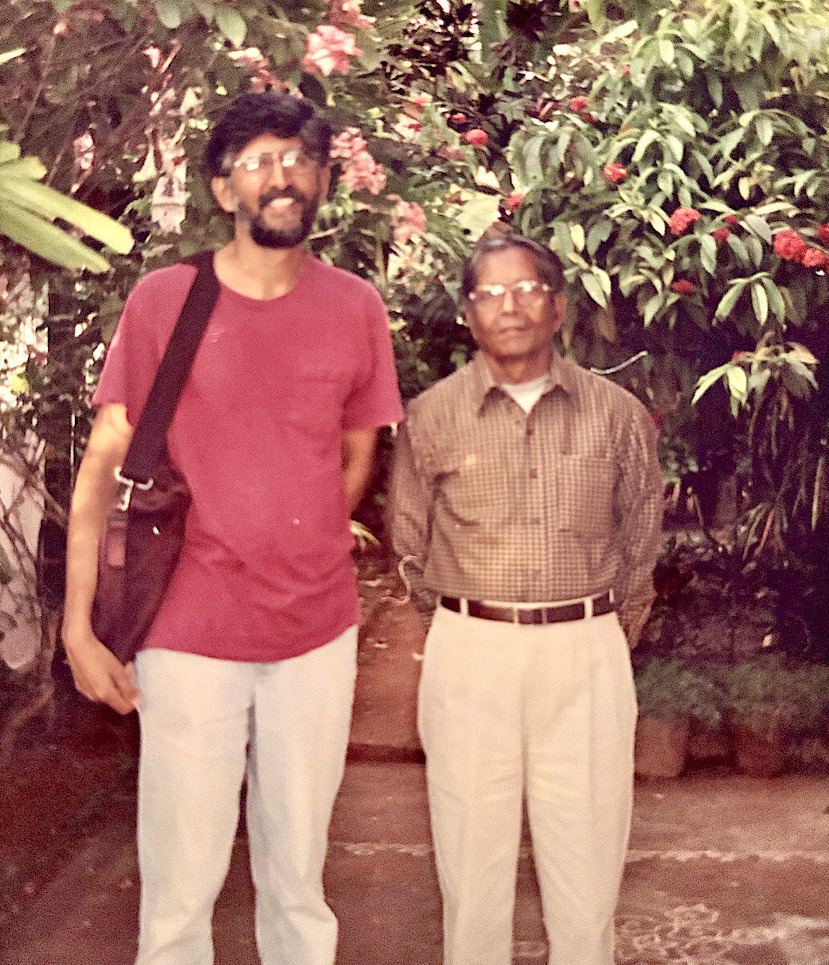
Panduranga Rao believed in education, and he guided his children well. More impressively, he believed in training his mathematics students in the branches of mathematics that he felt were important. He was essentially a self-taught scholar who, in a relative backwater, motivated himself by looking from afar at the work being done in the larger centres of mathematics. His university had a library with a decent collection of journals, and he could follow mathematical trends by reading the papers of famous mathematicians like Bott and Yau. This created the mathematical taste that he tried to convey in his teaching.
Panduranga Rao served mathematics by developing a high-quality teaching programme in his department. He taught his students the topics they would need to pursue a research programme in the areas of his interest, courses like commutative algebra and algebraic topology. His energy and enthusiasm for his subject must have enthused them as well, and some of them chose to pursue a research programme at major centres. He was unstinting in his generosity; his students could come to his house to be taught things beyond the normal coursework. He went beyond his department students to mentor younger students in local undergraduate colleges who had shown promise in mathematics. As the high quality of his mentoring became generally known, research institutions around the country accepted his letters of recommendation as convincing evidence of the quality of his better students.
Panduranga Rao loved mathematics, and he loved teaching his students. These students are indeed his legacy.
A. Prabhakar Rao received his degree from the University of California, Berkeley, in 1976. Following postdoctoral appointments at Harvard University and the University of California, Los Angeles, he served as professor of mathematics at Northeastern University before joining the University of Missouri–St. Louis, where he continued his academic career until his retirement in 2023.
G.D. Veerappa Gowda
A feeling of deep sorrow engulfed my soul when I learned of the passing of my beloved teacher, B.S. Panduranga Rao. Even as I was coming to terms with the painful news, I felt compelled to sit down and pen these lines, reflecting on my interactions with him, and the profound influence he has had on my life and my academic career.
I was at the University of Mysore from 1976 to 1978 to pursue my MSc in mathematics. I came from a very rural background, a small village called Satalalu in Sagara taluk, and from a family of farmers with no prior tradition of education. With the guidance and encouragement of many dedicated teachers during my school and college years, I completed my BSc and was fortunate to secure admission to the MSc programme at the University of Mysore.
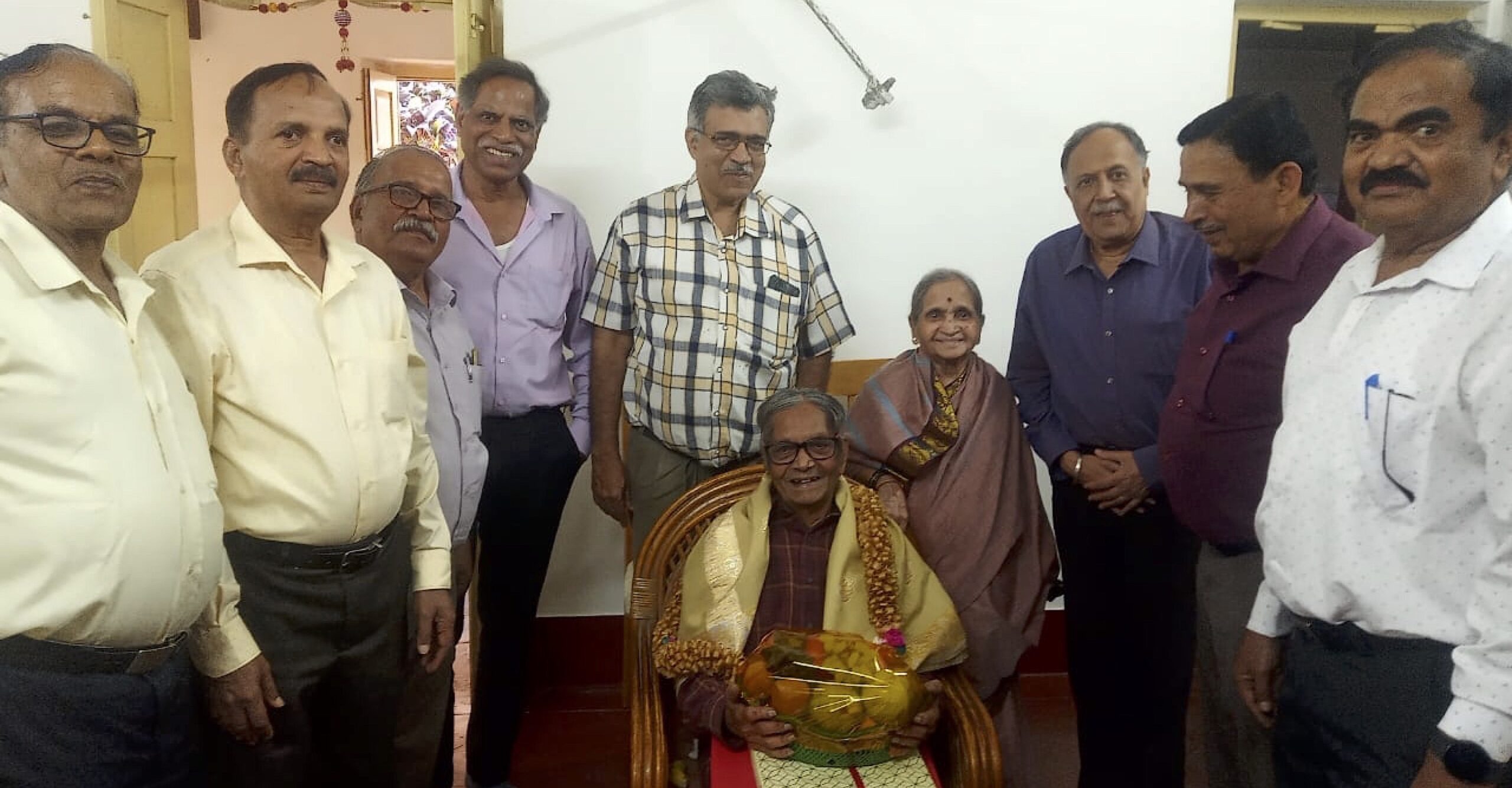
When I joined the MSc programme, BSP was a young faculty member in his forties—straightforward and direct in his approach, and exceptionally strong in his subject. I had the privilege of taking several courses under him, including real analysis, complex analysis, and advanced calculus. These courses left a deep and lasting impression on me, and they later influenced my decision to pursue analysis and differential equations as my research area at TIFR. They remained central throughout my professional career.
Those were times when there was a certain distance felt, between the faculty and the students. Yet, BSP was one of the rare teachers who went beyond the classroom. He spoke to students informally, joined them for coffee, and took his role as a teacher very seriously. He had a keen eye for identifying students with potential for further study and research, and took a personal interest in guiding their paths.
Given my non-academic background, I had never even heard of an institution like TIFR. It was BSP who told me about it, encouraged me to apply there, and—most importantly—instilled in me the confidence to believe that I truly belonged there. I deeply valued his honesty—sometimes expressed through scoldings that may have sounded harsh because of his directness—but they always came from an intent of genuine concern and goodwill. He persistently pushed his students to recognize and realize their innate potential.
I am just one among the many such students, both before and after me at Manasagangotri, and there were numerous other students whom he guided, and inspired them to pursue higher studies at various premier institutions.
Even after the completion of my masters, we remained in touch with each other until his last days. He followed my career with keen interest, asked about my research and progress, and was always very happy to hear about even the smallest of my achievements.
As I look back at this juncture, I can say with deep gratitude that his mentorship played a decisive role in shaping my life in mathematics. I will always remain thankful for his guidance, encouragement, and unwavering belief in me. His legacy lives on through the many students whose lives he deeply touched and transformed.
G.D. Veerappa Gowda was a professor at the TIFR Centre for Applicable Mathematics (TIFR-CAM), Bengaluru, where he worked for his entire academic career until retirement from there in 2020. He is currently a professor at Mahindra University, Hyderabad.
D.S. Nagaraj
Panduranga Rao was a lecturer at the mathematics department of the University of Mysore when I was an MSc mathematics student. He taught me commutative algebra from the book of Atiyah and MacDonald.
He was an inspiring teacher. I enjoyed his lectures. I used to go to his office after the lectures with my questions which he would clarify with great patience and care. Given his deep passion for the subject, he would go beyond that and tell me about many mathematicians, their works, important topics there are that one could study and so on.
One could get to see him at the department even during the holidays, and I used to go to his office. Panduranga Rao would give me maths problems and guide me on how to go about solving them in case I was stuck. It was from him that I came to know that there is a subject called algebraic geometry. He once told me that if one wants to do research in algebraic geometry, one has to learn all the subjects in mathematics. That inspired me to later take up research in algebraic geometry.
He told me that research is also an option that one could pursue, and used to tell me: “if you take care of mathematics, mathematics will take care of you’’. It was he who told me that joining a place like TIFR would be a great opportunity to do research in mathematics and asked me to apply there. When I received the selection letter, I went to meet him, and he invited me to his home for lunch, and I could see that he was extremely happy.
I joined TIFR in August 1979. Sometime in 1980 itself, perhaps in April or a bit later, Ramanan, Raghunathan, Balagangadharan (who was at the Bangalore centre of TIFR), along with Kalyan Mukherjea (from ISI Calcutta), organized a summer school at the maths department in Mysore. Apart from me, I remember that T.N. Venkataramana, Eswar Rao, K.T. Joseph (from the TIFR–IISc joint programme) and V. Raghavendra (from IIT Kanpur) also attended this workshop. Panduranga Rao attended all the lectures and was very happy about the fact that the University of Mysore was hosting this event. Perhaps it was he who was one of the people instrumental in organizing this summer school.
Panduranga Rao was a very simple person. Even though he was interested in doing research in mathematics, he took up a lecturer’s job owing to certain personal reasons, and stayed at Mysore.
I used to correspond with him from TIFR by post as it was about the only medium of communication then. Since my parents were living in Mysore, I used to visit them every year, once or twice, and I used to spend several evenings with Panduranga Rao at his house. He would tell me about the joy of learning and doing mathematics. He was very fond of differential geometry, and the work of S.T. Yau had greatly attracted his interest, and he used to tell me about it. I still remember his passion for geometry and the immense pleasure he would feel when he understood a new result and then explaining it to his students. I always remember my visits to his house and the warm atmosphere he and his wife created whenever I went. He and his wife treated students as their own children and always cared about their well-being.
Panduranga Rao now lives in the freshness of my memories.
After serving as a faculty member at the Institute of Mathematical Sciences for nearly three decades until formal retirement, D.S. Nagaraj is presently at the Indian Institute of Science Education and Research, Tirupati, as visiting professor. His main area of research is in algebraic geometry and, in particular, moduli problems, classification problems and various other classical projective geometry aspects.
K.S. Vishwanath
It was 1981 summer. The days of admissions to Masters degree programs at Manasagangotri, University of Mysore. My Bachelor degree was in Physics, Chemistry and Mathematics. I had done well in mathematics. I was reasonably passionate about mathematics. In many ways, I still am. Nobody among our immediate relatives or friends had a master’s degree. My family was unaware and unsure whether I should do mathematics masters or not. After much searching, we finally found a distant acquaintance who was a professor of statistics in University of Mysore. We sought his counsel. We asked him as to what is the `scope’ of having a decent career in mathematics. He said that doing a masters in mathematics is a disqualification! One is better off doing BEd because there are a lot of teaching jobs. Better still, with an MSc in statistics, one can get a job in the industry also, which is supposed to be available aplenty and the pay packages were supposed to be attractive. Some seats for admission to statistics MSc were reserved even for those who had not studied statistics in bachelors, and specially for those who had studied mathematics.
I certainly did not prefer doing BEd. I applied for MSc statistics and MSc mathematics. I got a seat in MSc mathematics easily, but the MSc statistics seat list was to be declared later. In the meanwhile, MSc mathematics classes started and my curiosity took me to attending them. In two weeks, statistics seats were announced and I got one. It was a Friday. I attended pre-lunch mathematics classes. Statistics classes were to start on the following Monday. I was almost not attending the post-lunch session. But I got to know that it was an algebra class and that it will be taught by an excellent lecturer. It sounded inviting. I loved algebra and I still do. I decided to attend.
It was B.S. Panduranga Rao’s class. He was known as BSP. At the beginning of the class, we were asked to introduce ourselves: our name, where we were from, college studied, marks in bachelors, and if we intend to continue pursuing mathematics. When my turn came, I introduced myself and promptly said that I will not continue mathematics. The introductions got over…
“You”. I heard. I was looking elsewhere. My friend next to me nudged me and told me that BSP was addressing me.
“Yes, Sir”, I muttered as I stood up.
“Did you say you are not continuing in mathematics?”
“Yes, Sir. I will not.”
“Which subject will you be pursuing?”
“Statistics, Sir.”
“Have you studied statistics?”
“No, Sir.”
“Do you like statistics?”
“I am yet to explore, Sir.”
“Don’t you like mathematics?”
“Not that Sir. mathematics is my passion. Always has been. I will keep doing mathematics in one way or the other. At the least, I will keep teaching mathematics.” (I was already teaching mathematics to the junior classes.)
“Come and meet me at my office after the class.”
I was completely spellbound by his teaching. Best I had ever attended in any topic. With springs under my feet, I went to his office.
BSP started. “You say mathematics is a passion. You have got good marks in mathematics. You have studied in a good college. You have never studied statistics. You don’t know whether you will like it or not. So, why are you joining statistics? More importantly, why are you leaving mathematics?”
“Because statistics has more scope than mathematics, Sir.”
“Who says so?”
“All elders, Sir.”
“I am also an elder to you. I am saying that mathematics has more scope than any other subject.’’
I, meekishly, “You are a mathematics lecturer and hence you will naturally say so, Sir”.
“It is not like that, Vishwanath. Forcing a student to study a subject that is not of interest will be an injustice to him. A student must be encouraged to study a subject that he is passionate about. Have you heard of the Tata Institute of Fundamental Research?”
I, with all my energies, “Yes, Sir. Only heard of the name and some of my seniors are there. And that it is a great place to be.”
“Let me tell you this. You join MSc mathematics. I will teach you. Let us take it as a challenge to prepare you well enough to get into TIFR or another similar centre.”
I was dumbstruck! Nobody had talked to me like that. I had never thought of such an option, let alone thinking of pursuing one.
“Perhaps you have not thought through the options carefully. Do one thing. Go home, go to Yuvaraja’s College. Talk to your favourite lecturers. Sit by yourself and think. Then decide”, he concluded.
Two intense days passed. I decided to pursue mathematics. He taught us linear algebra and three-fourths of the syllabus of algebra. I never missed his single class. Best learning experience I have had in my life. Even outside the class, every once in a while, he would catch me and I would obediently walk with him towards wherever he was heading and he would engage with me mathematically. I always eagerly soaked everything he said. He was uncompromising in my learning process and continually kept tabs on my progress.
I topped the University. After my masters, I applied to TIFR, Mumbai and the then Indian Institute of Science mathematics centre of TIFR. I was selected in both and joined TIFR, Mumbai in 1983.
Every time I came to Mysore for holidays, I met BSP once or twice without fail. He was always keen to know my progress. In 1987-88, I privately taught students pursuing masters at University of Mumbai. I strongly believe that I inculcated and carried most of what I learnt from BSP and transferred it to the students. Quite a few of them continued teaching. I also believe that this process carries-on.
I still cannot believe that he is not with us anymore. He was the person who meta-morphed me. What I owe him is unfathomable.
But I still pinch myself ever once in a while. How O How did he pick me among all the students?
As Jung puts it, this must have been an effect of “Acausal Connecting Principle” or one may just call it providence! The same providence that drew me closer to many who loved mathematics.
Vishwanath is a private tutor of mathematics and programming. He also works occasionally as a visiting faculty.
B.R. Shankar
I entered the mathematics department of the University of Mysore in 1984 for the MSc programme. That was when I first met BS Panduranga Rao, known to all as BSP. He taught real analysis to us in the first year. His classes were very lively and energetic. Our class size being relatively small, he would remember each of us by name.
BSP was very passionate about mathematics and would be quick to spot students who he felt had potential for higher studies and would encourage them to pursue research in mathematics. He played an active role in getting many students enter reputed research institutions to further progress in their studies. A good number of them have come out very successful, including his son Purnaprajna who joined the MSc programme, a year after me, in 1985.
During my visits to Mysore I have met BSP several times in his house. He was always very warm, affectionate and would enquire about our other classmates too! My last meeting with him was in October 2021, along with D.S. Nagaraj, another of his highly successful students. His memory was as sharp as ever.
An aspect of BSP that came to the fore while talking to other students of his is that he taught a range of topics, and if he spotted or felt that some of them were good or promising, he would take special care and offer courses that were not necessarily listed in the syllabus, but teach them under optional subjects. Three such courses that I have come to know that he taught with great fervour are algebraic topology, differential geometry and Riemann surfaces. Such was his pure love for the subject, and eagerness to learn and teach it to students.
I have very fond memories of the two years of MSc and can say that all my teachers there were excellent. Among the other teachers who taught me were S. Bhargava, H.S. Gopalakrishna, S. Nanjunda Rao, Chandrashekar Adiga, H.N. Ramaswamy, Huchegowda, and V.A. Hiremath. When I heard from one of my long time friends, Ashoka Rao, on 25th September 2025 that BSP is no more, it came as a very sad news. That was a generation of teachers who were really dedicated to their profession and were so human and humane. It is indeed very difficult to come across such excellent beings.
B.R. Shankar is senior professor of mathematics at the National Institute of Technology Karnataka, Surathkal. His research interests include number theory, algebra, and history of mathematics. He loves reading biographies of mathematicians and giving expository talks to students at schools and colleges to enthuse the study of mathematics.
Harish Seshadri
Panduranga Rao (BSP, as he was called) was a close family friend and part of my life from very early childhood.
BSP’s passion for mathematics, teaching and uncompromising honesty in all aspects of life were impressive to me from early on. He was an extraordinary teacher, more akin to a guru than a lecturer in the conventional sense. He deeply cared about the overall welfare of his students, especially those from financially distressed backgrounds, and went out of his way to help them.
My mathematical tutelage under him was brief, beginning when I expressed an interest in algebra in my 10th or 11th standard. He asked me to solve problems from Godement’s Algebra—an excellent text rooted in the “learning through problem solving’’ approach. BSP’s method of teaching was similar to Godement’s – he would motivate a concept or definition with a key example and then ask me to prove the ensuing results. I had a misguided fascination with the language of mathematics rather than its substance, and his approach was immensely helpful in setting me straight! I had planned to attend a local science college for a BSc and continue studying with him, but a few weeks at the college led to a change of plans and I joined the integrated MSc programme at IIT Kanpur.
A conversation we had around 1996, while I was doing my PhD at Stony Brook, has stayed with me: he suggested I look at Kähler geometry—specifically the interplay between curvature and complex structure—because many basic questions were still unanswered in that field and he had thought about some of them. However, I remained focused on the Riemannian side for a while; it was only in 2005 that I began working on Kähler manifolds and realized how right he had been!
BSP’s passing has left a deeply felt absence among all those who knew him.
Harish Seshadri is professor of mathematics at the Indian Institute of Science.
Aniruddha Naolekar
I had the good fortune of studying Masters in mathematics at the University of Mysore, fondly known by Mysoreans as Manasagangotri. Here I came in contact with some wonderful teachers : S. Bhargava, S. Nanjunda Rao, Chandrashekar Adiga, H.N. Ramaswamy, Huchhegowda, B.S. Kiranagi, V.A. Hiremath and B.S. Panduranga Rao. I recount below my two year journey at Manasagangotri and specifically my interactions with B.S. Panduranga Rao, whom I have always addressed as `Sir’, then and in later years.
I first met Sir in the Statistics department! To begin at the beginning, after completing BSc at Sarada Vilas College Mysore, I was looking forward to studying Physics at Manasagangotri which had a wonderful Physics department too. As something to fall back on, I had also applied to the mathematics and statistics departments for the MSc course. Physics was the most sought after course for science students at Manasagangotri and the competition was tough. I did not make it to the physics merit lists. The mathematics department came out with the merit list and two additional wait lists. I did not make it to any of those lists. Meanwhile I made it to the second wait list published by the statistics department. I joined the MSc in Statistics course.
A week of classes was already over when I joined. On the third day of attending classes at the statistics department I was called out by a gentleman from the statistics department office. When I walked out of the class he informed me, pointing to someone standing a few feet away, that Professor Panduranga Rao wished to see me. That was my first meeting with Sir who, little did I know at that time, was to have a great influence on my future in mathematics. When I stood in front of Sir he, as was his nature, straightaway came to the point and asked me if I wished to change from statistics to mathematics. I replied that I wished to but that I had not made it to the merit lists. He asked me to follow him. I walked behind him to the mathematics department. He took me to the notice board and pointed to the new (third) wait list. There were three names on the list and mine was the last. He again asked me if I wished to change to mathematics. When I replied in the affirmative, he immediately summoned a staff member, asked for my application forms and requested the gentleman from the office to drive me on his scooter to the university admission office to complete the formalities. That day was the last day of admissions. Thus began my two year journey in the maths department at Manasagangotri. I never remembered to ask Sir how he found me in the statistics department! How I wish I had.
From the very next day, I started attending the lectures. I was at the department early and the first teacher I saw at the department was H.N. Ramaswamy who had joined the faculty recently (as I learnt later). He wore a blue coloured khadi kurta with a sling bag on one shoulder and sporting a thick beard. He was teaching the first year batch that year. The teachers, it seemed to me initially, maintained a very reserved personality and I admit I was initially a bit apprehensive to talk to them. These apprehensions were soon laid to rest as I found out that all of them were very friendly, kind and generous.
Ours was a batch of 36 with almost equal numbers of boys and girls. The first year classroom was located on the first floor. In those days if one stood in the corridors of the first floor one had an unobstructed view of the surroundings. The classes began at 10 am and went on till 5:30 pm, with an hour gap for lunch. I would cycle to the department and on the way back I cycled back with Purnaprajna having long conversations while we rode back.
In the first year our teachers were : S. Nanjunda Rao (Complex analysis), Chandrashekar Adiga (Real analysis), B.S. Kiranagi (Linear algebra) and H.N. Ramaswamy (Algebra). With my not so good background in maths, I found it tough to cope with the lectures, especially in algebra. Sir was not teaching the first years that year. I, however, met him often in the corridors of the department and he would always enquire about how I was coping up with the courses. He would often speak in Kannada while talking to me. The teachers often would go together to the canteen for coffee and one could see them walk together from the first floor corridors. In the two years at Manasagangotri I noticed that Sir often wore a coat with white and brown checks during the winters.
Although Sir was not officially assigned a first year course, he did teach Real Analysis to our batch in the first year when Chandrashekar Adiga was away for a few weeks. His classes were lively and he encouraged participation from all the students. I realized in due course that one of the ways by which he got the students involved in the proceedings was, for example, to deliberately write some expression incorrectly or incompletely and look at the class with an expression of enquiry. His eyes would light up with pleasure if someone in the class pointed out the correct/complete expression.
I remember that in the first year at one point I was missing classes off and on. Sir came to know about this. After having missed classes for a couple of days, one evening I heard someone call out my name from outside our home in Mysore. When I opened the door I saw Sir standing at the gate. I rushed outside to meet him. He just looked at me and said “I want to see you in the department from tomorrow” and walked away. I stood speechless watching him walk away. This incident touched my heart.
 |
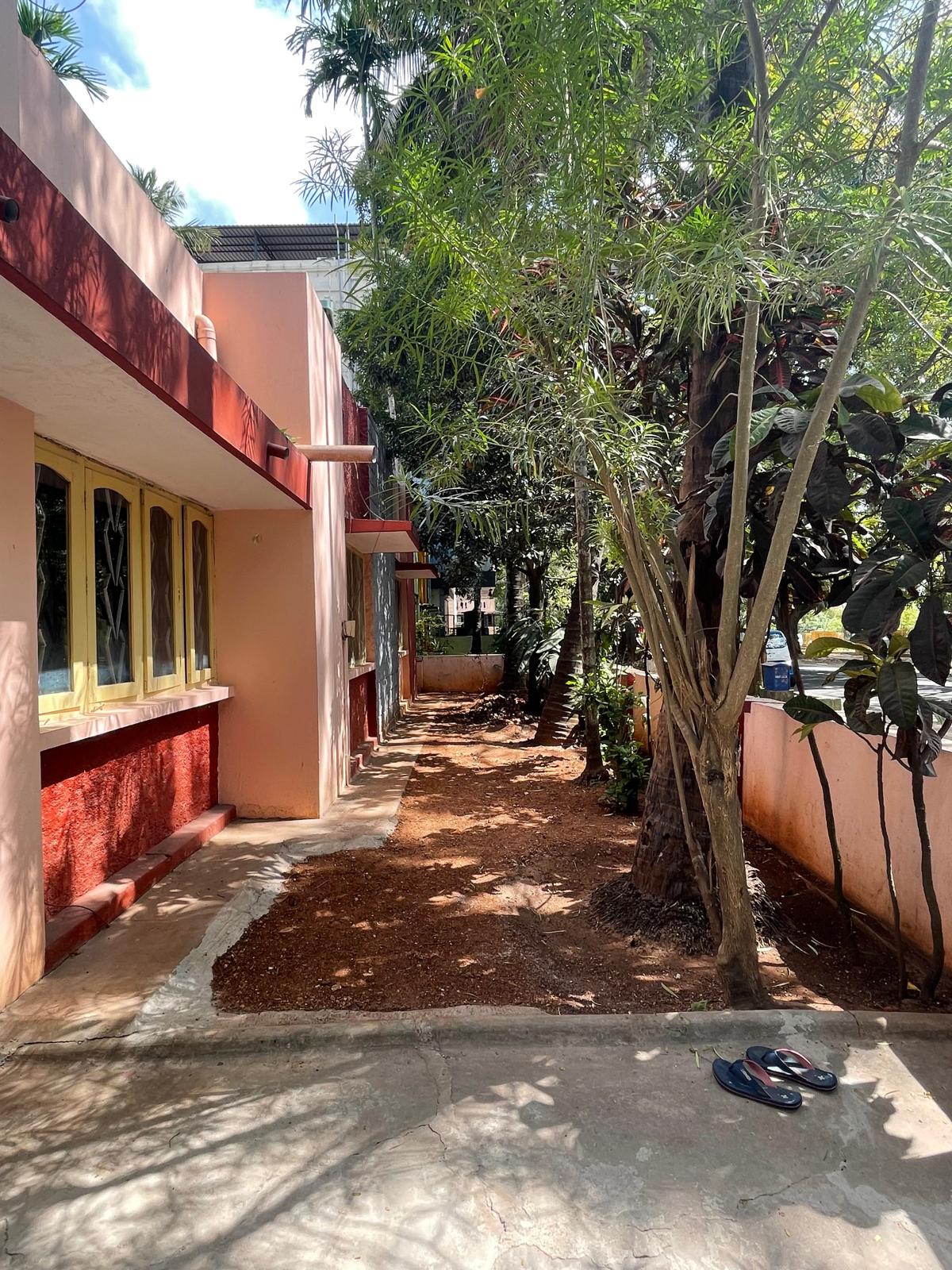 |
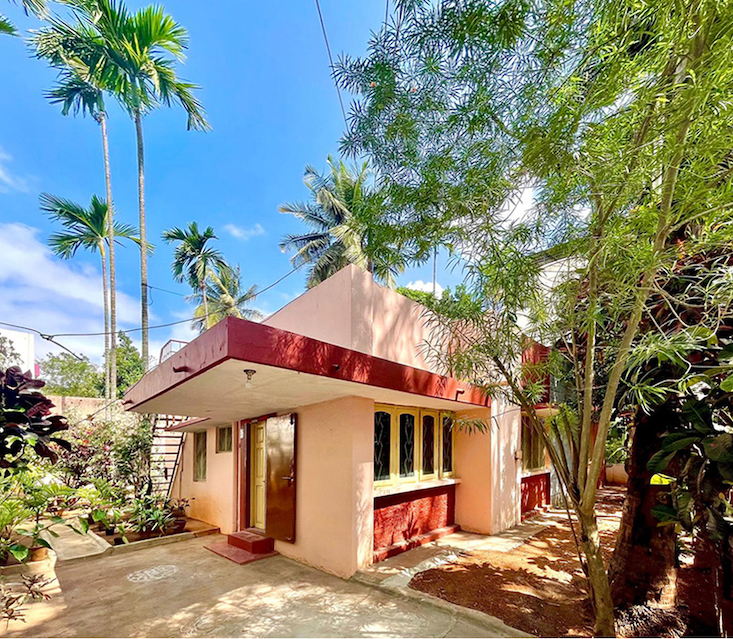
| Garden around his home. An avid gardener, Panduranga Rao kept an immaculate garden working with his own hands. B.P. Purnaprajna. | |
Slowly the academic year ended. My scores were not very good. The second year classes started. I met Sir on the first day of the classes in the department. He asked me about my scores. He knew I had not done well and he sounded a bit upset. He thought that I was capable of doing better and said so. I felt happy to hear that from him. The conversation then moved on to which special topics I was going to opt for in the second year. In the second year students had to opt for two special courses. Sir was offering two special courses for the second year students one was a course on Algebraic topology and the second on compact Riemann surfaces. I told him that I had still not decided. The students had a week’s time to decide on the special courses. In the next couple of days I decided to opt for both the courses that Sir was offering. I went to meet him to tell him that. He was very happy that I had decided to take his courses. It turned out that the Algebraic topology course had three students and the Compact Riemann surfaces course had two. The other (compulsory) second year courses were taught by H.N. Ramaswamy (Measure theory), Huchchegowda (Functional analysis) and V.A. Hiremath (Topology).
Both the special topics courses were special. I soon realized that apart from the beautiful mathematics that was being discussed in the class I was witnessing something wonderful. The lectures by Sir were energetic without being intimidating. His love for mathematics and the subjects he was teaching was on display for all to see. His involvement in teaching the courses was total. An experience that is difficult to describe. One event that stands out and has stayed with me happened during the end of the academic year. One afternoon I arrived in the department about half an hour early for the afternoon class on Riemann surfaces. I noticed that Sir was already in the classroom and was busy writing something on the board. What was being written was not clearly visible through the glass windows. I waited outside till it was time for the class to begin. When I walked into the classroom, on the board were written in very beautiful large handwriting, with coloured decorations, the words “The Riemann Roch theorem”. This writing stayed on one half of the board while Sir used the other half for mathematical calculations.
Slowly the second year ended. This time my scores were a lot better than in the first year. After collecting the marks sheet from the university office I met Sir at his office in the department. I was holding the marks sheet in my hand when I met Sir. He had a smile on his face and I then understood that he was aware of my scores. I did not stay for long as I had a bus to catch. In that short meeting he encouraged me to study for a PhD and mentioned three institutes that I should apply to. While applying for PhD admissions I wrote a few letters to Sir keeping him informed about what I was doing. His response would be immediate and encouraging. However, for some reason the correspondence reduced and I did not write to him for a long period. I did not get the chance to meet any of my teachers from Manasagangotri for many years except Chandrashekar Adiga who I met twice, once in TIFR where he was attending a conference and I a Summer school and the second time at ISI Bangalore where he was visiting. He was, as always, very soft spoken and enquired about how I had been all these years. I also met S. Bhargava at ISI Bangalore when he had come to deliver a lecture. That meeting was short but we talked for some time.
On some occasions we would talk on the phone. On one such occasion, just as life was returning to normal after Covid, I got a call from Sir. We talked for some time and he was very happy to learn that my daughter was planning to study maths as a major subject in the undergraduate course. He recounted that his granddaughter had a very good understanding of mathematics and that Covid denied him the opportunity to discuss mathematics with her. My last conversation with Sir was also on the phone when he called to invite me to his granddaughter’s wedding. Unfortunately, I could not make it to the wedding.
I woke one morning to a message from Aravinda informing me of Sir’s passing. All my interactions with him flashed through my mind in an instant. I regretted that I had missed a chance to have met him at his granddaughter’s wedding. Perhaps that is how things were meant to be.
It seems not right to talk of Sir in the past. People like him live in their actions and words. He led a selfless and transparent life. Anyone who came in contact with him came away benefited. He was always there for others, caring and guiding without making an effort to. His memories will be cherished by all those who have come in touch with him.
Aniruddha C. Naolekar teaches at ISI, Bangalore. He is interested in algebraic topology and geometric group theory.\blacksquare
Footnotes
- Incidentally, Roddam Narasimha and R.R. Simha are sons of R.L. Narasimhaiah.↩
- Editor’s note: The interested reader may see Bhāvanā January 2018 issue https://bhavana.org.in/r-r-simha-1937-2017/. ↩
- Bhāvanā carried an article on MTTS in its April 2018 issue, see https://bhavana.org.in/mtts-at-25/. ↩