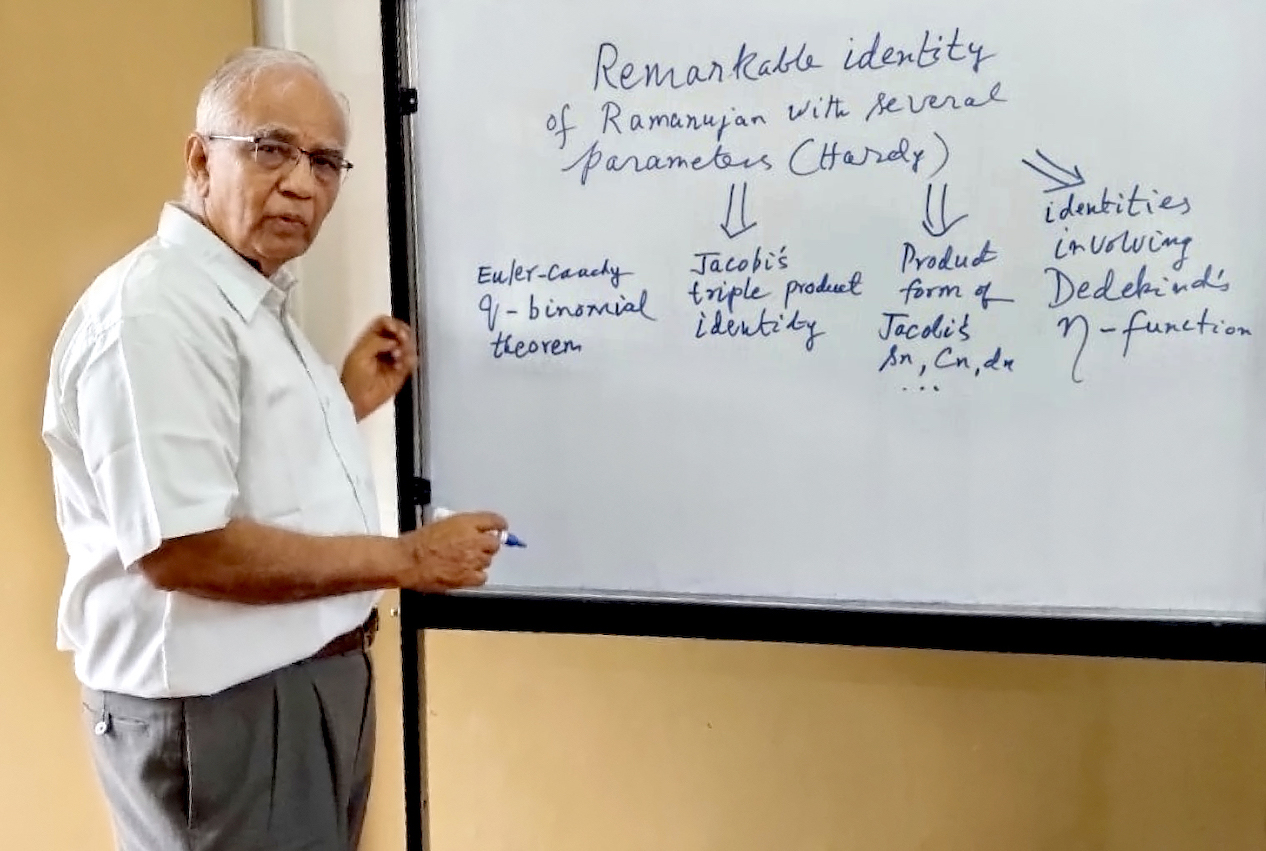
Srinivasamurthy Bhargava, octogenarian and an out and out Mysorean, took over the mantle as the head of the mathematics department of the University of Mysore from three formidable predecessors. Two of them – K. Venkatachaliengar and T.S. Nanjundiah – were his deeply inspirational teachers back during the course of his BSc Honours and MSc degrees at the Central College in Bangalore. In between, he also obtained the then sought-after three-year BE degree at the Indian Institute of Science. Joining his aforementioned teachers at the maths department as a faculty member soon thereafter, Bhargava did his PhD as a Fulbright scholar at Carnegie Mellon University, on a topic in optimization and control suggested by his advisor Richard James Duffin, while managing to keep his job back in Mysore. Relating every turn his life took as being guided by an unknown destiny, his razor-sharp memory of each minute incident along the way comes alive in this conversation with the editors of Bhāvanā, at his home in Mysore.
Warm greetings of the new calendar year, Professor Bhargava. It’s a great pleasure to welcome you for a conversation with Bhāvanā.
SB: Thank you. Thanks for the opportunity.
We would like to start by hearing about your ancestral background and your growing-up years, in school and college.
SB: I was born in a village, tucked in a forest, about 10 kilometres towards Sringeri from Chikkamagaluru. A village called Vastare. I probably studied a part of the first standard there, in the village school. And then in Bangalore.
Oh, then you moved to Bangalore.
SB: Yes, my father used to be in different places. For the second standard, I think I went for some reason to my uncle’s place in another village. I don’t know why I found myself there. I never asked my father.
Your maternal uncle’s place, perhaps?
SB: No. My mother’s younger sister’s place. It’s a village called Baluvaneralu. It’s close to Tiptur. From Tiptur, you go towards Arasikere. And in the middle, there is a deviation to Huliyaru. It’s about six or seven kilometres from that junction, once again, tucked inside. And it remains almost the same today, except for the roads, which are better now. And there’s electricity. For the third standard, I went to a place called Sarjapura, near Bangalore. For the fifth standard—I got a jump from the third to the fifth—I went to a place called Yelahanka, which is now a part of Bangalore.
You got a jump, meaning a double promotion. So you were precocious…
SB: Yes, somehow, I don’t know. Anyway, I studied until the sixth standard there. Then my mother passed away. My mother’s sister took us to a place called Banavara, near Arasikere. There, I studied a part of my seventh standard. I fell sick with typhoid there. In those days, typhoid was quite difficult to cure. One of my uncle’s brothers got chloromycetin capsules from Bangalore. It was probably not available at that time in Hassan, one of the bigger towns near Arasikere where it was normally expected. So he went all the way to Bangalore, I was told.
Which year roughly are we talking about?
SB: 1950. I must have been about ten years then, being born on 1st July 1940.
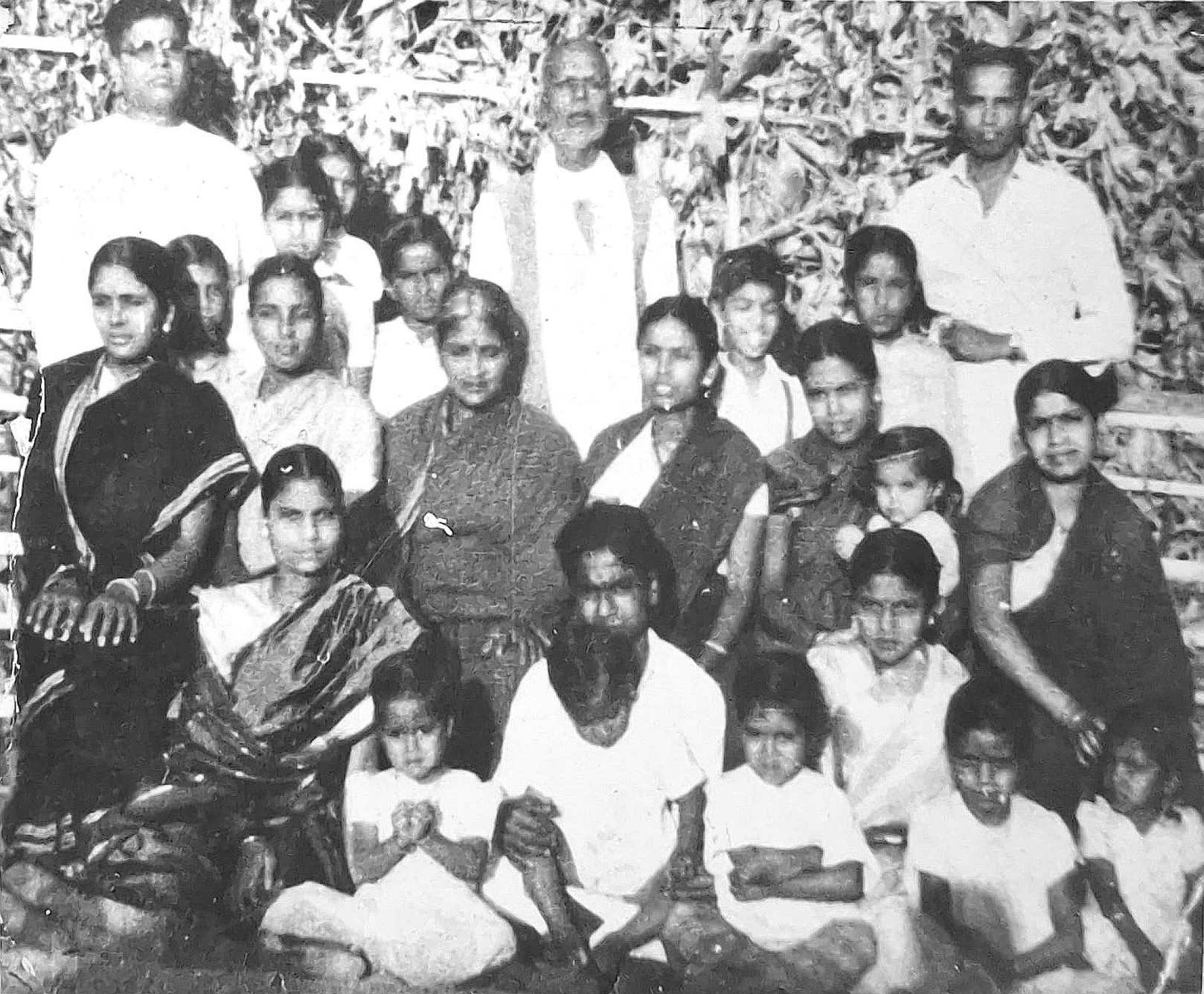
The 8th standard was a tough stage for several reasons. I was deficient in many topics and subjects, except, perhaps, mathematics because of the teachers in every place, the villages and towns. Everywhere I went, I had very good maths teachers. And tough ones too. Very disciplined. Our headmaster in Jog Falls was our neighbour. That was the most difficult thing for me because he used to talk to my father frequently about my status.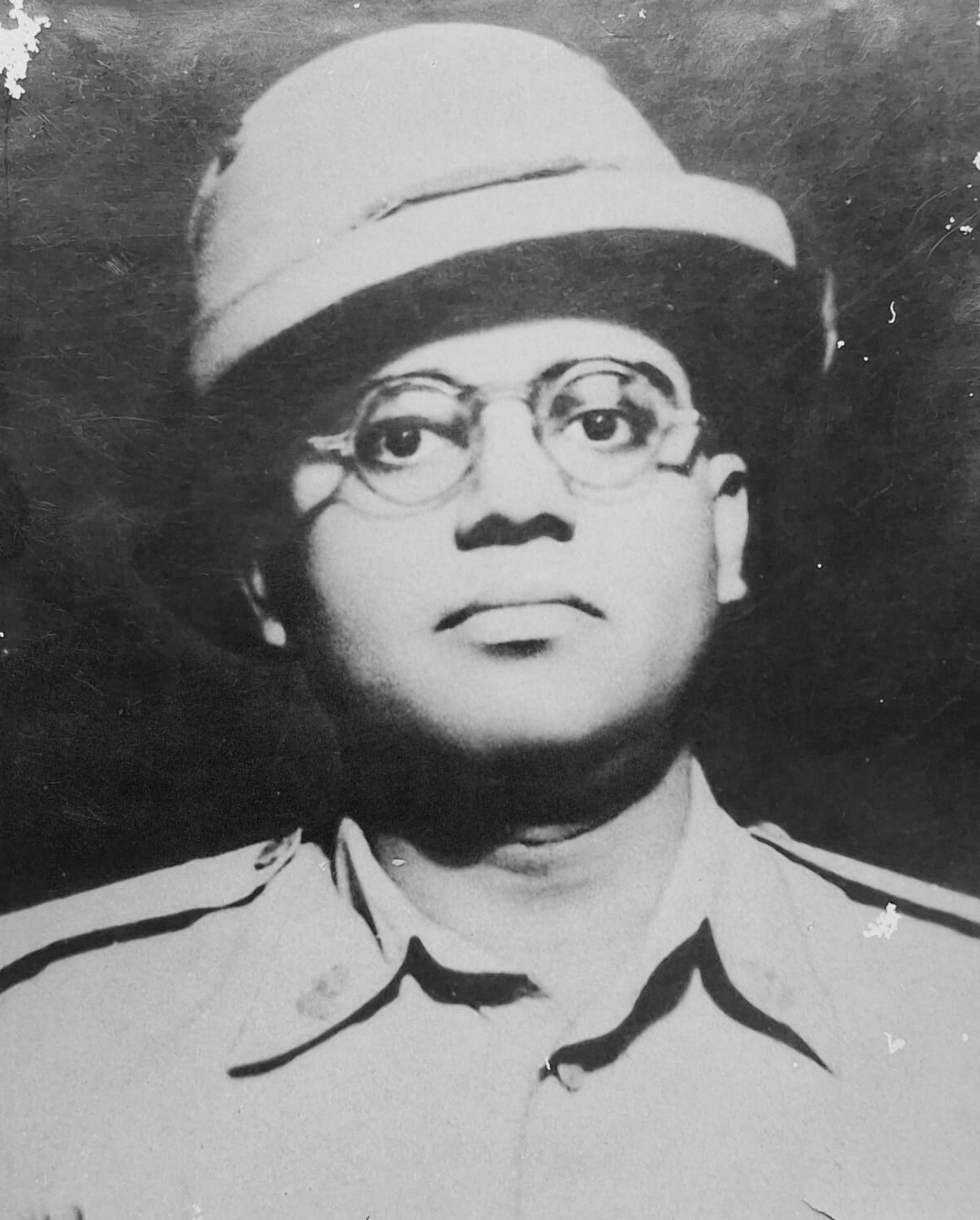
My classmates were very competitive. Most of them were children of engineers. The Linganamakki dam didn’t exist at that time. So most of the electricity was generated in the Jog Falls Colony itself. I had a tough time progressing with my lessons. The 8th standard exam was a state-wide [common] public exam. There was a selection exam before the headmaster allowed us to write the final exam. You could afford to fail the selection exam any number of times and later compensate for your deficiency.
My father took charge of training me in maths. It was all Kannada medium at the time. There used to be a book called Ankaganita by Subbannachar. It is an excellent book which can be used even now to learn and teach maths in Kannada at any level. That’s how I remember it. My father took charge of me and saw that I cleared the selection exam in the second attempt. We had to write our exams in Sagara because Jog was not an examination centre. When I visited Jog very recently, I saw that the school doesn’t exist there anymore but has shifted to another nearby town. Perhaps to compensate for this, there does exist a government high school now in Jog unlike in our days when high school students had to commute daily to Sagara. The 8th standard class now stands shifted to high school from middle school as per the restructured education.
Everywhere I went, I had very good maths teachers
The schools that you went to were all government schools, I presume?
SB: They were all government schools except in the 11th Standard which I did in St. Joseph’s Indian High School, Bangalore. I did well in the 8th standard selection exam and I made it to the finals. For the 9th standard, I came to Shiralakoppa.
By the way, what was your father working as? Was he in the education department?
SB: No. He was in the Police department. I think he started as a constable or a `daffedar’ (head-constable) during the British period, then got promoted as a sub-inspector. He retired also as a sub-inspector after several decades in service.
Did you have any siblings?
SB: We are nine in all: Myself, two elder sisters, three younger [step]brothers, three younger [step]sisters. Unfortunately, some of them are no more now. Throughout my childhood, I was very mischievous. My stepmother was too lenient towards me. She didn’t enforce any discipline. And my father was not available most of the time as he was on duty 24 hours practically. So, I was a free boy.
Coming back to what I was saying, Shiralakoppa was a nice place. We had very good teachers. I visited Shiralakoppa recently. The school looked about the same. I couldn’t find the Bhadravati school because it’s all changed.
From Shiralakoppa, I moved to Shivamogga. I could also find the Shivamogga school during a recent trip. In Shivamogga, H.S. Gopalakrishna was one year senior to me there. He became my colleague in Mysore later.
And from Shivamogga my father was transferred to Bangalore Cantonment area which was a totally different world. There, I got admitted to St. Joseph’s Indian High School, the first private school I went to. I had a lot of problems there.
Was it an English-medium school?
SB: Yes, totally so. However, I had switched to English in the ninth standard itself at Shiralakoppa School. There they had both Kannada medium and English medium. Somehow my father put me in the English medium for reasons best known to him – a drastic change from the Kannada medium. And Sanskrit was my second language in ninth and tenth.
For the eleventh, I went to St. Joseph’s Indian High School in Bangalore, which was then situated on Residency Road and close to Brigade Road junction. Now it stands shifted near Sampangi Tank. The principal at St. Joseph’s didn’t initially allow me to join because they didn’t teach Sanskrit there. And he didn’t allow me to take Kannada for some reason; maybe the class was full. But my father insisted on admission because the school was a neighbourhood school – in fact a stone’s throw away both from our house, near Johnson Market, as well as from my father’s office, the Shoolay Police Station. The principal found a way out. He asked me if I knew Hindi and contemplated whether I could take Hindi. I was familiar with some kind of Urdu picked up from classmates, friends, tongawallas and neighbours in different places I was in. On finding out that I knew some vocabulary as well as the numbers up to 10 or 20 and writing in the Hindi script (Devanāgarī, same as that of Sanskrit), I was given admission with Hindi as the Second Language.
Was that a compromise?
SB: It appears so. I didn’t know what I was doing. But I said alright. My father was satisfied.
It seems you pick up languages easily.
SB: Yes. I knew some Tamil and Telugu. Bhadravati was full of Tamilians.
Ankaganita by Subbannachar is an excellent book to learn and teach maths in Kannada
Because of the paper mills, I guess.
SB: Also, because the Lakkavalli Dam was coming up. And other industries. And everywhere, my neighbours used to be Telugu or Tamil-speaking. They used to talk to me in those languages. They used to call me by my pet name Maadhu. All who know me from my boyhood call me by my pet name. So I learnt some Tamil and Telugu. Hindi used to be grammatically tough. But the Prachar Parishad exams were quite lenient. My classmates, and especially my teacher, used to speak grammatical Hindi, whereas I used to speak this tongawala Hindi. The teacher was very nice. He would say, “Bhargava, this is not the way to speak Hindi.” And he taught me some ways of speaking correctly to some extent, but I couldn’t compensate for all my deficiencies.
It took a long time for me to adjust to the new system at St. Joseph’s. Due to my ignorance, I was frequently late to classes, even missed some classes including evening sports. At the time of admission, the School had given the Calendar of Events and all the necessary books. My father had collected and brought them home. I didn’t know about the existence of those books and the Calendar. I brought only those notebooks to school, which I used to buy from the nearby Devi Book House. And the English teacher, the class teacher, always used to ask me, “Bhargava, where are those books which we gave?” I didn’t understand what he was talking about until quite late. It took me a few months before I could understand the world I was living in.
Sports class was after regular school hours. That was near Mayo Hall. One had to walk some distance. I didn’t know about this, and I just walked home instead of going there because I had another job – to pick my sister up from her school near the city market, Vani Vilas School. We used to walk all the way via Richmond Circle, Sampangirama Nagara Road, Corporation office, and Silver Jubilee Park Road. Maybe it’s a college now, opposite to Vani Vilas Hospital. It’s a very large establishment. So I used to do that and missed sports. At some stage, the principal complained to my father which was somehow resolved. From then on, I became regular.
My classmates were highly competitive. It was a prestigious school with the children of ministers and MLAs included. It was complicated for me. But then I managed. I adapted and learned a lot of things in that one year there.
Okay. And that was also English medium, right?
SB: Yes. In the 9th standard at Shiralakoppa, I had a problem switching to English medium. But fortunately, they used to give the question paper both in English and Kannada. So I could read both versions and translate. In all these places, the teachers were very good, especially the maths teachers.
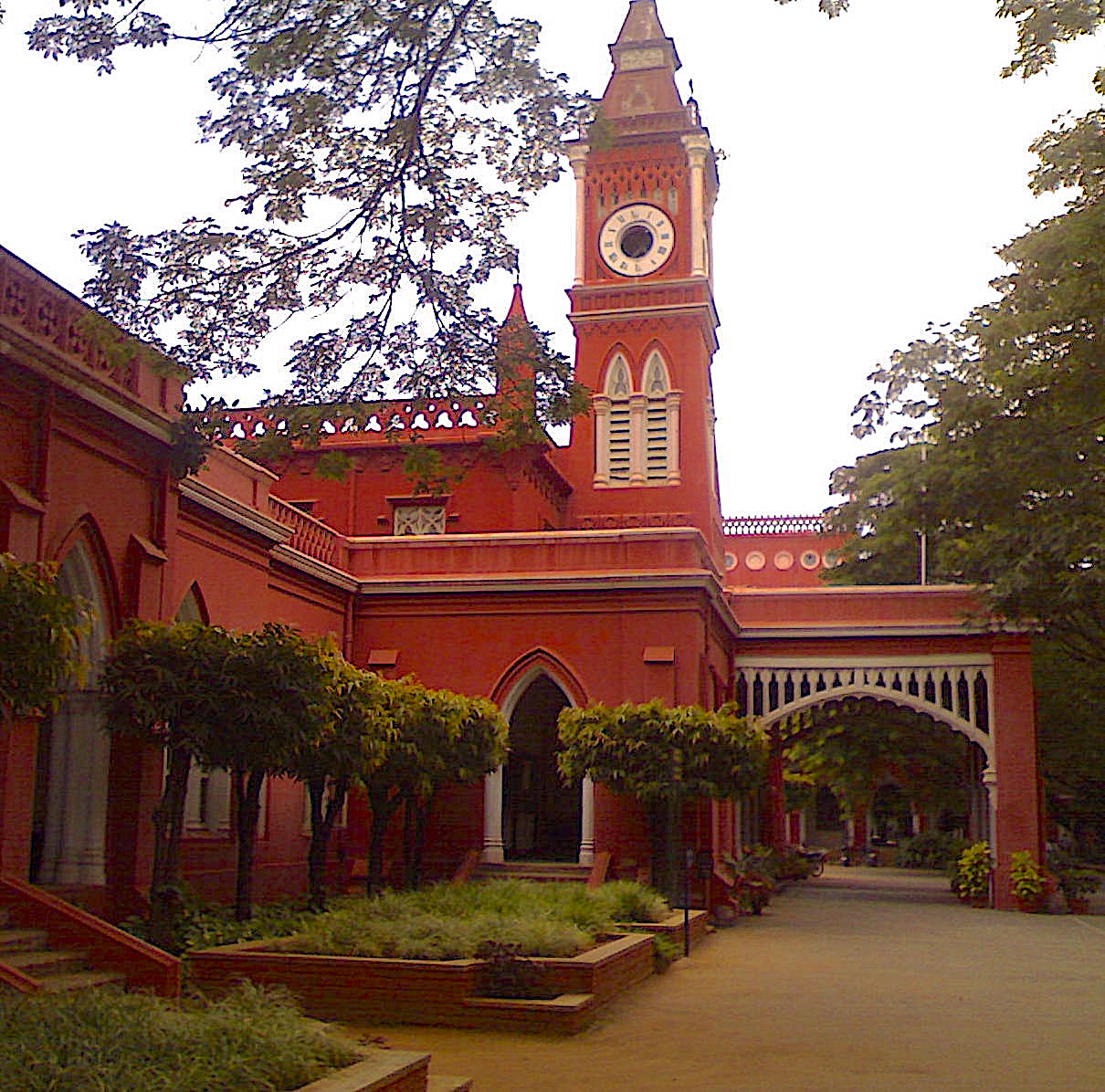
I think it is now called Nrupathunga University.
SB: So for two years I had very good teachers there. Especially the maths teachers and language teachers. That’s where I learnt relatively better Hindi. The Hindi teacher responsible for this happened to teach both in Central College and our Intermediate College. That was when we were in second year Intermediate. He said to us, “Forget about whatever Hindi you learned previously. I will teach you afresh”. For instance, he taught us how to write Hindi correctly: “You put that stroke up for each letter. That’s the way to write. Not on the whole word.” His name was Hiranmayee. He was a Gandhian, I suppose, and always wore Khadi. He was very nice and tolerated all our deficiencies and corrected us very patiently. He became our teacher in Central College also, where I did BSc (Hons) and MSc.
In Intermediate, we had a famous Chemistry teacher, Sampath Iyengar by name, if my memory is correct. He was a very nice person. I had broken a desiccator lid in an experiment class during Intermediate. When I had to receive my Hall Ticket, the Principal refused to give it to me because I had not paid the dues, for breaking the desiccator lid, which turned out to be a big amount for me. So, I went to the lab and asked, “why is it so much?” They said, “We don’t charge you only for the lid. We charge you for the whole desiccator because a desiccator without the lid is of no use.” So, I walked across the huge sports field towards the Chemistry block, where the judicial courts now stand, to talk to the professor. He was coming in the opposite direction towards the main building and was kind enough to stop at my request. I explained my problem. Right there, very kindly he wrote a letter to the principal to exempt me from paying any fine at all. He was also a great teacher. He taught us organic chemistry, and taught it so well and grippingly, that I, as I listened to his teaching, would think, “I’m going to study chemistry in future”. But the moment I came out of the classroom, everything I listened to would dissipate from the confines of my mind.
All the way through primary school, middle school, and high school, I didn’t really know what I was doing. Even getting into intermediate was all my father’s business of taking care of me. My Intermediate score was quite good. Enough to get admission to the three year BSc (Hons) course. Class of maths Honours used to be a very compact class, just about 25 to 30 students. Central College was the only place where that course was offered in the whole state in those days.
What topics did you study in BSc (Hons)? Mainly mathematics, I suppose.
SB: Yes, as the major subject. Then we also had physics as the minor subject and languages. We had to clear our minor and language exams by the second year. There was no BA Honours, except for English Honours.
You took maths, basically, because you liked it?
SB: Without any serious contemplation, perhaps. Because I didn’t know what to do after intermediate. My father showed my marks card to one of his friends who was a BA Honours. He said that I had no chance in physics or chemistry because they get filled up with the first few ranks of intermediate. All the upper layers, upper echelons, used to go to physics or chemistry. Maths, you know, to leftovers. So he said to my father, “Why don’t you send your boy to maths Honours?” That’s how it happened. I was okay with maths, for I didn’t know what else to do.
Was engineering not an option?
SB: In those days, unless you were a top ranking Intermediate student, you definitely would not even attempt to go into engineering. It was very difficult to get admission, even if you had good marks. And engineering existed in only four colleges in the State, two colleges in Bangalore and one each in Mysore and Davanagere.
Okay. Please continue with your experiences during BSc (Hons).
SB: We ran into great teachers like T.S. Nanjundiah and S.N. Manikarnikamma right away in the very first year of the Honours classes. Nanjundiah taught us analytical geometry, and Manikarnikamma taught pure geometry.
Nanjundiah was a great problem solver. He was very leisurely. Very competitive. He gave us tough homework every day and asked for our answers at the very beginning of the next class. When turned in, he would go through our solutions in detail and offer comments. At times, even if you had a correct answer, he may not compliment you if your method did not satisfy him. He expected novelty. He would then go about presenting his favourite method. He would compliment you when due, however. There was one homework which I could do, for which he complimented me profusely. The method he presented in the class, he said, was due to another former teacher of Central College, Bhima Sena Rao.
Oh, I see. Wow.
SB: The problem is as follows: You have an ellipse. As you know, from any point in the plane of the ellipse you can draw four normals. You are given the equation of the ellipse. You are given the coordinates of the point from where you draw the normals. And you are given the coordinates of the foot of one of the four normals. The feet of the other three normals define a circle. Find the equation of that circle in a diametric form.
What does the diametric form of a circle mean?
SB: It means that you are given the coordinates of diametrically opposite points of the circle. You find the equation of the circle in terms of the coordinates. It takes a nice form. So that’s the problem. I solved it using all kinds of trigonometry. I used all my knowledge and intelligence at that time. It may not be so great now. But even now, I take a lot of time redoing it.
We ran into great teachers T.S. Nanjundiah and S.N. Manikarnikamma right away in the first year of Honours
But it’s a beautiful problem.
SB: Yes. It’s a problem somewhere in the book The Analytical Geometry Of The Conic Sections by E.H. Askwith. One of the chapters is on homogeneous coordinates. Before that, you have other stuff. It’s a beautiful book, actually. And there’s a book on pure geometry by Askwith, which is also nice and which we followed.
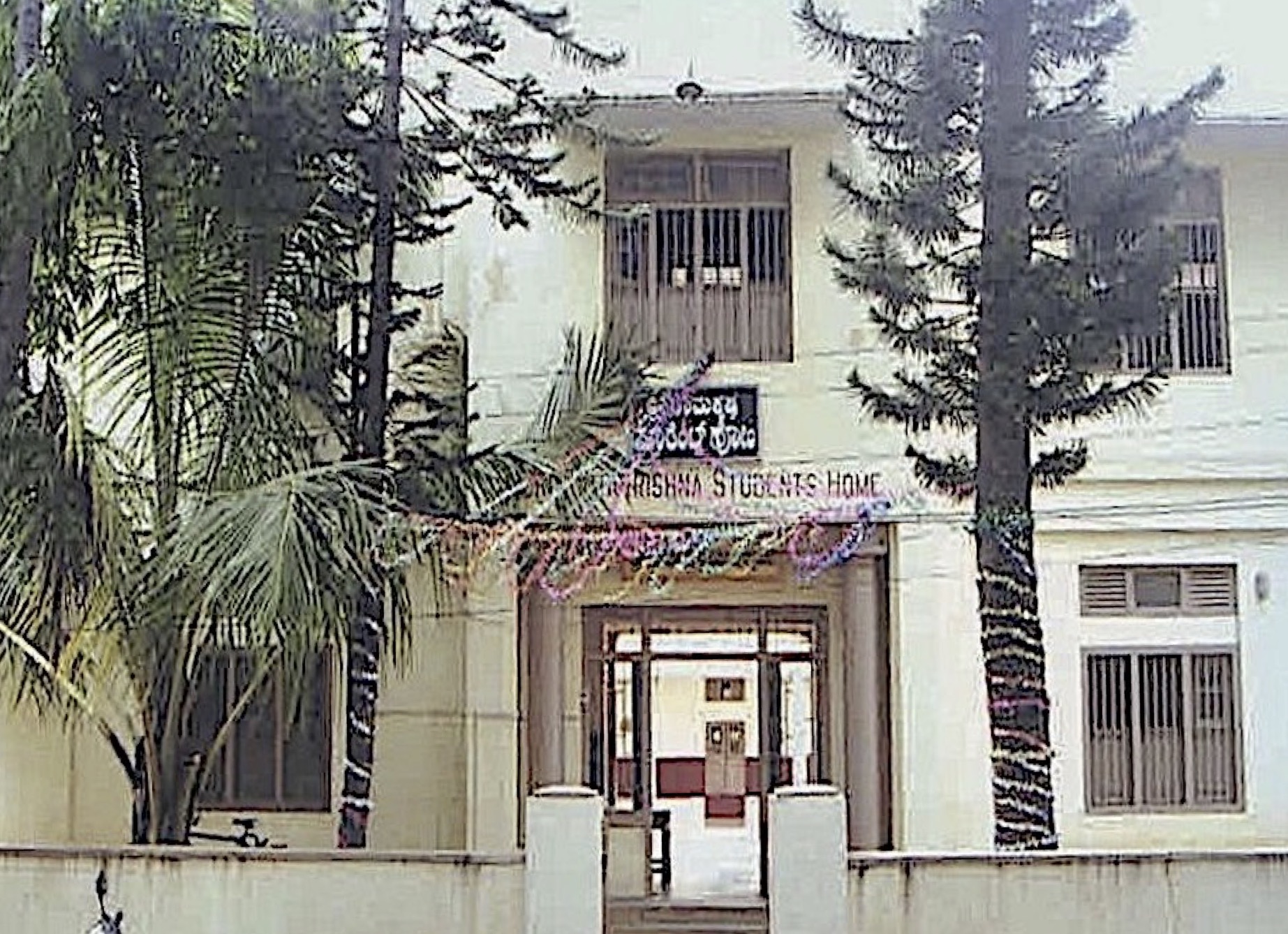
I used to try all the problems. I had all the time in the world because I was living in a great place. The hostel where I stayed, Sri Ramakrishna Students Home, was a free boarding and lodging place with studious and disciplined inmates, taken care of by a set of benevolent administrators. It is situated next to the Jain Temple in Visweswarapuram.
 |
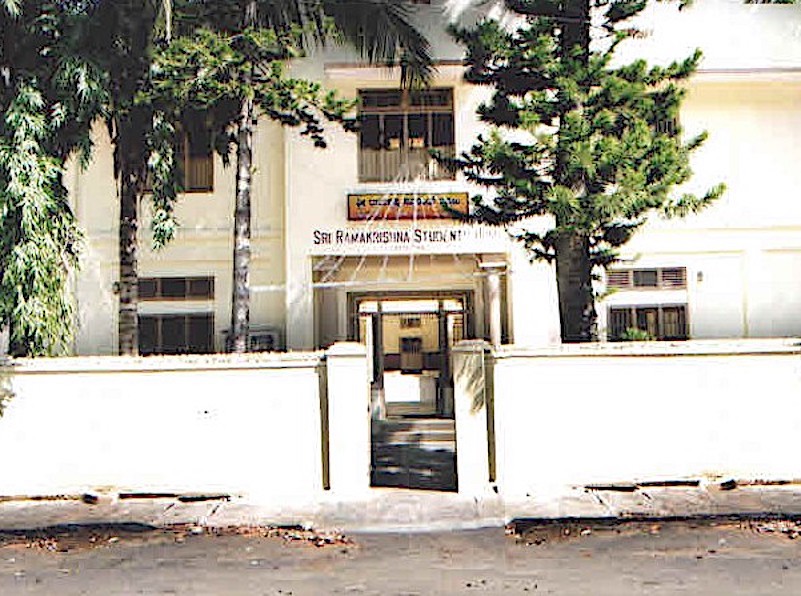 |
| Sri Ramakrishna Students Home provided free boarding and lodging during Bhargava’s studentship at the Central College. SRK Students Home, Bengaluru | |
You stayed in that hostel and walked to college, perhaps?
SB: Yes, we walked, always. All of us. There were half a dozen of us Central College students. We used to walk. Nothing else to do, you see.
Was it the first time you realized that you have a serious liking for mathematics?
SB: No, no. I was always interested in maths, right from the beginning. But I had some deficiencies, as I said. My father had to take charge of me during the eighth standard because it was a very important stage, you see. You had to pass a common public exam, which was state-wide. Old Mysore state. There, I had a problem because I had missed several things in between while moving from place to place. That book Ankaganita by Subbannachar, you know, is a very nice book even today. But I can’t find it now. It may possibly be available in some library. It is flawless and authentic, that much I remember. It’s a government publication. So I was already interested and, here, I got more interested because there was a particular emphasis on maths only. And all the teachers were very good. By the way, I forgot to mention that notwithstanding all the problems I had in adapting to the new and disciplined environment of St. Joseph’s Indian High School, the maths teacher, Parameswaran (if I have got his name right), was lenient to me. He liked the way I converted some problems in Arithmetic into algebraic problems and solved them.
Who were the other teachers there? Can you mention some names?
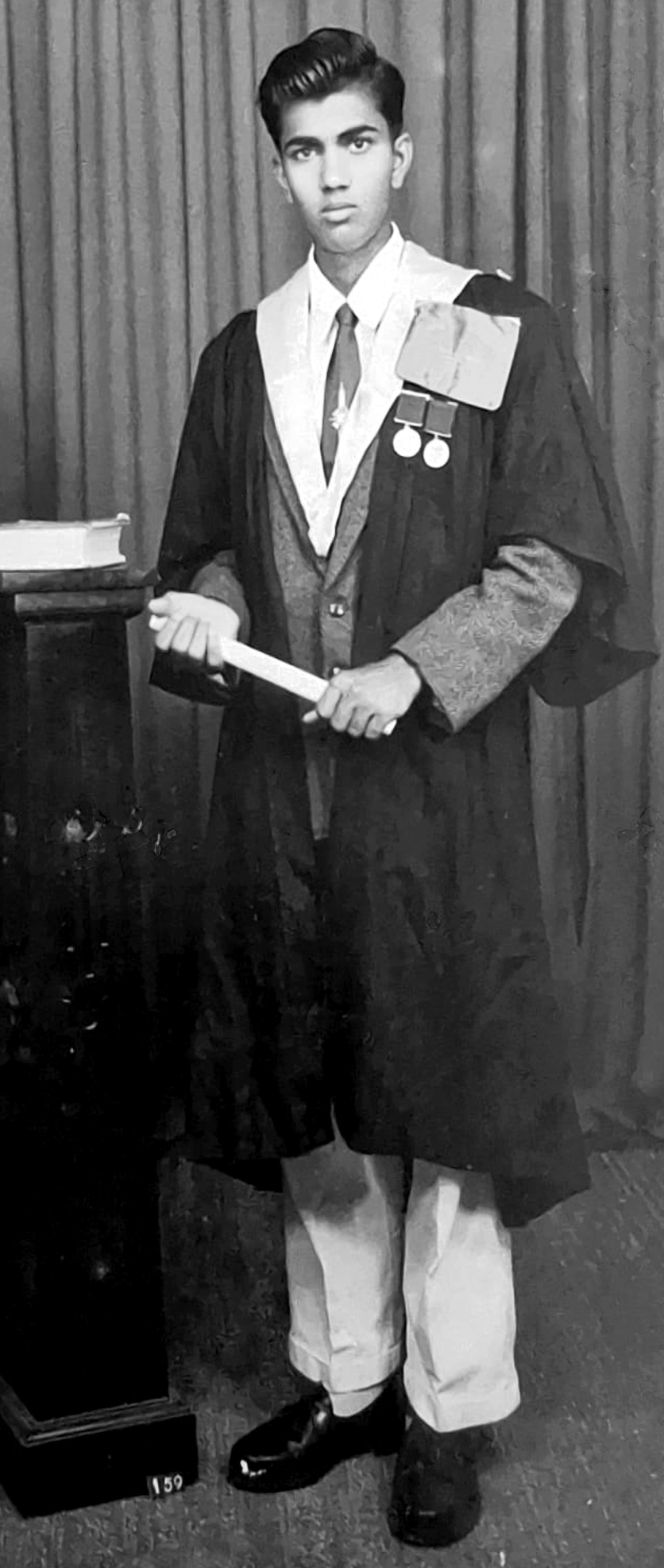
SB: I may not recall all the names. But I’ll try. I’ll combine the names of the teachers of all the three years of BSc (Hons) and the one year of MSc: Nanjundiah, Manikarnikamma, Kuber, Subbanarasimhaiah, Munigavyappa, Nagappa (the Head of the Department), Noronha (from Intermediate College where he was also the Principal), Venkatachaliengar (from the University College of Engineering), Sitarama Sastry (known as Calculus Sastry and also as the author of a popular book on Analysis), Keshava Hegde, Narayana Iyengar, Lakshmanan (who took over from Nanjundiah in the second year Honours and taught us all of geometries over three years), Basavappa, and Rudraiah. All of them were great teachers in their own way, some exceptional and versatile. I still remember Lakshmanan’s beautiful presentation of “Schläfli’s double six”. It’s about the existence of two sets of six lines each: each line in a set is skew with the other lines in its own set, but intersects all but one of the lines in the other set.
Skew in what sense?
SB: “Skew lines” are lines in space that do not cut each other. That topic, I think, is a sort of climax in the study of quadrics. The discussion is given in a book by Cohn-Vossen, if I remember it right.
You are talking about Geometry and Imagination by Hilbert and Cohn-Vossen?
SB: Yes, that one, I think. Of course, Lakshmanan was an excellent teacher. He, like Nanjundiah, was a great problem solver. Novelty, brevity and simplicity—all at the same time—were the hallmarks of their lectures. If I have learned any ability of any level in teaching and problem solving, it is from them, primarily.
After BSc (Hons), you went to the Indian Institute of Science (IISc), I believe?
SB: No. I could have. But I didn’t, even though I did have admission to the BE course at IISc with a scholarship. I had some good reasons at that time, so I thought. One of my seniors in Sri Ramakrishna Students Home, my hostel, H.N. Rama Murthi, went to IISc soon after his BSc (Hons) in mathematics. He did his BE and ME from the IISc and opted for the engineer career all the way, doing very well.
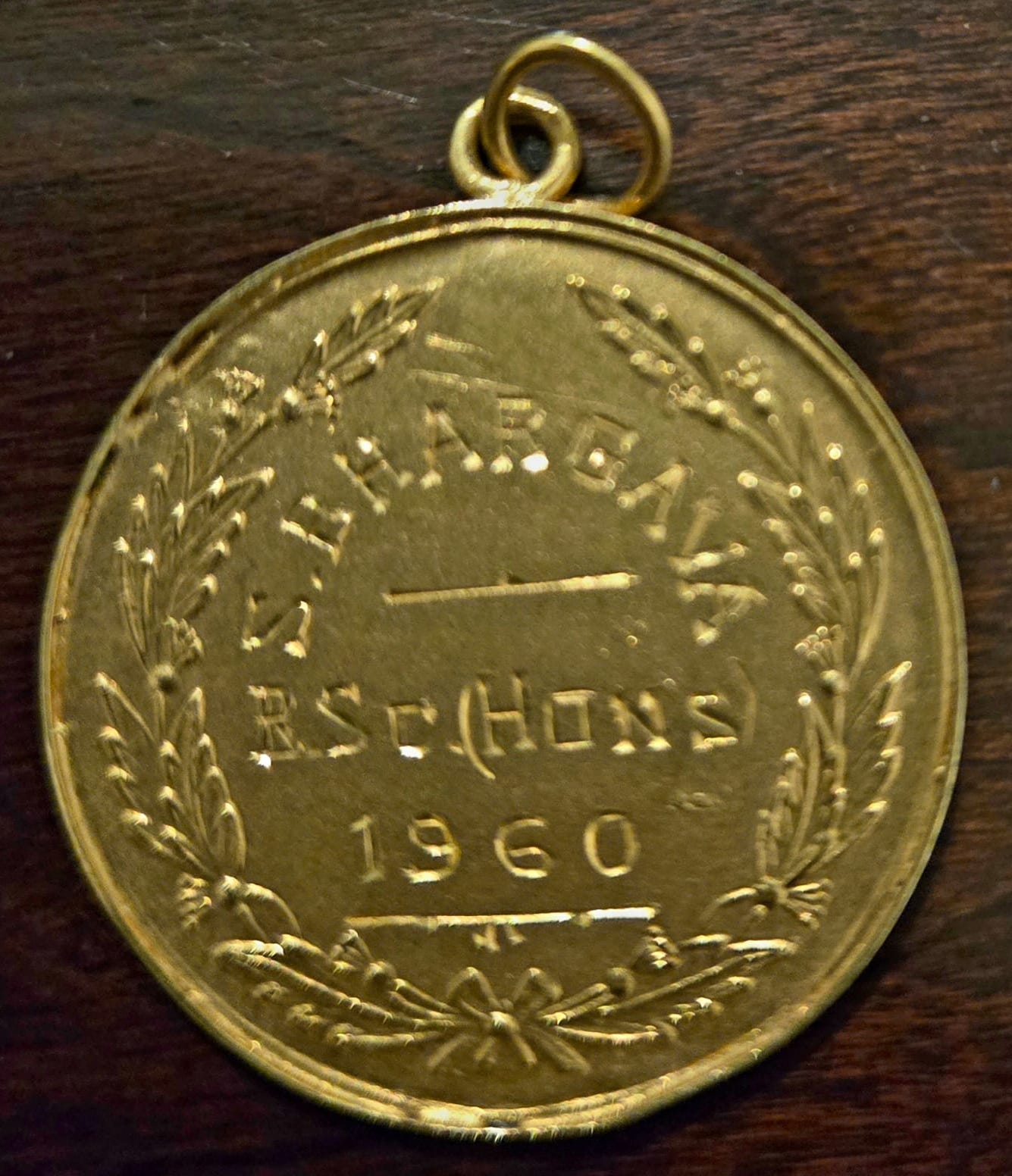
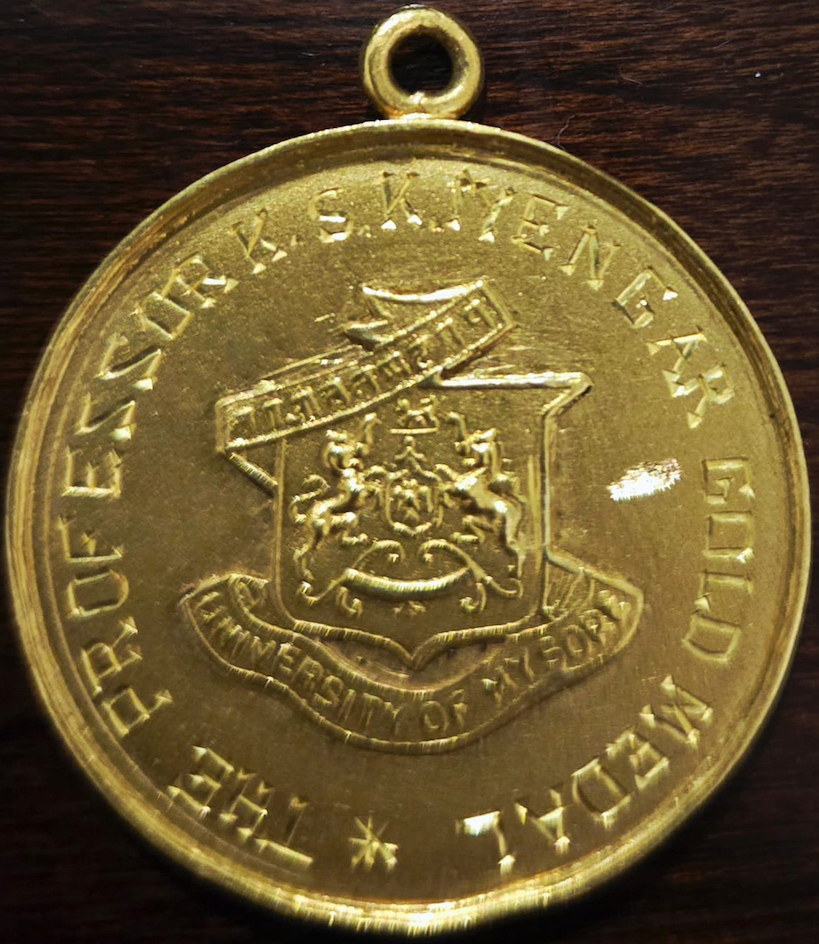
I looked upon him as a sort of a role model. In BSc (Hons), I happened to receive the “all-honours” medal to the dismay of all the science students as well as arts students. My classmates probably were not that dismayed because though in the first year I could only get a half-freeship, in the second and third years I got the subject scholarship. Ours was the last batch of the three-year BSc (Hons) programme. As per the university rules we couldn’t afford to fail in the final exam. If we failed, we would go down the ladder by three years. Or, we could get a consolation degree if we met some requirements. The consolation degree was equivalent to the two-year BSc.
 |
 |
 |
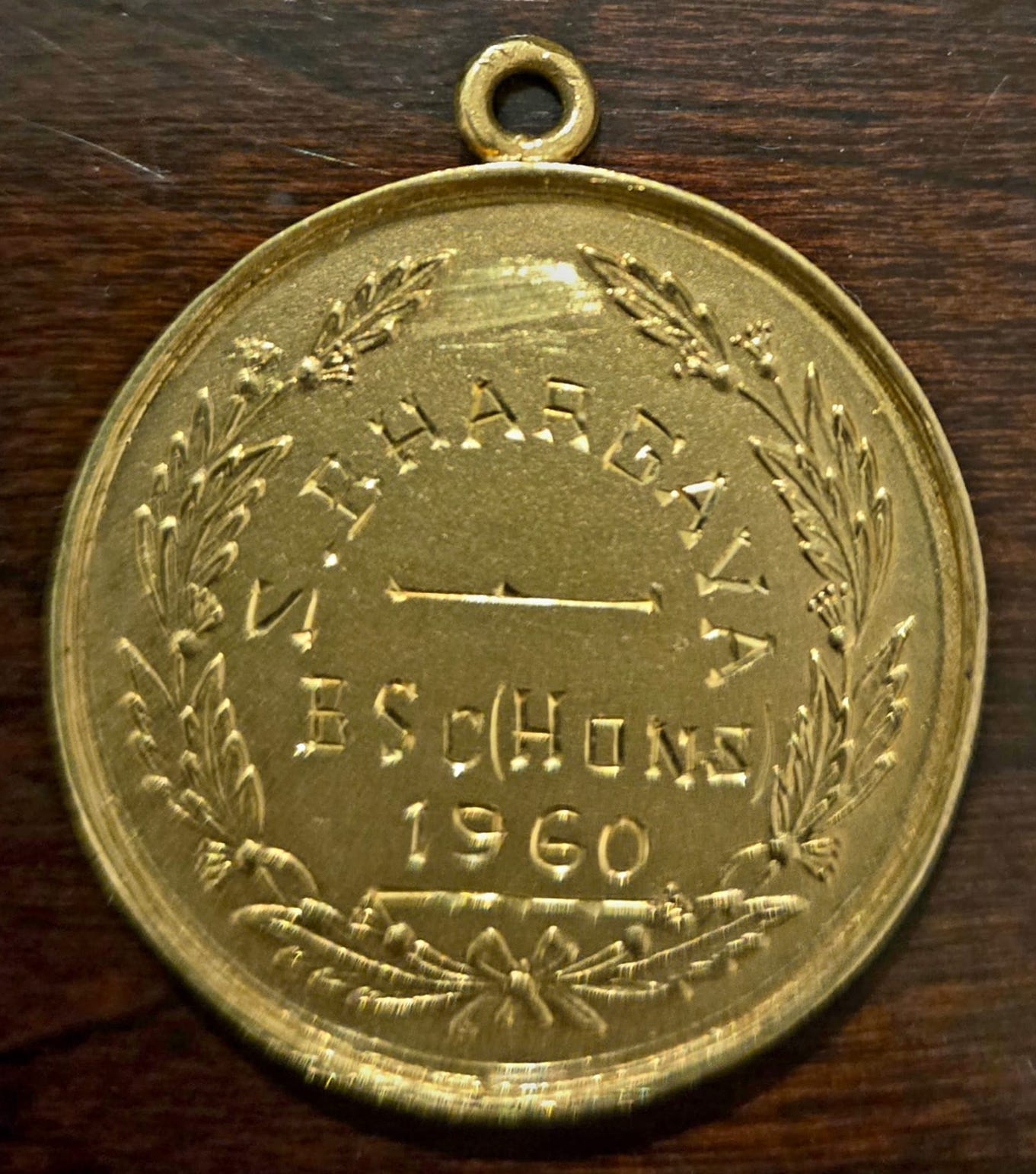 |
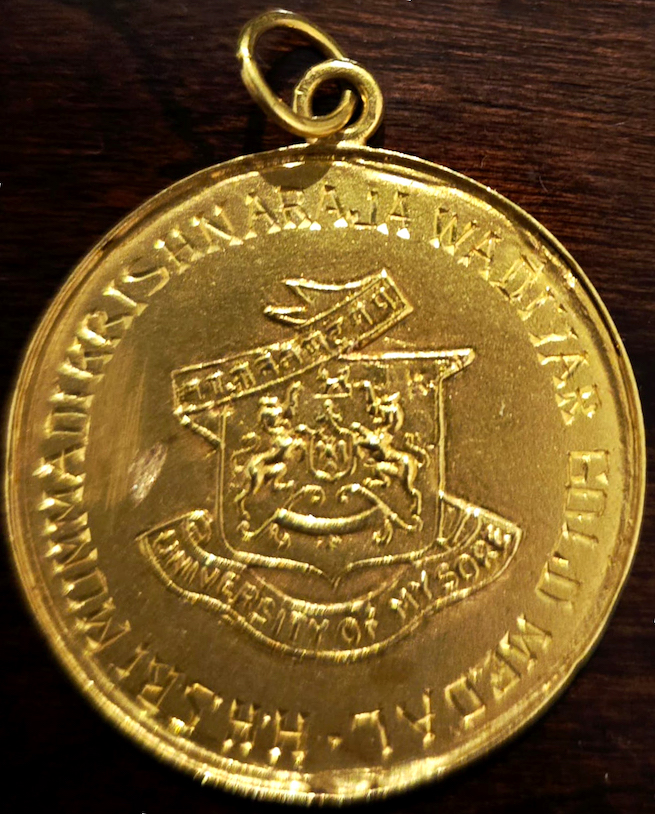
| Mummadı Krishnaraja Wadiyar all-honours Gold Medal. S.Bhargava | K.S.K. Iyengar BSc (Hons) Gold Medal. S.Bhargava | ||
Do you still have the gold medal that you got?
SB: In fact, I received two gold medals and a Cash Prize. I have passed the gold medals on to my grandchildren. H.H. Mummadi Krishnaraja Wadiyar gold medal is one of them, that’s the “all-honours medal”, I mentioned earlier. The other is K.S.K. Iyengar gold medal for the subject. M.T. Narayana Iyengar Memorial cash prize was the only award one could get in MSc and I got that too for standing first among the MSc examinees.
So the MSc happened following the three years of BSc (Hons)?
SB: Yes. MSc was a one-year programme, following the three-year BSc (Hons) programme. For graduating with an MSc, you could take attempts, unlike BSc (Hons). However, you had to score a minimum of 50% for a pass in MSc. That way MSc was considered to be an elite post-graduate degree in those days, or so I thought.
I see. Which years are we talking about now?
SB: I joined Honours in 1957 and completed it in 1960. MSc was going to be another year. I was in a dilemma while transitioning from BSc (Hons) to MSc. I had got admission at the Indian Institute of Science for the BE course there as I mentioned earlier. And I was given admission with a scholarship. In those days, for most of the students at IISc, BE admissions were accompanied with a scholarship. Rs. 75 per month for the 12 months was the scholarship. That was sumptuous.
During the holidays soon after BSc (Hons), we used to go to the department and come back as was the habit during term days. But now the purpose was to meet friends, chat and eat snacks like masala dose in nearby eateries. On one of those visits, I met one of the clerks, Srikantaiah by name. He was in charge of students’ scholarships and attendance mainly. I owe my MSc to him, in a way. He was known to take care of all the students who were in difficulty, such as being deficient in attendance and things like that. I never had that problem, but he knew me as a subject scholar. He said, “Bhargava, don’t join the Institute (IISc). Join MSc. Since you have come first in all honours, you will get a Government of India Scholarship equivalent to a teacher’s salary provided you join MSc.”
I owe my MSc to a good suggestion by a clerk named Srikantaiah
So that was the dilemma.
SB: That and the money to join any of these two courses.
I thought that it was a good suggestion by Srikantaiah. But one had to be ready with some money for admission. There was the Secretary of our hostel, Sri Ramakrishna Students Home, V. Gopalaswamy Iyengar. I think he was one of the registrars of the University of Mysore in its early years. He was also a professor of mathematics. He was in his mid or late 80s when I was in that hostel. If we had any problem with money or anything, he would be the first one to help us out. So, I went to him and expressed my dilemma. He said, “You make up your mind and come back.” I gave it a good thought and made up my mind to join MSc because I was assured of a hefty scholarship and more importantly that would be the last batch of MSc of the prevailing one-year scheme following the three-year BSc (Hons). From the next year, the University would introduce a two-year MSc post two-year BSc. So, I didn’t join the Institute. I joined MSc and was happy to continue at Central College under my favourite teachers.
But after MSc, once again, I had the same problem. What to do next? I got temporary jobs, including a job offer as Lecturer in Manasagangotri, the newly formed Campus of post-graduate Studies of the University of Mysore. Venkatachaliengar, the first head of the maths department, had sent me a letter. He was my teacher in BSc (Hons) as I mentioned earlier, and I was one of his favourite students in his complex analysis class. He had come to know that I was through with my MSc and so he invited me to join him as his younger colleague in Mysore. But by the time the formal letter reached me, I had joined IISc and finished one semester in BE. And the job offered was a temporary job. The letter said that I will be relieved in March 1962, which meant that I had to take a chance to retain my job after that. So, I decided not to go to Mysore but continued in IISc and finished my BE
How many years was BE for?
SB: Three years at the IISc. It was a post-graduate course. A BSc was the minimum requirement for admission.
But then, after BE, I was asked to attend an interview at the institute for ME as I didn’t get direct admission. Some of my classmates who had distinction got direct admission. I had missed the distinction for various reasons. So I had applied to some of these IITs, and I got an interview call from IIT Bombay for Computer Science, and had gone there. I had thought that I would come back from Bombay and attend the interview at Bangalore. I decided that the institute is a better place in all respects, especially the mess which I had liked. I took a train from Bombay back to Bangalore. But in Arasikere, the train got diverted via Hassan for some reason and I couldn’t attend the interview in Bangalore on time.
However, I thought of meeting the head of the department, S.V. Chandrashekhar Aiya and ask for an interview. He was a pioneer in engineering education and research, especially in electrical communications in the country. Solid-state devices were quite new. He introduced the study of solid-state devices as a part of our curriculum. That was the time everyone was still using vacuum tube radios.
You mean using semiconductors was new.
SB: Yes, semiconductors. It was one of our lab projects to assemble semiconductors, design and fabricate a super heterodyne receiver.
Coming back to the topic of the interview for admission to ME that I missed, I came to the department carrying my T-square and Clark’s table with the hope of convincing the HoD. I knew that our head Chandrashekhar Aiya was a nice person and would condone the delay. As I was climbing the stairs, I coincidentally saw him coming down. It was lunch-time. He saw me and asked: “Bhargava, what is all this? Where are you going with the T-square etc.?” I said hesitantly that I just wanted to take the entrance exam and explained why I missed the scheduled one. Then he said, “There’s nothing I can do. All seats are filled up. I can’t give an exam for you now”. But he changed his mind the next moment and said, “Bhargava, go join’’.
Oh, without the exam?
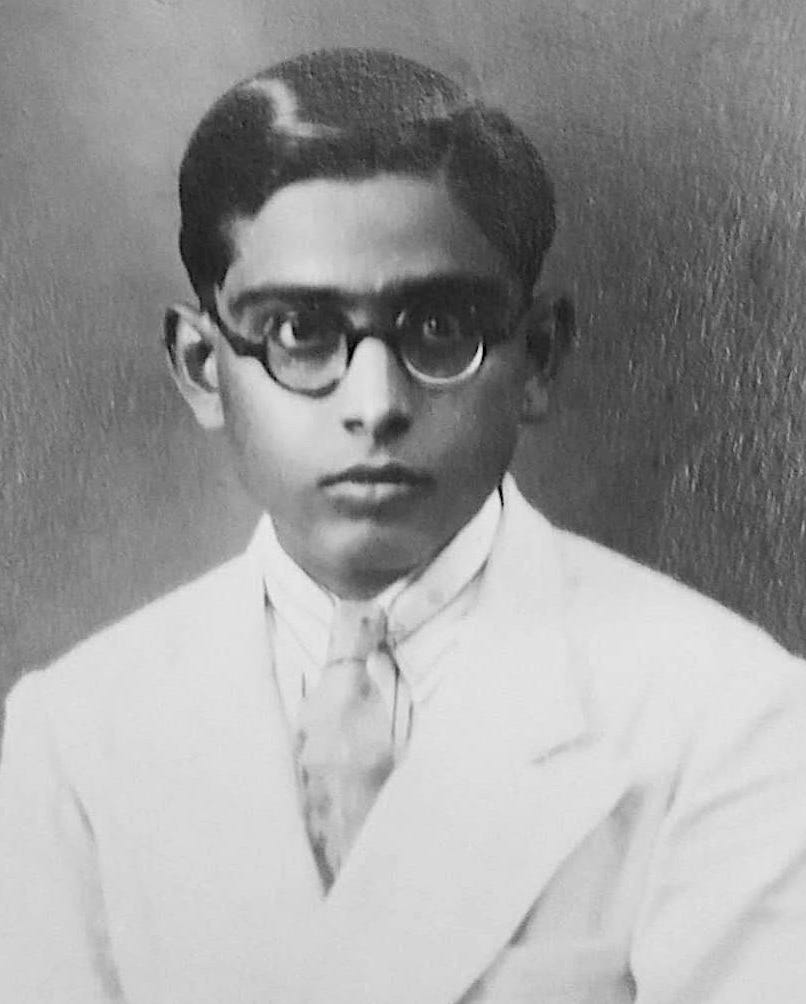
SB: Yes. I was surprised and confused. I said, “Don’t I have to take any exam?” And he said, “No, go join.” Then I said that I didn’t have the required admission fee. He told me not to worry and exempted me from it for the time being. That is how I joined ME at IISc.
People were so informal, like when they really recognized one’s potential.
SB: Yes. Even today, the Institute is like that, I believe.
I think I must have spent three months in the ME course and was about to write the periodical tests when I received a postcard from Mysore University.1 It was a big surprise. That card had travelled all kinds of places before it reached me—my original hostel in Vishveshvarapuram, my room in C-block in the IISc hostel, my house in Sheshadripuram, and somehow finally our ECE Department. The post card briefly said that I had to attend an interview at University of Mysore in Mysore. It was to happen the very next day. I could have easily missed that card.
I thought about Mysore University. The salary was going to be double the salary college teachers would get. Same teaching job, almost. Except that we were supposed to teach post-graduate students and do research in mathematics, my first love. It was a godsent opportunity, for sure. I was going to be guided by my favourite teachers Venkatachaliengar and Nanjundiah. So I made up my mind to go to Mysore and to attend the interview. In the interview, Venkatachaliengar, who was in the committee, expressed his displeasure saying, “You didn’t join when we had called in the past”. He started speaking to me in Kannada, as was his instinct. There was a Tamil-speaking expert, and one Bengali expert, I came to know later. K.L. Shrimali the Vice-Chancellor had no knowledge of Kannada, I was sure. K. Ramachandran, the Registrar was a senior IAS officer and was a Kannadiga.
So Venkatachaliengar started in Kannada.
SB: Yes, he addressed me in Kannada initially. Others were naturally curious about our talk. Registrar Ramachandran interpreted. I told them that I was interested in coming back to maths, my first love. That I have some experience in engineering which would be of additional help and all that. All of them seemed convinced. They didn’t ask me much about the subject. They seemed impressed with my academic records. So, I had no indication of what my performance in the interview was.
I went back to Bangalore and started attending the ME classes. The next day or so, I received a phone call from Nanjunda Rao, another aspirant for the job. He said, “Bhargava, Venkatachaliengar asked me to call you and find out whether you are really interested in coming. You and I have been selected. If you say no, another person will be appointed in your place.” I was overwhelmed and said, “I’ve been waiting. I’ll come right away and join” So that’s what I did.
Venkatachaliengar was a fatherly figure. I came to Manasagangotri to get back to mathematics mainly because of him
That’s how you came to Manasagangotri. What was the position called when you joined?
SB: Lecturer, Department of Postgraduate Studies and Research in Mathematics.
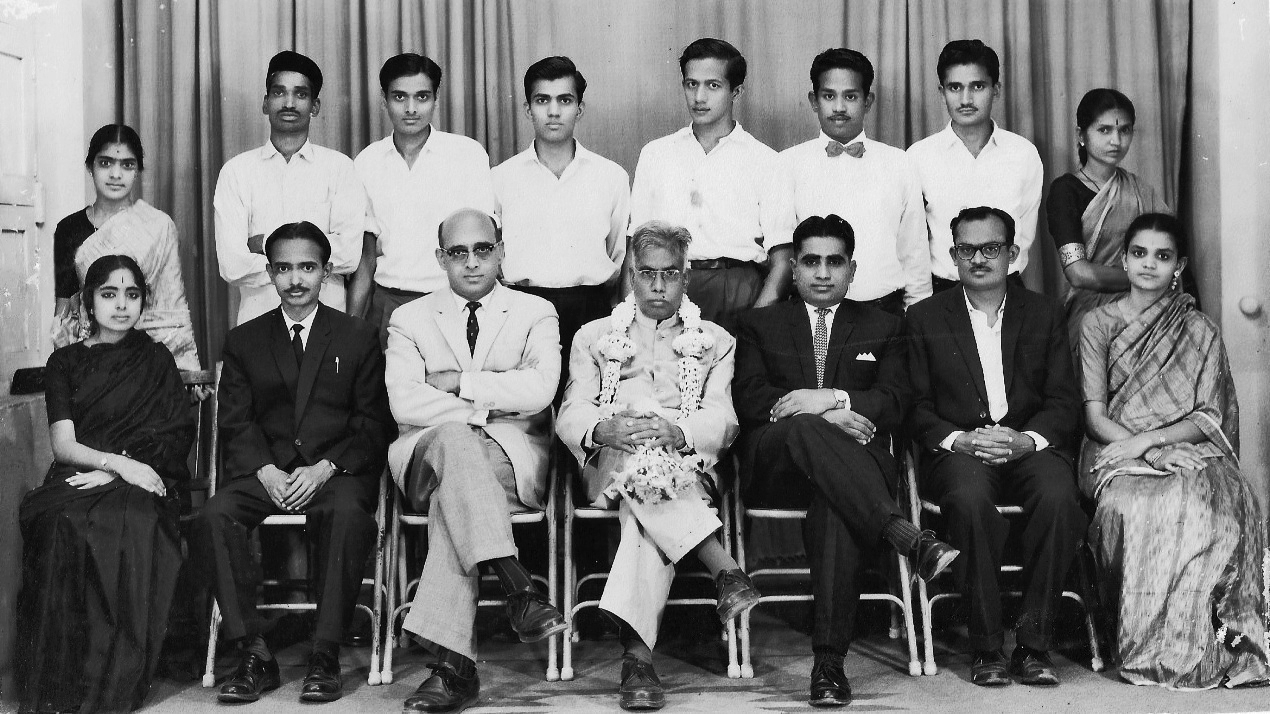
Undergraduate classes were held in another university college namely Yuvaraja’s College. There were a different set of teachers there. Four of us were taking care of all the classes. Geometry was pending to be taught until I came in, just before the Dussehra holidays. So I had to cover two years’ portions in geometry before the end of March, and with intervening Dussehra and Christmas holidays. I did it. I used to take four hours of classes every day. Late in the evening also.
There used to be only one bus in those days between the city and Manasagangotri. And the evening bus, around 6 o’clock, used to stop right in front of our maths department. The driver and the conductor of the bus knew that our class would be over and the students would come out soon and waited.
Was it in the same location as now?
SB: Yes, same location. In the beginning, before I joined, they had classes in Yuvaraja’s College. And our department building was the first one to be built on the whole campus mainly due to the efforts of Venkatachaliengar. He was very well respected.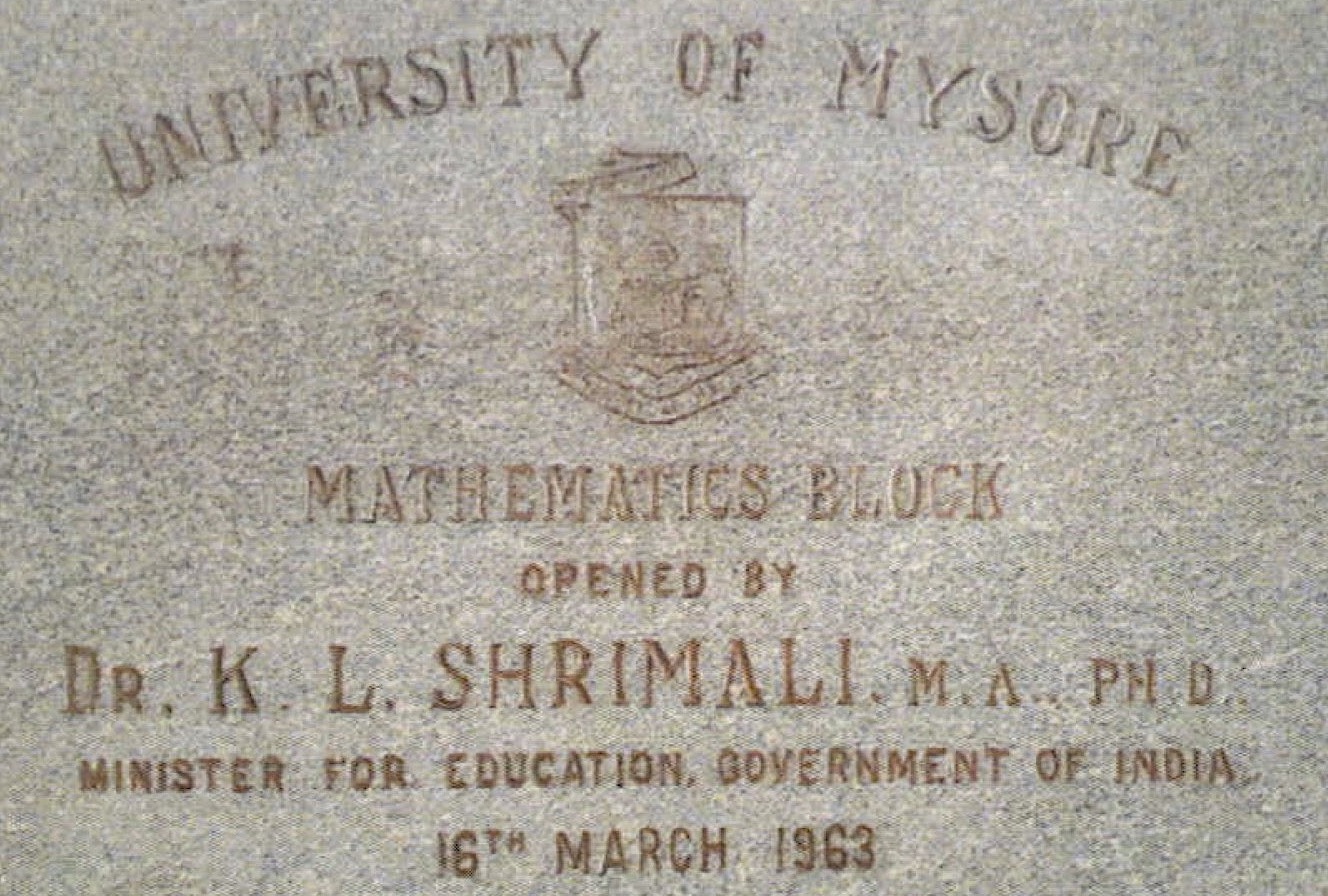
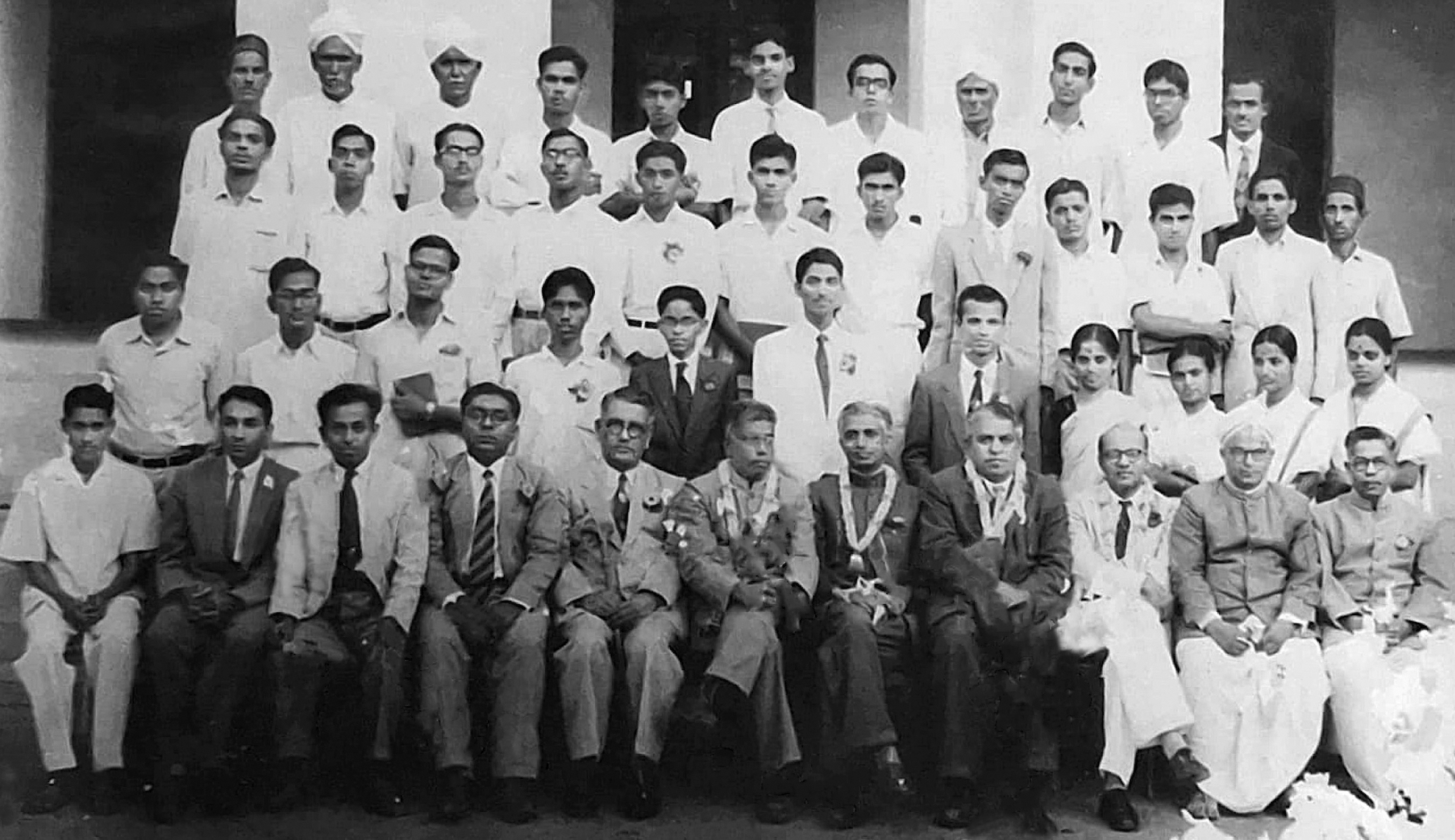
Later on, in the second year of my joining, Venkatachaliengar retired. There is a little episode around Venkatachaliengar’s retirement that concerns me. For a couple of weeks before the last working day, I was in Bangalore on leave to take care of my father, who was hospitalized. I had completed all my teaching assignments. As soon as my father got better I returned to Mysore. It was a requirement for all of us teachers to be on duty on the last working day of the academic year.
Seeing me, Venkatachaliengar asked, “How is your father? Is he well? Have you come because it is the last working day?” (He used to speak in Kannada most of the time, and 50% of his classes used to be in Kannada though he wrote in English on the black board.) He continued, “Today, I am retiring. A party will be there for me. Don’t head back to Bangalore right away. You stay in Mysore till the party is over. There will be a photo session also”.
The professor himself was inviting me to his own retirement party, I thought. It was so kind of him. In fact, known for his versatility and scholarship, Venkatachaliengar was a fatherly figure. I didn’t know that he was retiring so soon. I was sort of sad, actually. I came to the University of Mysore to get back to mathematics mainly because of him. If I had the slightest idea that he would be retiring so soon, I would perhaps not have come to Mysore but stayed back at IISc.
How did your PhD come about? I mean, you were teaching here.
SB: Yes, I had a nice time. After Venkatachaliengar retired, Nanjundiah, as reader, was the head of the department until the new appointment happened. Later S.V. Keshava Hegde was appointed as our department head. Before that, he was the principal of Yuvaraja’s College.
Then, on one of those days, I saw a small advertisement in one of the newspapers. As always, I didn’t know what I was doing. I just carried on as things came by.
The advertisement was regarding higher studies in the United States through the United States Educational Foundation in India (USEFI). They would cover the costs of travel or maintenance or both. So I sent a handwritten letter to the USEFI office in the US Consulate at Madras that I would be interested in doing the doctoral program.
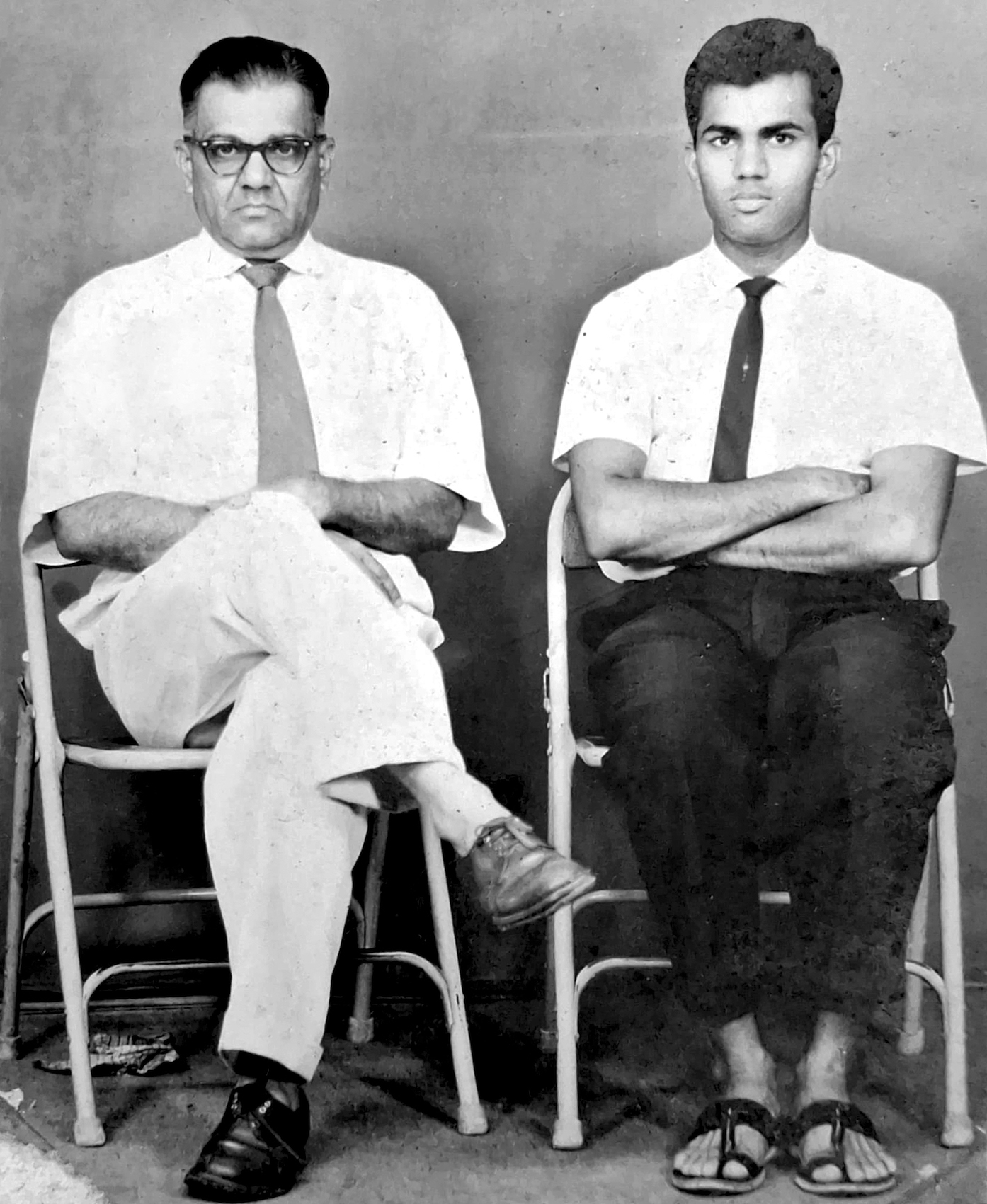
I wrote the exams and came back. To my surprise, after a few days, I got a letter asking me to come back again for another test. That time, they had filtered and the number of prospective candidates was much less. I think that was in Matscience.2
It was a test in maths, both written and oral. Two months later, much to my great surprise, I received a letter from USEFI stating that I had been selected and that the final selection would be done in Washington, D.C in absentia. That was in 1967, one year ahead of actually going there. The Student Fulbright Fellowship which was awarded to me, covered one year maintenance in the US and round-trip travel to the US along with travels within India and the US. That was the maximum one could get. Maintenance included tuition and books.
So, you flew to America, I presume?
SB: From Bangalore to Delhi, for a two-day stay hosted by USEFI. Then Delhi to East Lansing, for a two-month orientation hosted by Michigan State University, via London and Detroit and finally to Pittsburgh, the home of my University, Carnegie Mellon. USEFI had sent my tickets for the entire journey, including return. In Delhi, some of the awardees from different parts of India had also converged. We met at Fulbright House, 12 Hailey Road, Delhi.
Many of the former Fulbright scholars who were residents of Delhi were invited to share with us information about education and living in the US and so on. From Delhi, we took off to our respective destinations in the US. That was in late July 1968. The USEFI had assessed that Carnegie Mellon was the most appropriate place for me to pursue my studies for PhD. The two-month orientation Program in Michigan State University, East Lansing, Michigan was interesting. There, to my surprise, I found scores of Student Fulbrighters from some of the other parts of the world too. I didn’t know at that time that the student Fulbright fellowship was open not only to Indian students but also to students of the other parts of the world.
Was it the first time you took the flight?
SB: Yes. My father had come to the airport. At that time, Bangalore Airport did not have much traffic. You could just walk through. My father who was allowed to walk right up to the doors of the flight gave me a copy of the Bhagavad Gita.
My father who was allowed to walk right up to the doors of the flight gave me a copy of the Bhagavad Gita
In London, on our transit, some of us Fulbrighters who had flown together, saw London by night at three pounds each. Needless to say, USEFI had given us good pocket money in US Dollars. That was in addition to reimbursing all that we had spent for attending interviews. However, the reimbursement was in rupees. Instead of carrying the rupees to the US, I money-ordered it to my sister in Mysore.
Upon landing in East Lansing, I was received by one of the secretaries of the Michigan State University at the airport who had come to pick me up. It was a holiday. I was given a room in a hostel for the rest of my stay there. “I have lost the concept of sleep, you see”, I told the gentleman who received me. He joked, “Oh, you will get back some. Don’t worry”. And I slept, unmindful of hunger until the gentleman came back and woke me up. He told me that I had to write some more exams.
Exams didn’t leave you!
SB: No. We had to write all sorts of short exams. They first gave me a test in English language. I told them, I’ve already done TOEFL. This is the Michigan State English language exam, they said. I wrote for one hour or so and scored nearly 100. Then, they gave tests in history and geography and all that. I scored good enough marks. Then, based on that, I was given an orientation for two months and then the final exams. Needless to say my final scores were not much different from the initial scores.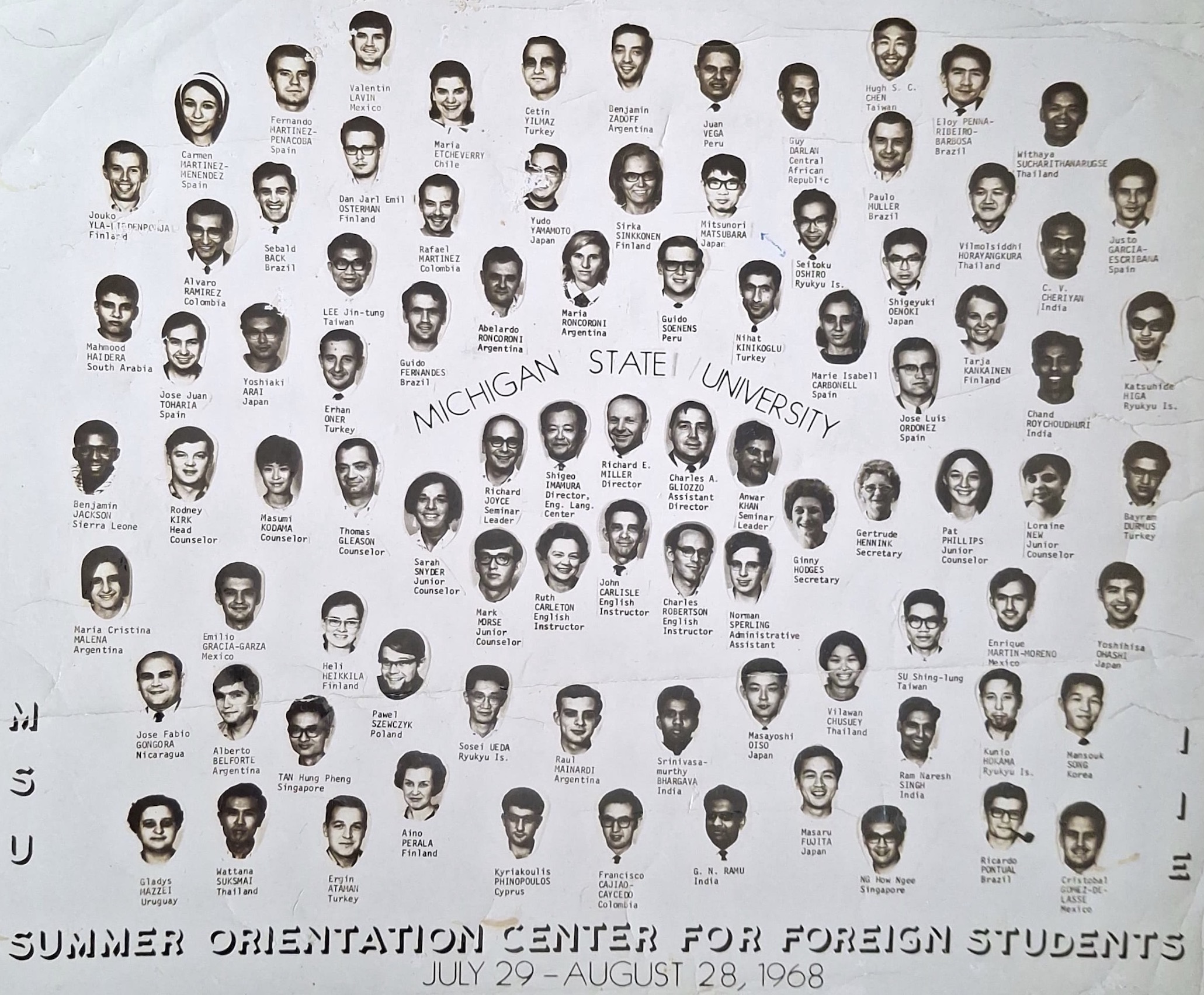
We used to take food in the University cafeteria. Being a vegetarian, I had a hard time picking my food. Besides, we were given pocket money every day during the two months. I could actually save all that money. After two months, I got admitted to Carnegie Mellon, and started attending classes.
Who all were there in the department?
SB: The chairman was Ignace Isaac Kolodner, a migrant from Poland, I suppose. I took a course from him on functional analysis. Then R.J. Duffin and C. Truesdell. You may have heard of Clifford Truesdell. He has a book on continuum mechanics. I took a course from Richard Owen based on one of Truesdell’s books. That was a tough course but finally, all is well that ends well.
How long was this PhD stint at Carnegie Mellon? And since you mentioned that the Fulbright fellowship was for one year, how did you manage after that?
SB: I was given MS after two years and PhD one-and-a-half years thereafter – in all three-and-a-half years. The first year I didn’t have to work because the Fulbright money sustained me. That is assured for only one year. After that you either return or find your own money.
to my surprise, I found scores of student Fulbrighters from other parts of the world too
That’s something. They take you all the way there, and after one year, they send you back if you don’t get the funding?
SB: Yes, you had to find your own money to continue your studies, but not take up any job. That’s the only condition.
I was not sure of finding funding from Carnegie Mellon. It was a tough place to get money from, I was told by some of the students. So I approached the University of Pittsburgh, where they assured me of financial assistance in case I didn’t get any from CMU. Before the assurance, they had called some of my teachers at CMU from whom I had taken courses.
In the summer, CMU gave me the money without me having to do any teaching but research. Apparently, my performance in the first year was good enough. I was reassured. In the second year, CMU gave me a teaching Fellowship. I think I taught linear algebra to Engineering students.
Then I received a letter – a real love letter in the second year summer stating that my records show that I have finished the requirements for MS degree and I could pick it up in the ensuing commencement. However, I could not pick up my MS degree certificate at that time (1970) due to ill health. But I got it later when my doctoral advisor Duffin sent it to me along with my PhD degree certificate to Mysore by mail. I had not attended the PhD commencement ceremony either (1972). I had returned to India a few months before in January 1972 soon after completing all the requirements for the PhD.
Who was your advisor?
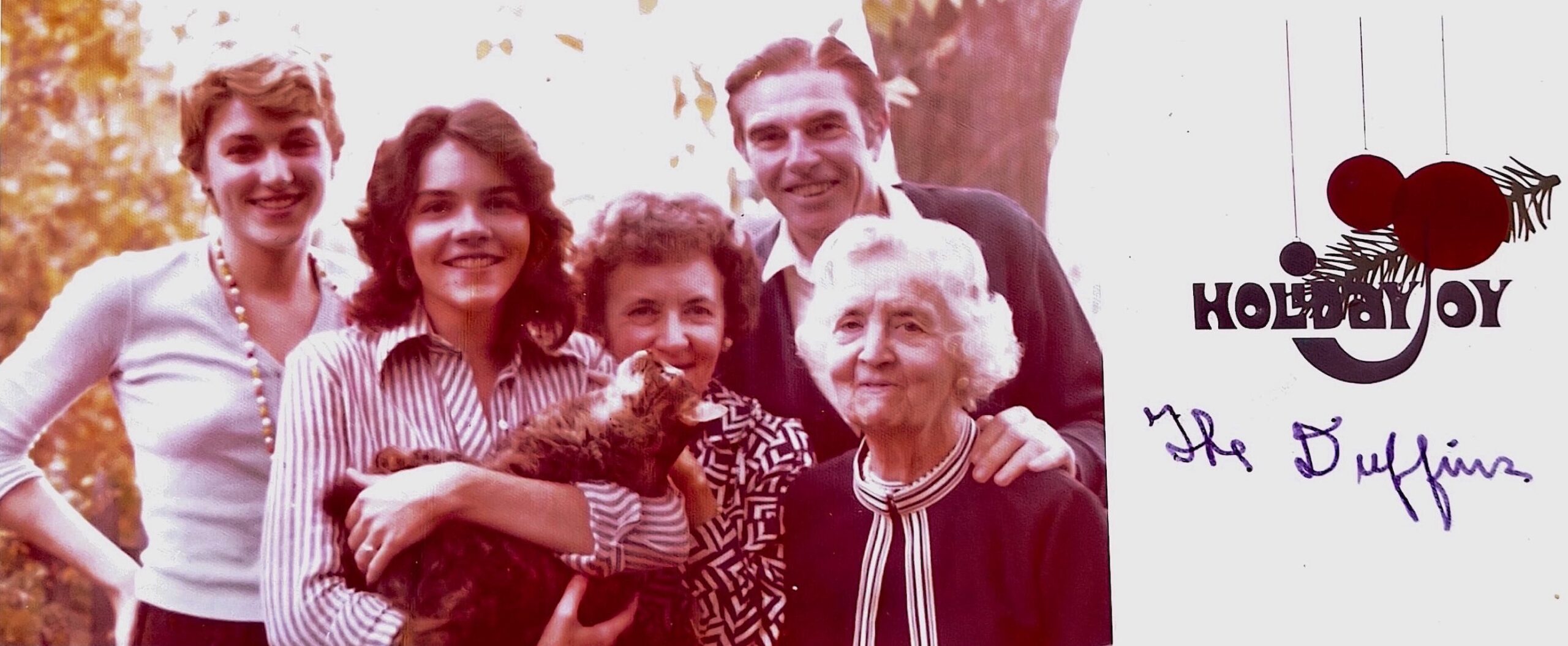
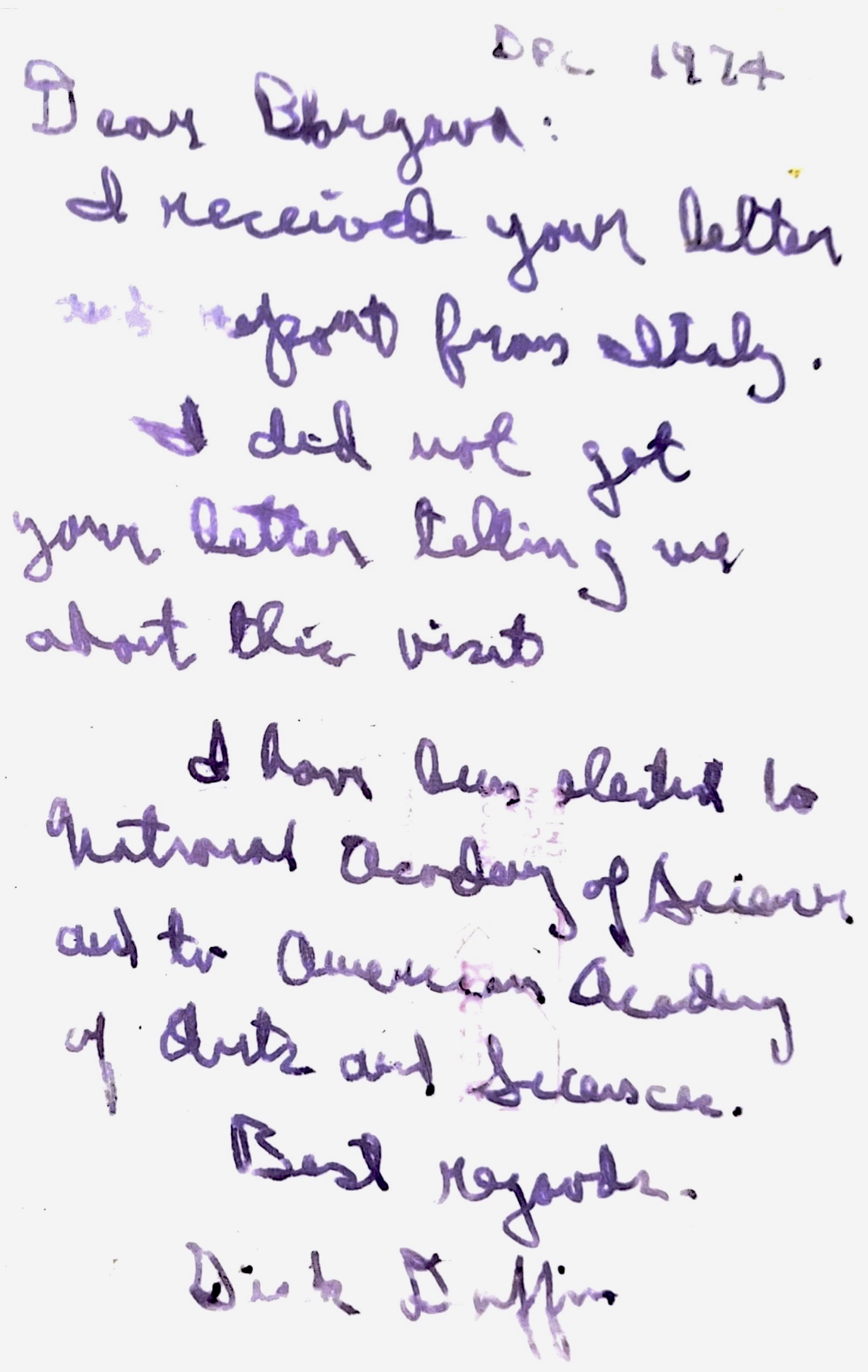
SB: R.J. Duffin. Raoul Bott was Duffin’s first student, I believe. I was one of Duffin’s last students. Duffin was also an advisor for John Nash when the latter was an undergraduate student at CMU.
What was your PhD on?
SB: Actually, I wanted to work in complex function theory with Zeev Nehari. He was one of my teachers. But then he said he had switched to differential equations. I was not interested in differential equations.
I took a variety of courses in continuum mechanics and multilinear algebra, categories and functors, measure theory, probability theory, integral equation, Topology, among others. As a requirement for PhD maths students at CMU, I also self-studied Russian and was examined by Zeev Nehari.
For instance, if you take the heat transfer problem, it is to find the best shape of a cooling fin for maximum rate of heat dissipation while the fin is not permitted to exceed a given weight.
The fin could have different shapes – rectangular, circular cooling fins, for example. Analogously, you have the problem of finding the shape of a simply supported beam or cantilever beam of maximum strength, given its weight.
In these problems, you run into functionals to be maximized subject to constraints including differential equations of different orders. The electrical network problem is a discrete version. Subsequently, the findings of the thesis were published jointly with Duffin in Quarterly of Applied Mathematics, Archives for Rational Mechanics and Analysis, Networks, Siam Journal of Applied Mathematics, all in the 1970s.
After coming back to Mysore, I found that the general idea developed in my doctoral thesis was applicable in the case of atmospheric noise filters also. I happened to read a paper by L.D. Berkovitz and H. Pollard of Purdue University who had tackled a problem on atmospheric noise filters. And they had gotten an extremal principle for the optimal noise filter. Then I thought I could supply a principle dual to theirs along the lines in my PhD thesis. I was able to do that. My findings were eventually published in the Journal of Optimization Theory and Applications (1980). In fact it was communicated by Berkovitz himself.
Earlier, another paper of mine on sharp dual estimates for a circular cooling fin written at ICTP, Italy was communicated by R. Conti and published in the same Journal (1976). I had also intended to unify these different treatments using measure theory and so on. But I got stuck, and I thought I had reached saturation.
Did you have to leave Mysore University or were you on leave?
SB: This is a tricky thing to talk about. I was given half-pay-leave for a period of a few months and leave without pay for most of the time I was at Carnegie Mellon.
But you still had the job.
SB: Fortunately, yes. I could have lost it but for this little story. The job I had was a contract job. The contract would have expired during my stay at Carnegie Mellon. One of my friends happened to give me a timely warning to renew my contract.
So I wrote a letter from CMU to the Vice Chancellor, Mysore University requesting that he renew my contract. I had also got my letter signed by a US Notary. Thanks to Duffin who had advised me to approach a Notary.
You wanted to come back, too.
SB: I had the ticket. My Fulbright Fellowship covered it, as I said. On my return to Mysore, I had some difficulty getting back to my job as my leave was not sanctioned yet. But the problem was resolved by the kind-hearted Vice Chancellor Javaregowda [De Ja GoW].3 He said, “Bhargava, I have received very nice letters about you from your university in the USA. You don’t worry about anything. You give another letter stating that all this has happened. I have a syndicate meeting in 15 days. Wait till then”. I could keep the job.
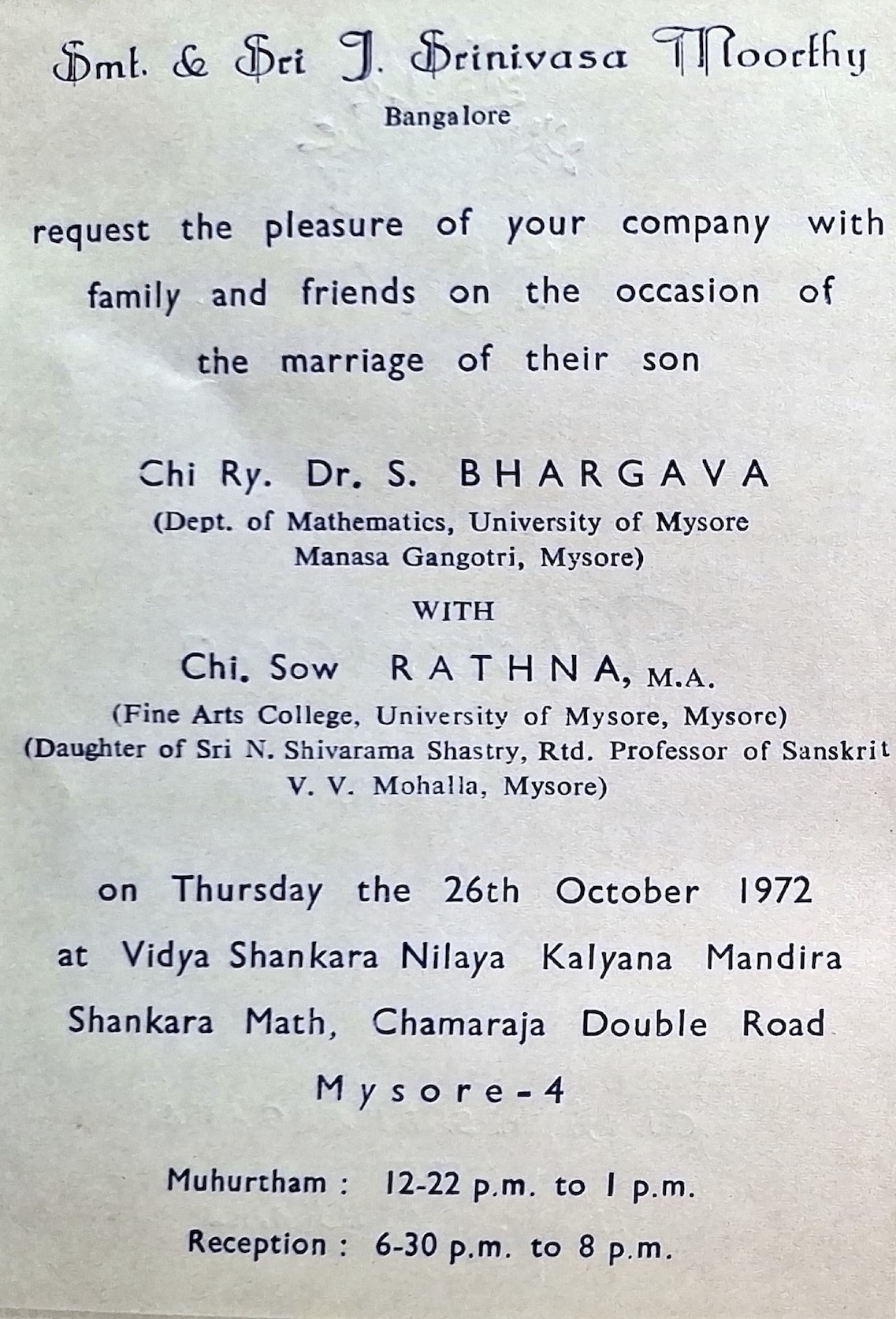
A bit about your personal life: When did you get married?
SB: I came back in January 1972. I got married in October.
Since then, you have been at Mysore University all along.
SB: Yes. Most of the time. I was a Fulbrighter again, about 2 decades later. This time as a senior Fulbright Fellow under the Indo-US Fulbright Program.
At that time, you probably went with the family, I guess?
SB: Yes, to the University of Illinois Urbana-Champaign. I took my wife and my two children.
I also visited Duffin at Carnegie Mellon. He was still there at CMU. He invited me to give a talk at the Joint CMU-Pitt Friday Seminar. By that time, I had done a good lot of work.
You went to Urbana-Champaign. Is that when your interest in number theory also picked up? Was Bruce Berdnt there in Urbana-Champaign?
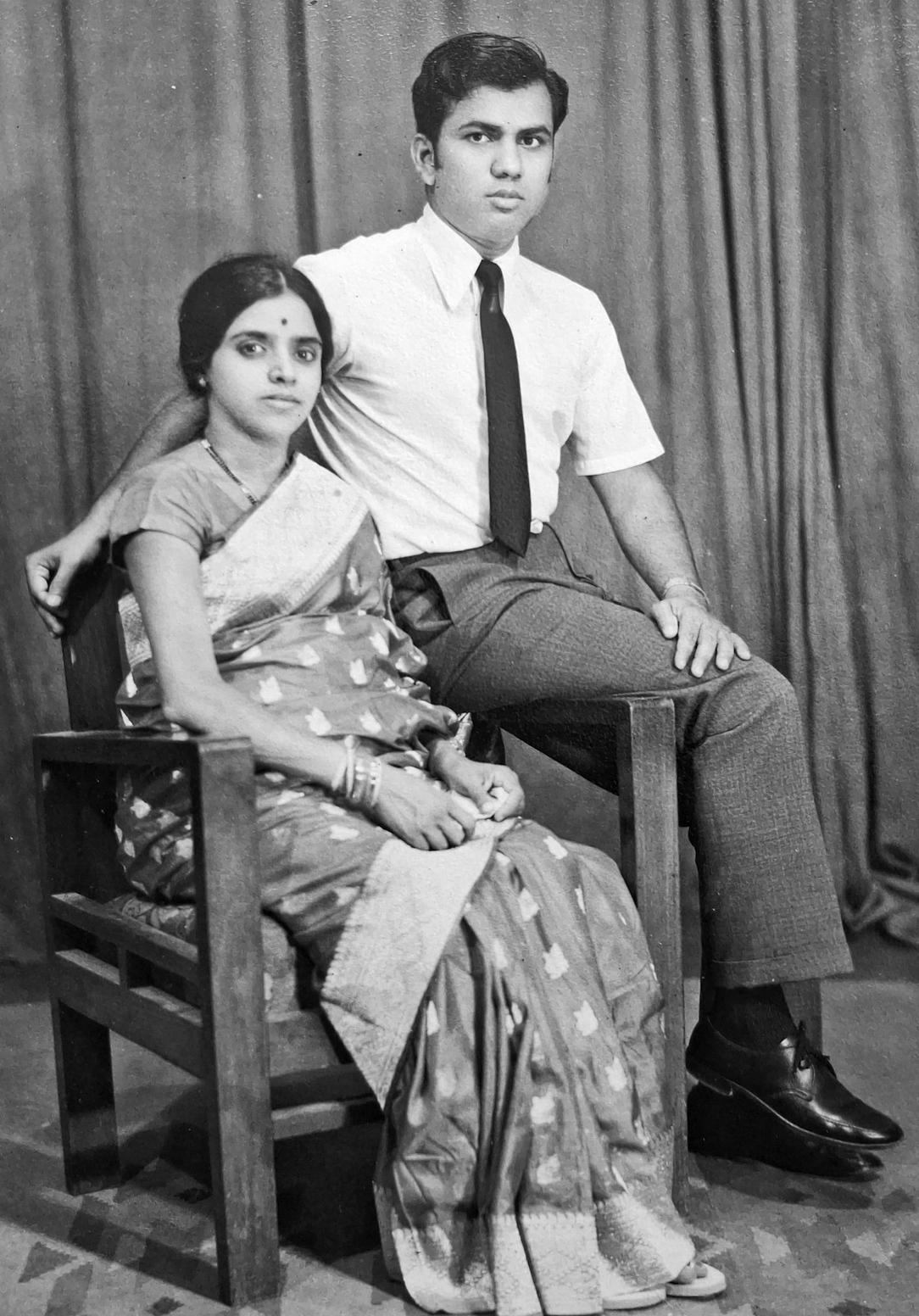
SB: No. Not exactly. But, we were already pen friends for a few years before, exchanging a lot of mathematics and also becoming coauthors.
Well, here is the chronology of things. My colleague Nanjunda Rao was interested in doing doctoral work in complex analysis under my direction. I had some bearings in complex function theory. We worked on some univalent functions. Over a length of time, we could unify and consolidate the work done at other universities resulting in a nice thesis for which Nanjunda Rao was awarded PhD by the University of Mysore.
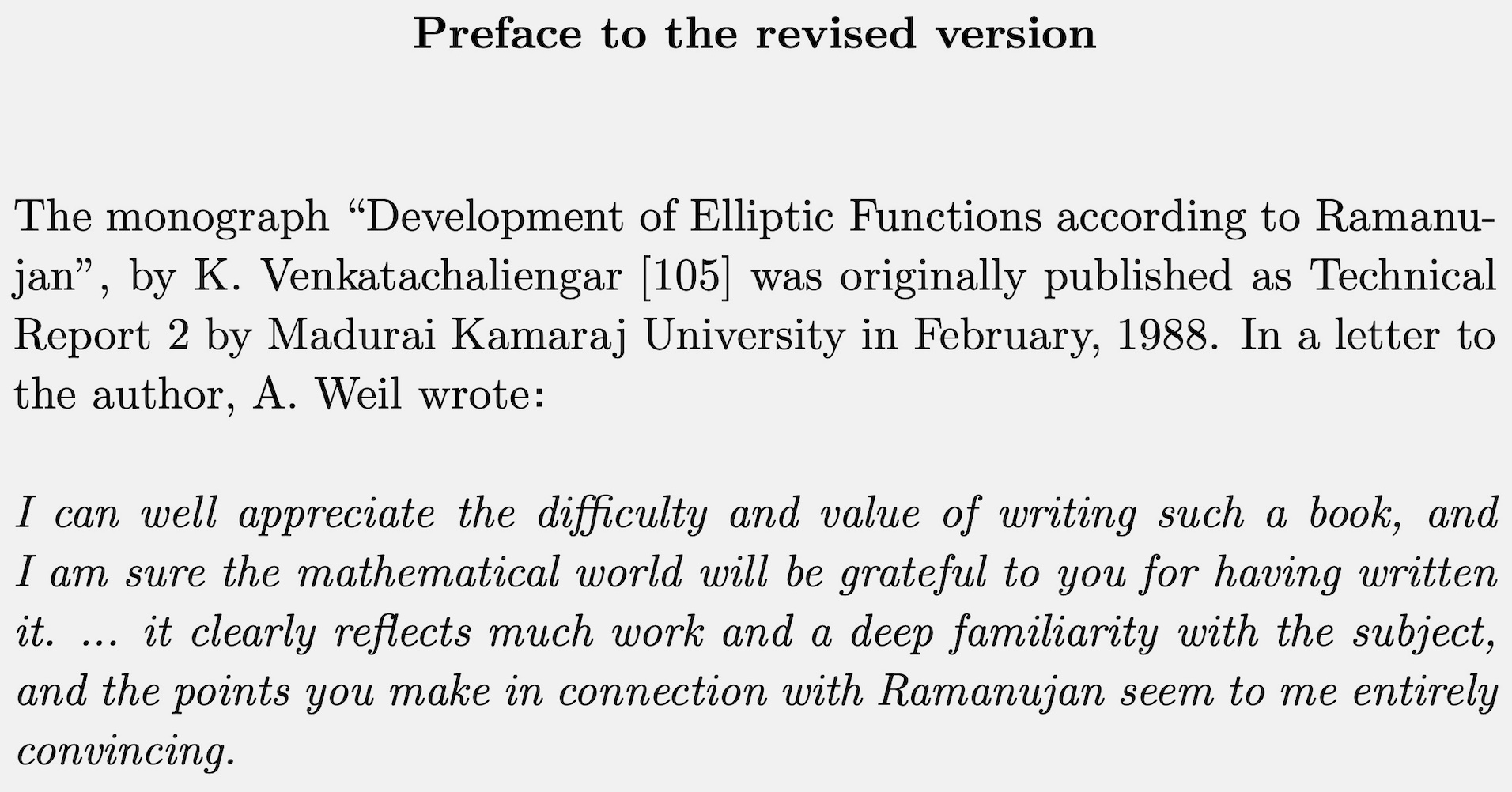
Later, Chandrashekar Adiga, a fresh MSc from our Department, wished to work for his PhD under my supervision. When Venkatachaliengar was here, V. Ramamani was his PhD student. She subsequently wrote a very good PhD thesis, which has been a good resource for many researchers not only in Mysore but, as Bruce Berndt has mentioned to me, to some of his doctoral students also. Venkatachaliengar has written a monograph called Development of Elliptic Functions according to Ramanujan. This monograph has since received good reviews. It was reviewed by none other than André Weil.
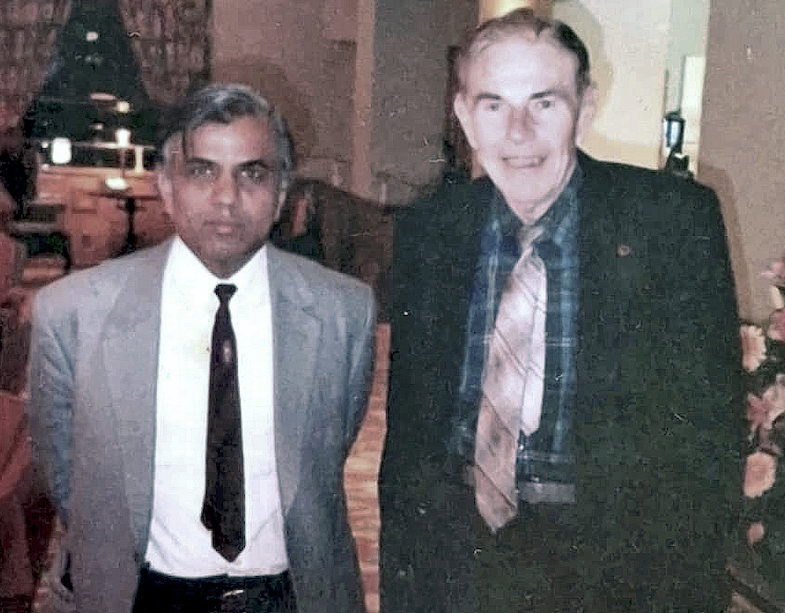
Shaun Cooper of New Zealand has expanded on Venkatachaliengar’s monograph and called it The development of elliptic functions according to Ramanujan and Venkatachaliengar. That goes to Venkatachaliengar’s credit. As a young colleague of Venkatachaliengar, I did have some familiarity with some of his works on Ramanujan. He used to incorporate Ramanujan’s work in his MSc classes and also discuss with us colleagues frequently. Thus, when Adiga approached me, I thought of diversifying into Ramanujan’s mathematics, which I knew was an ocean of opportunities. As the head of the department, I could get Adiga some money too and quickly, thanks to the discretion exercised by the IAS officers who were registrars at that time.
In course of time, I found out that lots of work we had done had already been published by Bruce Berndt. So, I started corresponding with Berndt, who was generous enough to spare his time to look into our mail. We could agree to consolidate our work, his work, and also the work left behind by G.N. Watson and B.M. Wilson. Chapter 16 of Ramanujan’s second notebook published in the Memoirs of the American Mathematical Society came that way. Thus we corresponded with Berndt. He was prompt. He went through whatever we wrote, and made critical comments. So, work on that chapter was already in place before I went to Urbana-Champaign. And, Berndt had indeed, on my invitation, visited us once before. That was on his way to Ooty where Matscience was going to have an international conference.
Venkatachaliengar’s monograph Development of Elliptic Functions according to Ramanujan was reviewed by none other than André Weil
So you met Berndt for the first time when he came to Mysore?
SB: Yes.
I see. Now, coming to a bit of history of the maths department at Manasagangotri, basically, it started as a postgraduate centre. Is that right?
SB: As is well-known, Mysore University is more than 100 years old. Until the time Bangalore University was bifurcated from Mysore University in 1960, BSc (Hons), MSc and PhD programmes in Science were offered only in Central College, Bangalore. Whereas BA (Hons), MA and PhD programmes in Arts were offered only in Maharaja’s College, Mysore. Yuvaraja’s College in Mysore was an intermediate college. Some exceptions were there. BSc (Hons) and MSc in Statistics were offered in Mysore, for some reason. And I think other exceptions were BA (Hons) and MA in English, which were offered both in Mysore and Bangalore.
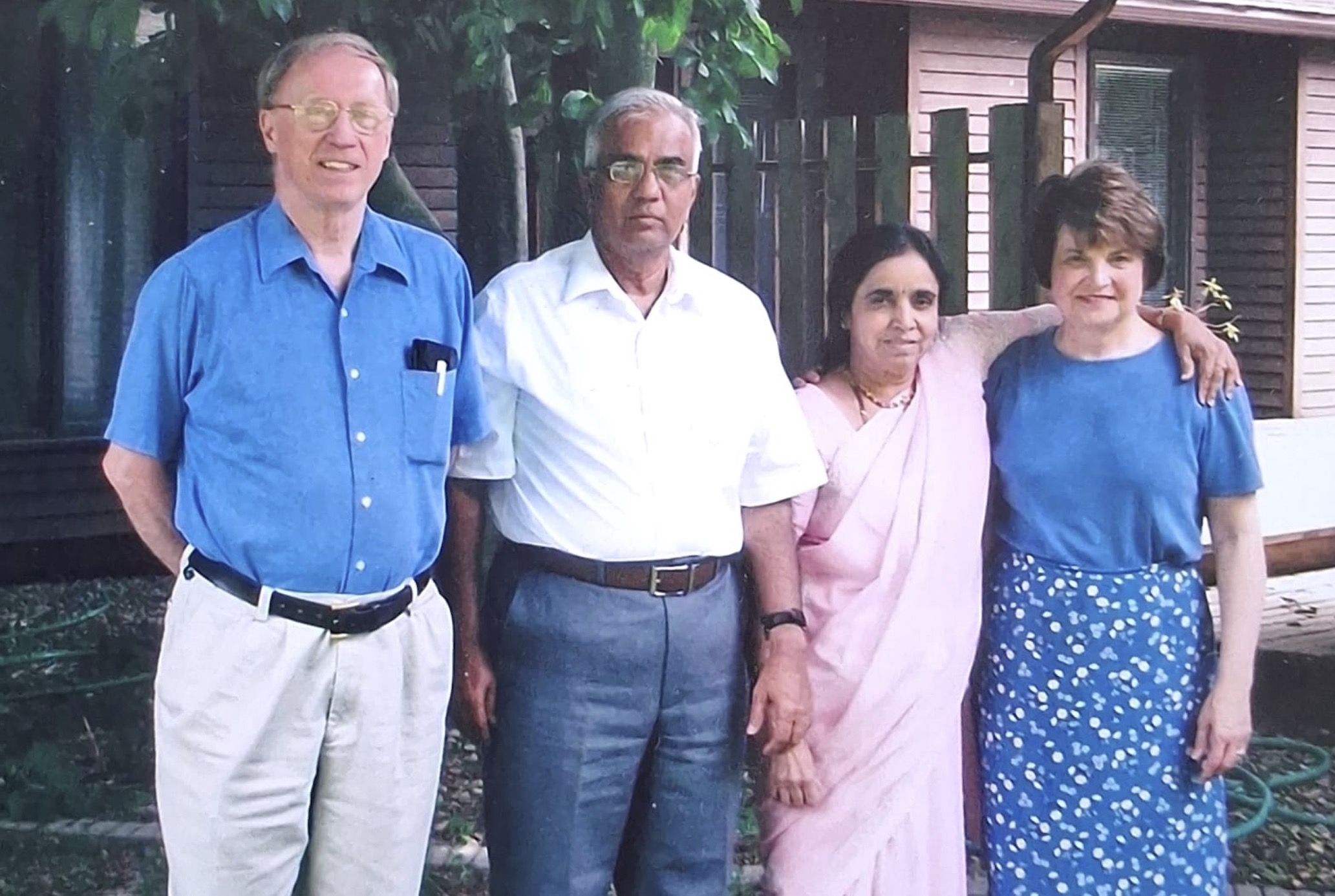
When did you become the head of the department?
SB: In 1980, at the retirement of Nanjundiah. Earlier, I had become a professor in 1979.
Do you think going to the US to do a PhD was a lucky break?
SB: Indeed it was, as many other things that happened to me before. As a fresh PhD graduate, I had received a letter of offer from BITS, Pilani as a Reader, probably at the instance of my supervisor at CMU, Duffin. I would have perhaps landed in Pilani in case I was unable to get back to Mysore University. I was also offered a position at Indira Gandhi National Open University when I came back in 1990 after visiting the US as a Senior Fulbright Fellow. I couldn’t go to Delhi for family reasons.
So, how do you reflect upon your own academic career sitting at this point?
SB: It could not have been better, as I think. No regrets. No regrets at all. Lucky to be where I am.
How was it running the department as the head? How big was the department? How many colleagues did you have?
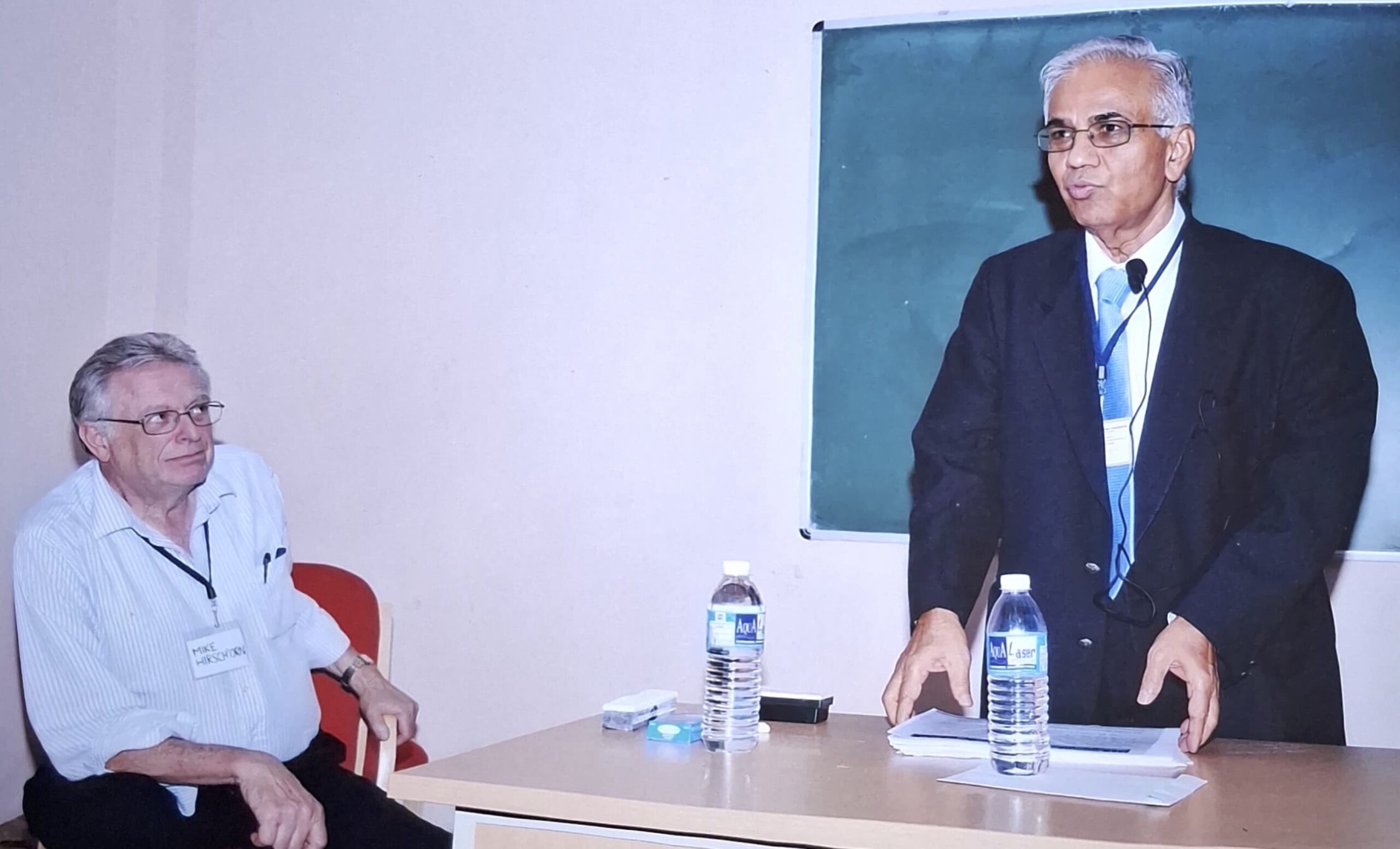
SB: Quite smooth. Puttamadaiah, Panduranga Rao, Nanjunda Rao, Padmavathamma, and Hucche Gowda were already there when I took charge as the head. H.S. Gopalakrishna, B.S. Kiranagi, V.A. Hiremath, Chandrashekar Adiga, H.N. Ramaswamy and D.D. Somashekara joined the department when I was the head. Padmavathamma and Nanjunda Rao were already readers. They did PhD under my supervision, as did Chandrashekar Adiga and Somashekara. E. Sampathkumar joined a little later after “rotation of headship” came into vogue, when Gopalakrishna was the chairman. When others came in, I had retired.
In one of your recollections, in the Hardy-Ramanujan journal tribute to S. Srinivasan, you mention that Srinivasan was a student here, is that right?
SB: Yes. He was a very singular type of student, as I heard. He had his own ways of doing things. He probably couldn’t convince some of his teachers of what he was doing. This is all I’ve overheard. I may have spent four months with him.
Once, K. Ramchandra wrote a letter to me from TIFR Bombay, when I was the head of the department. As a consequence, I invited Srinivasan, and he was provided with an office. He spent some months here.
I now want to ask you about another aspect. I have heard that TIFR organized what’s called summer schools in the mathematics department here. I had heard about the one organized sometime in 82 or 83. Apparently, there was one before that, in 1980 as well. Perhaps because of the success of these workshops, I believe, TIFR was interested in setting up an undergraduate centre in Mysore at that time. It would be nice to hear your recollections of that.
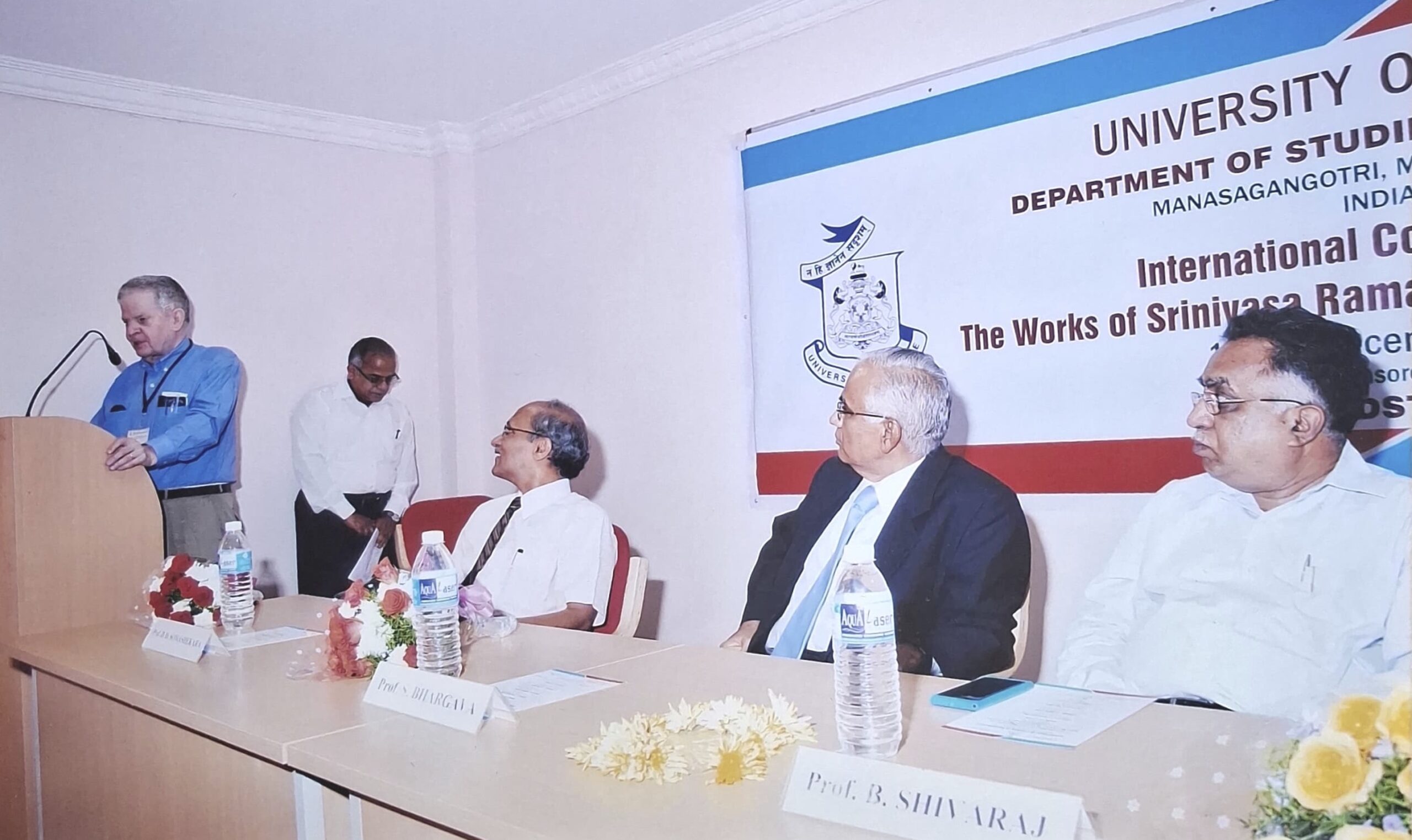
SB: Yes, I remember. With B.V. Sreekantan [then director of TIFR], K.G. Ramanathan, Ramanan, and Raghunathan all came down to Mysore. And I was with them too when we met the Vice-Chancellor. There was some talk about this. I did think that the proposal would come off. The Vice-Chancellor said there is no reason not to be favourable. That was a brief meeting. To be sure, even before we had these joint workshops, some of our students had made it to TIFR.
If the director, B.V. Sreekantan, came down from Bombay, they must have been pretty serious about it.
SB: Of course. They were serious. They came all the way down from Bombay for this very purpose.
Who was the Vice-Chancellor at that time?
SB: K.S. Hegde.
And you were the head of the department, I guess. Could you recall the kind of discussion that ensued?
SB: Yes, I was the head. The meeting was very brief. It lasted for 15 minutes or so. That’s all. Maybe I went in late. They were already there. And I got a call from the Vice-Chancellor. I joined them. After I joined, I think it lasted for 15 minutes. I had some discussion about it. I remember the Vice-Chancellor offered a site which was quite close to the campus, I think. I don’t know why the project didn’t come off. There was no talk after that. As far as I know, they didn’t visit again.
And also, I was told that another land in close proximity to Mysore was offered by the government itself. But I don’t know why this too didn’t come off.
So it went to that extent, but somehow fell through.
SB: Yes. Somehow fell through.
I now want to ask about your colleagues. You have already talked about Venkatachaliengar.
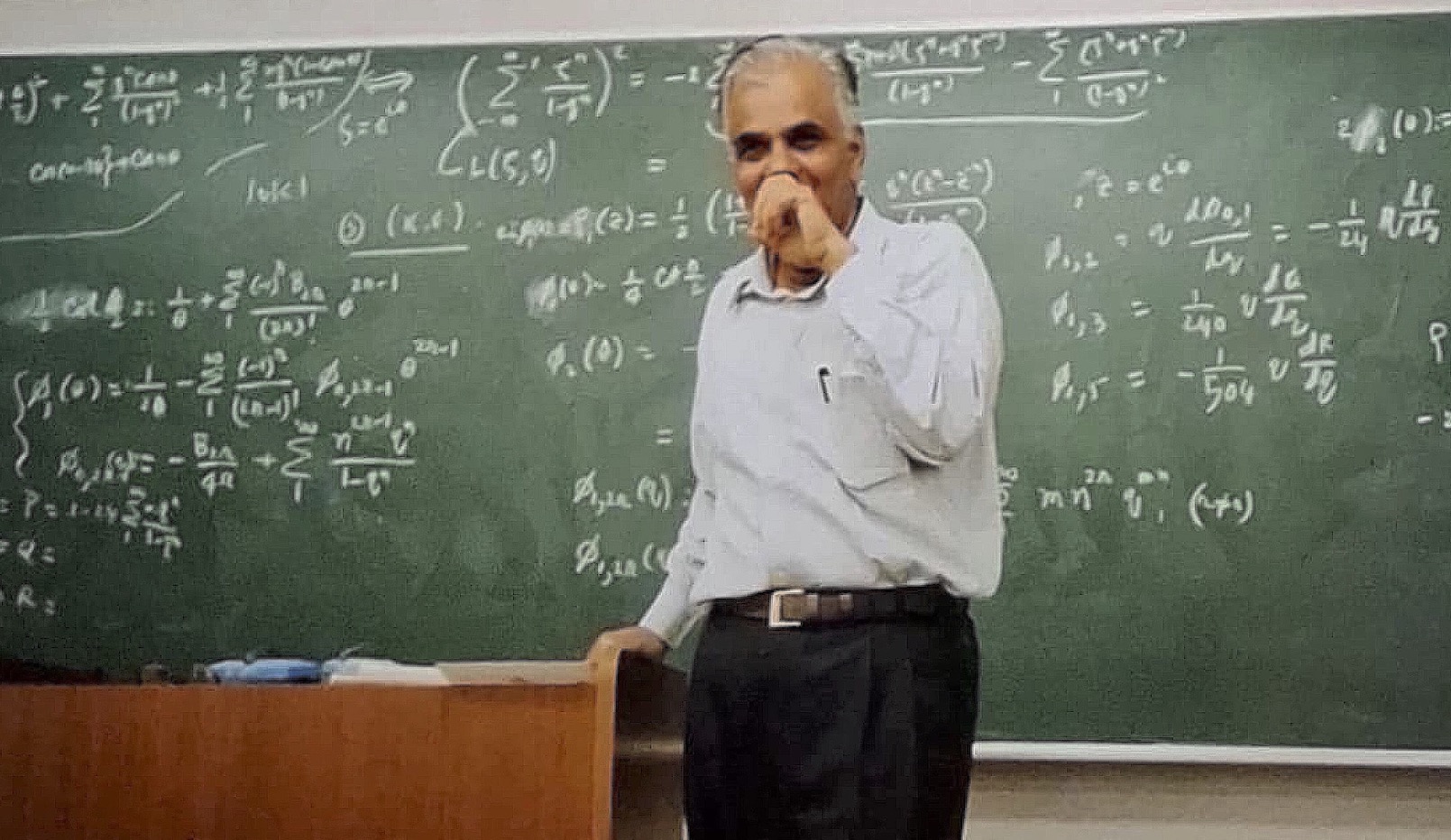
SB: Yes, Venkatachaliengar is the founder of this department. So the department started with a bang. He was very versatile. I was also his student at Central College. And I was one of his first two younger colleagues in Mysore, apart from T.S. Nanjundiah. Venkatachaliengar and Najundiah came together.
I was very lucky to have a generation of colleagues, including Panduranga Rao, Puttamadaiah and Nanjunda Rao and all the others I mentioned earlier. And then in my early years at Manasagangotri, S. Krishna Reddy. He was my classmate in BSc (Hons).
Can you tell us about your recollections of T.S. Nanjundiah?
SB: My association with Nanjundiah started from my first Honours class in Central College, where he was my teacher. Bhanumurthy, his younger brother, was my teacher too, before that, when I was in Intermediate. They were the first two exceptional teachers that I had, I may say. Their presentation was perfect! Clarity and novelty were the hall marks of their lectures, and they were both very good at problem-solving. They gave us a lot of homework problems. I was diligent in solving them. Nanjundiah used to appreciate the students’ solutions. And I was one of them to be appreciated.
Could you talk about some of your other colleagues, Panduranga Rao, Sampathkumar, and Adiga?
SB: Adiga was my student in MSc classes. And he was the second of my PhD students as I mentioned earlier.
S. Nanjunda Rao was my colleague. Both of us joined the department on the same day. And he became my first doctoral student because the Vice-Chancellor insisted on a PhD for promotion and so on. I was the head of the department then.
In their interviews for promotion, I did mention to the Vice-Chancellor that there was no need for a PhD for either Padmavathamma or Nanjunda Rao. Panduranga Rao didn’t care too much. At one time, the government became very generous and wanted to promote those who had put in long service. These people were putting in years of dedicated service, had experience and deserved promotions.
Absolutely. I think it stands to reason.
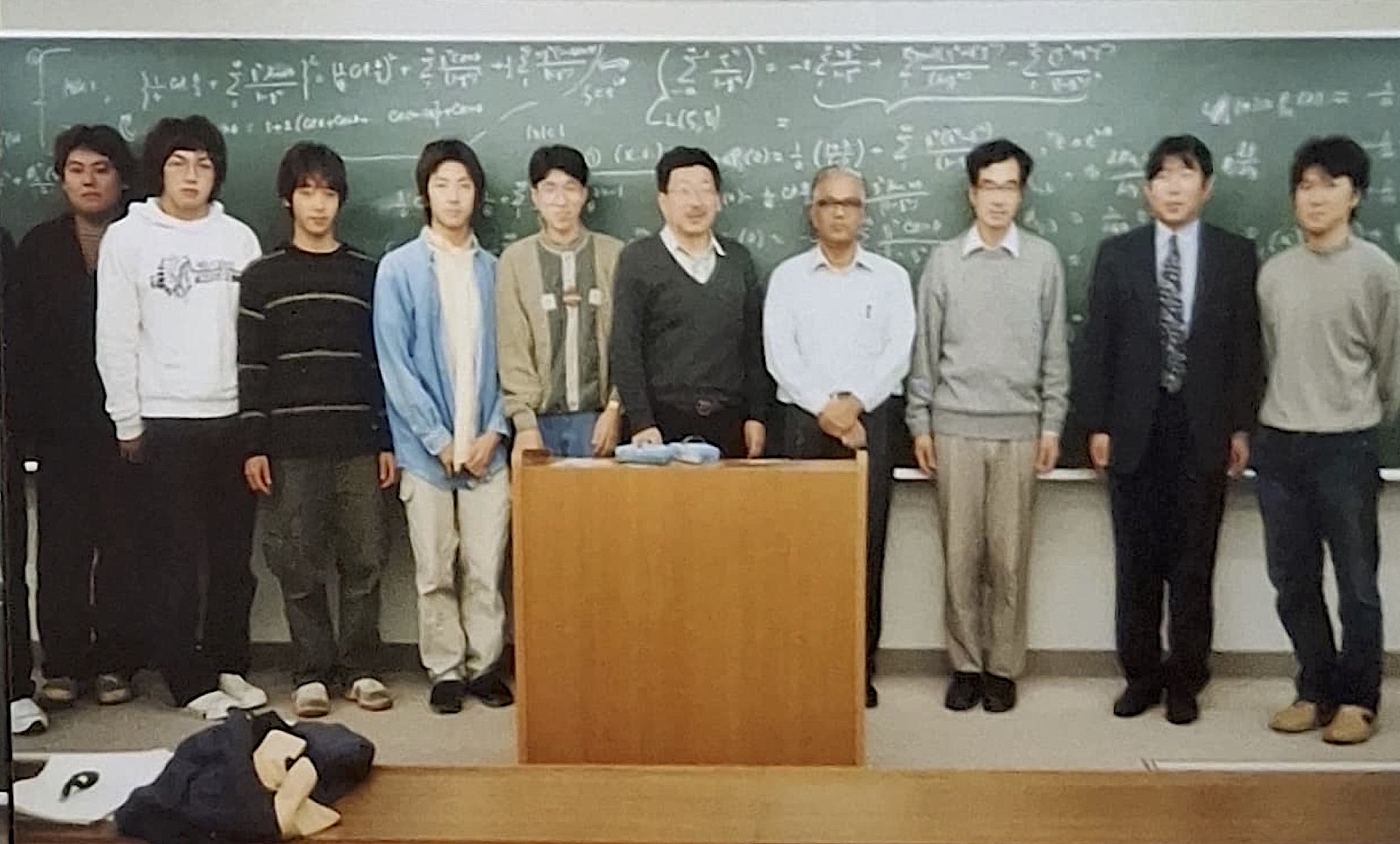
SB: Promptly, our University sent appropriate orders but with a condition that before reporting, they had to get and attach a letter of recommendation from the head of the department. It was a formality. However, Panduranga Rao didn’t like the idea as a matter of principle and did not ask me for any such letter. Then I insisted. I prepared a letter for him and thrust it on him. That’s the kind of person he was. Needless to say that we were great friends and remained so. He was a man of principles to the extreme. He and I shared many classes together. One on topology and geometry, following the book by Singer and Thorpe. We taught the whole book together for a year, along with classical stuff from Weatherburn’s book differential geometry. He would talk about mathematics all the time.
And he had the knack of comprehending a lot from a book at first sight without going through too many details. He didn’t care much for the details. He just penetrated. And probably asked the students to fill up the details. It’s another feature of Panduranga Rao that he would expose a whole lot of the subject at once to the students and motivate them to study on their own. Students from other colleges also used to go to him. He had the ability to catch the right students.
I am of the opposite kind. I would do all the details in the classroom, following Nanjundiah, Lakshmanan, Venkatachaliengar, and Bhanumurthy and others. Bhanumurthy had a slightly different style. He was sort of too brief in his presentation. He would give the details, but in a succinct form. We could see that the proofs were there, but had to be filled up some more by us. He taught us geometry in the intermediate college. And he taught us parts of our ancient Indian mathematics, like Brahmagupta’s theorem about cyclic quadrilaterals. Bhanumurthy was a polyglot. We used to see him talk in different languages with different people in our college campus and were overawed. We also came to know that he knew several foreign languages. That was when we were in the intermediate class.
Coming to my students, Nanjunda Rao was the first doctoral student, ironically, though we were colleagues. We worked very hard during several summers. He and I both had a lot of teaching load.
Panduranga Rao would talk about mathematics all the time. He had the ability to catch the right students
Somashekara, Adiga and Padmavathamma proved and extended scores of Ramanujan’s theorems found in his lost notebook and earlier notebooks. Hypogeometric series, theta functions, elliptic functions, partitions, Ramanujan’s alternative theories of theta and elliptic functions, modular equations and so on. In his thesis Adiga concentrated on the scores of theorems in Chapter 16 of Ramanujan’s second notebook and continued and q-continued fractions in the lost notebook. Padmavathamma especially worked on Hardy–Ramanujan Rademacher partition theorem and colour partitions.
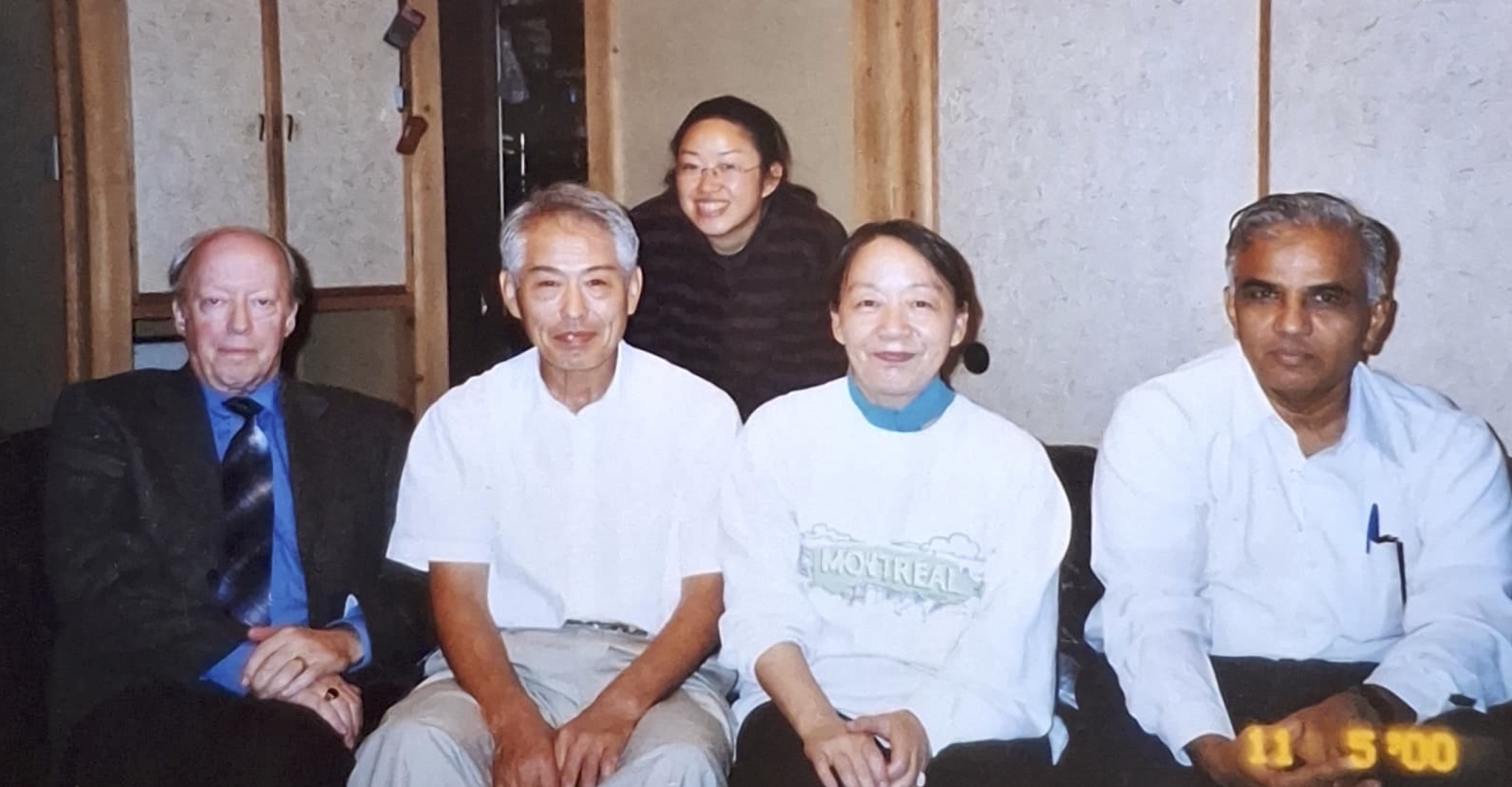
One of the most perpetually fascinating of Ramanujan’s formulas to work on, as we found, was the summation formula of Ramanujan, what Hardy called the `remarkable’ formula of Ramanujan in several parameters. It sort of unifies a lot of things, like some of Euler’s formulas and some of Jacobi’s formulas in theta and elliptic functions. As such, Somashekara concentrated especially on that. The remarkable identity, he found, also gives rise to many identities about Dedekind eta function and partitions. So that is Somashekara’s thesis in brief. I have scores of collaborative papers with Adiga and Somashekara on topics mentioned earlier, apart from my own papers and some in collaboration with Nanjunda Rao, Bruce Berndt and Frank Garvan.
I would now like to ask about another colleague of yours, Sampathkumar.
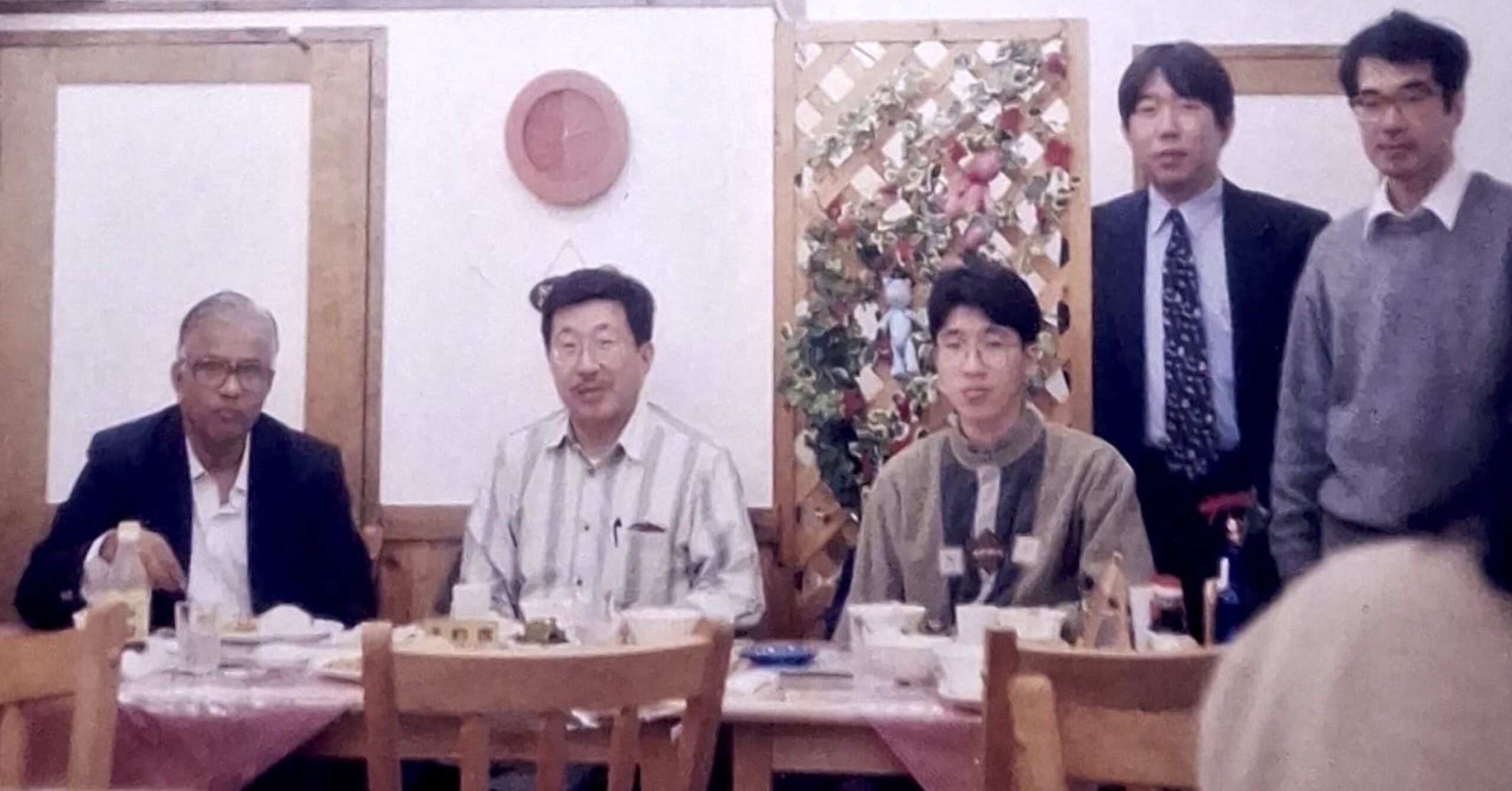
SB: We knew each other from my first year of Honours course. At that time he was already in MSc in the same Department of Mathematics at Central College. Many years later, we became colleagues in Manasagangotri. The first thing he did after shifting from Karnatak University, Dharwad, was to introduce graph theory in our department. He laid a lot of emphasis on both teaching and research in graph theory. He had many doctoral students. He brought in a lot of money from DST (Department of Science and Technology [of the government of India]) and other sources to the aid of his students. I may even say that the culture of getting funds for research from funding agencies gained momentum with the coming of Sampathkumar. He had a great influence on students as well.
I am also mentioning here that he took charge of running the Journal of the Ramanujan Mathematical Society from here.
SB: He is one of the main founders of the society.
It’s a nice gesture that the department and the university also supported, in the sense that they provided office space.
SB: Yes. He had a lot of influence. He knew how to go about meeting the right kind of people. He influenced the journal. I call it his journal.
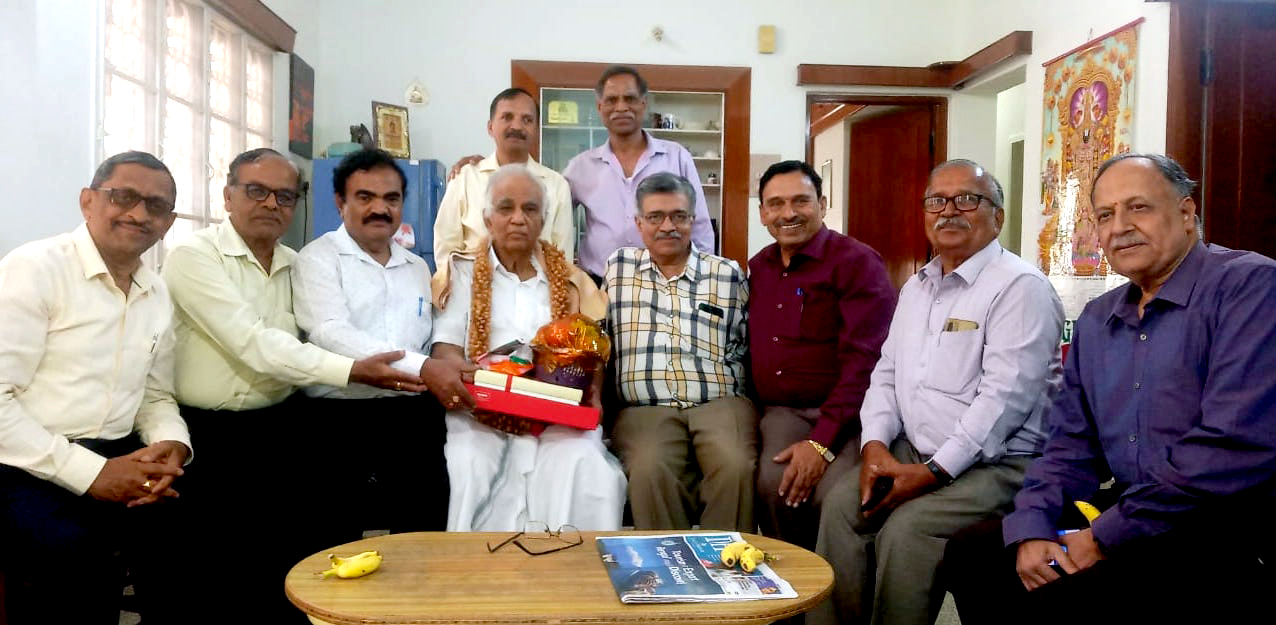
It was fascinating to hear about the maths department and its service to the larger mathematical community in India, directly from you who worked here for decades, almost right from the beginning. Thank you very much for your willingness to share and for spending a few hours with us.
SB: Thank you for giving me the opportunity to relive the past memories.\blacksquare
Footnotes
- Editor’s note: For convenience in narration we have used, at places, Mysore University where the official usage `University of Mysore’ is meant . ↩
- IMSc (Institute of Mathematical Sciences) in Chennai is, in short, known as ‘Matscience’. ↩
- Javaregowda was a renowned Kannada writer, academic and former VC of the University of Mysore. Author of over 350 works, De Ja Gow received several awards during his illustrious career, including a Padma Shri from the Government of India . ↩